You wake up ready.
By mid-morning you drag.
After lunch you crash.
Coffee helps for an hour. Then the slump returns.
You think: “I eat healthy. Why am I always tired?”
This is not your fault.
Modern food and habits push blood sugar up and down.
That roller-coaster steals your focus, moods, and hours every day.
This guide gives clear, usable steps using foods for stable energy.
You will learn which simple foods and daily habits give steady fuel.
No extreme diets. No expensive pills.
Just real food and small changes you can keep.
Why stable energy matters
Stable energy helps you:
- Focus at work.
- Control cravings.
- Make better food choices.
- Sleep better at night.
When energy is steady you feel more in control.
That is worth the work.

How energy works — in plain words
Food becomes fuel.
Carbs break into sugar (glucose).
Protein and fat slow that process down.
If sugar rises fast:
- Insulin rushes in.
- Sugar drops fast.
- You feel tired and hungry.
If sugar rises slowly:
- Your body uses fuel steadily.
- You stay alert longer.
So the trick is to choose the right foods and combine them well.
That’s why foods for stable energy matter.
Big reasons you crash
- Foods that spike blood sugar (white bread, sugary drinks).
- Meals low in protein or fiber.
- Eating too fast or while distracted.
- Long gaps between meals then overeating.
- Poor sleep and stress.
- Dehydration.
Fix these and you fix most energy problems.
Point 1: Start the day right: Breakfast that lasts (deep detail)
Why breakfast matters: Overnight your body uses fuel.
A weak breakfast forces a big mid-morning catch-up.
Good breakfast rules:
- Include protein.
- Add fiber.
- Use healthy fat.
- Avoid pure sugar.
Why each matters
- Protein keeps you full. It slows digestion.
- Fiber slows sugar release and helps gut health.
- Fat adds steady fuel and satiety.
Practical breakfasts
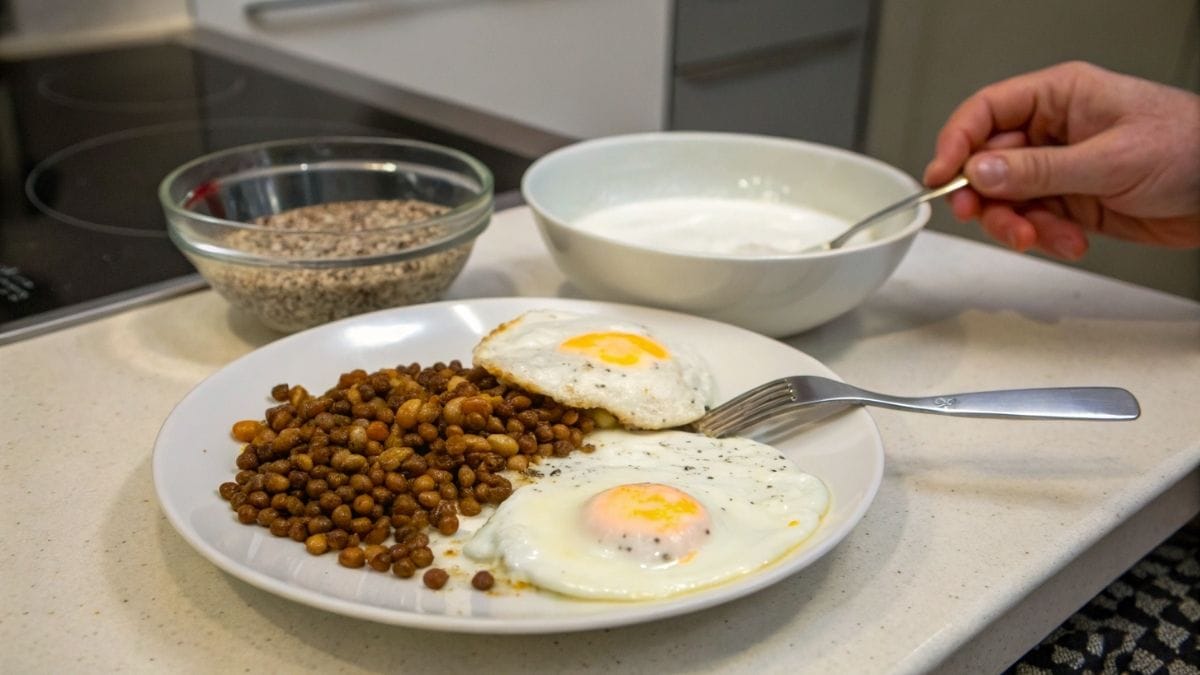
- Savory oats: oats + 1 egg + a handful of spinach + black pepper.
(Cook oats, stir in a soft-boiled egg. Protein + fiber = calm energy.)

- Greek yogurt bowl: plain Greek yogurt + chia seeds + a small apple, chopped.
(Protein + fiber + a bit of fruit sweetens without spike.) - Chickpea toast: mashed chickpeas, lemon, and olive oil on whole-grain toast.
(Plant protein + fiber + real food satisfaction.)
If mornings are rushed
Prep the night before. Make overnight oats with protein (use Greek yogurt) or hard-boil eggs.
Point 2: Midday: Build a lunch that prevents the afternoon slump
Common lunch mistake: big plate of carbs and little protein. Result: crash.
Lunch rules:
- Half the plate vegetables.
- A clear protein portion.
- One serving of slow carbs (whole grains, legumes).
- A small healthy fat.
Strong lunch examples
- Lentil bowl: lentils, roasted veggies, tahini dressing.
(Legumes are slow carbs and fill you long.) - Grain bowl: quinoa + grilled chicken + mixed greens + avocado.
(Quinoa is a steady carb. Chicken adds lasting protein.) - Mason jar salad: beans, greens, roasted pepper, feta, vinegar dressing.
(Easy to prep and keeps you full.)
Portion tip:
If you overfill your plate, digestion slows. Aim for moderate portion sizes. Eat until 80% full.
Point 3: Smart snacking: Stop the sugar yo-yo
Many people think snacks cause crashes. The wrong snacks do.
Good snack traits:
- Protein or fat first.
- A bit of fiber.
- Low added sugar.
Best snack ideas
- Plain Greek yogurt + cinnamon.
- Cottage cheese + cucumber.
- Hummus + raw veggies.
- Small apple + a spoon of tahini.
- A boiled egg with a pinch of salt.
Why this helps:
Snacks with protein and fiber keep blood sugar stable and stop the 4 pm binge.
Point 4: Dinner: Keep it light but balanced
Heavy dinners slow sleep and recovery. They also affect next-day energy.
Dinner rules:
- Lean protein.
- Plenty of vegetables (cooked or raw).
- A small portion of slow carbs only if you are active.
- Limit heavy fried foods and desserts at night.
Good dinners
- Baked white fish (or tofu) + steamed green beans + small sweet potato.

- Stir-fry with tempeh, lots of veggies, and a small serving of brown rice.
- Vegetable chili with beans and a side salad.
Evening tip: Finish eating 2–3 hours before bed. This helps sleep and morning energy.
Point 5: Hydration and tiny practices that matter
Dehydration causes tiredness. You may mistake thirst for hunger.
Hydration rules:
- Start with a glass of water each morning.
- Sip water between meals.
- If coffee is regular, add an extra glass for each cup.
- Herbal tea is fine in evening.
Micro-habits
- Eat slower. Chew well. Digestion starts in the mouth.
- Pause before seconds. Ask: “Am I still hungry or bored?”
- Walk for 5–10 minutes after meals. Light movement aids digestion and energy.
Point 6: Kitchen tools and simple meal prep that keep energy steady
You do not need a lot of gadgets. Use simple tools to prep.
Prep plan (weekly)
- Cook a pot of lentils or beans.
- Roast a tray of vegetables.
- Boil eggs.
- Make a big jar of Greek yogurt mix (yogurt + seeds + dried fruit).
Why this helps:
When your kitchen has ready food, you choose steady options over quick sugars.
Point 7: Foods to favor — not a long list, but the best picks
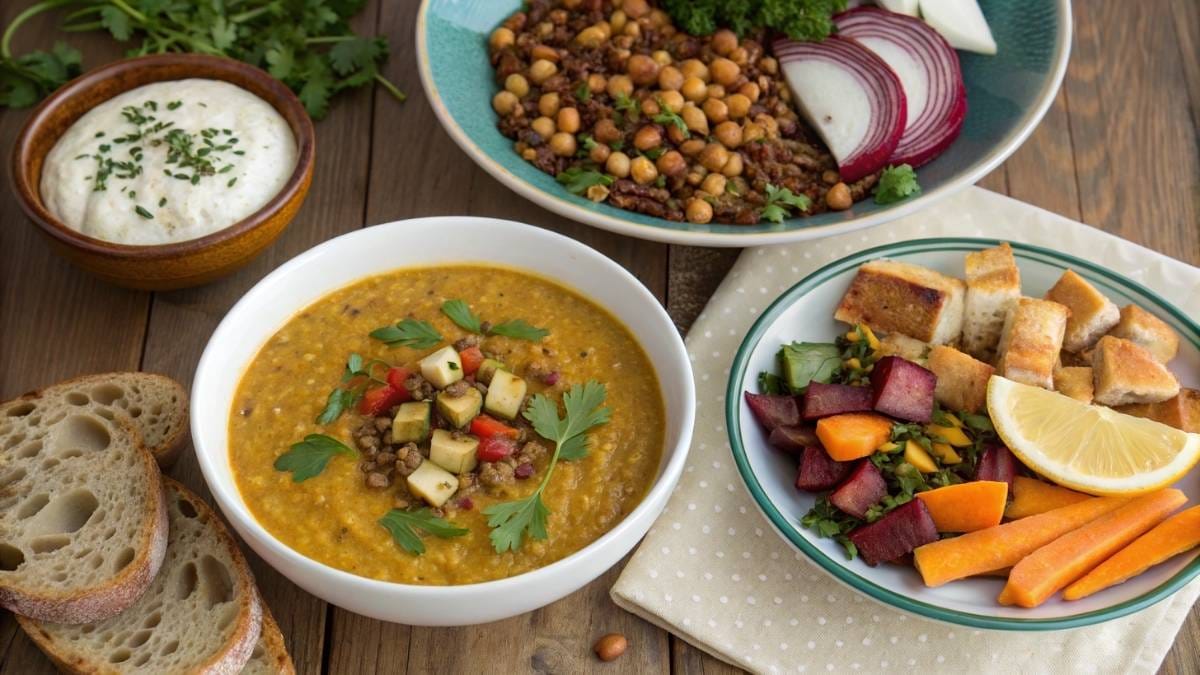
This list avoids overused staples. It gives options that feel new but are practical.
a) Lentils and split peas
- Why: High fiber and plant protein. They release energy slowly.
- How to eat: Lentil soup, dhal, or lentil salad.
- Real tip: Add a dash of lemon to lift flavor and aid iron absorption.
b) Plain Greek yogurt / Skyr
- Why: High protein, low sugar. Supports gut and steady energy.
- How: Add cinnamon, chopped pear, or a spoon of oat bran.
c) Root vegetables — beets, carrots, small sweet potato
- Why: They give slow carbs and micronutrients.
- How: Roast with herbs and pair with protein.
d) Fermented grains or sourdough bread
- Why: The fermentation lowers rapid sugar release.
- How: Use one slice as part of breakfast with protein.
e) Miso or fermented soybean-based dishes
- Why: Gut-friendly and savory. Good in soups adding umami and balance.
- How: Quick miso soup with tofu, scallion, and seaweed before meals to prime digestion.
f) Whole pulses in salads (chickpeas, black beans)
- Why: Fiber + texture → long fullness.
- Combine with herbs and lemon for bright flavor.
Note: These are practical picks. You can rotate them and keep meals interesting.
Point 8: The invisible energy killers (and how to stop them)
These habits hide in plain sight.
1) Liquid calories
- Soda, many store-bought smoothies, and sugary lattes spike sugar fast.
- Swap: water with lemon, unsweetened tea, or coffee with milk/protein.
2) Smoothies without protein
- A fruit-only smoothie spikes sugar.
- Fix: add Greek yogurt, protein powder, or nut butter.
3) Eating on the run
- Distracted eating speeds consumption and undermines feeling full.
- Fix: sit for 10 minutes, eat slowly, and breathe.
4) Relying on “diet” bars or shakes
- Many have hidden sugars or cause rebound hunger.
- Use them sparingly and always with real food protein.
Point 9: Quick 3-minute energy-boosting recipes (real, usable)
These are small practical fixes to use now.
1) Savory Overnight Oats
- ½ cup oats, 1 cup milk (or water), 1 egg (soft scramble into the oats next morning), pinch salt, chives.
- Prep night before. Heat or eat cold.
2) Lentil & Veggie Mason Jar
- ½ cup cooked lentils, roasted pepper, baby spinach, 1 tbsp vinaigrette.
- Assemble, shake, eat.
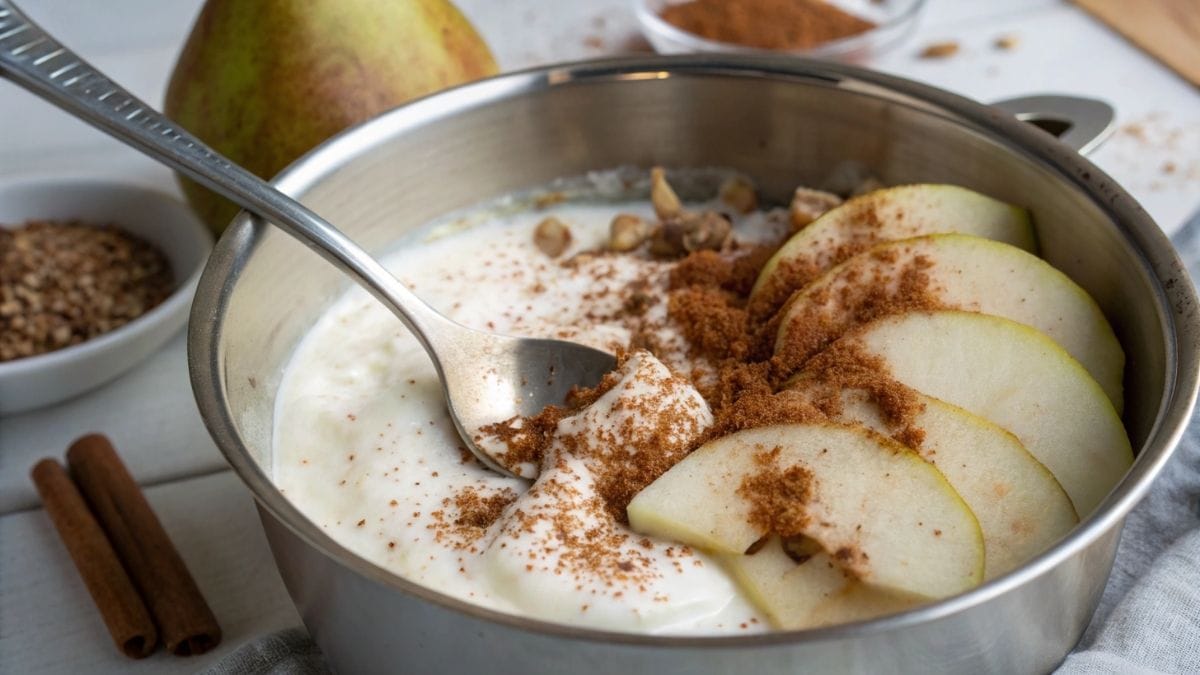
3) Cinnamon Yogurt Pot
- 1 cup plain Greek yogurt, ½ tsp cinnamon, 1 tbsp flaxseed, quartered pear.
Point 10: A simple 7-day plan to reset energy (practical)
This plan is flexible. Use staples you like.
Day 1
- Breakfast: Savory oats + egg
- Lunch: Lentil bowl + greens
- Snack: Yogurt + cinnamon
- Dinner: Baked tofu + roasted carrots
Day 2
- Breakfast: Greek yogurt + oat bran + pear
- Lunch: Quinoa + chickpeas + salad
- Snack: Hummus + carrot sticks
- Dinner: Fish or tempeh + green beans
… (repeat mix-and-match of the above patterns)
Goal: Keep meals balanced. Protein + fiber at each meal.
Point 11: What to expect and how quickly
You may feel small changes in days:
- Less mid-morning fog in 3–7 days.
- Fewer cravings in 1–2 weeks.
- Noticeable stamina change in 3–4 weeks.
Consistency matters more than perfection.
Point 12: Short checklist before you eat (use it every meal)
- Does my meal have protein?
- Is there fiber or vegetables?
- Is there a healthy fat?
- Am I sitting and breathing?
- Will I finish eating 2–3 hours before bed?
If yes, you set your body up for steady energy.
Point 13: How to handle social eating and travel
Travel and social life can disrupt plans. Use smart swaps.
- Choose grilled proteins and vegetable sides.
- Avoid big dessert portions; share instead.
- Pack a protein snack (yogurt, boiled egg, hummus) for travel.
Point 14: FAQ
Q: Do I need to cut carbs?
A: No. Choose better carbs and pair them with protein and fiber.
Q: Is coffee bad?
A: Not if you don’t overload it with sugar. Add water and a protein snack.
Q: Can supplements help?
A: Food first. Supplements can support but are not a short-term fix.
Point 15: Final, simple rules to follow
- Protein at every meal.
- Add fiber and vegetable volume.
- Avoid sugary drinks and fruit-only breakfasts.
- Eat slowly and sit down.
- Prep simple staples on weekends.
- Hydrate.
- Sleep and manage stress—food works best with rest.
Conclusion:
Energy is not a mystery.
It is a pattern you can build.
Simple food choices. Better timing. Small habits.
Pick three changes today:
- Add protein to breakfast.
- Swap sugary drink for water.
- Sit and eat slowly at two meals.
Repeat these for a week. Notice how your day changes.
That steady energy will let you do more and feel better — day after day.