
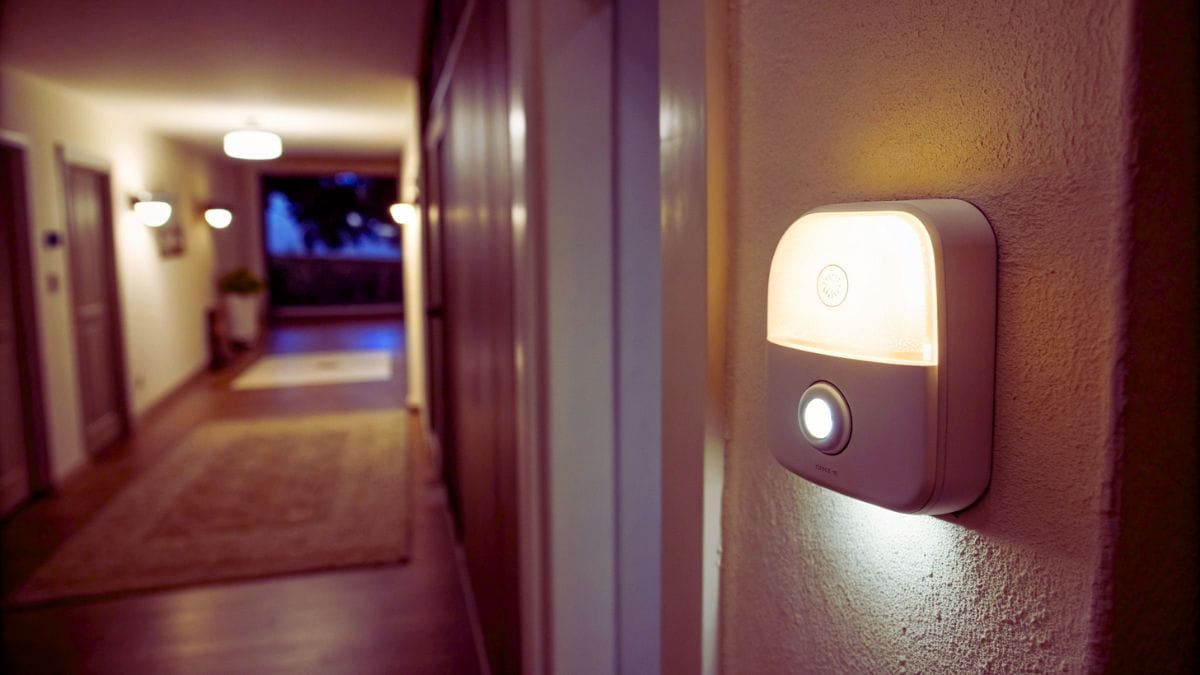
You wake up at 2 AM needing water. The house is pitch black. You shuffle down the hallway, squinting, trying not to stub your toe on that corner table. Again.
We’ve all been there. Nighttime navigation in your own home shouldn’t feel like an obstacle course. But turning on bright overhead lights? That jolts you awake and makes getting back to sleep nearly impossible.
Motion-sensor night lights changed everything. These clever little devices light your path automatically when you move, then turn off on their own. No switches. No fumbling. No harsh light burning your retinas at 3 AM.
Why Motion-Sensor Night Lights Work So Well
Traditional night lights stay on all night. They waste energy and create annoying glows that seep under bedroom doors. Motion sensors are smarter.
They only activate when they detect movement. Walk by, and a soft light guides you. Stand still for 20-30 seconds, and it fades out. You get light exactly when and where you need it.
The sensors typically reach 10-15 feet. That’s perfect for hallways, stairs, and bathrooms. You won’t trigger them from another room, but you will activate them before you reach that dark spot.
Where to Place Them for Maximum Safety
Hallways are essential. This is where most nighttime accidents happen. Place one every 15-20 feet along your path from bedrooms to bathrooms. You’ll always have a lit pathway.
Stairs need them most. Put one at the top and bottom of every staircase. Stairs in the dark are legitimately dangerous. Don’t skip this spot.

Bathrooms make sense too. Stick one inside near the door. You get just enough light to see without turning on the vanity lights. Your eyes stay adjusted to darkness for easier sleep when you return to bed.
Closets and pantries benefit from them. Ever fumbled for a light switch while holding laundry or groceries? Motion lights solve that instantly.
The Features That Matter Most
Look for adjustable brightness settings. Some lights are too bright even on their “dim” setting. Being able to customize intensity helps you find that sweet spot between safety and sleep disruption.
Rechargeable batteries beat disposables. You’ll use these every night. Replacing batteries every few months gets old fast. USB-rechargeable models pay for themselves quickly.
Warm light is easier on eyes than cool white. The 2700-3000K range gives you visibility without that harsh blue-white glow. Your sleep cycle will thank you.
Adhesive backing makes installation simple. No screws, no tools, no holes in your walls. Peel, stick, done. Most attach to any clean surface in seconds.
Smart Options Take It Further
Higher-end models connect to your phone. You can adjust sensitivity, brightness, and timing from bed. Some even work with smart home systems.
Dual sensors combine motion and light detection. They won’t activate during the day when natural light already illuminates your space. This saves battery life significantly.
Some include USB ports for charging your devices. That’s a nice bonus for bedroom placement, though not essential for safety.
Real Benefits Beyond Convenience
Kids gain independence with these lights. They can navigate to the bathroom alone without calling for help or turning on blinding lights. Parents sleep better too.
Elderly family members face serious fall risks in dark homes. Motion lights dramatically reduce that danger. They’re honestly one of the simplest safety upgrades you can make for aging-in-place situations.
Pets benefit as well. Your cat or dog can move around at night without you wondering what that noise was. You’ll see them pass by your doorway without getting up.
Getting Started
Start with your most-used nighttime route. Bedroom to bathroom, probably. Add three to five lights along that path. Use them for a week.
You’ll immediately notice the difference. Then expand to other areas. Stairs next, then hallways, then anywhere you’ve ever stubbed a toe in the dark.
Most quality motion-sensor lights cost $15-30 each. For under $100, you can light your entire home’s nighttime pathways. That’s a small investment for significantly safer midnight wandering.
Your 2 AM self will appreciate it. So will your shins.