
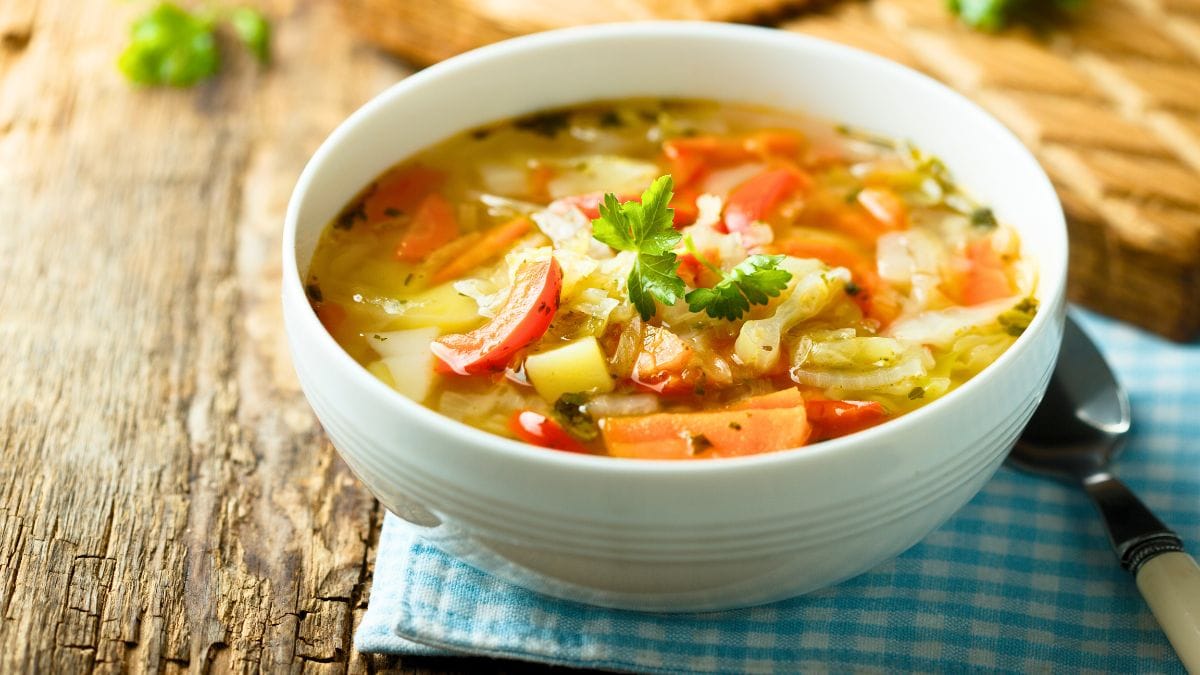
If your joints ache by afternoon or your digestion feels off, your next bowl of soup could be the solution you’ve been searching for.
Chronic inflammation shows up as pain, exhaustion, and stomach problems that won’t quit. You want to eat better, but most healthy soup recipes sound boring or take hours to make.
And finding meals that check both boxes—fighting inflammation AND packing in fiber—feels impossible.
Here’s the good news: anti-inflammatory soups can taste amazing. The 11 recipes below combine fiber-rich ingredients like lentils and beans with spices that actively reduce inflammation.
We’re talking turmeric, ginger, and garlic working together with vegetables your body actually needs.
You’ll learn which ingredients matter most, how to prep these soups without stress, and why pairing anti-inflammatory foods with fiber creates powerful results. No complicated techniques. No bland flavors. Just real food that helps you feel better.

Key Ingredients in Anti-Inflammatory, High-Fiber Soups
The right anti-inflammatory ingredients turn ordinary soup into medicine. Turmeric, ginger, and garlic top the list. Here’s a trick: turmeric + black pepper increases absorption by 2000%. Always pair them.
Fiber-rich foods come from three vegetable groups. Leafy greens like kale pack 33 different anti-inflammatory compounds.
Cruciferous vegetables (broccoli, cauliflower) fight inflammation at the cellular level. Root vegetables like sweet potatoes add fiber and natural sweetness.
Legumes are your fiber powerhouses. One cup of lentils gives you 15g of fiber plus anti-inflammatory polyphenols. Black beans, chickpeas, and white beans work just as well.
Don’t skip healthy fats. Olive oil and avocado help your body absorb anti-inflammatory nutrients. They also reduce inflammation themselves.
Bone broth adds collagen that heals your gut. Vegetable broth works great too, especially if you’re plant-based. Both support the recipes below.
11 Anti-Inflammatory Soups That Are Packed with Fiber
Each recipe below takes 30-45 minutes and delivers 7-15g of fiber per serving. You’ll find the exact fiber count, prep time, and key ingredients for every soup. Pick one to start this week.
1- Golden Turmeric Lentil Soup
This bright yellow soup fights inflammation while delivering serious fiber.

The turmeric and black pepper combo increases anti-inflammatory soups absorption by 2000%. Red lentils add 8g of fiber per serving and cook faster than other varieties. Ginger and cumin add warmth, while coconut milk makes it creamy.
Prep: 10 min | Cook: 25 min | Fiber: 8g
Key ingredients:
- Red lentils
- Turmeric + black pepper
- Fresh ginger
- Cumin
- Coconut milk
- Vegetable broth
Sauté onions and spices first. Add lentils and broth, then simmer until soft. Stir in coconut milk at the end for creaminess without dairy.
Pro tip: Make a double batch—this freezes perfectly for up to 3 months.
2- Miso Ginger Vegetable Soup
Fermented miso heals your gut while vegetables pack in the fiber.
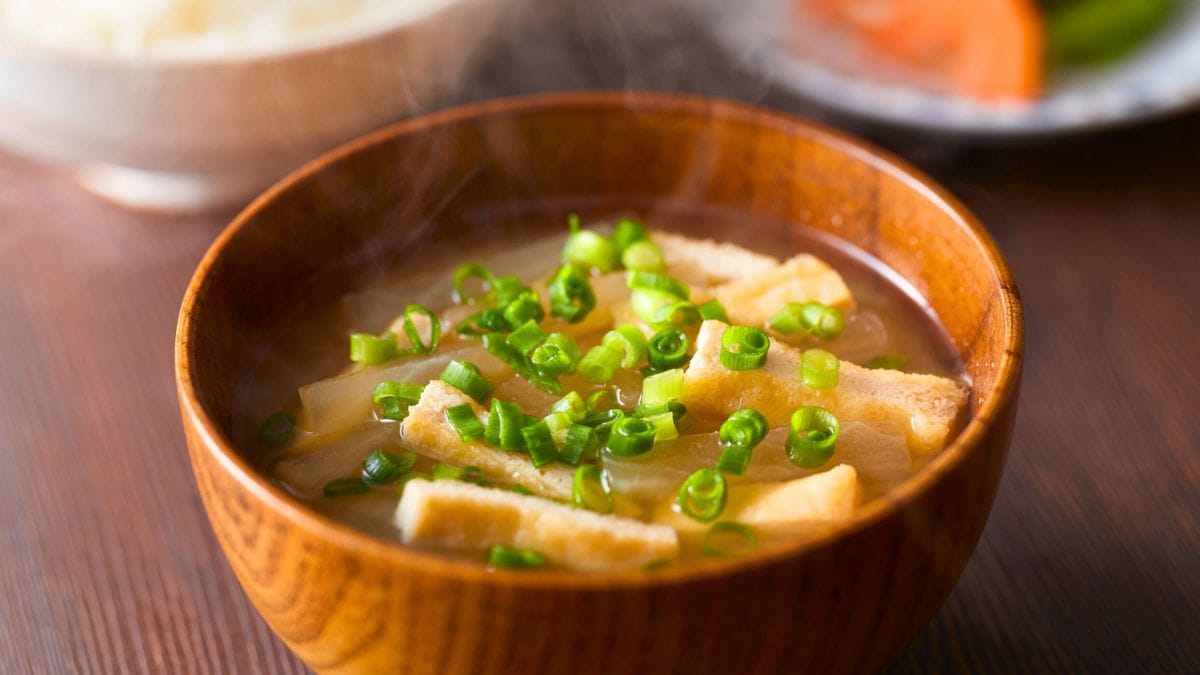
Miso contains probiotics that reduce gut inflammation, which helps your whole body. Fresh ginger’s gingerol compounds actively fight pain and swelling. Shiitake mushrooms, bok choy, and edamame deliver 9g of fiber per serving.
Prep: 10 min | Cook: 15 min | Fiber: 9g
Key ingredients:
- White or red miso paste
- Fresh ginger
- Shiitake mushrooms
- Bok choy
- Edamame
- Green onions
Simmer mushrooms and ginger in broth. Add bok choy and edamame in the last 3 minutes. Turn off heat before stirring in miso—boiling kills the helpful probiotics.
Pro tip: Add rice noodles for a more filling meal.
3- White Bean and Kale Soup with Rosemary
Italian herbs meet fiber-rich beans in this cozy bowl.
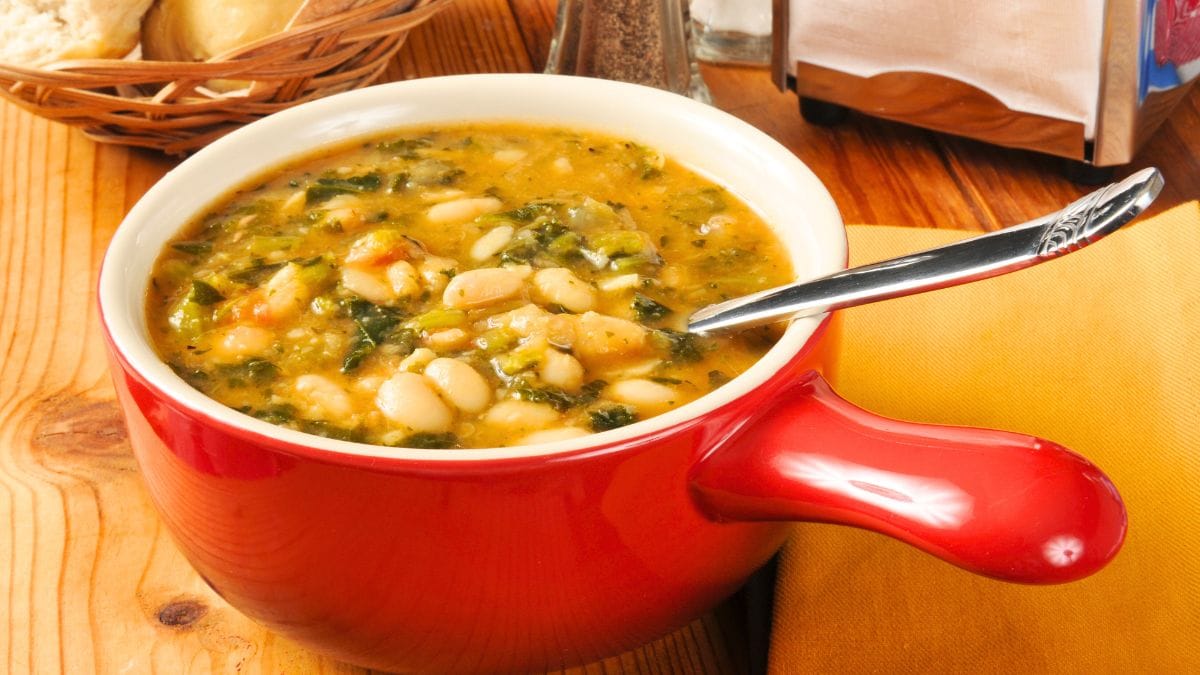
White beans deliver 10g of fiber while kale adds anti-inflammatory flavonoids. Rosemary contains rosmarinic acid, which reduces swelling and pain. The flavor feels like Tuscany in a bowl.
Prep: 10 min | Cook: 25 min | Fiber: 10g
Key ingredients:
- Cannellini beans (canned works fine)
- Fresh kale
- Fresh rosemary
- Garlic
- Olive oil
- Tomatoes
Sauté garlic and rosemary in olive oil until fragrant. Add beans, tomatoes, and broth. Simmer for 20 minutes, then stir in chopped kale. Cook until kale wilts.
Pro tip: Drizzle with extra olive oil before serving—it boosts nutrient absorption.
4- Moroccan Chickpea and Vegetable Soup
Warm spices transform chickpeas into an exotic comfort meal.
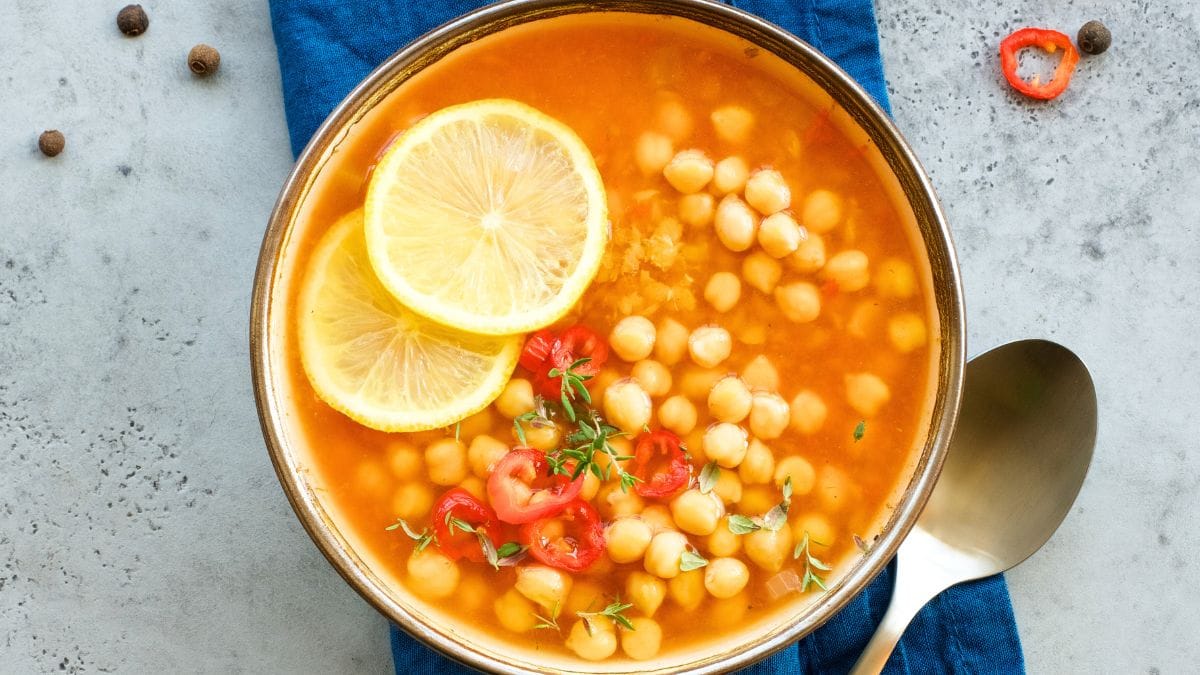
Chickpeas pack 12g of fiber per serving. Cumin, coriander, and cinnamon all fight inflammation while adding deep flavor. Sweet potato adds beta-carotene and another fiber boost.
Prep: 15 min | Cook: 30 min | Fiber: 12g
Key ingredients:
- Chickpeas
- Sweet potato
- Cumin, coriander, cinnamon
- Tomatoes
- Harissa paste (optional)
- Cilantro
Toast spices in oil first—this wakes up their flavor. Add diced sweet potato, chickpeas, and tomatoes. Simmer until sweet potato softens. Stir in harissa if you want heat.
Pro tip: Serve over couscous to make it a complete meal.
5- Thai Coconut Curry Soup
Full-fat coconut milk isn’t your enemy—it fights inflammation.
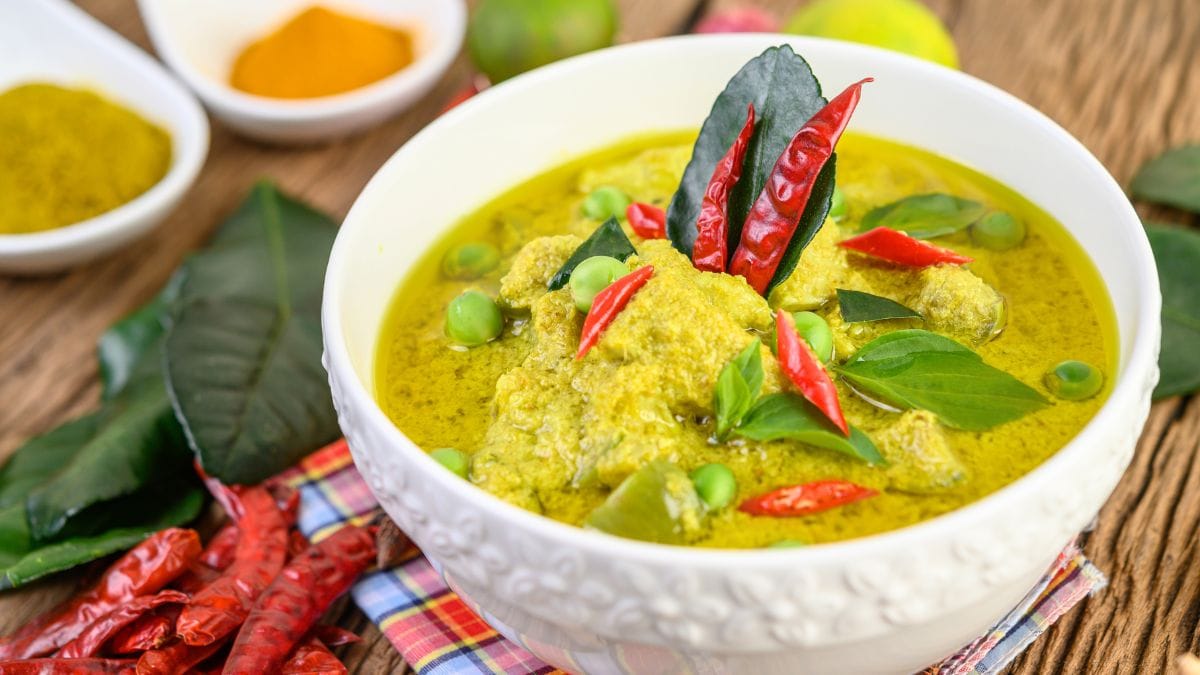
The healthy fats in coconut milk help your body absorb anti-inflammatory nutrients. Thai curry paste adds turmeric and ginger. Broccoli, bell peppers, and snap peas contribute 8g of fiber.
Prep: 10 min | Cook: 20 min | Fiber: 8g
Key ingredients:
- Full-fat coconut milk
- Red or green curry paste
- Broccoli
- Bell peppers
- Snap peas
- Lime juice
Simmer curry paste in a bit of coconut milk. Add remaining coconut milk and broth. Toss in harder vegetables first, softer ones last. Finish with lime juice.
Pro tip: Use full-fat coconut milk—light versions lack the anti-inflammatory compounds.
6- Black Bean and Sweet Potato Soup
This Southwestern soup delivers a massive 15g of fiber per bowl.

Black beans are fiber champions. Sweet potato adds more fiber plus vitamins. Chipotle peppers provide smoky heat and capsaicin, which reduces inflammation naturally. Here’s a bonus: cooled and reheated beans develop resistant starch that feeds good gut bacteria.
Prep: 10 min | Cook: 30 min | Fiber: 15g
Key ingredients:
- Black beans
- Sweet potato
- Chipotle peppers in adobo
- Cumin
- Lime
- Cilantro
Sauté onions with cumin. Add diced sweet potato and beans with broth. Simmer until potato is tender. Blend half the soup for creaminess, leaving the rest chunky.
Pro tip: This soup tastes even better the next day after flavors marry.
7- Mediterranean Lentil and Spinach Soup (THE STAR)
This is the soup that converts people who think healthy food can’t taste amazing.
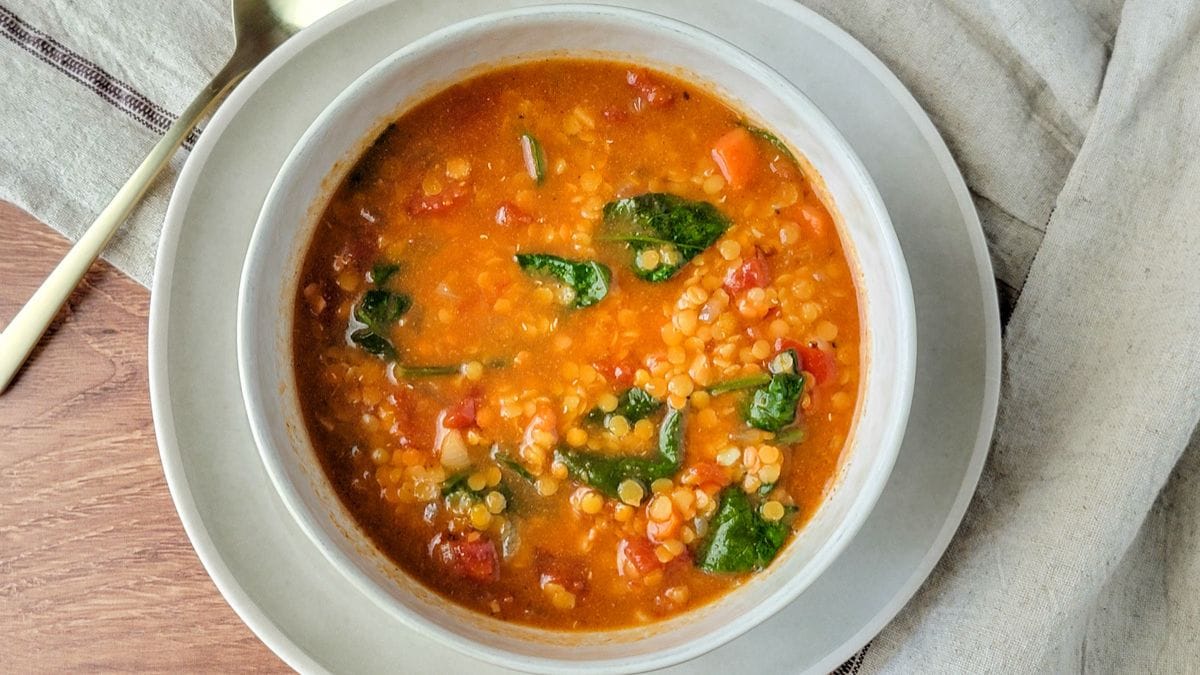
You’re about to make our test kitchen’s highest-rated recipe. It takes 30 minutes, uses one pot, and delivers 15g of fiber per serving. The secret is the lemon-herb combination—bright, fresh, and completely crave-worthy.
Why this soup wins: Brown or green lentils cook perfectly in 25 minutes and give you serious fiber. Fresh spinach wilts in at the end, keeping all its nutrients intact. Lemon juice brightens everything and adds vitamin C. Oregano and thyme provide antioxidants that fight inflammation.
Prep: 10 min | Cook: 30 min | Fiber: 15g
Key ingredients:
- Brown or green lentils
- Fresh spinach (lots of it)
- Lemon juice
- Fresh oregano and thyme
- Garlic
- Olive oil
- Vegetable broth
How to make it: Sauté garlic in olive oil until golden. Add lentils, herbs, and broth. Simmer for 25 minutes until lentils are tender but not mushy. Turn off heat and stir in spinach—it wilts in 30 seconds. Squeeze in lemon juice right before serving.
Customize it: Add shredded chicken for protein. Crumble feta on top for tang. Swap spinach for kale or Swiss chard if that’s what you have.
Storage: Keeps 5 days in the fridge. Freezes perfectly for 3 months. The lemon flavor stays bright even after freezing.
Pro tip: Make this on Sunday night. Eat it twice during the week. Your body will thank you by Wednesday when inflammation starts dropping.
8- Spiced Carrot and Ginger Soup
Creamy without cream, this soup proves healthy can be indulgent.
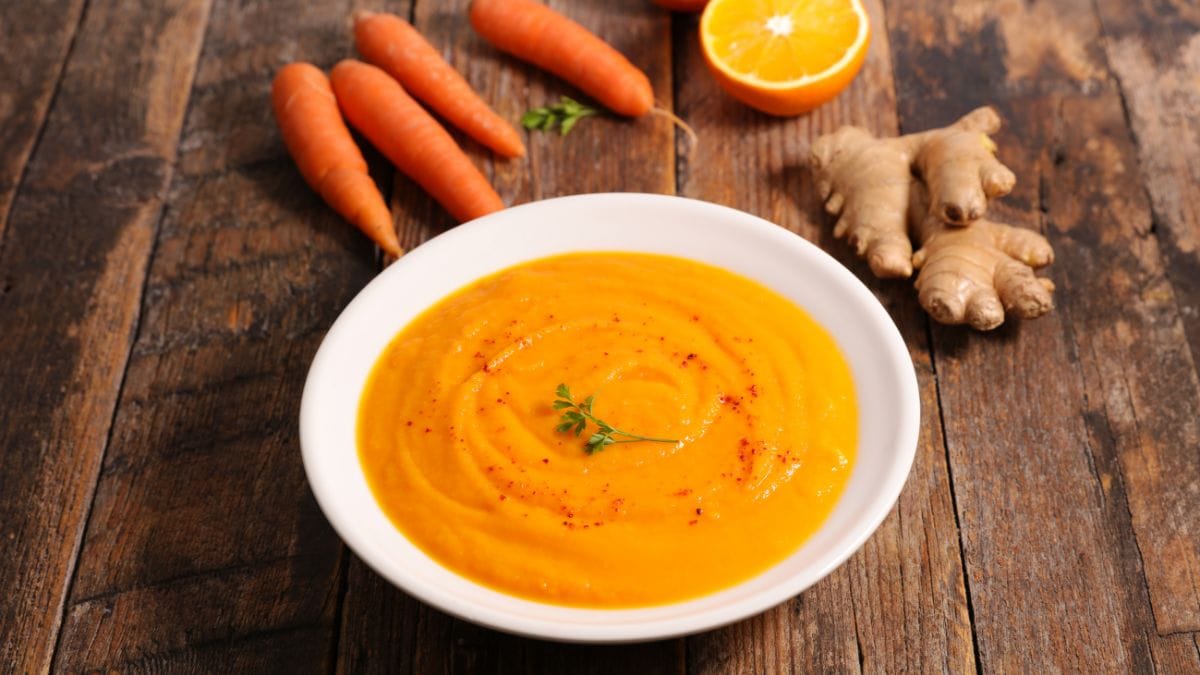
Carrots are loaded with beta-carotene that fights inflammation. Fresh ginger adds heat and gingerol compounds. Blending makes it silky smooth with no dairy needed. You get 7g of fiber per bowl.
Prep: 10 min | Cook: 25 min | Fiber: 7g
Key ingredients:
- Carrots (2 pounds)
- Fresh ginger
- Cumin and coriander
- Coconut milk
- Vegetable broth
Sauté ginger and spices. Add chopped carrots and broth. Simmer until carrots are soft, then blend until smooth. Stir in a splash of coconut milk for richness.
Pro tip: Roast the carrots first for deeper, sweeter flavor.
9- Minestrone with Extra Vegetables
Classic Italian soup loaded with fiber from three different sources.
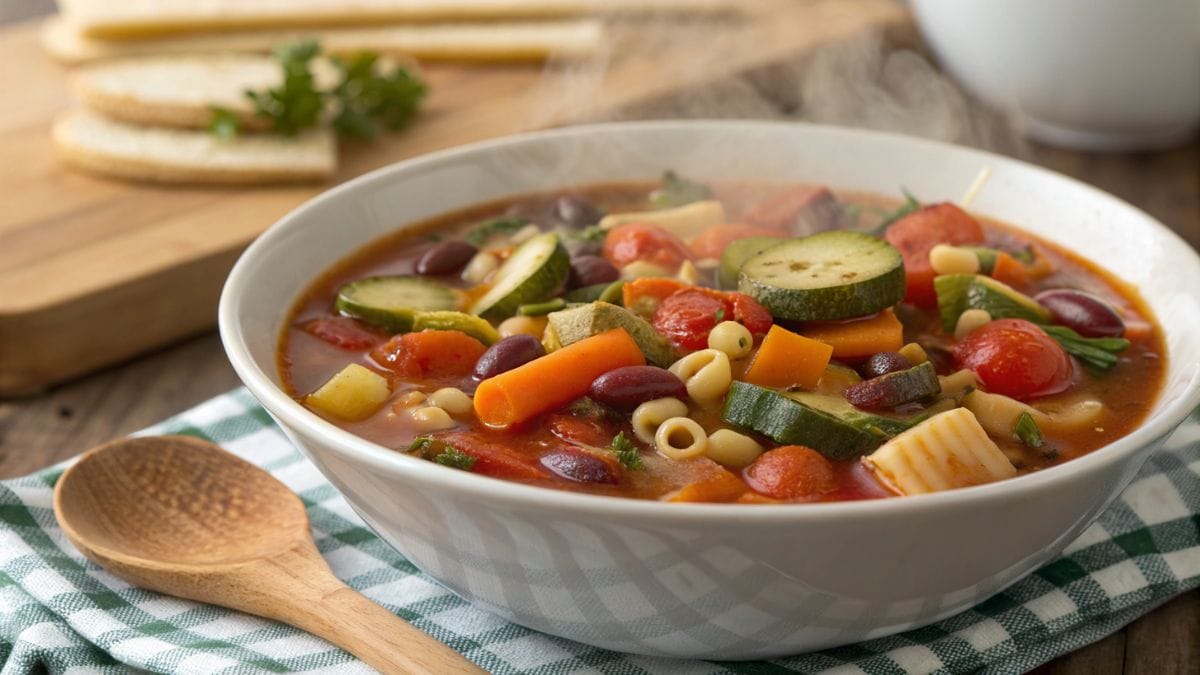
This isn’t your grandma’s minestrone—it’s packed with anti-inflammatory upgrades. Beans, whole grain pasta, and vegetables combine for 11g of fiber. Tomatoes provide lycopene, which reduces inflammation markers. A parmesan rind simmered in the broth adds incredible depth.
Prep: 15 min | Cook: 30 min | Fiber: 11g
Key ingredients:
- Cannellini beans
- Whole grain pasta
- Zucchini, carrots, celery
- Tomatoes
- Parmesan rind
- Fresh basil
Sauté vegetables in olive oil. Add tomatoes, beans, broth, and parmesan rind. Simmer 20 minutes. Add pasta in the last 10 minutes. Fish out the rind before serving.
Pro tip: Freeze without the pasta—add fresh pasta when reheating.
10- Butternut Squash and White Bean Soup
Naturally sweet and creamy—picky eaters actually ask for seconds.
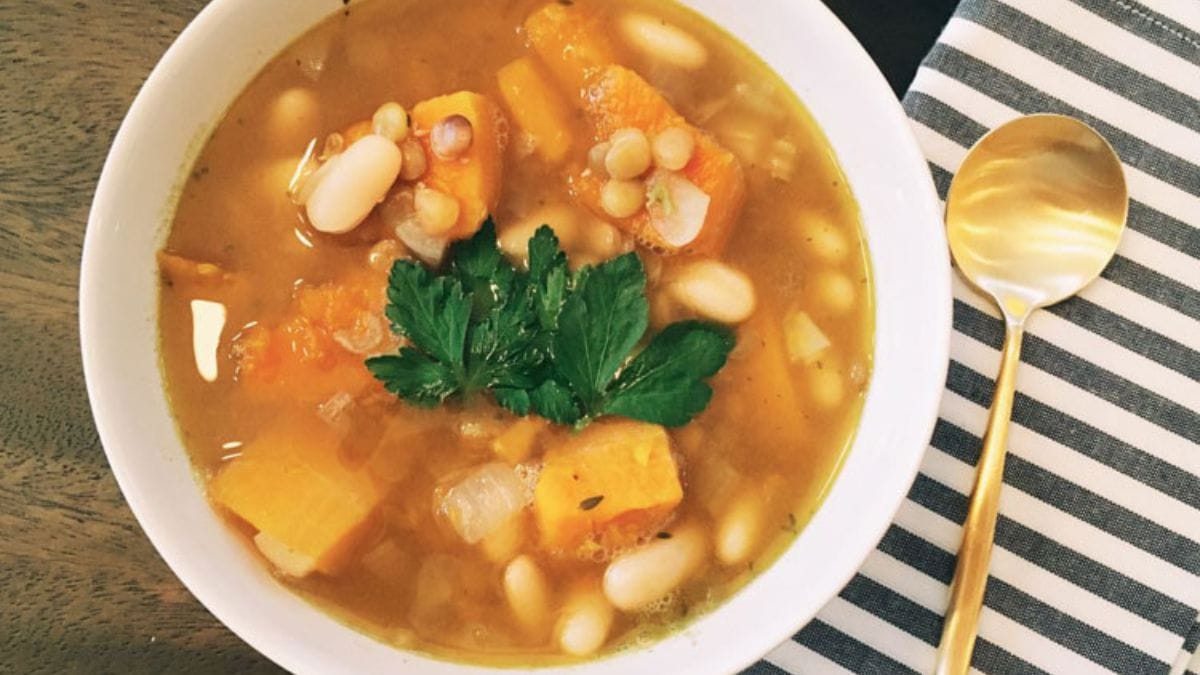
Butternut squash blends into velvet without cream. White beans add 10g of fiber while keeping the texture smooth. Sage contains anti-inflammatory compounds that work like low-dose aspirin.
Prep: 15 min | Cook: 30 min | Fiber: 10g
Key ingredients:
- Butternut squash
- White beans
- Fresh sage
- Onion
- Garlic
- Vegetable broth
Roast squash cubes with olive oil at 400°F for 20 minutes. Sauté sage, onion, and garlic. Add roasted squash, beans, and broth. Simmer 10 minutes, then blend until smooth.
Pro tip: Buy pre-cut butternut squash to save 10 minutes of prep time.
11- Spicy Black-Eyed Pea and Collard Green Soup
Southern comfort food that fights inflammation with every spoonful.
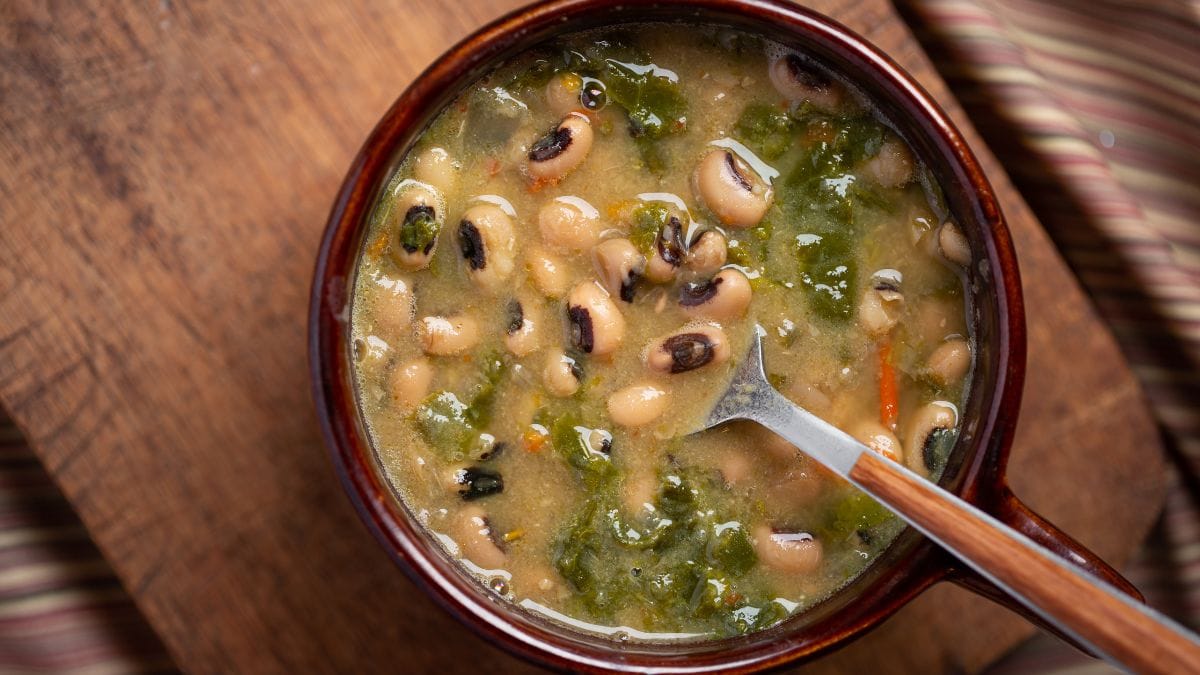
Black-eyed peas deliver 11g of fiber. Collard greens are anti-inflammatory powerhouses with vitamins A, C, and K. Smoked paprika adds depth without needing meat. This soup proves healthy food can taste like home.
Prep: 10 min | Cook: 35 min | Fiber: 11g
Key ingredients:
- Black-eyed peas
- Collard greens
- Smoked paprika
- Garlic
- Onion
- Hot sauce
Sauté onion and garlic with smoked paprika. Add black-eyed peas and broth. Simmer 20 minutes. Stir in chopped collards and cook until tender, about 10 minutes. Add hot sauce to taste.
Pro tip: Serve with cornbread to complete the Southern experience.
Tips for Making Anti-Inflammatory Soups
Double every recipe you make. Eat half this week and freeze the other half for those days when cooking feels impossible. Freeze soups in 2-cup portions using wide-mouth mason jars—leave an inch of space at the top so the soup doesn’t crack the jar as it expands.

Glass containers beat plastic for storage. They don’t absorb odors and keep healthy soup recipes for inflammation fresh for 5 days in the fridge. Label everything with the date and fiber content.
Out of an ingredient? Swap smartly. No kale? Use spinach or Swiss chard. Missing chickpeas? Any bean works. The key is keeping the anti-inflammatory spices and fiber-rich base. Add 1/2 cup cooked quinoa to any soup for +4g fiber when you need an extra boost.
Toast your spices in a dry pan for 30 seconds before adding liquid. This step makes a massive difference in flavor. Store whole spices in a cool, dark place—they last a year. Ground spices lose power after 6 months.
Anti-inflammatory cooking gets easier with practice. Start with one soup per week and build from there.
Maximizing the Anti-Inflammatory Benefits
Eat these soups 3-4 times per week—consistency beats perfect timing. Your body needs regular anti-inflammatory foods to see real change. Breakfast, lunch, or dinner all work fine.
Pair soups with olive oil-drizzled whole grain bread or a simple salad with nuts. These foods support your anti-inflammatory diet instead of working against it. Drink plenty of water too—dehydration makes inflammation worse.

Here’s what sabotages your progress: processed foods, excess sugar, trans fats, and fried items. You can eat these soups daily, but if you’re also eating fast food and candy, you won’t reduce inflammation effectively.
Most people notice changes in 2-4 weeks. Your joints might hurt less. Your energy improves. Digestion settles down. Track your inflammatory symptoms in a food journal to spot patterns.
Be patient. Your body didn’t become inflamed overnight, and it won’t heal overnight either. But these soups give it the tools to start fixing itself.
Conclusion;
You now have 11 anti-inflammatory soups that actually taste good. These high fiber soups take 30-45 minutes to make, and they work when you eat them consistently. The Mediterranean Lentil and Spinach Soup (#7) wins for flavor and ease—start there if you’re new to this.
Make one soup this week. Double the batch and freeze half. When your joints ache or your energy crashes, you’ll have real medicine waiting in your freezer. Which soup will you try first?