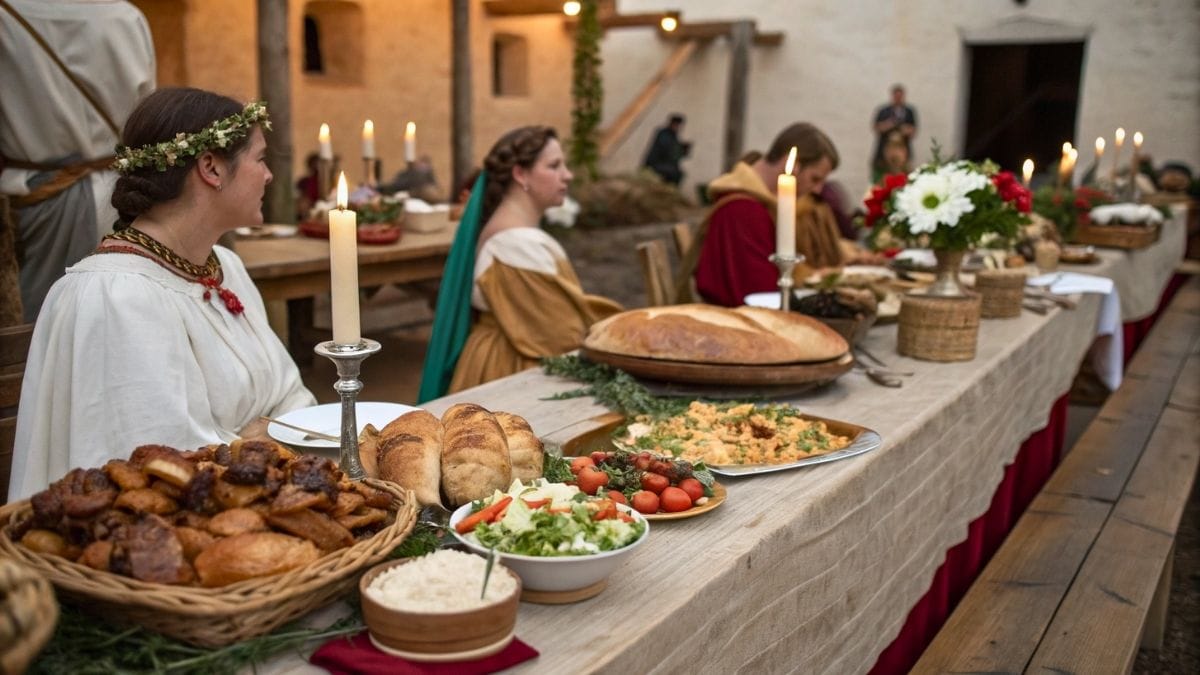
Food at weddings is rarely just food — it’s evidence of what a society valued centuries ago and still honors today.
Many couples or planners want to include cultural food traditions in their wedding. But they often don’t know which ones are real, why those foods matter, or how to add them in a respectful, meaningful way.
In this article you’ll discover five ancient food traditions still served at weddings in 2025 — from Sofreh Aghd spreads to classic sugared almonds — what they once meant, how people still practice them today, and practical tips to include them correctly.
You’ll get clear, respectful ideas that work for modern weddings.
Sofreh Aghd: The Persian Wedding Spread
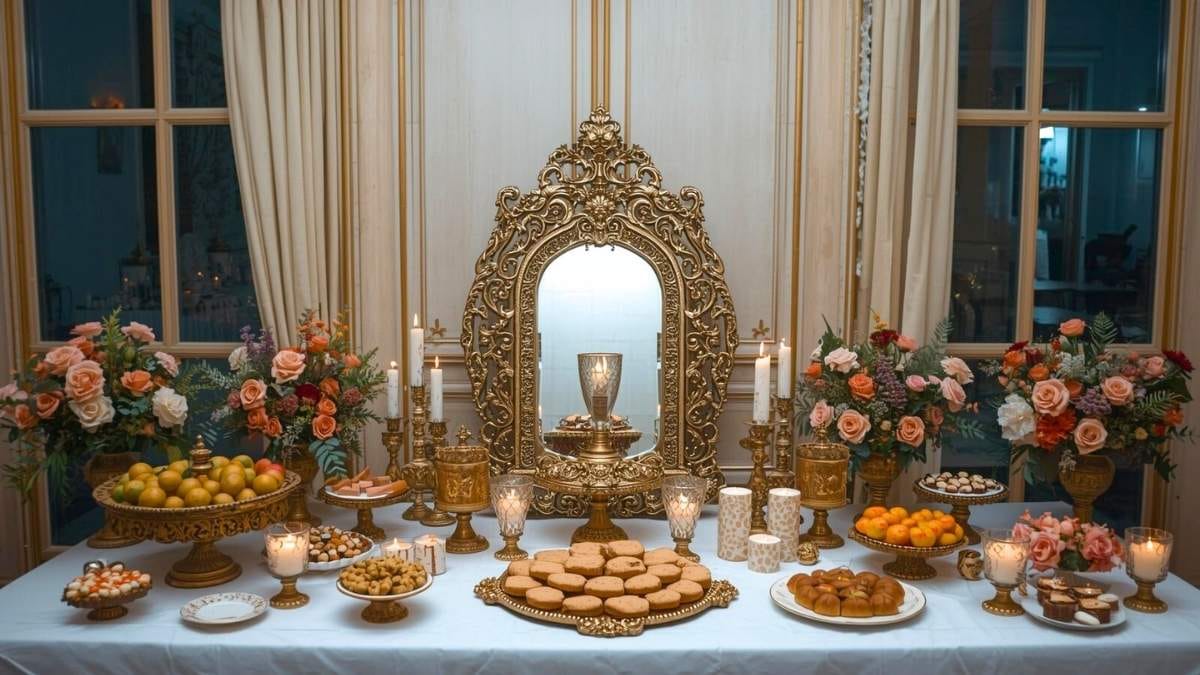
The Sofreh Aghd is a Persian wedding spread filled with symbolic foods and objects. You’ll usually see a mirror, two candles, honey, flatbread, herbs, and rock candy. Encyclopaedia Iranica notes that these items appear in records tied to early Persian and Zoroastrian customs. Each item stands for something clear: light, sweetness, protection, and prosperity.
The Persian wedding spread is still used in 2024–2025 by Iranian families and the global diaspora. Many couples now book “mini-sofreh” displays for receptions. Rental kits listed by modern vendors, including those highlighted in recent guides from Persis Collection and wedding photographers like Lin & Jirsa, make the setup easier for planners who need quick sourcing.
If you’re planning a wedding, build a simple Sofreh Aghd with core items. Use a mirror, two candles, rock candy (nabat), a small jar of honey, and flatbread such as sangak. You can find these at Persian grocery stores or from vendors who rent full sofreh packages. Add a short note in the program that explains the symbolism so guests understand why these items matter.
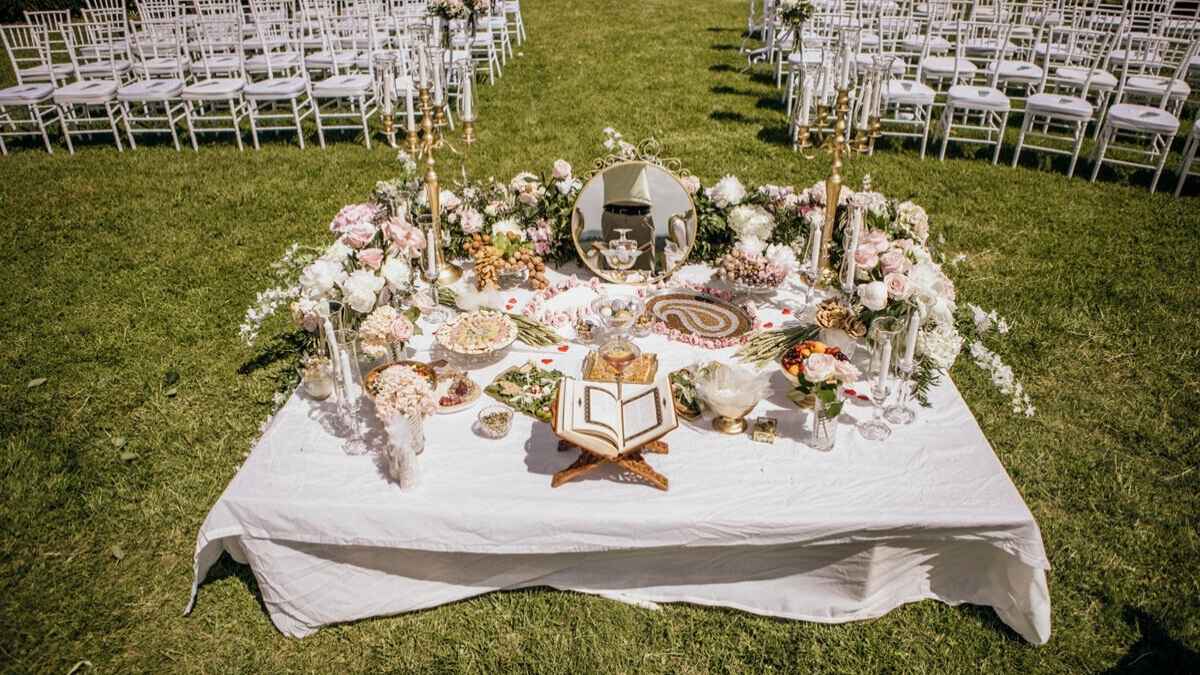
For interfaith weddings, treat the Sofreh Aghd as a cultural moment. Keep it light and clear. Explain that the couple sits before the spread as family blesses them with sweetness and protection. This keeps the tradition respectful without forcing religious meaning.
Jordan Almonds & Koufeta: Sugared Almonds as Fertility Favors
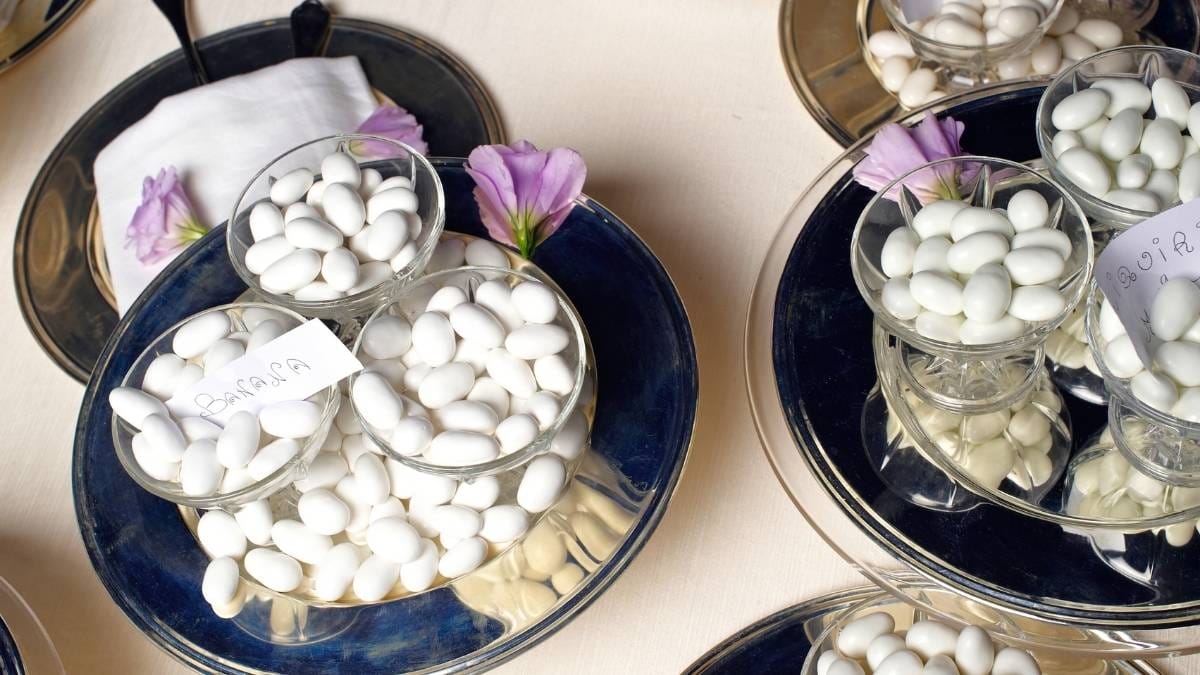
If you’re picking wedding favors, you want something small, meaningful, and low-stress. Jordan almonds (koufeta) solve that problem fast.
They’re simple. They’re traditional. And they carry a message guests actually remember.
Short History
Sugared almonds go back to ancient Rome, when almonds were dipped in honey and handed out at weddings.
The idea spread through medieval and Renaissance Europe, where almond “dragées” became a sign of joy and good luck.
Today, the city of Sulmona in Italy is still known for making some of the finest “confetti” almonds by hand.
What the Five Almonds Mean
You usually give five Jordan almonds.
Each almond stands for health, wealth, happiness, fertility, and longevity.
It’s a quick symbol guests understand without a long speech.
How People Use Them Today
In Greece, wedding koufeta are still a must.
Italy continues the confetti tradition for weddings and baptisms.
You’ll also see Jordan almonds at Middle Eastern events, since almonds and sweets often mark new beginnings.
Actionable Tips for Your Wedding
Buy from trusted makers—look for Sulmona confetti or other artisan almond vendors.
If someone has allergies, you can switch to chocolate dragées but keep the same meaning.
Place an odd number of almonds in a small organza bag or a clear box. Odd numbers are seen as “unbreakable,” which fits the wedding theme.
Quick Program Line (Copy-Ready):
“Five almonds for your five wishes: health, wealth, happiness, fertility, and long life.”
Let me know if you want a shorter, more playful version too.
Wedding Cake’s Ancestor: Roman Bread & the Mustaceum
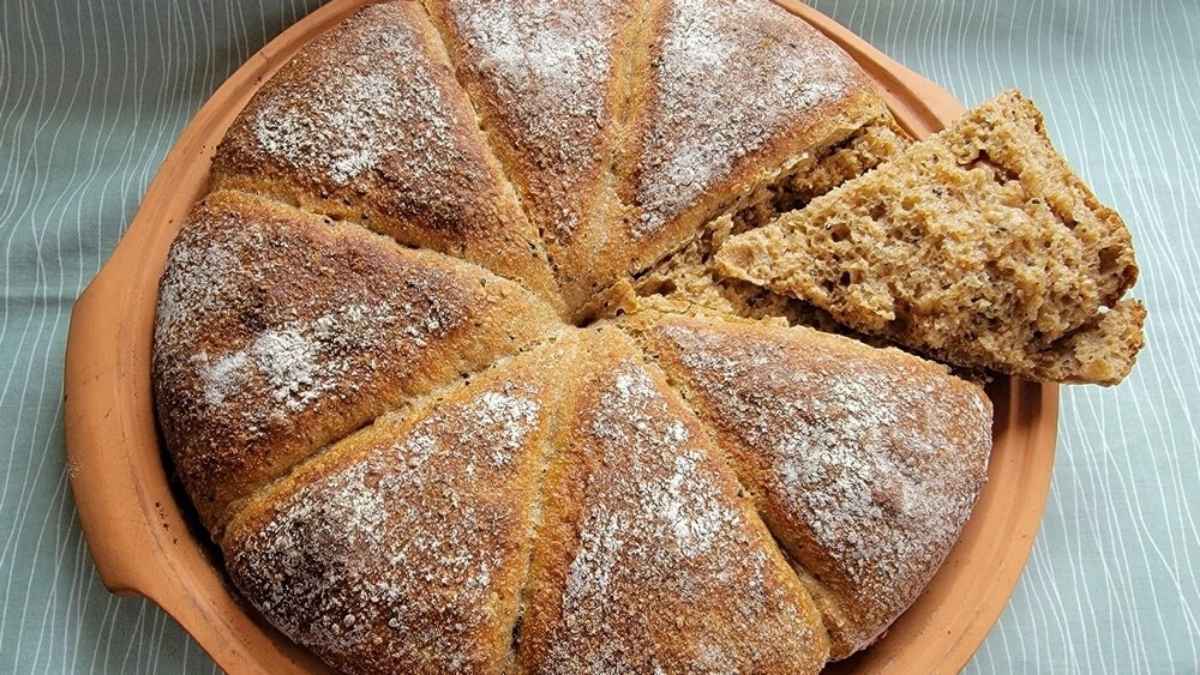
If you’re using a wedding cake, you might want to know where this whole idea came from. The story is far older — and a lot stranger — than most couples expect.
The Roman Start
Ancient Romans used a mustaceum, a simple loaf made from wheat or barley.
It was broken over the bride’s head as a sign of good luck and fertility.
This early ritual later mixed with stacked buns seen in medieval feasts, which helped shape today’s tall wedding cakes.
Why It Mattered
Breaking bread in public showed community blessing.
Romans believed sharing food created a social bond, almost like a contract.
It was a way of saying, “We support this marriage,” and people took that seriously.
How This Shows Up Today
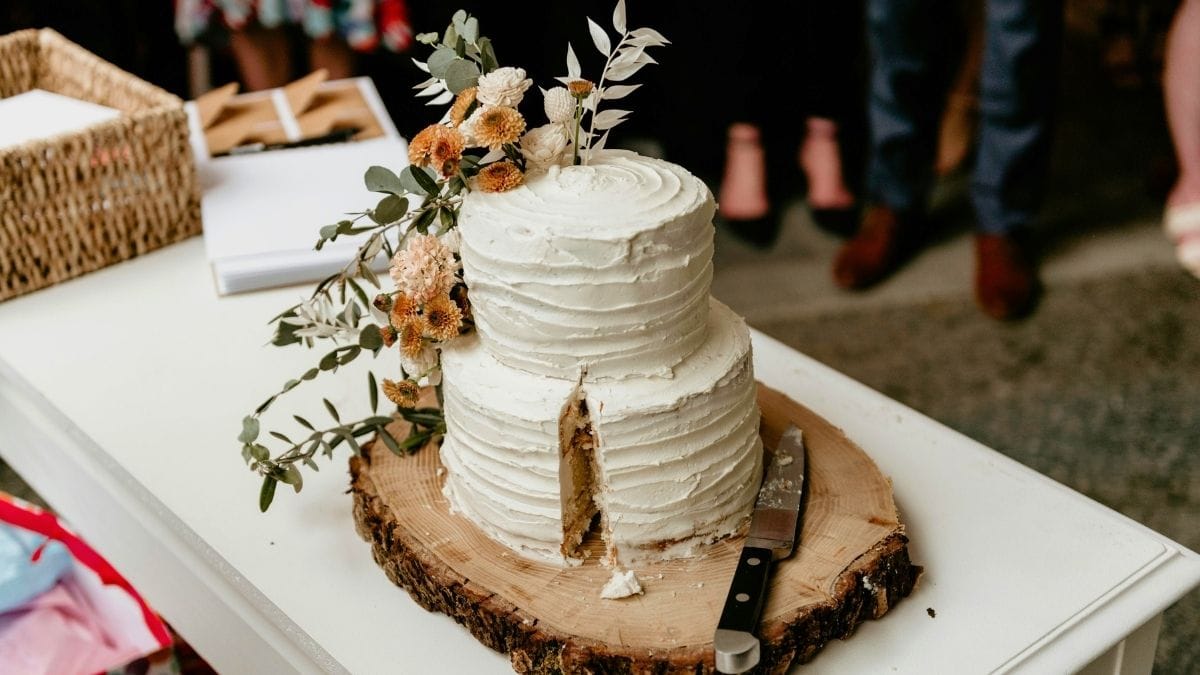
The modern cake-cutting comes from that same idea.
Now it feels more like a photo moment.
But it still marks the couple’s first shared task, even if the meaning has shifted.
How You Can Use This History
If you want a real nod to wedding cake history, add a small mustaceum-style loaf at your ceremony.
You can break it, share it, or keep it symbolic with a short line in the program that explains the tradition.
Ask a bakery for a rustic wheat-and-herb loaf with a touch of honey.
It works as a prop, and it connects your modern wedding to an old ritual.
If you want, I can write the exact program line for you.
Paebaek: Dates and Chestnuts in a Korean Wedding Tradition
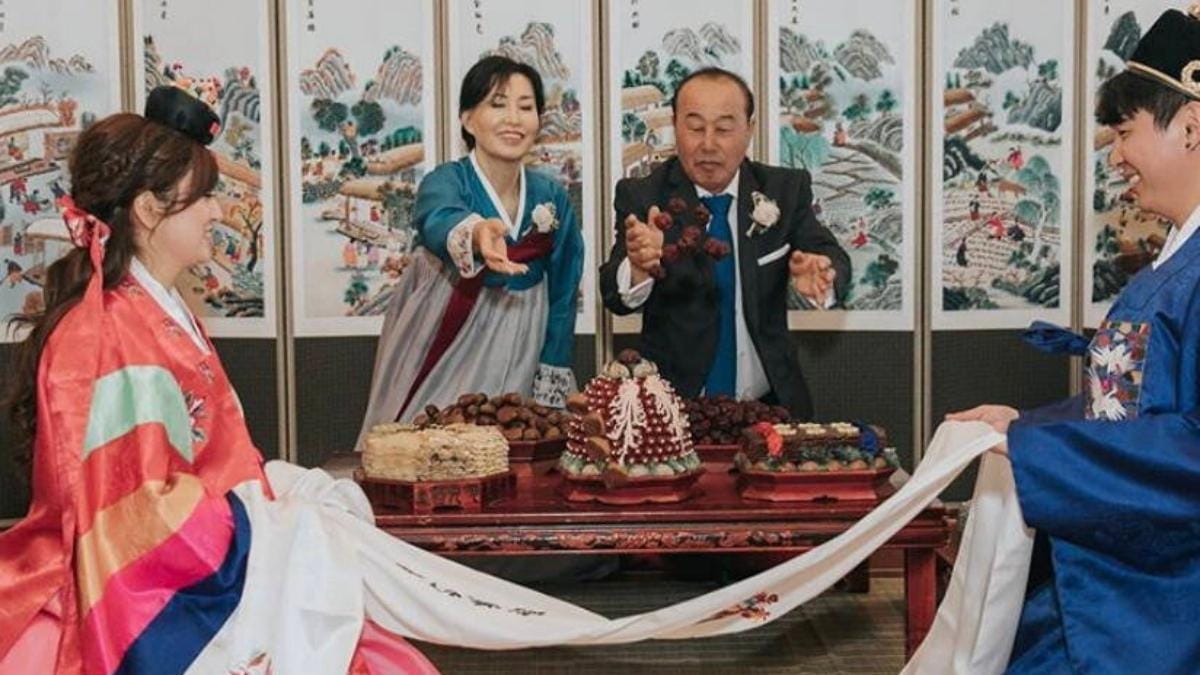
If you want to honor Korean culture but don’t know how Paebaek works, this breaks it down so you can include it with respect and clear meaning.
What Paebaek Is
Paebaek is a private bowing and tea ceremony held after the main wedding.
The couple offers deep bows to their parents.
Then dates and chestnuts are presented and tossed to show hopes for children and family blessings.
Where the Meaning Comes From
The ritual comes from long Korean and Confucian custom.
Dates (jujubes) stand for having a child soon.
Chestnuts stand for a long family line.
Parents toss the fruits, and the couple tries to catch them.
People treat it as a playful prediction, not a literal count.
How It’s Used Today
Many Korean couples still hold Paebaek at weddings.
Diaspora families often add it inside the reception so guests can learn from it.
Some venues even offer Paebaek sets or hanbok rentals.
How You Can Set It Up Well
Help guests by adding a short note in the program about the meaning of the dates and chestnuts.
If there are allergies or food rules, use wooden or faux props.
Photographers should stand close and use a fast shutter to catch the toss.
Ask the couple if they want the fertility part highlighted or softened.
If they want neutral wording, say, “These items represent blessings for the couple’s future.”
If you want, I can write a program line for your Paebaek section.
Ethiopian Coffee Ceremony: How to Use Communal Coffee as a Wedding Blessing
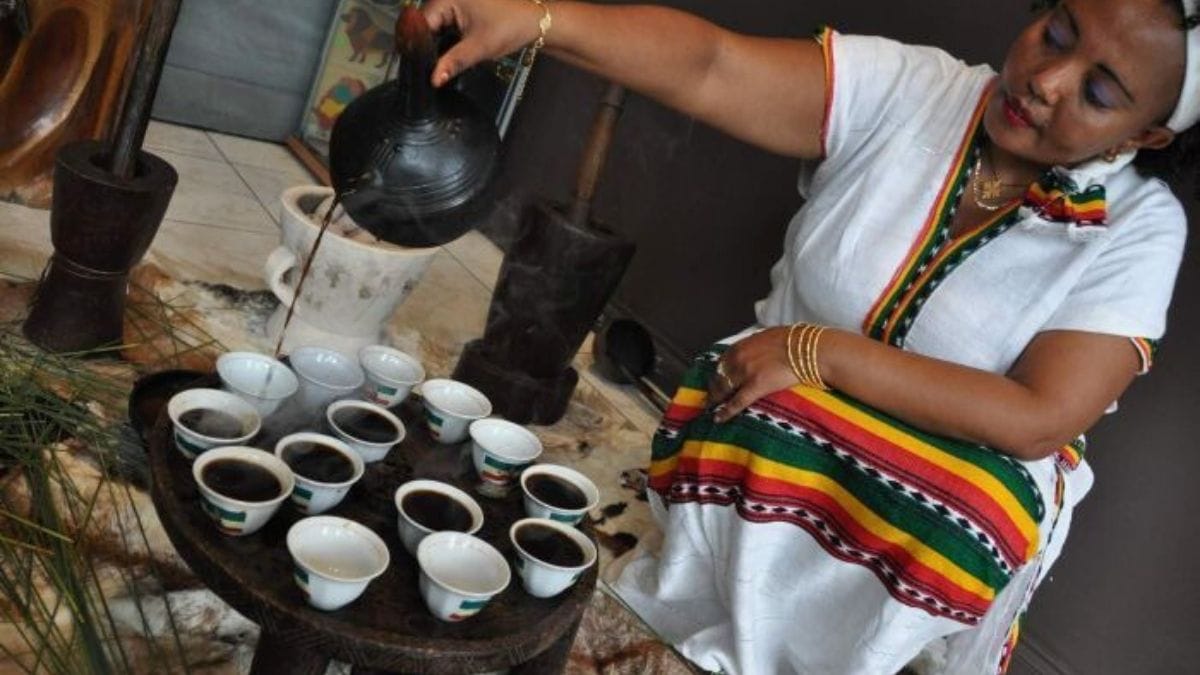
If you want a ritual that brings people together fast, the Ethiopian coffee ceremony does that in a clear and meaningful way.
What the Ceremony Is
The Ethiopian coffee ceremony is a slow, hands-on process done in stages.
Beans are roasted, ground, and brewed in a clay pot called a jebena.
Women traditionally lead the ceremony, and it is a core part of social life in Ethiopia and Eritrea.
Why It Matters
This ritual stands for hospitality, welcome, and community.
National Geographic notes that the smell, sound, and pace build a shared moment that makes people feel close.
Serving the coffee is seen as a blessing for the group.
How It’s Used at Weddings Today
Many Ethiopian couples include it in their wedding day.
Diaspora families often hire a trained host or rent a full setup.
Some choose a small version during the reception so guests can watch each step.
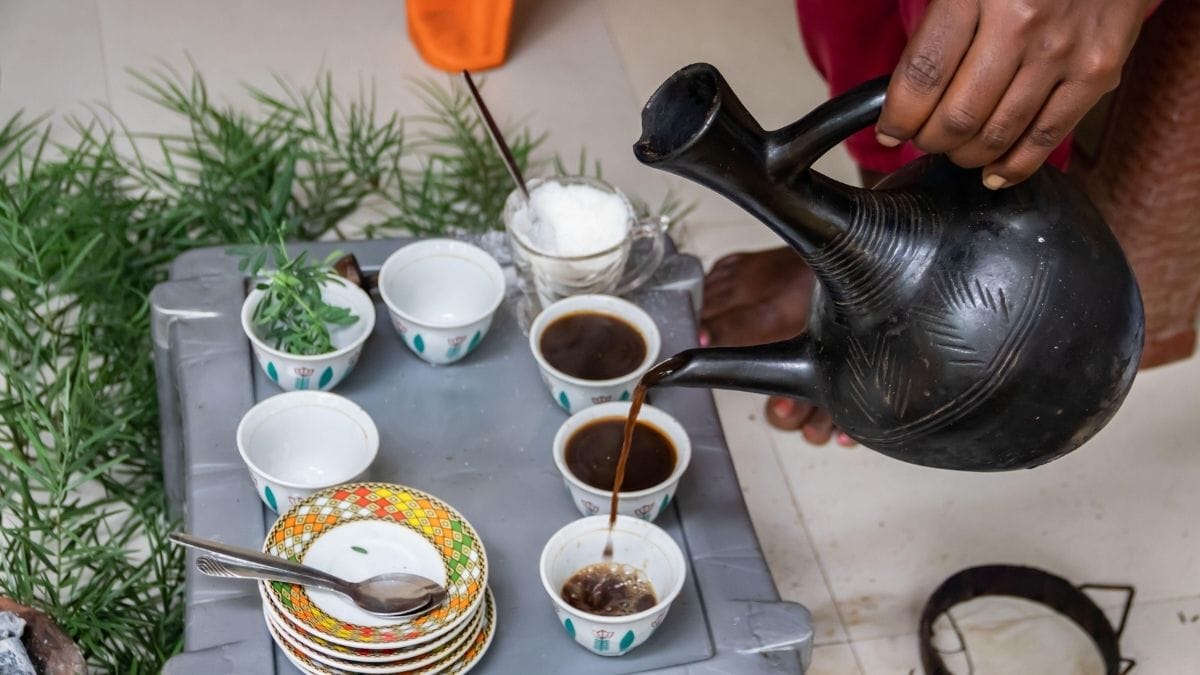
How You Can Add It to a Wedding
Hire someone experienced with the ceremony.
You need a safe, open space because of smoke from roasting.
Plan for 20–40 minutes, but if time is tight, offer a 10–15 minute demo during cocktail hour.
Print a short card that explains the meaning so guests follow along.
How to Keep It Authentic
Reach out to Ethiopian cultural centers or elders for guidance.
Rent or buy a jebena set from trusted vendors.
Give clear credit in the program so guests know the cultural source.
If you want, I can also write the guest explainer card for you.
Conclusion:
These five rituals show how food still links past and present.
Each one — Sofreh Aghd, Jordan almonds, the Roman mustaceum, Paebaek, and the Ethiopian coffee ceremony — carries clear meaning you can use with care and respect.
If you’re planning a wedding, talk with family elders, work with real cultural vendors, and add a short note in your program. Planners can request the one-page cultural checklist.
This helps you honor ancient food traditions at weddings with accuracy.