
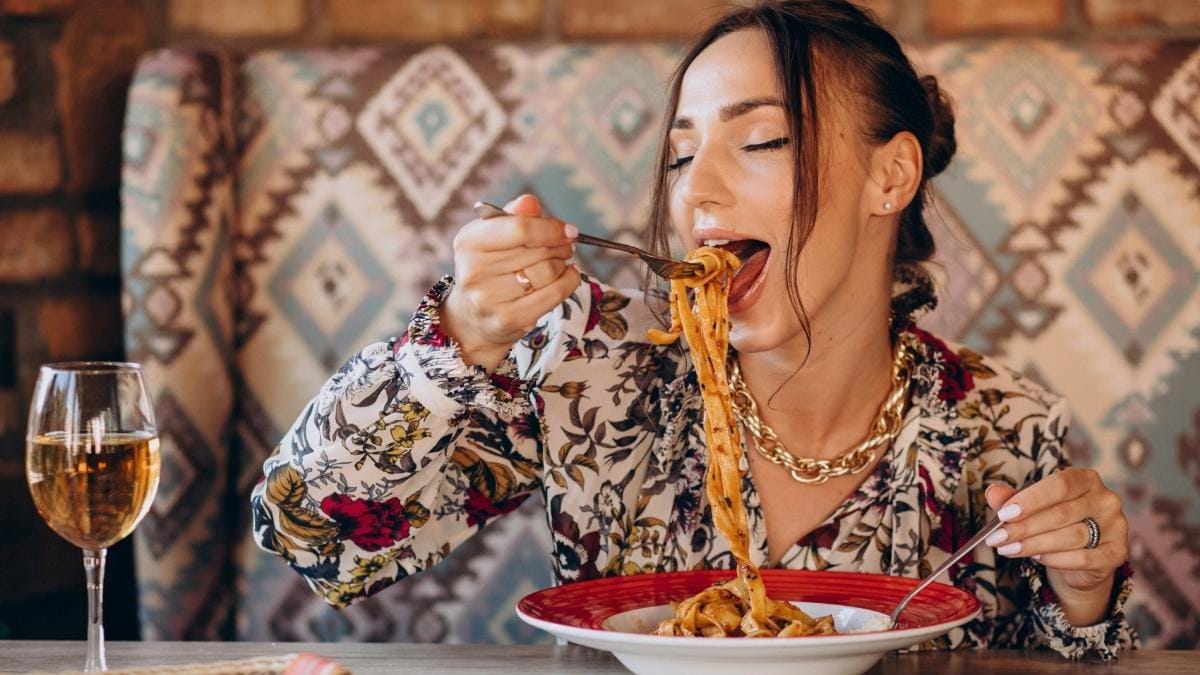
Picture this: a small, steamy bowl of pasta arrives at the table. People lean in. Forks twirl. Conversation keeps flowing.
No one stares at their phone. The bowl is gone in ten minutes. Then the main course — fish or beans or grilled vegetables — appears.
Wine is shared. Laughter increases. This is not a special occasion. It is a normal meal in many parts of Italy.
Across the ocean, pasta often arrives as the whole show. Big plates. Heavy sauces. Seconds offered, then accepted. Plates cleared.
People roll away from the table full and sluggish. The food looks similar. The result is not. In this guide I’ll show why Italians can — and do — eat pasta daily without the waistline struggle many Americans face.
I’ll focus on three core strategies: portion control, ingredient quality, and meal structure.
I’ll explain the difference between a pasta primo and an American main-course plate. And I’ll give clear, usable steps you can try tonight.
Portion Control: The Italian Measure
Italians treat pasta like an opening sentence, not the whole paragraph. In most homes and trattorie, pasta is a primo — the first course. It is meant to whet the appetite, not overwhelm it.

A typical Italian portion for an adult is about 80 grams of dry pasta. That is roughly 2.8 ounces dry.
Once cooked, it usually becomes about 180–200 grams — roughly 6.3–7.1 ounces cooked. This is what lands on the table as a neat, satisfying bowl.
Compare that to the American-style main-course plate. Restaurant servings, and many at-home portions, commonly range from 300–400 grams cooked — that’s 10.6–14.1 ounces on the plate.
That cooked portion is equivalent to roughly 130–180 grams dry (about 4.6–6.3 ounces dry). In short: the American main-course serving is often one-and-a-half to two times bigger, sometimes more.
Why does this matter? Calories add up fast. But portion is not just math — it is also psychology.
A smaller, composed bowl signals that the meal has more parts to come. You eat with a different pace and expectation.
Italian portion control is culinary etiquette as well as nutrition. You feel satisfied, not stuffed.
Ingredient Quality: Less Is More, But Better
Italian cooking prizes a few excellent things over many mediocre ones. A simple plate of spaghetti al pomodoro uses ripe tomatoes, extra-virgin olive oil, a little garlic, a basil leaf, and maybe a pinch of salt.
That’s it. The dish delivers flavor through quality, not heavy creams or a mountain of butter.
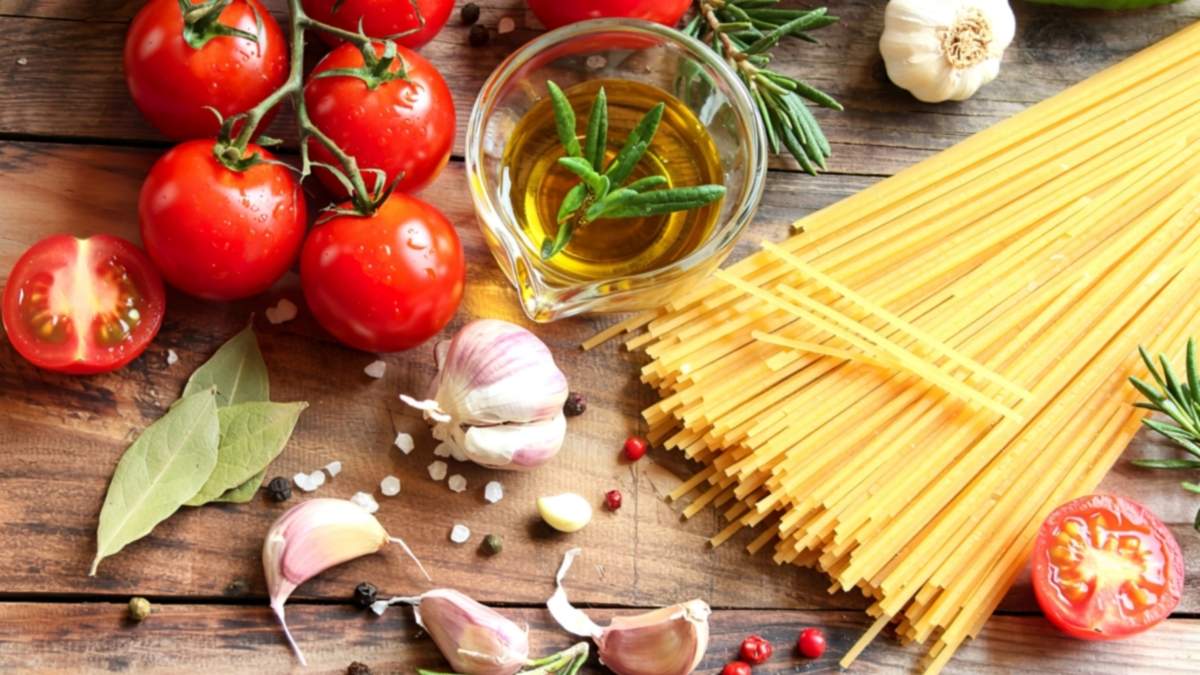
When you use good ingredients you need less of them to feel satisfied. Fresh tomatoes have bright acidity that wakes your palate.
Olive oil carries fat and flavor in small amounts. A little Parmigiano-Reggiano goes a long way. This economy of taste keeps dishes lighter without skimping on pleasure.
Think of the classic, short ingredient list:
- 80 g dried pasta (per person)
- 200 g fresh tomatoes or 120 g canned San Marzano tomatoes
- 1–1.5 tablespoons extra-virgin olive oil
- 1 clove garlic, basil leaves, pinch of salt
- Optional: 1–2 tablespoons grated cheese
These are small measures. But they pack power when each element is high quality. A bright tomato, an aromatic basil leaf, and a good oil create satisfaction
Americans often chase that satisfaction with heavy creams, extra cheese, and large meat additions. Those choices raise calories quickly.
Quality also affects digestion. Whole, minimally processed ingredients tend to be more filling per calorie.
Fresh vegetables and beans added to a pasta course bring fiber and volume. This lets you enjoy pasta daily while keeping overall energy intake balanced.
Meal Structure: Primo, Secondo, and the Mediterranean Rhythm
The Italian table is a sequence. It shapes appetite and behavior.
First comes the antipasto sometimes — a few olives or a slice of cured prosciutto. Then the primo, often pasta.
After that, the secondo — fish, meat, or legumes — served with a side of vegetables. Meals end with fruit, coffee, or a small dessert.
The portions at each step are modest. The whole sequence creates variety but not excess.
This structure encourages several friendly habits:
- Slower eating. You take time between courses. The brain registers fullness better when food is spaced out.
- Social pacing. Conversations last; you smell, sip, and taste. You are less likely to shovel food quickly.
- Balanced plates across the meal. The main protein and vegetables often carry more volume than the pasta itself.
- Al dente cooking. Pasta is cooked al dente — firm to the bite. This texture slows digestion and can lower the post-meal blood sugar spike compared with overcooked pasta.
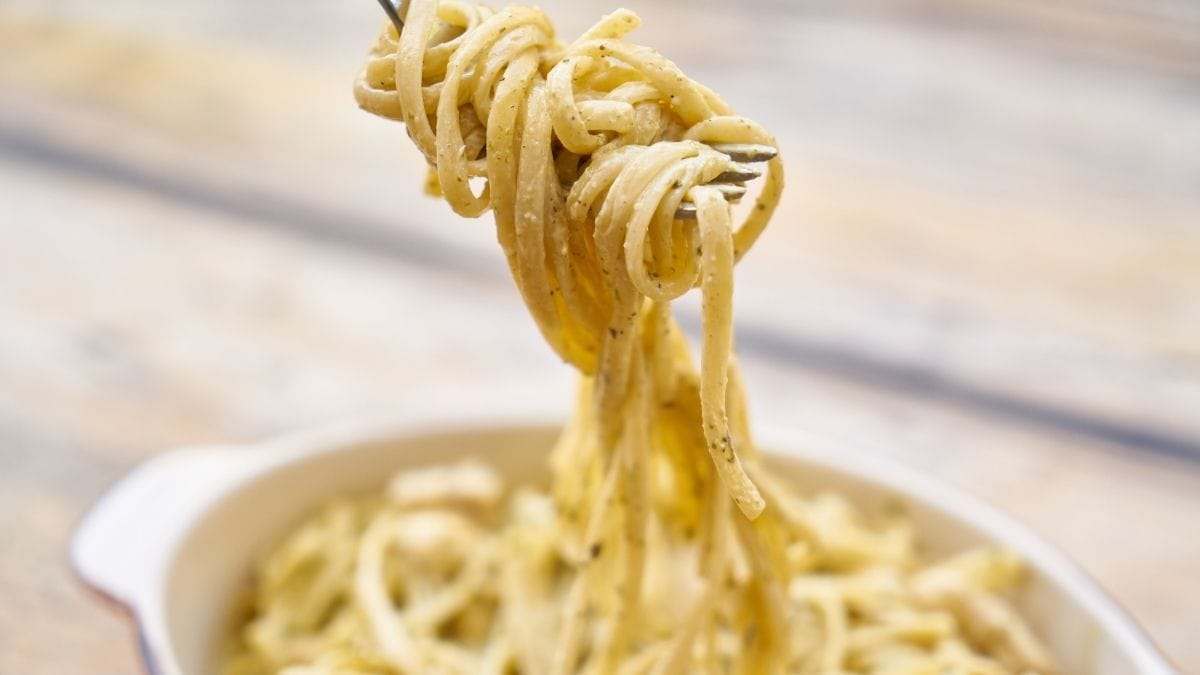
Americans often compress everything into a single plate. Protein, pasta, sauce, and sometimes side salads are all piled together.
The result is immediate satiety — but also an earlier signal to eat again later, because large portions of refined carbs that are soft and quickly eaten can raise blood sugar quickly and fall just as fast.
The Mediterranean lifestyle that accompanies these meals is part of the equation too.
Walking after dinner, shared errands to the market, and fewer solo, screen-focused meals all nudge behavior away from mindless overeating. Food is communal, not merely fuel.
How to Eat Like an Italian Without Moving to Rome
You don’t need an espresso machine or a villa. You can adopt the strategies that matter. Here are practical swaps and routines to try.
Start with portioning. Measure out 80 grams of dry pasta per person. Use a kitchen scale the first few times. Notice how that single, smaller bowl satisfies when paired with a second course.
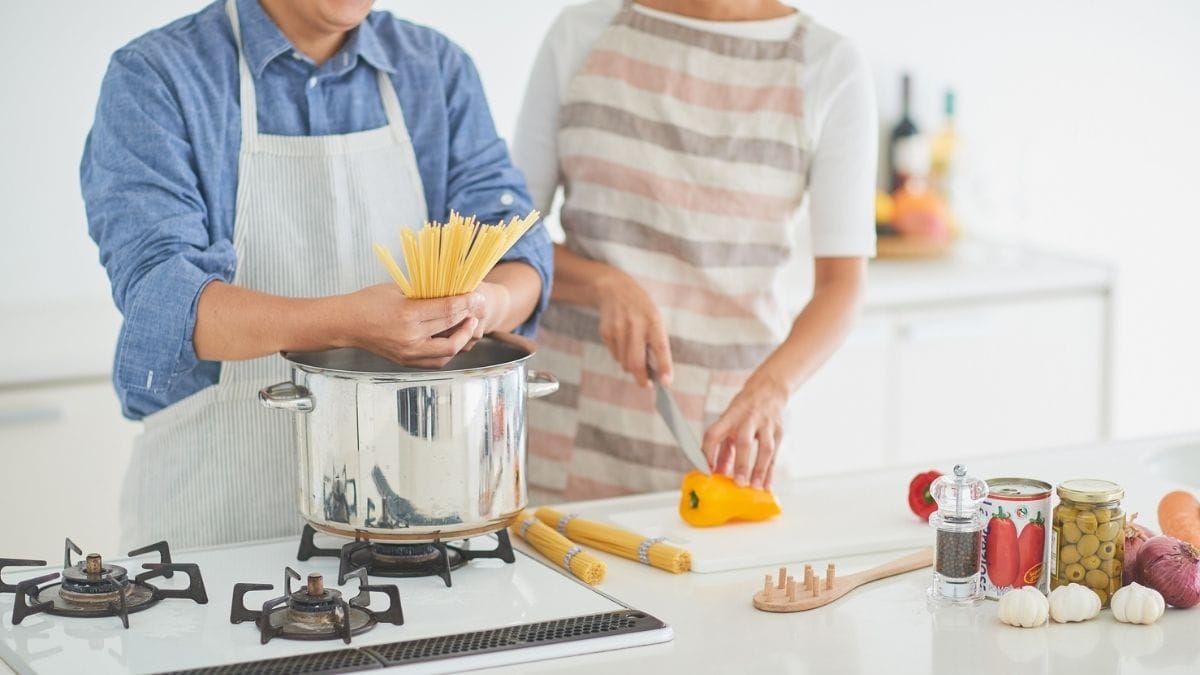
Cook al dente. Test a strand a minute before the package time. It should be firm, with a slight resistance. Al dente pasta takes longer to break down in the body. It keeps you feeling fuller, longer.
Upgrade a few ingredients. Choose a good extra-virgin olive oil, a can of high-quality tomatoes, and a small wedge of flavorful cheese.
Use herbs — basil, parsley — liberally. These swaps add pleasure with little added calorie cost.
Restructure your dinner. Make pasta the opener, not the centerpiece. Try this simple three-step home menu as a template:
- Antipasto: a small plate of leafy greens dressed with lemon and a teaspoon of oil, or a few marinated vegetables.
- Primo: 80 g dry pasta, prepared simply (pomodoro, aglio e olio, or a vegetable-forward sauce).
- Secondo: a modest protein portion (grilled fish, legume salad, or roasted chicken thigh) with a generous side of seasonal vegetables.
If you’re feeding family or friends, put the pasta in the middle of the table so people serve themselves smaller bowls. Resist the “seconds” habit by offering fruit or espresso after the second course.
Slow your pace. Put down your fork between bites. Talk. Let the food last. You’ll eat less and enjoy more.
Move a little after the meal. A short 10–20 minute walk is common in Italy and helps digestion. It’s not about burning every calorie. It’s about rhythm — food, conversation, movement.
A One-Week Experiment (Try It Tonight)
Want proof? Try this seven-day test. Eat pasta up to three times this week using the Italian rules below. Track how you feel.
Rules:
- Measure: 80 g dry pasta per person for each primo.
- Cook al dente.
- Use high-quality, simple ingredients (tomato, oil, garlic, herbs).
- Serve a second course: protein + vegetables.
- No seconds of pasta. Instead, offer fruit, cheese, or coffee after the secondo.
- Walk 10–20 minutes after dinner.
- Eat at a table. No devices.
You may be surprised. The smaller pasta portion, paired with a protein-rich second course and slow conversation, often leaves people pleasantly full and more energetic the next day. It also helps reduce late-night snacking.
If you want a starter recipe, try this pared-back dinner for two:
Ingredients
- 160 g dry spaghetti (80 g per person)
- 400 g ripe tomatoes, diced (or one 400 g can of quality tomatoes)
- 2 tbsp extra-virgin olive oil (1 tbsp per person, total used across dishes)
- 2 cloves garlic, a handful of basil, salt to taste
- A small piece of Parmigiano for grating (optional)
Method: Simmer tomatoes gently with garlic and oil for 10–12 minutes. Cook pasta to al dente. Toss pasta in sauce, briefly. Serve in small bowls. Follow with a simple grilled fish and a plate of roasted greens.
Final Thought and Call to Action
Pasta isn’t the enemy. How you portion it, what you put on it, and how you build your meal around it make the difference. Italy’s secret isn’t magic. It’s a set of habits that value balance, taste, and company.
Try the one-week experiment. Measure the pasta. Cook it al dente. Eat it as a primo. Sit at a table. Walk a little. Notice how you feel.
If you’d like, I can send you a 7-day dinner plan that follows these rules — with simple grocery lists and exact weights in grams and ounces for each meal.
Say “Send the 7-day plan” and I’ll write it in plain language, ready to cook. Buon appetito.