
Americans cook eggs wrong. Not sometimes. Every single time.
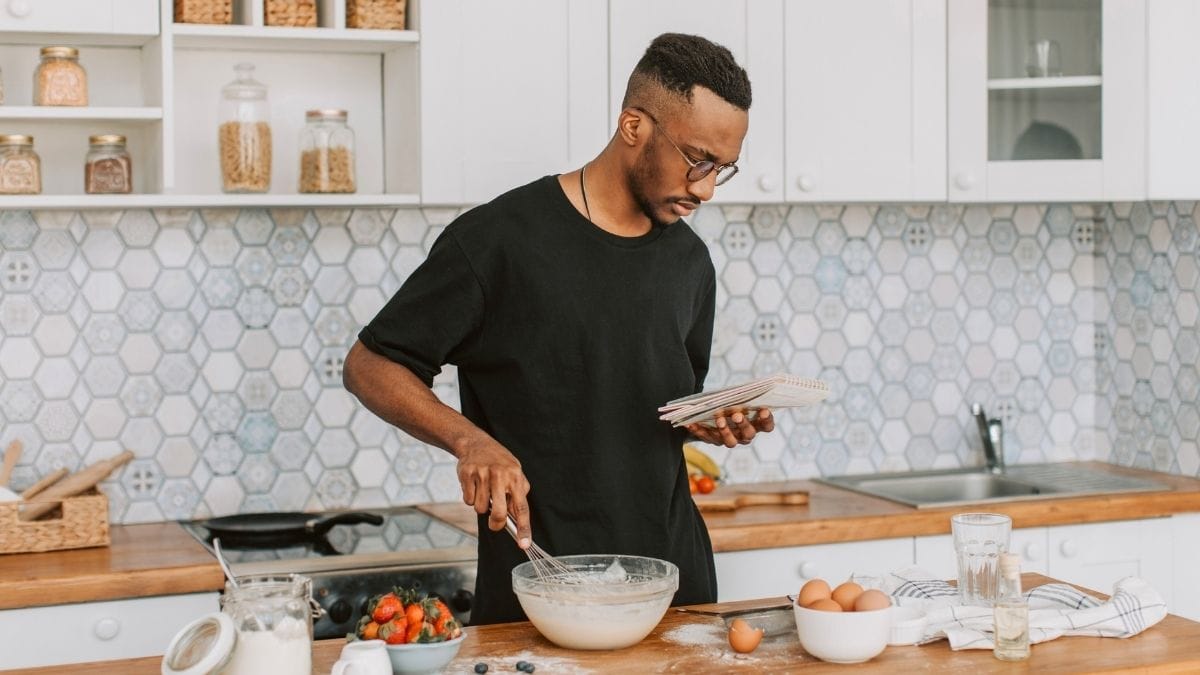
You stand at your stove with butter melting slowly in a cold pan. You crack an egg and watch it spread into a pale, rubbery circle. Maybe you scramble it into dry yellow curds. Maybe you poach it in simmering water until it looks like hospital food.
This is the mistake.
In Spain, we drop eggs into hot olive oil and watch them bloom. The white puffs into crispy lace called puntilla. The yolk stays liquid gold. The whole thing tastes like sunshine with a crunch. You eat it on bread, on potatoes, on yesterday’s rice. You never go back to butter.
This is not complicated cooking. It is one egg, hot oil, and sixty seconds of attention. But it changes breakfast completely.
Why Americans Miss This Every Time
Americans treat eggs like babies. Low heat. Gentle stirring. Butter whispered across a warm pan. You are taught that eggs need kindness.
Spanish eggs need the opposite. They want heat. They want olive oil that shimmers and hisses. They want a fast, hot bath that sets the white immediately and leaves the center glowing.
When you cook eggs slowly, the proteins get tough. The white turns rubbery. The yolk overcooks. You get no texture, no contrast, no joy.
When you cook eggs fast in hot oil, magic happens. The edges crisp into golden lace. The white stays tender. The yolk stays runny. You get crunch against cream in every bite.
This is what every Spanish grandmother knows by ear. This is what every bar in Madrid does without thinking. This is what you are missing.
What Puntilla Actually Means
Puntilla is the Spanish word for that crispy, golden lace that forms where egg white meets hot oil. It looks like delicate bubbles frozen in place. It tastes salty and crunchy, like the best potato chip edge you ever ate.
You cannot make puntilla with butter. You cannot make it with low heat. You need olive oil between 175°C and 185°C. At that temperature, the outer layer of egg white dehydrates instantly. Tiny bubbles form and set. The lace happens fast.
PUNTILLA
The Art of Crispy Golden Lace
Crispy, golden lace that forms when egg white meets hot oil — delicate bubbles frozen in place, tasting salty and crunchy like the best potato chip edge.
Temperature is Everything
If your oil is just warm, the egg spreads flat. The white gets chewy. You never get the crisp. If your oil is too hot, the lace burns and tastes bitter.
The sweet spot is simple: hot enough to bubble immediately, not hot enough to smoke. Your ear will tell you when you are there.
What You Need
This is not fancy cooking. You already own everything.
For the egg:
- 1 large fresh egg
- 3 tablespoons extra virgin olive oil
- A pinch of good salt
Equipment:
- A small nonstick or carbon steel pan
- A slotted spoon
- A small cup for cracking the egg
That is it. No special ingredients. No fancy tools. Just heat and attention.
The Technique, Step by Step
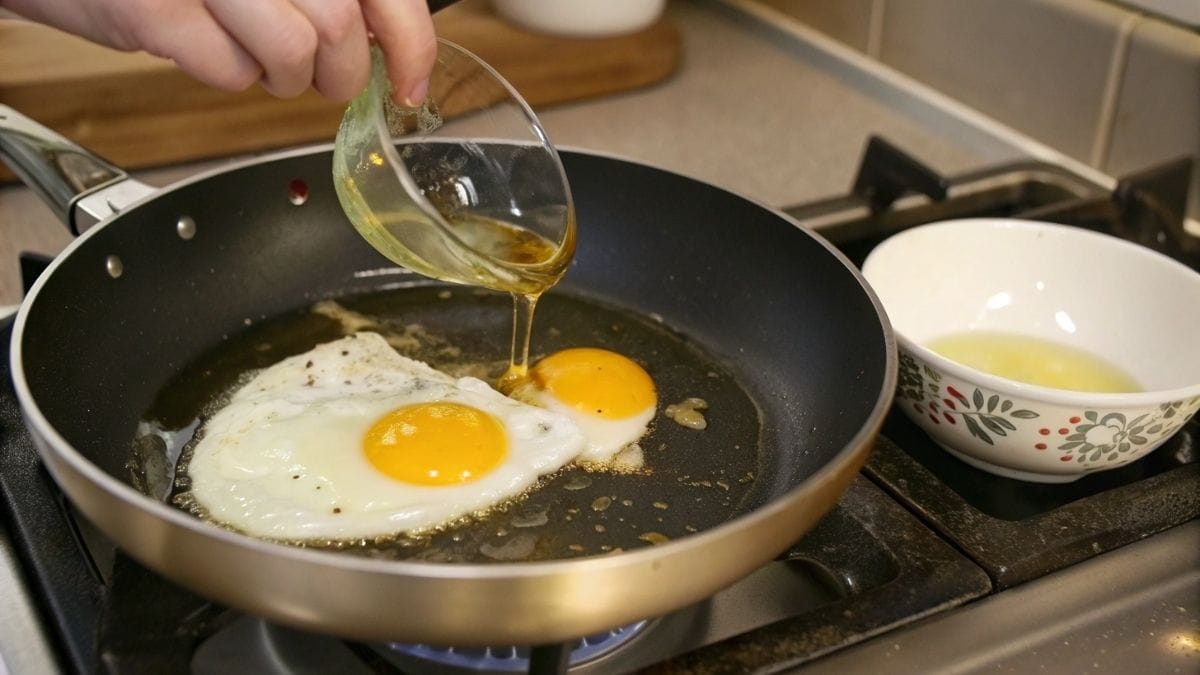
Heat your pan on medium-high. Add the olive oil. Wait until it shimmers and a wooden toothpick dipped in makes tiny bubbles. This takes about two minutes.
Crack your egg into a small cup. This matters. You want a clean drop without shell bits or drama.
Bring the cup close to the oil surface. Slide the egg in gently. The white will balloon and hiss. This is correct.
Tilt the pan slightly so oil pools to one side. Use your spoon to gently scoop hot oil over the edges of the white. Do this for ten seconds. This builds the lace. Keep the oil away from the yolk or it will turn opaque.
Watch the white. When the outer edges are crisp and golden and the inner white is no longer glassy, you are done. This usually takes 45 to 75 seconds total.
Lift the egg with your slotted spoon. Let excess oil drain back into the pan. Slide the egg onto your plate. Sprinkle with salt immediately.
Eat it now. Not in five minutes. Now.
What You Should See
A perfect Spanish fried egg has three parts. Golden, crispy lace at the edges. Tender, set white in the middle. A bright, runny yolk that trembles when you move the plate.
If the lace is pale, your oil was not hot enough. If it tastes bitter, you went too long. If the white is rubbery, you cooked it too slowly.
The sound tells you everything. When the egg hits hot oil, it should hiss loudly. As the water cooks off, the sound softens. When it gets quiet, pull the egg. That is your timer.
Why Olive Oil Works Better Than Butter
People say butter has more flavor. In Spain, we say the egg has flavor. The oil just carries it.
Extra virgin olive oil handles high heat better than people think. Good olive oil smokes around 190°C to 210°C. We cook at 175°C to 185°C. We stay below the smoke point, above the soggy zone.
The oil does not soak into the egg. Most of it drains back into the pan. What stays behind tastes fruity and green and makes the crispy edges taste like a snack.
Butter burns at these temperatures. Butter makes things taste like butter, which is fine if you want buttery eggs. But if you want the egg to taste like itself, with texture and brightness, use olive oil.
The Classic Spanish Plate
In Spain, we put these eggs on soft potatoes cooked with onion. We call it huevos con patatas a lo pobre, which means poor man’s eggs and potatoes. This is a terrible name for one of the best things you can eat.
Slice 500 grams of potatoes very thin. Slice one small onion. Put them in a wide pan with three tablespoons of olive oil and a pinch of salt. Cover and cook on medium for 12 to 15 minutes, stirring now and then. You want them soft and glossy, not brown.
Push the potatoes to the sides of the pan. Fry your eggs one at a time in a separate small pan using the method above. Put each egg on a bed of potatoes. Add salt.
The soft potatoes catch the runny yolk. The crispy egg gives texture. The sweet onions balance the salt. You get everything you want from breakfast.
Common Mistakes and How to Fix Them
Oil not hot enough. The egg spreads and the white turns rubbery. Fix this by heating longer. Test with a breadcrumb. If it sizzles right away, the oil is ready.
Cooking two eggs at once. Two eggs cool the oil down. Fry one at a time. It takes two minutes total for two perfect eggs instead of four minutes for two sad eggs.
Basting the yolk. Hot oil on the yolk turns it opaque too fast. Baste only the white.
Too much salt in the oil. Salt burns and tastes bitter in hot oil. Salt the finished egg instead.
Using old oil. Old oil tastes flat and burns early. Use fresh oil every time. You only need a few tablespoons.
The first time feels scary. The oil hisses. Things happen fast. By the third time, this feels easier than scrambling. By the tenth time, you do it without thinking.
If You Worry About Splatter
Keep the cup close to the oil when you pour. Do not drop the egg from high up.
Make sure the egg is dry. If the shell was wet, pat the egg with a paper towel after cracking it. Water pops loudly in hot oil.
Tilt the pan away from you when you add the egg. This keeps the oil on the far side.
Use a mesh splatter screen if it helps you feel brave. Remove it before you scoop the egg out.
After two tries, the fear goes away. The noise is just noise.
Simple Variations
Garlic oil. Warm a smashed garlic clove in the oil for 30 seconds before you add the egg. Remove the garlic. Fry the egg. You get perfume without burnt garlic.
Smoked paprika. Dust the egg with a tiny pinch of pimentón right after it comes out. Spanish smoke without fire.
On tomato toast. Rub toast with garlic. Grate a ripe tomato over it. Add olive oil and salt. Put your egg on top. Cut it with a knife and fork. The yolk becomes the sauce.
On greens. Cook spinach or asparagus with garlic and lemon. Put the egg on top. Breakfast for people who say they do not like breakfast.
Do not add heavy sauces. The point is the crispy lace and the runny yolk.
Five Days to Make This Normal
5-Day Egg Challenge
From beginner to intuitive cook
Egg on Toast
Learn the lace with salt and black pepper
Egg on Roasted Potatoes
Notice how crunch works with soft vegetables
Two Eggs on Tomato Toast
This becomes lunch
Egg on Rice with Herbs
The yolk makes sauce
Egg on Sautéed Greens
This feels light at lunch
After 5 days, you stop measuring.
You listen to the oil instead.
The Nutrition Question
One tablespoon of olive oil is 120 calories. Most of it stays in the pan. A fried egg absorbs less than one tablespoon.
A plate with one egg, soft potatoes, and greens is about 400 to 500 calories depending on how generous you are. You can eat this and feel light two hours later.
The technique is portion control dressed as pleasure. When breakfast tastes this good, you eat once and move on with your day.
What This Actually Costs
Good eggs cost €3 to €4 for a dozen. Decent olive oil costs €7 to €12 per liter. Potatoes cost €1.20 per kilo. One breakfast costs less than €2.
This is poor food that tastes rich. The technique makes it feel expensive.
Why This Changes Everything
Most people think cooking is about recipes. You follow steps. You get results.
This is different. This is about heat control. About listening. About understanding that fast and hot can be gentle if you pay attention.
Once you learn this, you see eggs differently. You see that texture matters. That crispy edges and runny yolks together create joy. That olive oil can be your friend.
You also learn to trust your senses. The sound of hot oil. The sight of golden lace. The smell of good olive oil meeting fresh egg. These things teach you more than any recipe.
This is how Spanish grandmothers cook. By feel. By sound. By decades of morning eggs. You can learn this in a week.
What to Do Right Now
Put a small pan on your stove. Pour in enough olive oil to coat the bottom generously. Turn the heat to medium-high.
While the oil heats, crack one egg into a small cup.
When the oil shimmers, slide the egg in. Listen to it hiss. Spoon hot oil over the white edges for ten seconds. Watch the lace form.
When the white is set and the lace is golden, lift the egg out. Put it on a slice of tomato or a piece of toast. Sprinkle with salt.
Eat it standing at your counter.
You will taste the difference immediately. Crispy. Tender. Bright. This is what eggs should be.
Tomorrow, you will make another one. The day after that, you will make two. By next week, you will wonder why you ever cooked eggs any other way.
This is not about being fancy. This is about being right. Hot oil. Fresh egg. One minute. Everything changes.
Welcome to Spanish breakfast. You are going to like it here.