
Your birth certificate says you’re 45. But your cells might tell a different story. One where you’re biologically 52. Or with the right changes, just 40.
Modern life is making us age faster than our parents did. You feel tired all the time. Your brain feels foggy. Your body aches more than it should. This isn’t normal aging. It’s accelerated aging caused by how we live today.
Here’s what you’ll learn: The exact lifestyle factors that speed up aging (backed by 2025-2026 research).
How to measure your real biological age. And five proven ways to slow or reverse aging by 2-6 years. These aren’t theories. They’re tested methods with real results.
Understanding Biological vs Chronological Age
You have two ages. Your chronological age is the years you’ve lived. Your biological age is how old your cells actually are.
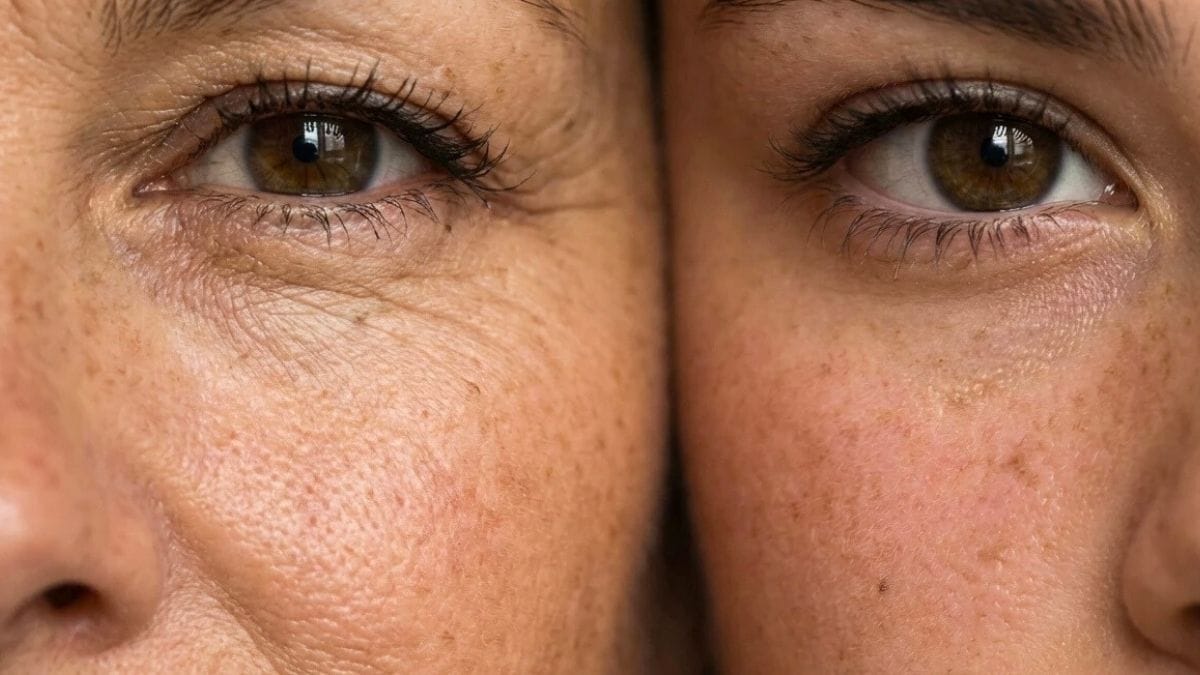
Scientists measure biological age through epigenetic clocks. These tests read DNA methylation patterns in your cells.
Think of them as cellular wear and tear markers. A 2025 University of Florida study found brain age can differ from real age by up to 10 years based on how you live.
The UK Biobank studied 27,500 people in 2025. They found sleep quality alone affects brain age by 1-3 years. Epigenetic clocks now predict how long you’ll live better than your birth year does.
You can test your biological age today. Tests cost $75 to $500 in 2026. Many use simple blood draws or cheek swabs. The results tell you if your lifestyle is helping or hurting you.
Modern Lifestyle Factor #1 – Sleep Deprivation’s Aging Impact

Poor sleep ages your brain fast. A 2025 Karolinska Institutet study tracked 27,500 adults. Each drop in sleep quality aged their brains by 0.5 years. That adds up quick.
When you sleep less than 6 hours, bad things happen. Your brain can’t clean itself properly. There’s a system called the glymphatic system.
It flushes out toxic proteins while you sleep. Skip sleep and these proteins build up. Beta-amyloid accumulates. This is the same protein linked to dementia.
A 2025 study published in PMC found chronic sleep loss accelerates cognitive decline. Memory gets worse.
Executive function drops. Attention span shrinks. Another study found sleeping less than 6 hours increases dementia risk by 75%.
The inflammation in your brain increases by 10% with poor sleep. Your brain literally swells and ages faster. But here’s good news: better sleep can reverse some of this damage.
Modern Lifestyle Factor #2 – Ultra-Processed Foods

Ultra-processed foods (UPFs) are more than just unhealthy. They age you at the cellular level. These are foods with ingredients you don’t have in your kitchen. Think packaged snacks, instant noodles, frozen meals, and fast food.
A 2024 Monash University study tracked 16,055 people. For every 10% increase in UPF consumption, biological age increased by 2.4 months. That’s separate from calories or nutrients. The processing itself causes aging.
UPFs now make up 40% of what people eat in Western countries. High-temperature processing creates harmful compounds.
These increase oxidative stress in your body. Your gut microbiome gets disrupted. Food matrix breaks down.
Studies link UPFs to sarcopenia (muscle loss), telomere shortening, cognitive decline, and frailty.
Italian and US populations show the same pattern. Eat more than 14% of your calories from UPFs and biological aging speeds up.
Modern Lifestyle Factor #3 – Sedentary Behavior and Screen Time

Sitting kills. A 2025 Scientific Reports study tracked 12,504 adults. Here’s what they found: Sitting 4-6 hours increases aging risk by 30%.
Sitting 6-8 hours increases it by 25%. Sitting more than 8 hours increases it by 58%.
Screen time is worse than other sitting. The UK Biobank studied 241,125 people.
Leisure screen time has a robust effect on GrimAge acceleration. This is a genetic aging marker. The effect is strong (β = 0.69, p < 0.001).
Your skeletal muscle changes at the molecular level from screen time. This happens even if you’re not overweight. There’s an independent pathway that ages you separate from BMI effects.
The dose-response is linear. More sitting equals more aging. Every hour counts. Your body wasn’t built to sit all day.
Modern Lifestyle Factor #4 – Chronic Stress

Stress hormones age you fast. Cortisol accelerates telomere shortening. Telomeres are caps on your chromosomes that protect your DNA. When they get shorter, your cells age.
Chronic stress creates a sustained inflammatory state. Your whole body stays inflamed. This affects multiple organ systems at once.
A 2025 University of Florida study found lower stress levels equal measurably younger brain age.
Here’s what matters: perceived stress affects you more than actual stressors. How you think about stress changes how it affects your body.
Meta-analyses confirm the inverse relationship between perceived stress and telomere length.
Chronic stress elevates cortisol. This impairs your sleep. It increases systemic inflammation. Your stress appraisals directly correlate with biological age markers. But stress management techniques can reverse this damage.
Evidence-Based Intervention #1 – Structured Exercise

Exercise reverses aging at the cellular level. A 2025 review in the Aging journal studied sedentary middle-aged women. After just 8 weeks of combined aerobic and strength training, their epigenetic age dropped by 2 years.
Both types of exercise matter. Aerobic training improves cardiovascular fitness.
Your VO2 max (oxygen uptake) strongly correlates with slower epigenetic aging. Older men with higher oxygen uptake show significantly slower aging.
Resistance training protects your nerves and prevents muscle loss. The benefits reach your muscles, heart, liver, fat tissue, and gut. Exercise acts as a “geroprotector” with measurable reductions across all organs.
Structured exercise works better than casual activity. You need a plan. The sweet spot is moderate to high intensity. This creates hormesis – a beneficial stress that makes you stronger. Start with 30 minutes, 5 days a week.
Evidence-Based Intervention #2 – Sleep Optimization

You need 7-8 hours of sleep nightly. Multiple 2025 studies confirm this is optimal for healthy aging. Less than 6 hours or more than 9 hours both cause problems.
Sleep quality has four components: consistency, timing, depth, and efficiency. Consistency matters most. Going to bed and waking up at the same time beats occasional long sleep sessions.
Your circadian rhythm needs alignment. Sleep when it’s dark. Wake when it’s light. This affects every cell in your body.
Recovery sleep can reverse some acute sleep deprivation damage. But chronic sleep debt takes longer to fix.
Sleep efficiency correlates positively with keeping your brain young. Here’s how to improve it: Keep your bedroom cool (65-68°F). Make it dark. No screens 1 hour before bed. Same schedule every day.
Evidence-Based Intervention #3 – Whole Food Diet

The Mediterranean diet has the strongest evidence for slowing aging. A 2025 study found the Green Mediterranean diet reduced brain aging proteins significantly. This version adds more plants and less meat.
Focus on minimally processed whole foods. Eat vegetables, fruits, whole grains, nuts, legumes, and omega-3 rich fish. These foods contain polyphenols that protect your cells.
A study found eating 55% of calories from high-carb whole foods makes you 29% more likely to achieve healthy aging at 70.
Your gut microbiome diversity is crucial. Foods high in fiber, prebiotics, fermented dairy, and polyphenols support healthy aging.
Omega-3 supplementation (1,000mg DHA+EPA daily) may slow biological aging over 3 years.
Avoid trans fats, excess sodium, sugary beverages, and processed meats. The gut microbiota dietary index correlates with lower biological aging.
Evidence-Based Intervention #4 – Stress Management & Mindfulness

Meditation reduces cortisol and stress arousal. A 3-month meditation retreat increased telomerase activity in participants. This enzyme rebuilds your telomeres.
Recent research suggests meditation may reduce brain age by up to 6 years.
A 2025 USC study found 30 days of app-guided meditation enhances attentional control across all ages. You don’t need years of practice to see benefits.
Specific practices work best. Mindfulness meditation and loving-kindness meditation show the strongest telomere benefits.
The MEDIT-AGEING trial followed people for 18 months. Meditation improved mental health, emotional regulation, and reduced stress markers.
Start with 10-20 minutes daily. Stress reduction shifts your cognitive appraisals from threat to challenge. This changes how stress affects your body. Consistent practice matters more than perfect sessions.
Evidence-Based Intervention #5 – Social Connection & Purpose

Retirement without engagement speeds up physical and cognitive decline. Staying professionally or socially active keeps your brain in training mode. Your brain needs stimulation to stay young.
A 2023 University of Florida study found supportive relationships link directly to younger brain age.
Social support acts as a buffer against stress-related aging. The WHO Decade of Healthy Aging emphasizes social connection as critical for longevity.
Staying professionally active maintains brain metabolism, neuroplasticity, and vascular health. Cross-generational living reduces isolation and loneliness. Quality of relationships matters more than quantity.
Purpose and meaning protect against stress aging. Find activities that give you a reason to get up each morning.
Volunteer work, mentoring, hobbies, or part-time work all count. Your brain stays younger when it has meaningful work to do.
Creating Your Personalized Anti-Aging Action Plan

Don’t try to change everything at once. Start with 1-2 changes and build gradually. Pick the easiest wins first. This builds momentum.
Track measurable markers. Write down your sleep hours, exercise frequency, and diet quality. Consider getting a biological age test as your baseline. Retest in 6-12 months to see progress.
Expect to wait 8-12 weeks minimum for epigenetic age improvements to show. Combining interventions shows synergistic effects. Small, stable behaviors produce measurable changes over time.
Consistency beats perfection. Behavioral patterns matter more than occasional perfect days. If you miss a day, just start again the next day. Your cells respond to what you do most of the time, not what you do once in a while.
Conclusion:
Modern lifestyles age you faster through poor sleep, ultra-processed foods, sitting too much, and chronic stress. But 2025-2026 research confirms you can slow or reverse biological aging by 2-6 years.
Exercise, sleep, whole foods, stress management, and social connection all work. Choose one intervention this week. Track your progress. Your cells will thank you.