

You hit the gym four days a week. You eat well. You think you’re doing everything right.
But if you’re sitting for 8 or 9 hours every day — at your desk, in your car, on your couch — your body may still be in serious trouble.
Most people don’t know this. They think exercise cancels out long hours of sitting. It doesn’t. Sitting too long is its own health risk, separate from how much you work out.
In this article, you’ll learn what the science actually says about the dangers of sitting too much. You’ll see what happens inside your body when you sit all day. And you’ll get simple, real habits you can start using today — no gym required.
This is not fear-mongering. This is real data. And it should matter to you.
What the Research Actually Says About Sitting Too Long
A 2024 study of 481,688 people found something hard to ignore. People who sat for most of their workday had a 16% higher risk of dying from any cause.
That’s nearly half a million people. Not a small sample.
A separate study in the Journal of the American College of Cardiology found that more than 10.5 hours of sitting per day was strongly linked to heart failure and cardiovascular death — even in people who exercised regularly.

Research published on PubMed shows that every hour of sitting beyond 7 hours a day adds a 5% increase in all-cause mortality risk. That number stacks up fast.
The WHO named physical inactivity a leading cause of death globally in 2024. They also estimated it will cost health systems around $300 billion between 2020 and 2030.
Here’s something important to say honestly: sitting is not exactly as deadly as smoking. Smoking raises the risk of early death by around 180%. Excessive sitting raises it by 10–20%. But that doesn’t mean sitting is safe. It means it’s a serious, ignored risk — one most people completely overlook.
The data is clear. How long you sit matters, separate from how often you exercise.
What Happens to Your Body When You Sit All Day
The damage doesn’t happen all at once. It builds hour by hour, system by system.
Heart: When you sit for long periods, blood flow slows down. Fatty acids build up in your blood vessels. This raises your risk for heart disease, heart attack, and stroke.

Metabolism: Your body burns far fewer calories when you sit. It stops generating energy for muscles that aren’t being used. Over time, this disrupts your hormones and affects how your body manages hunger and weight.
Muscles and Bones: Long hours of sitting weaken your muscles and make your back and legs stiff. Your posture suffers. Your spine takes extra pressure in ways it was never designed to handle.

Brain: Research shows a clear link between sitting — especially screen-based sitting — and depression. A 2023 study in JAMA also connected high sedentary time to increased dementia risk in older adults.
Cancer: An inactive lifestyle raises the risk of several types of cancer. This is not a small or disputed finding.

Aging: Research from CU Boulder and UC Riverside found that millennials sitting more than 60 hours a week are speeding up their biological aging process.
You might be thinking — “But I exercise, so I’m fine.” That’s exactly the myth we need to address next.
Why Your Gym Session Cannot Undo 8 Hours of Sitting
Here’s the part most people get wrong.
A 45-minute workout does not cancel out 8 hours of sitting. It helps. But it doesn’t fix everything. Exercise and sitting are two separate issues your body deals with differently.
Research from the Society of Behavioral Medicine is clear: the healthiest routine combines regular workouts AND movement spread throughout the day. One without the other leaves gaps your body feels.
Cleveland Clinic data shows that once you hit 10 or more hours of daily sedentary behavior, your cardiovascular risk rises.

even if you’re at a healthy weight and meet exercise guidelines. Even if your BMI looks fine on paper.
Think of it this way. Sitting is its own independent risk factor. It’s not just a lack of exercise. It’s a separate problem that needs its own fix.
You don’t solve it by working out harder on weekends. You solve it by sitting less throughout each day.
The good news? You don’t need to overhaul your life. You just need to move a little, more often. Here’s how to figure out where you stand — and what to do about it.
How Much Sitting Is Too Much? The Numbers You Need to Know
Before you fix the problem, you need to see if you have it.
Cleveland Clinic research suggests that sitting 6 to 7 hours a day starts crossing into sedentary territory. At 10 or more hours a day, your cardiovascular risk goes up significantly.
Between 2007 and 2016, daily sitting time for US adults increased from 5.5 to 6.4 hours. That trend has only gotten worse with remote work.
A 2025 study in the European Journal of Cardiovascular Medicine specifically looked at work-from-home professionals.
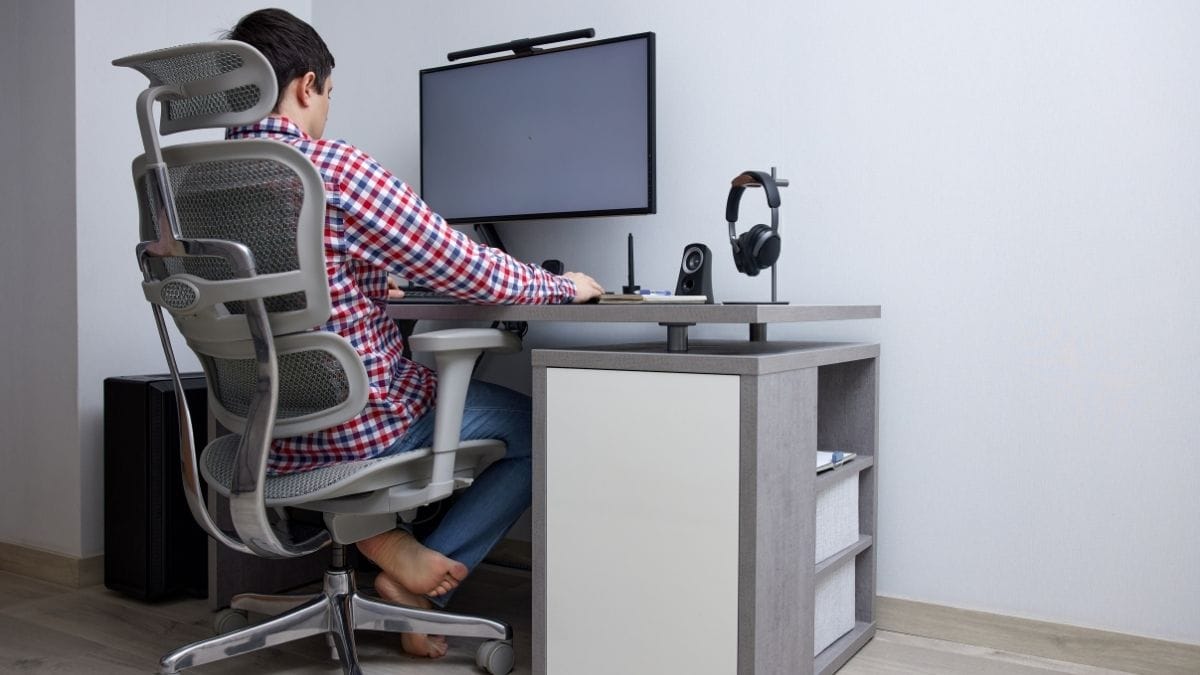
It found that prolonged sitting at home was having a real, measurable impact on heart health.
Do this quick check right now. Add up your daily sitting time:
- Morning commute (or walk to your home desk)
- Desk or work hours
- Meals eaten while sitting
- Evening TV or screen time
Most people hit 8 to 10 hours before they even realize it. If that’s you, you’re not alone — but you do need a plan. The next section gives you one that actually works.
8 Practical Ways to Sit Less in 2026 (That Actually Work)
You don’t need to quit your desk job. Small, consistent changes through your day are enough.
1. Follow the 40-8-2 Rule. Every 50 minutes: sit for 40, stand for 8, move lightly for 2. This formula was designed by occupational health researchers and reduces both fatigue and strain.
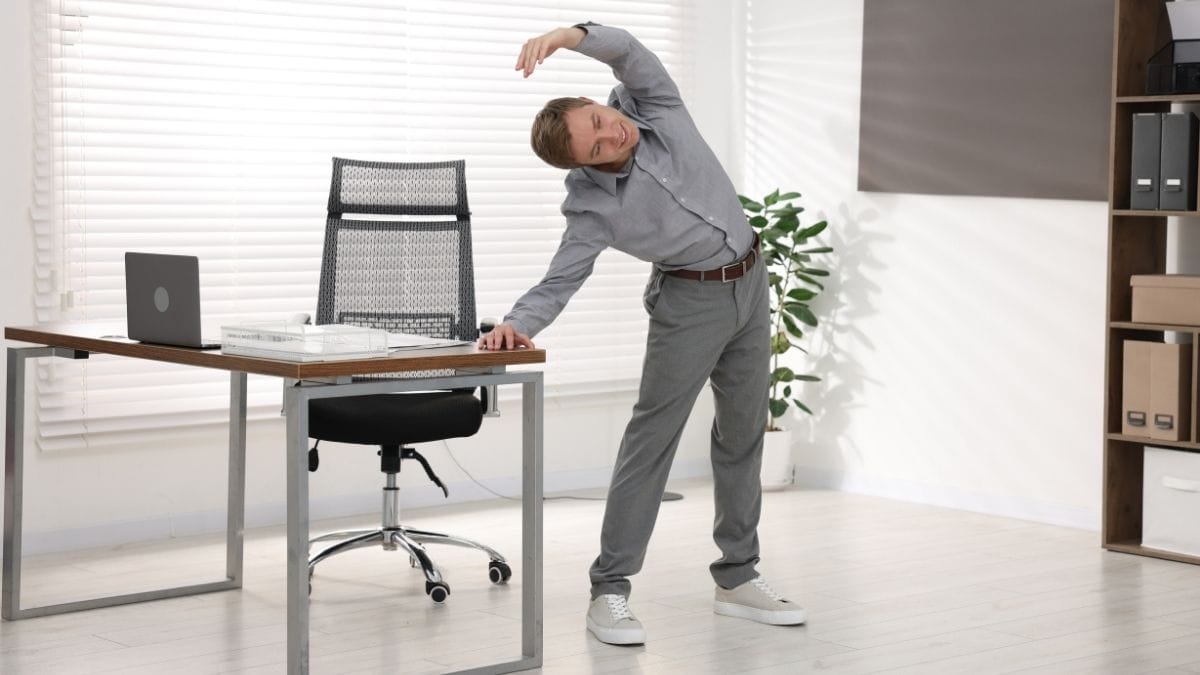
2. Set a movement alarm every 45 minutes. The American Heart Association says sitting longer than 45 minutes at a stretch starts hurting your health. A simple phone alarm fixes this.
3. Get a sit-stand desk. The British Journal of Sports Medicine recommends at least 2 hours of standing or moving in an 8-hour workday, with a goal of reaching 4 hours over time.
4. Walk during phone calls. Put your headphones on and walk. It’s that simple. Research shows 60 to 75 minutes of light daily movement counters many effects of sitting.

5. Use reminder apps. Apps like Stand Up!, Move, and Stretchly send you nudges to get up. Free, simple, and they work.
6. Try temptation bundling. Only allow yourself to watch your favorite show or listen to your podcast while walking or stretching. You’ll move more and not feel like you’re giving anything up.
7. Redesign your workspace. Put your water bottle, printer, or charger across the room. Force yourself to stand up to get them. These small trips add up.
8. Try a yoga ball or desk bike. A yoga ball engages your core while you sit. A desk bike or treadmill desk lets you move gently while you work — without hurting your focus.
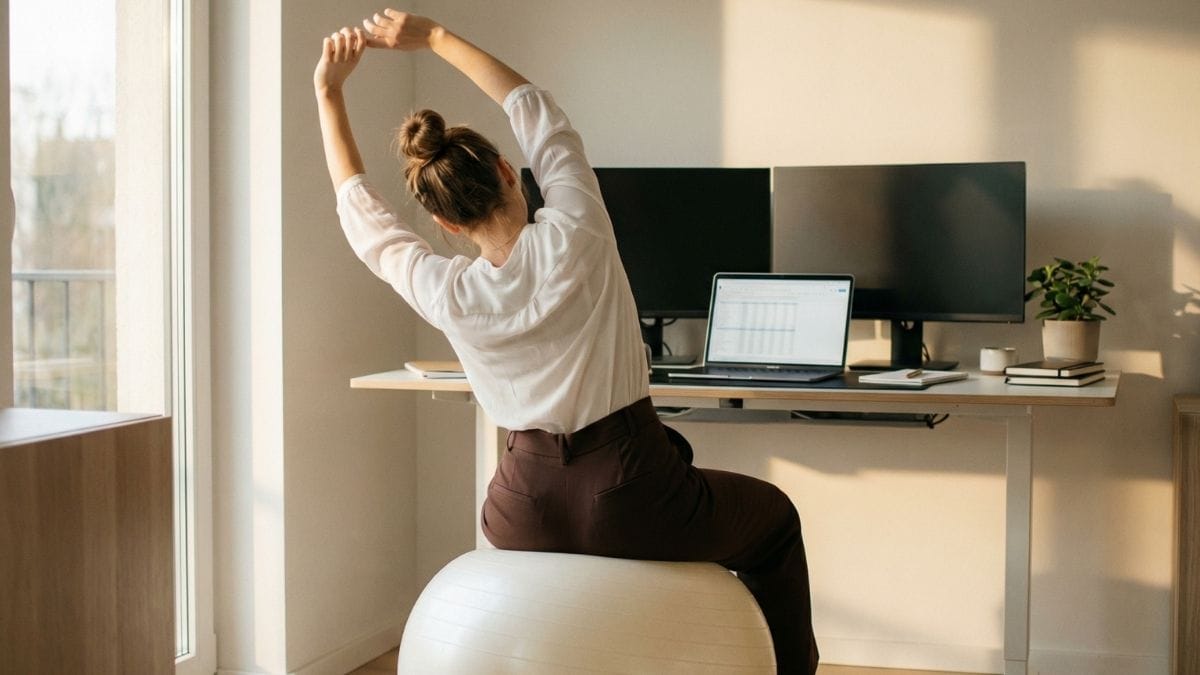
These aren’t radical changes. They’re small shifts that add up to hours less sitting per week.
The Experts and Studies You Can Trust on This Topic
This isn’t blog opinion. Here are real names and real sources.
Dr. Todd Cade — Duke University. Professor of Orthopedic Surgery. Studies how exercise affects long-term health outcomes.
Dr. Terry Boyle — Epidemiologist, University of South Australia. Published research in the American Journal of Public Health clarifying the real risk difference between sitting and smoking.
Ezimamaka Ajufo et al. (2024) — Led the Journal of the American College of Cardiology study on sedentary time and heart failure risk.
Siddiqi et al. (2025) — Led the European Journal of Cardiovascular Medicine study on remote workers and cardiovascular health.
WHO Physical Activity Fact Sheet (June 2024) — Global data on inactivity costs and mortality.
If you want to read the original research yourself, start at PubMed (pmc.ncbi.nlm.nih.gov) and who.int. Cleveland Clinic and Mayo Clinic also publish clear, accurate summaries for general readers.
Conclusion;
Sitting too much is a real health risk. The research proves it raises your risk of heart disease, diabetes, cancer, and early death — even if you exercise.
Pick one habit from this list and start today. Set your first 30-minute movement alarm right now.
The dangers of sitting too much are real — but so is your ability to change.