At 28, I was not sick. But I was slowly heading toward a future I didn’t want.
I was tired all the time. I ate whatever was fast. I skipped sleep to get more done. I told myself I’d fix it “later.” Sound familiar?
The problem is that “later” shows up at 55 looking like diabetes, bad knees, and a heart that can’t keep up. The damage doesn’t happen overnight. It builds quietly, year after year.
What I’m sharing here are seven specific changes I made at 28. Not pills. Not extreme diets. Just real habits backed by real science. I kept them going for over 40 years. And they worked.
You’ll learn what each habit is, why it matters, and exactly what to do starting today. No fluff.
Why Starting Young Is the Smartest Move You’ll Ever Make: 7 Changes in my life

Most people think health problems are for older people. They’re not. Your habits in your 20s and 30s are quietly building the body you’ll live in at 60 and 70.
Think of it like money. Small deposits made early grow into something huge. Dr. Michael Greger, quoted in a 2025 U.S. News health survey of 53 experts, said it best: “It’s like investing for your retirement with compound interest. The earlier you start, the greater your nest egg of health.”
A 2025 review of 35 clinical trials covering 25,000 people confirmed it. Nutrition, movement, sleep, and social connection all shape how well you age.
The UN also projects that by 2050, the number of people over 65 will double to 1.6 billion. Most of them will struggle. A small number won’t. The difference is daily habits, started early.
You don’t need to be perfect. You need to be consistent.
3 Quick Tips:
- Start one habit this week, not all seven
- Write your habit goal on paper — it makes it real
- Track one health number (weight, steps, sleep hours) as a baseline
1- I Treated Food Like Medicine, Not Entertainment

I didn’t go on a diet. I changed how I thought about food.
Food stopped being comfort or reward. It became fuel. I moved toward a Mediterranean-style way of eating — more fish, vegetables, legumes, olive oil, whole grains, and nuts.
I cut out daily ultra-processed foods and reduced added sugar. I also swapped regular salt for a salt substitute.
The results backed by science are hard to ignore. A 2025 review of 35 trials found the Mediterranean diet reduced cardiovascular risk by 22% and meaningfully slowed cognitive decline.
A 2024 study in the Annals of Internal Medicine found that using salt substitutes cuts the risk of death from heart disease.
You don’t need to eat perfectly. You need a simple framework. Every lunch, add a vegetable. Every dinner, include a protein and a whole grain. That’s it. Repeat that for 40 years and your body notices.
3 Quick Tips:
- Swap one ultra-processed snack a day for nuts or fruit
- Use a salt substitute — your heart will thank you in 20 years
- Fill half your plate with vegetables before adding anything else
2- I Made Movement Non-Negotiable, Not Optional

I didn’t treat exercise as a reward. I treated it like brushing my teeth — something you just do, every day, without debating it.
I combined walking and light cycling with basic strength training. Nothing extreme. But I never skipped it for long. That consistency is what mattered.
Here’s a striking fact: only 24% of adults currently meet the CDC’s recommended 150 minutes of moderate activity per week, plus two strength sessions. That means 76% of people are already behind.
A 2024 British Journal of Sports Medicine study found that people over 40 who walked as much as the most active of their peers could add roughly five years to their lives.
A Lancet Healthy Longevity study of 36,000 adults followed for 20 years found that those who moved regularly had significantly lower death rates.
Start with Zone 2 cardio — walking or cycling at a pace where you can still talk. Do it four times a week, 30 minutes each.
3 Quick Tips:
- Walk after dinner every night — even 15 minutes counts
- Add two bodyweight strength sessions per week (squats, push-ups)
- Track your steps with a free app like Google Fit
3- I Stopped Treating Sleep as Wasted Time

At 28, I thought sleeping less meant doing more. I was wrong. Sleep isn’t downtime. It’s when your body repairs tissue, clears brain waste, and resets your hormones.
I built a simple rule: same bedtime, same wake time, 7–8 hours, every night. I cut screens 60 minutes before bed. I kept the bedroom dark and cool.
The science backs this hard. A 2025 review of 29 meta-analyses found short sleep (under 7 hours) is a major risk factor for heart disease, stroke, hypertension, diabetes, and obesity.
A 2024 Nature Medicine study tracked 6,785 people using Fitbit data over 4.5 years. Irregular sleep and short sleep were both linked to obesity, heart disease, and mental health problems.
More than one-third of American adults — 34.8% — currently sleep fewer than 7 hours per night. If you’re in that group, this single habit change could be the highest-return investment you ever make.
3 Quick Tips:
- Set a consistent bedtime alarm, not just a wake-up alarm
- No phone in bed — charge it in another room
- Keep your bedroom below 68°F (20°C) for deeper sleep
4- I Cut Smoking and Kept Alcohol Minimal

This one was hard. But it was also one of the biggest turning points.
At 28, I quit smoking. I also stopped drinking during the week. Alcohol became something I had occasionally at social events, not a daily habit.
Why does this matter so much? Because smoking and heavy drinking don’t just cause disease — they speed up how fast your entire body ages.
A 2024 eLife study using the Healthy Lifestyle Index (HLI) — which scores five factors: smoking, alcohol, diet, exercise, and sleep — found that a higher combined score directly slows biological aging across multiple organs.
The 2024 Journal of Internal Medicine review confirmed it too: avoiding smoking and excess alcohol, alongside other habits, is essential for healthy aging.
Quitting at 35 or 40 still adds healthy years to your life. It’s never too late. And in 2026, you have better tools than ever.
3 Quick Tips:
- Use the Smoke Free app (free, iOS and Android) to track quitting progress
- Replace evening alcohol with sparkling water and lemon — it helps more than you think
- Tell one person your goal — accountability increases success rates
5- I Built Real Social Connections and Kept Them

Nobody talks about this enough. Loneliness is not just a feeling. It is a health risk.
I made sure to stay connected. Regular dinners with family. Phone calls with friends. Community involvement. Even when life got busy, I protected that time.
Look at the Blue Zones — the regions of the world where people consistently live past 90. Okinawa, Sardinia, Nicoya. Every single one shares strong community bonds. It’s not a coincidence.
A January 2024 study in JAMA Network Open found that reducing social isolation meaningfully lowered mortality risk, especially in people with obesity.
A 2025 ScienceDirect review confirmed that social connection is one of the three core pillars of healthy aging, alongside diet and physical activity.
This is not about being an extrovert. It is about having consistent, real relationships with people who matter to you.
3 Quick Tips:
- Block one meal per week with a friend as a calendar event — treat it like a meeting
- Walk with a friend instead of alone — you get exercise and connection at once
- Call one person this week you haven’t spoken to in a while
6- I Managed Stress Before It Managed Me
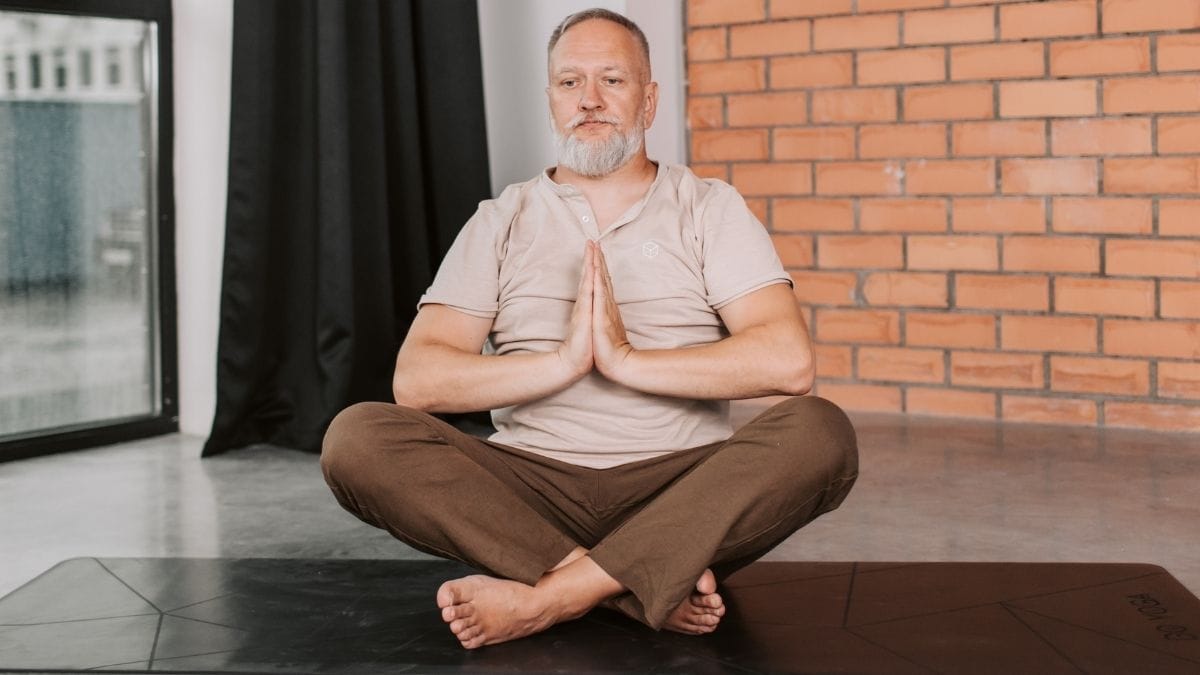
Chronic stress doesn’t just make you feel bad. It raises cortisol, increases inflammation, and speeds up aging at a cellular level.
I built small daily habits to release stress before it piled up. A 10-minute walk. Five minutes of deep breathing. Journaling at night. And a firm rule: no work after 7 PM.
A 2025 meta-analysis of 35 clinical trials found that mindfulness and stress reduction interventions reduced depression symptoms meaningfully and improved cognitive function in aging adults.
The 2025 U.S. News Healthy Aging Survey of 53 health experts listed stress management alongside diet, sleep, and exercise as the four core practices for aging well.
In 2026, tools like Apple Watch and WHOOP track Heart Rate Variability (HRV) — a real measure of how much stress your nervous system is carrying. You can see your stress load in numbers and respond to it. That is powerful.
3 Quick Tips:
- Try 5 minutes of box breathing daily (inhale 4 counts, hold 4, exhale 4, hold 4)
- Use Insight Timer — it’s free and has hundreds of short stress-relief sessions
- Set a hard stop time for work every evening and stick to it
7- I Made Preventive Healthcare a Priority, Not a Panic

Most people only go to the doctor when something is wrong. I did the opposite. I went every year, even when I felt fine.
I tracked my key numbers: blood pressure, blood glucose, cholesterol, and Vitamin D. I never missed a dental check. I caught small problems early, when they were still small.
A 2025 ScienceDirect review confirmed that regular screenings, combined with strong lifestyle habits, provide the most complete protection against chronic disease.
Researchers also confirmed that a healthy lifestyle significantly reduces “multimorbidity” — meaning the chance of developing multiple diseases at once — which is the biggest driver of poor quality of life in older adults.
In 2026, ask your doctor for these specific markers: fasting glucose, HbA1c, full lipid panel, Vitamin D (25-OH), C-reactive protein, and thyroid (TSH). These six markers give you a clear picture of where you stand before problems develop.
3 Quick Tips:
- Schedule your annual physical now — don’t wait until you feel sick
- Ask specifically for C-reactive protein (inflammation marker) — most standard panels skip it
- Use a simple health journal to track your numbers year over year
Final Thought;
Seven habits. Forty-two years. None of them required perfection — only consistency. Pick the one that feels most doable this week. Do it for 30 days. Then add another. That is how a lifetime of health gets built — one small, repeated choice at a time. Start today.