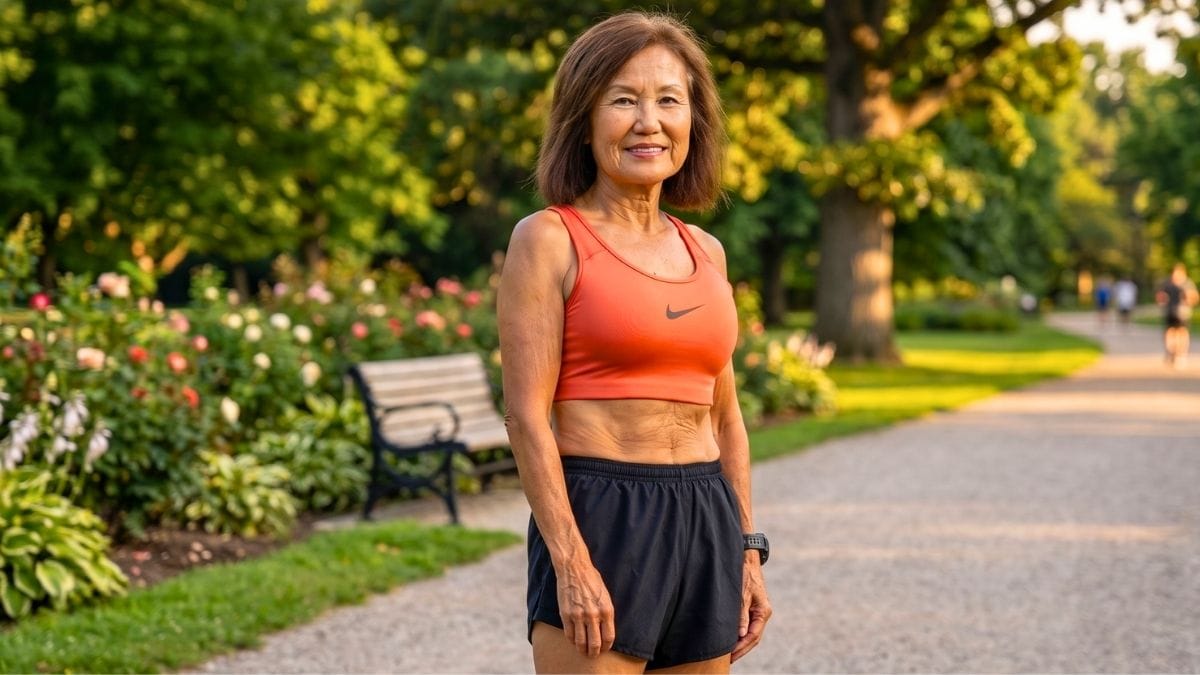
At 77, Jeannie Rice has the aerobic fitness of a healthy 25-year-old woman. She just beat the fastest men in her age group at the Boston Marathon.
Most women over 70 believe their best days are behind them. They feel tired. They move carefully. Family, doctors, and culture all tell them the same thing — slow down.
So they do. And then they slow down more.
But what if that’s wrong? What if your body is still capable of more than you think?
This article shows you the exact weekly routine — backed by real science and real people — that keeps women in their 70s strong, fast, and full of energy. You’ll learn what to do, how often, and what to eat.
Meet the 77-Year-Old Who Runs 50 Miles a Week
Jeannie Rice started running at 35 just to lose five pounds. She didn’t even own running shoes back then.
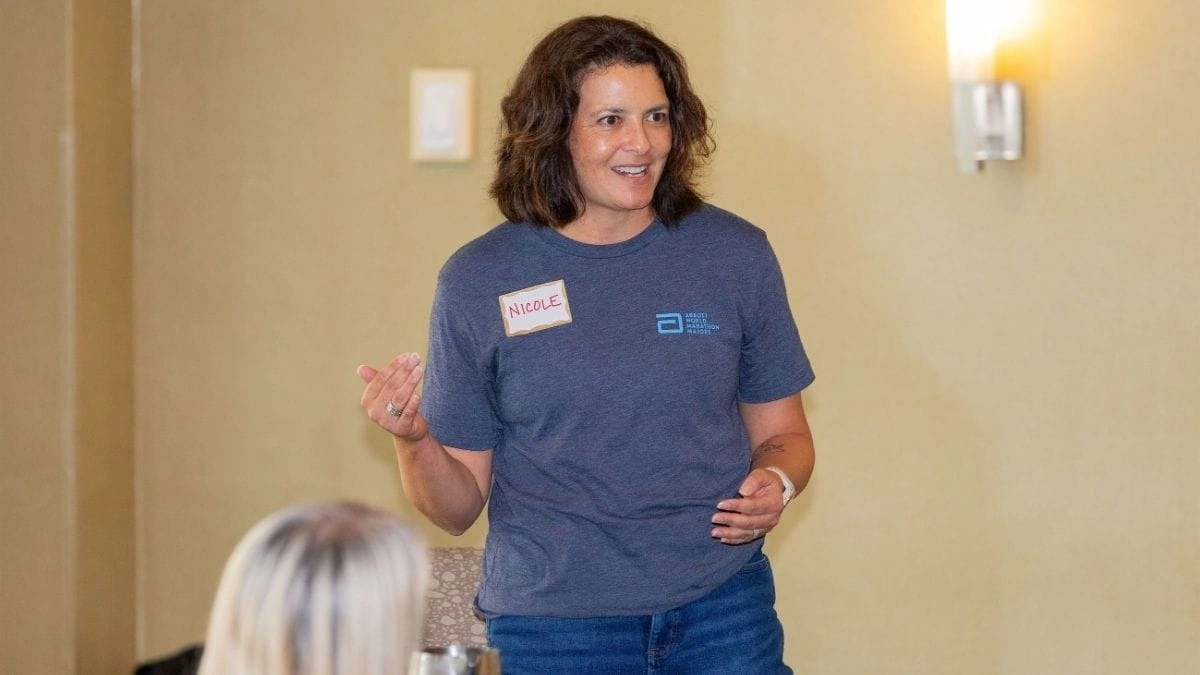
Today, she holds multiple marathon world records. Her VO2 max — the number that measures how well your heart and lungs work during exercise — was recorded at 47.8.
That’s the highest ever measured in any woman aged 75 or older. For comparison, that same number is average for a healthy woman in her mid-twenties.
A 2025 study in the Journal of Applied Physiology confirmed her cardiac fitness sits at the 90th percentile for women aged 20 to 29.
She runs 50 miles a week. Every week. For 40 years.
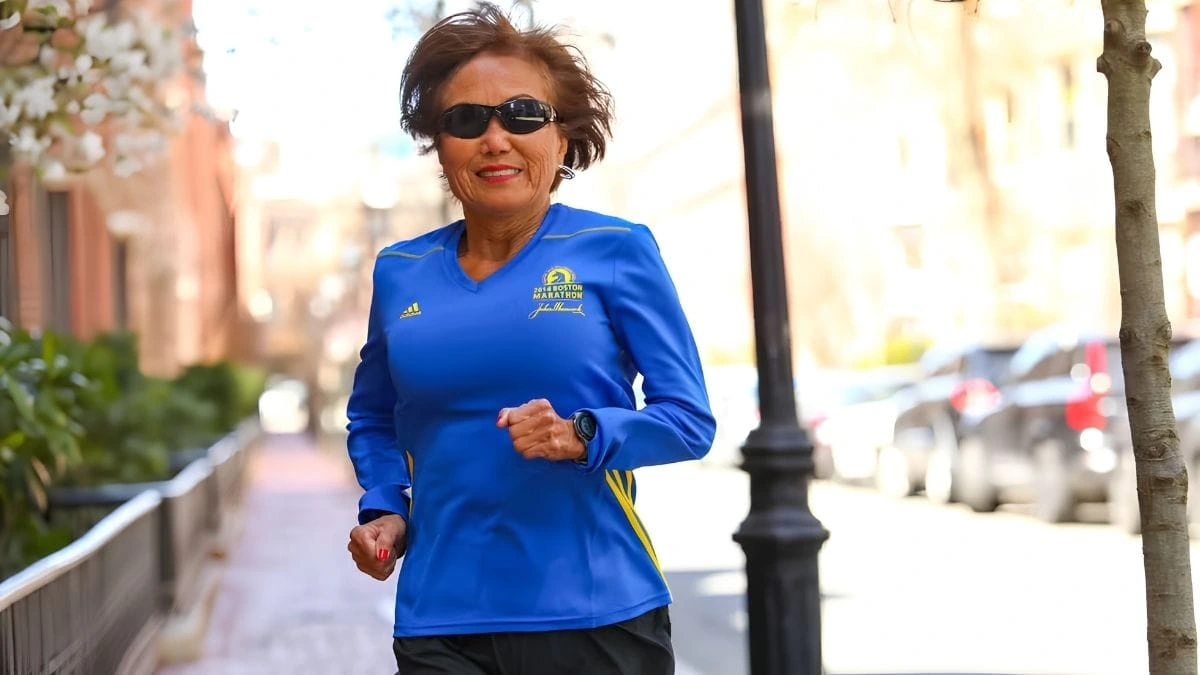
When asked her secret, Rice keeps it simple. “I eat well, sleep well and stay hydrated.” She calls it a lifestyle. She calls her mindset the “Three Ds — Dedication, Discipline, and Determination.”
This isn’t about running marathons. It’s proof that the body at 70 is far more capable than most people believe.
What Research Tells Us About Fitness After 70
The CDC updated its physical activity guidelines in December 2025. Adults 65 and older need at least 150 minutes of moderate aerobic activity per week.

That’s just 30 minutes a day, five days a week. Plus two days of strength work. Plus regular balance exercises.
That’s it. That’s the baseline.
A 2024 study in the International Journal of Epidemiology found that any amount of weight training lowered all-cause, cardiovascular, and cancer mortality in people with an average age of 70. Not a lot of training. Any training.
A 2025 meta-analysis looked at 37 studies across 13 countries with over 2,500 senior participants.
It found strength training has the strongest effect on brain health in older adults — stronger than aerobic exercise alone. The sweet spot was 2 to 3 sessions of 45 minutes per week.
Research also shows resistance training improves walking speed, balance, and the ability to get up from a chair — all things that keep you independent and safe.
The 4-Part Weekly Routine That Actually Works
A good fitness routine for women over 70 has four parts. Most people only know about one or two of them.
You don’t need all four on day one. Start with two and build.
Part 1 — Aerobic Movement (3–5 days a week)
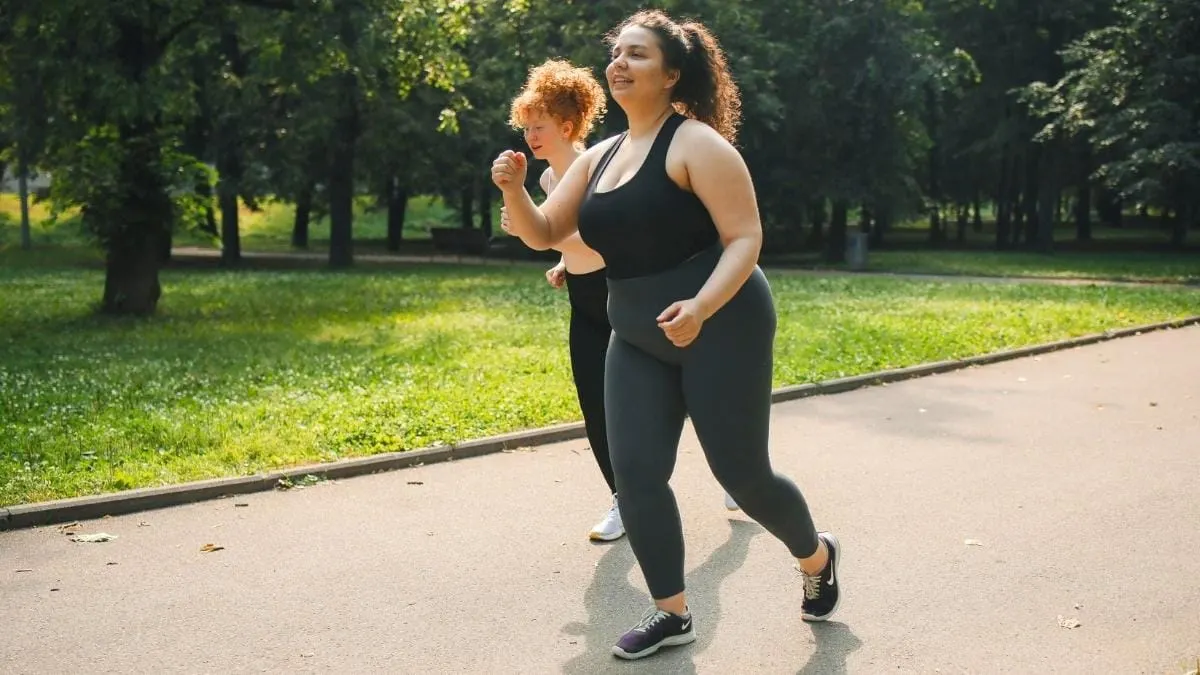
Walk, swim, cycle, dance, or try water aerobics. Aim for 8,000 to 10,000 steps a day. Brisk walking is the easiest place to start — no gym, no equipment, no cost.
Aim for 30 minutes most days. “Moderate” means you can talk but not sing. You should feel slightly breathless. If 30 minutes is too much right now, do two 15-minute walks instead. Build from there.
Part 2 — Strength Training (2–3 days a week)
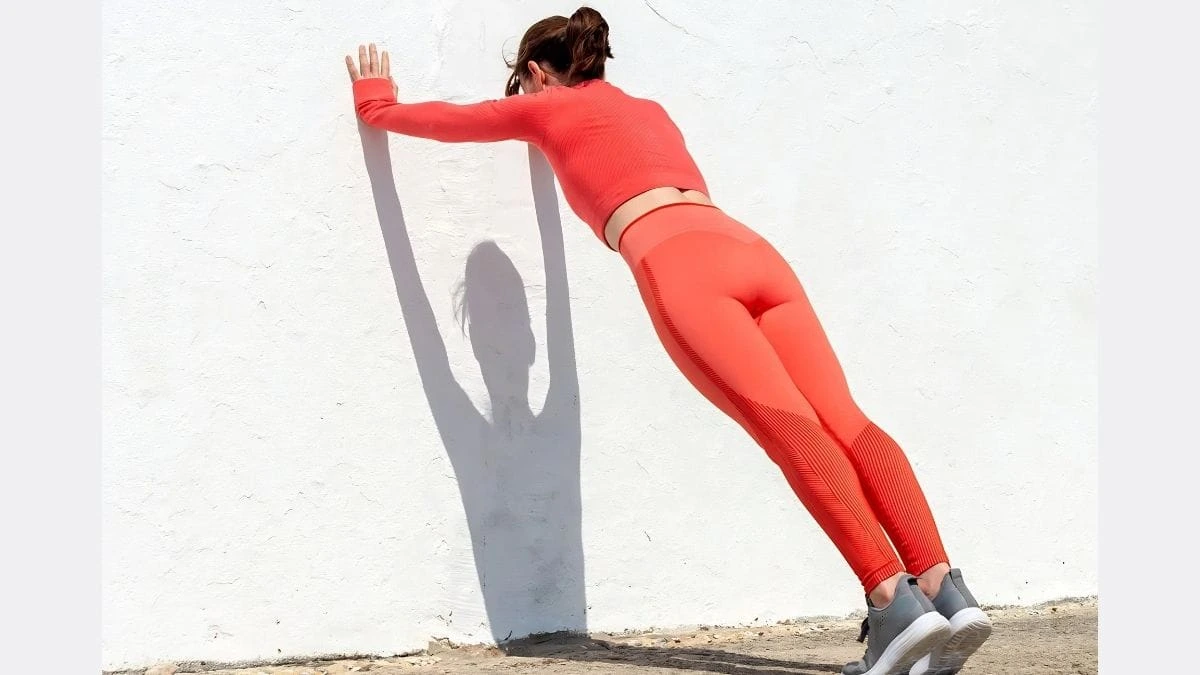
A Cochrane review of 121 trials — covering around 6,700 people — showed that resistance training 2 to 3 times per week increases muscle strength, improves walking distance, and lowers resting heart rate.
Start with: wall push-ups, chair squats (sit to stand), standing calf raises, and resistance band rows. No gym needed.
Balance and Flexibility — The Two Most Skipped Pillars
Most women focus on cardio and maybe some weights. They skip balance and flexibility. That’s a mistake.
Part 3 — Balance (5–10 minutes daily)

Stand on one foot for 10 to 20 seconds. Hold a chair for safety. Then switch feet. Do this every morning. Once it feels easy, try it with your eyes closed.
Strong balance means fewer falls. Falls are one of the biggest health risks for women over 70. This simple drill takes five minutes and costs nothing.
Part 4 — Flexibility (Daily or after workouts)
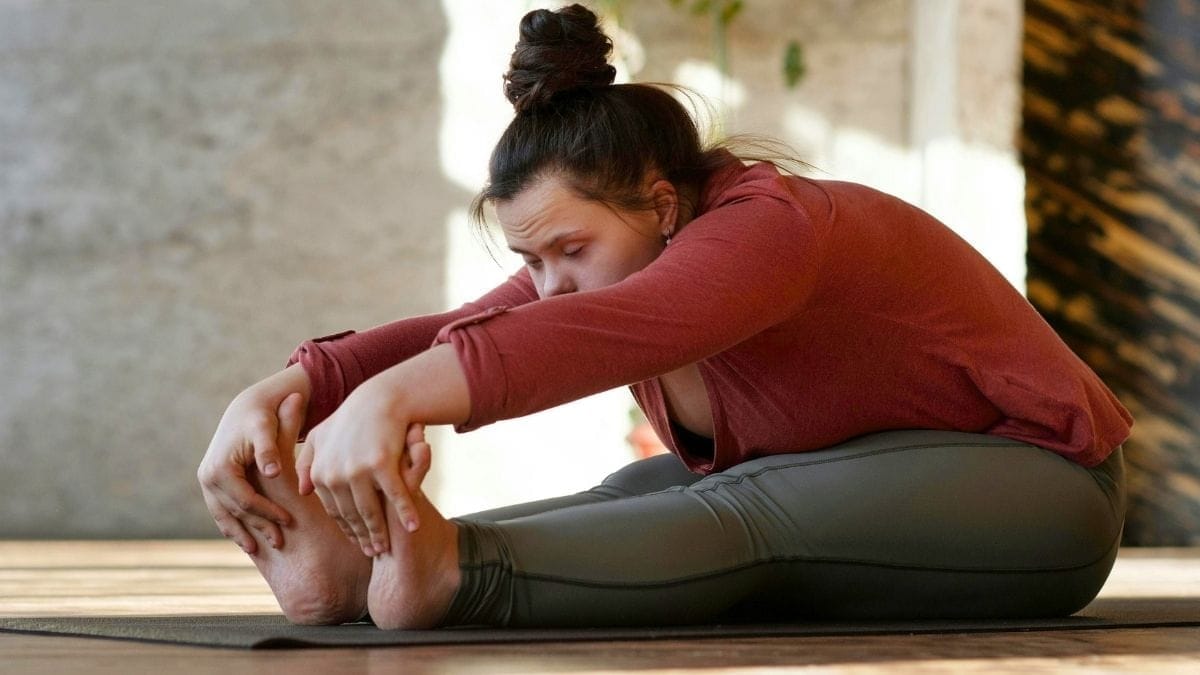
Stiff joints make everything harder — walking, sleeping, getting dressed. A 10-minute morning stretch routine targeting your hips, hamstrings, and shoulders fixes a lot of that stiffness over time.
Yoga is a great structured option. It covers flexibility, balance, and breathing all at once. You can find free beginner videos on YouTube — search “yoga for seniors over 70” and dozens of real options come up.
These two pillars protect the work you do in Parts 1 and 2.
The Protein Problem Most Women Over 70 Don’t Know They Have

Here’s a stat that surprises almost everyone.
A 2025 review found that 50% of women over 71 don’t eat enough protein. Not because they don’t care. Because appetite shrinks with age, taste changes, and most people don’t realize their needs have gone up — not down.
Without enough protein, muscles shrink. Strength fades. Energy drops. It becomes a slow, quiet slide.
Research shows the right amount for older adults doing strength training is 1.0 to 1.3 grams of protein per kilogram of body weight per day. For a 143-pound (65 kg) woman, that’s roughly 65 to 85 grams daily.
Good sources: eggs, Greek yogurt, canned salmon, chicken, lentils, edamame, cottage cheese.
One warning — very high protein intake can stress the kidneys. If you have kidney issues, talk to your doctor first.
Hydration matters too. Jeannie Rice takes electrolytes before big efforts and drinks consistently every day.
Why Sleep Is the Most Underrated Part of Your Fitness Plan

Jeannie Rice names sleep as one of three habits she never skips. There’s a reason for that.
Exercise and sleep work together. One session of moderate exercise can already improve your sleep quality and lower your blood pressure that same night. And better sleep makes your next workout more effective.
A 2025 systematic review found that aerobic exercise, resistance training, tai chi, and water activities all improved sleep quality in older adults — including how fast they fell asleep and how long they stayed asleep.
A study of adults aged 50 to 83 found that a single bout of moderate activity — brisk walking, climbing stairs — improved memory and problem-solving the very next day.
Simple sleep habits that work: go to bed at the same time every night, keep your room cool and dark, avoid screens for 30 minutes before bed, and stop caffeine after 2 PM.
Sleep is not passive recovery. It’s when your body does the real repair work.
Your First 4 Weeks — A Simple, Safe Starting Plan
You don’t need a gym. You need a plan you’ll actually stick to.
The 4-Week Action Plan
Week 1: The Start
Walk 15–20 minutes, 3 days. Do chair squats and wall push-ups — 2 sets of 10, twice this week. Stretch for 5 minutes every morning.
Week 2: Build Up
Increase walks to 25 minutes, 4 days. Add calf raises and single-leg balance holds. Buy a basic resistance band and try bicep curls and rows.
Week 3: Consistency
Walk 30 minutes, 5 days — or swap in swimming/cycling. Do strength training 3 days. Add a 10-minute stretch after each walk.
Week 4: The Milestone
Aim for 150 minutes of total movement this week. Compare how you feel vs. Week 1 (energy, sleep, stiffness). Pick one new challenge for Month 2!
Research shows women over 60 get the best results training every 72 to 96 hours — so muscles have time to recover. And remember: pain is a stop sign. Fatigue is normal. Learn to tell them apart.
Lastly:
You don’t need to run marathons. You need consistency, enough protein, good sleep, and a plan that starts where you are.
Pick one thing from this article — a 20-minute walk, a set of wall push-ups, a glass of water with every meal — and do it today.
The right fitness routine for women over 70 doesn’t look like punishment. It looks like a habit you actually keep.