Your body has two ages. One is on your birth certificate. The other is inside your cells, and that one you can actually change.
Most people feel tired, stiff, or foggy and just accept it as “getting older.” But that is not the full story. Your biological age, meaning how fast your body is really breaking down, is shaped by how you move every single day.
The good news? Current science from 2025 and 2026 shows four specific exercises can protect your cells, keep your brain younger, hold onto your muscle, and lower the inflammation that speeds up aging.
These are not complicated. You do not need a gym. You do not need two hours a day. You just need the right moves, and the science behind them is real.
Your Body Has a Second Age

Your birthday tells you one number. Your cells tell a different story.
Biological age is measured by things like telomere length, brain volume, and inflammation levels. Telomeres are the protective caps on the end of your DNA. Think of them like the plastic tips on a shoelace. When they wear down, things start to fall apart.
A BYU study looked at data from 5,823 adults. It found that highly active people had telomeres that matched someone 9 years younger. Sedentary people had much shorter telomeres.
And here is the part most people miss: low or moderate exercise showed almost no difference compared to doing nothing at all. You need to actually move with purpose.
A 2025 meta-analysis in Frontiers in Physiology confirmed that exercise significantly maintained telomere length and boosted telomerase, which is the enzyme that repairs those caps.
The four biggest enemies of your cells are inflammation, oxidative stress, shrinking mitochondria, and muscle loss. Each one speeds up aging. And each one responds to the right kind of exercise.
Quick Tips:
- Check your resting heart rate each morning. It is one of the easiest signs of how your body is aging inside
- Stop comparing yourself to a number on a scale. Telomere length and energy levels tell a much more honest story
Exercise 1- Zone 2 Cardio: Small Effort, Big Biology
Zone 2 cardio is simple. It is steady, moderate movement where you can still hold a conversation. That is it.

On a scale of 1 to 10 effort, you are at a 4. Your heart rate sits around 60 to 70% of your maximum. Think brisk walking, easy cycling, light swimming, or a slow jog.
At the cell level, this type of exercise activates something called PGC-1α, which is the main switch for building new mitochondria. Mitochondria are your cells’ power plants. More of them means more energy, slower aging, and a stronger heart.
Research shows that people who did moderate aerobic exercise regularly had a 30% lower risk of dying from any cause compared to people who sat most of the day. Even 2 to 3 hours of Zone 2 per week lowered LDL cholesterol and improved blood pressure.
One important note: a 2025 Sports Medicine review found Zone 2 works best as part of a bigger plan, not your only exercise. We will cover that combination later.
Start with 20 to 30 minutes, three times a week. Talk test: if you can speak in full sentences, you are in the right zone.
Quick Tips:
- Use a simple smartwatch or the talk test to stay in Zone 2. You should never be gasping for air
- A walk after dinner counts. It does not need to be a formal workout to give your mitochondria a boost
Exercise 2- Strength Training: Stop the Muscle Loss Before It Stops You
After age 30, your body loses 3 to 8% of muscle every decade if you do nothing about it. This is called sarcopenia. And it is not just about looking soft. It drives falls, broken bones, poor balance, and faster brain aging.
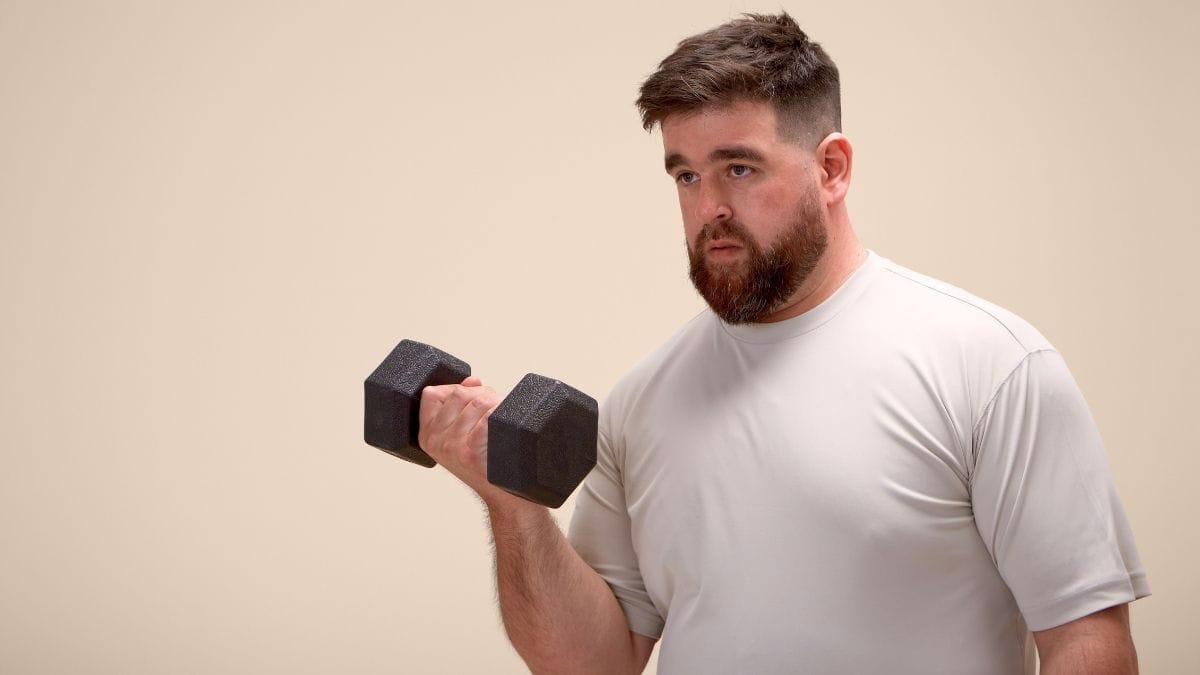
A 2025 study found that strength training reduced biological brain age by 1.4 to 2.3 years. That result held up two years later. Study author Dr. Agustín Ibáñez said it best: “Think of it less as a quick fix and more as shifting your long-term trajectory.”
Here is what most people do not know. Muscle is not just tissue. It acts like a hormone-producing organ. When you train, your muscles release molecules called myokines. These protect your DNA and your mitochondria. They lower inflammation too.
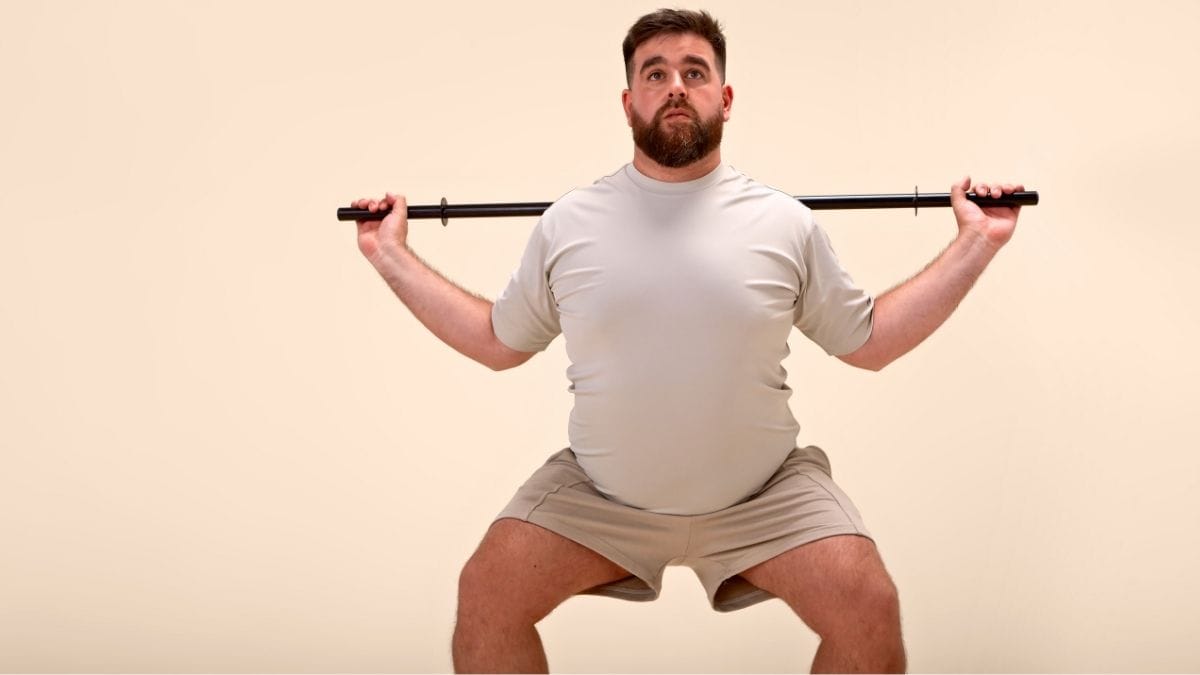
You do not need heavy weights. Bodyweight squats, push-ups, rows with a resistance band, and deadlifts work well. Two to three sessions per week is enough.
Dr. Katie Takayasu, an integrative medicine physician, puts it clearly: resistance training improves insulin sensitivity, supports metabolism, and slows aging at the cellular level.
Quick Tips:
- You do not need a gym membership. A resistance band set costs under $20 and covers most of the movements you need
- Track your grip strength over time. Research shows it is one of the most reliable physical markers of how fast you are aging
Exercise 3- HIIT: Short, Hard, and Surprisingly Powerful for Your Cells
HIIT stands for High-Intensity Interval Training. It means you go hard for a short burst, then rest, then repeat. A typical round is 20 seconds of effort and 40 seconds of rest.

It is not about destroying yourself. It is about intensity spikes that force your cells to adapt.
Research shows HIIT lowers two key aging drivers: IL-6 and TNF-α, which are inflammatory molecules that eat away at your telomeres. It also triggers the growth of new muscle cells and reverses some age-related muscle deterioration that has already started.
One study found that a mix of moderate and vigorous activity gives the best longevity results. Intensity, not just duration, is what drives down mortality risk.
A simple starter routine: 20 seconds of fast walking or cycling, then 40 seconds easy, repeated 8 to 10 times. That is under 15 minutes total.
Two sessions per week is the sweet spot for most adults. More than that, especially daily, is counterproductive for aging. Your body needs recovery time to rebuild.
Quick Tips:
- Start with walking intervals. Fast walk for 20 seconds, slow walk for 40 seconds. This is real HIIT and it works
- Never do HIIT two days in a row. Your cells need rest time to repair and strengthen
Exercise 4- Stress Ages You. Yoga Slows That Down
You can exercise every day and still age fast if chronic stress is running in the background.
Stress raises cortisol. High cortisol shortens telomeres and shrinks parts of your brain. This is a real, measurable process. And yoga is one of the most well-studied tools for bringing cortisol down.

UCLA research confirmed that yoga protects against age-related brain shrinkage in memory regions.
A Harvard study found that just 8 weeks of yoga and meditation increased grey matter density in the hippocampus. UCLA researchers also found that 12 minutes of daily yoga meditation increased telomerase activity, which is the enzyme that repairs your DNA caps.
A 2025 systematic review found that regular yoga reduced falls in older adults by 34%. That is better than most physical therapy programs.
NIH-supported research shows yoga can cut anxiety by up to 40% and noticeably lower cortisol levels.
You do not need to be flexible. Chair yoga works. So does Hatha or gentle Vinyasa. Fifteen minutes a day is enough to see real results over time.
Quick Tips:
- Yoga with Adriene on YouTube is completely free and has beginner-friendly routines under 20 minutes
- Focus on slow, deep breathing during your practice. That is the part that directly lowers cortisol
One Week. Four Exercises. Real Results.
You do not need to do all four exercises every day. A 5-day plan covers everything without burning you out.
Here is a simple structure that works:
The Balanced Weekly Protocol
A sustainable blueprint optimizing cardio, strength, and active recovery
The combination is what makes this work. Zone 2 builds your aerobic base. Strength training saves your muscle and brain. HIIT adds cellular intensity. Yoga manages the stress that undoes all the other progress.
Do not try to start all four at once. Pick the one that feels most doable right now. Do it for 4 weeks. Then add the next.
Progress is the point, not perfection.
Quick Tips:
- Set a phone reminder for each workout day. Consistency matters more than intensity, especially in the first month
- If you miss a day, do not double up the next day. Just carry on with the next session in the plan
Lastly:
Five years from now, your body will reflect the decisions you made in ordinary weeks like this one.
Not the big dramatic moments. The quiet Tuesday walks. The resistance band sessions before dinner. The 15 minutes of yoga that felt too small to count but added up to something real.
Aging fast is not inevitable. It is largely a result of the right movements never becoming habits.
You now know the four. You know the science. You know the starting point.
The only question worth asking right now is simple: which one will you do first?