

Aging is not just something that happens in mirrors. You feel it in your energy by mid-afternoon, in how long it takes to recover from a bad night’s sleep, in the quiet calculation of whether your body will keep up with your plans.
For decades, researchers have tried to understand why some people seem to age more slowly than others.
Across long-term studies, one pattern keeps resurfacing: daily walking—simple, consistent, and often overlooked—shows up again and again as a quiet protector of long-term health.
Why this matters more than it sounds
Most people think of aging as a sudden decline. In reality, it is a slow accumulation of small stresses: stiffness that limits movement, blood sugar that creeps upward, inflammation that never quite settles.
These changes rarely come from one bad decision. They come from years of doing very little differently.
When researchers followed adults over long periods—sometimes two decades or more—they were not looking for miracle behaviors.
They were watching how everyday habits shaped biological aging: cardiovascular health, muscle strength, metabolic resilience, and cognitive function.
Walking consistently stood out not because it was intense, but because it was sustainable.
Walking engages multiple systems at once. It supports circulation without stressing the heart. It keeps muscles active without injury risk.
It improves insulin sensitivity, which quietly affects almost every organ. Over time, these small effects compound.
The overlooked truth about “low effort” habits
Modern health culture often dismisses walking as insufficient. If it doesn’t leave you breathless, sweaty, or sore, it feels like it doesn’t count. That mindset leads many people to do nothing at all.
But long-term research tells a different story. High-intensity routines tend to come and go with motivation, schedules, and injuries.
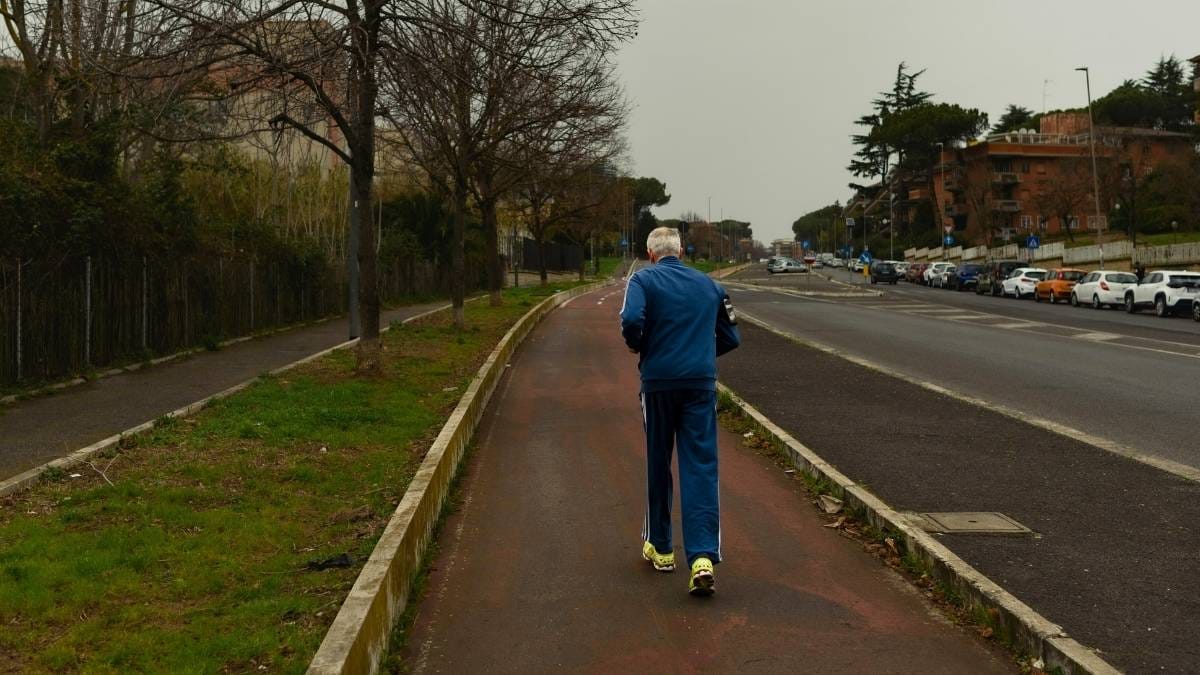
Walking stays. People who walk most days—whether in their neighborhoods, markets, parks, or on errands—build a baseline of movement that protects them even when life becomes busy or stressful.
In many cultures, walking was never exercise. It was transportation, social time, and thinking space. As daily life became more sedentary, that quiet advantage disappeared.
What researchers noticed over time
The people who aged better were not necessarily those with perfect diets or strict routines. They were the ones who moved regularly without making it complicated.
Their joints stayed more functional. Their blood pressure rose more slowly. Their balance and confidence lasted longer.
Importantly, the benefit did not depend on speed or distance. Consistency mattered more than intensity. A modest walk done most days outperformed ambitious plans done sporadically.

How to apply this without changing your life
You do not need gear, tracking apps, or special routes. You need a reason to walk that fits into your existing day.
Walk after meals when you can. It helps regulate blood sugar and digestion.
Walk while thinking or talking instead of sitting.
Walk to accomplish small tasks rather than outsourcing movement to vehicles.
Walk at a pace that feels natural, not performative.
If you miss a day, nothing is lost. The power of walking comes from returning to it over years, not days.
A quieter way to think about longevity
Aging well is rarely about doing more. It is about removing friction between healthy behavior and daily life. Walking works because it does not demand willpower. It asks only for time you already have.
When researchers look back over twenty years, they are not impressed by intensity.
They notice who kept showing up for themselves in small, repeatable ways. Those habits leave traces in the body long after motivation fades.
Long-term health is built the same way it is lived—step by step, patiently, with an eye on tomorrow rather than shortcuts today.