
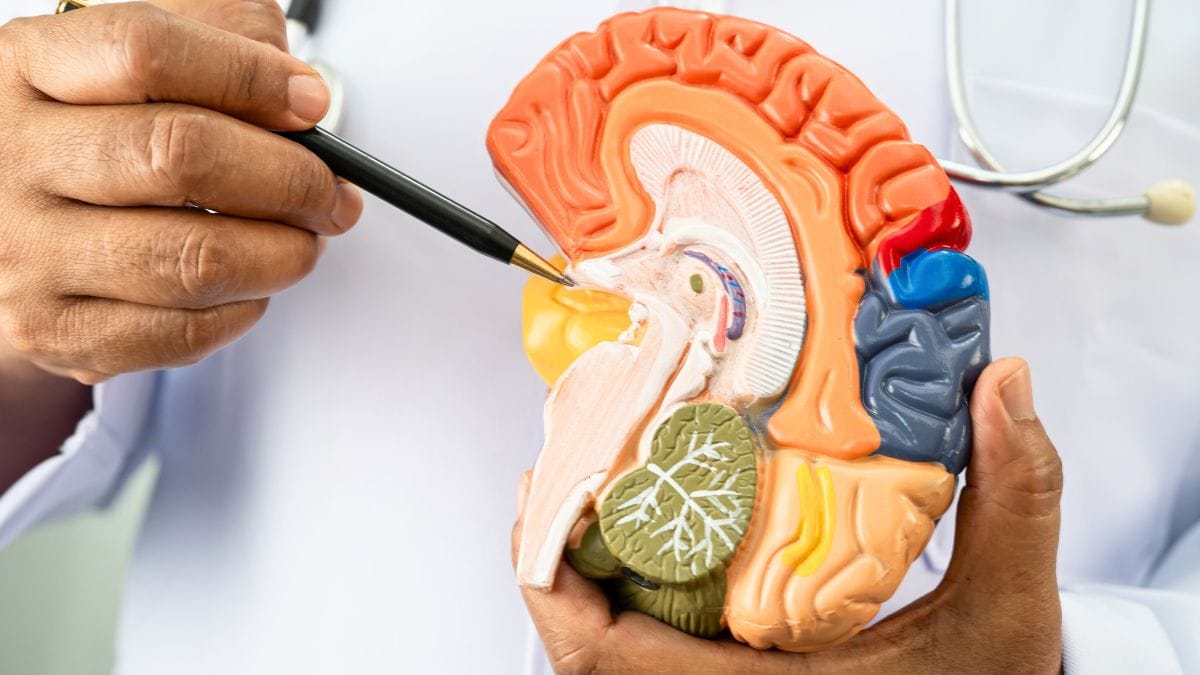
Your weekly grocery list just became a whole lot more important.
Scientists have discovered something remarkable. The foods you pick up at the market each week could protect your brain for decades to come Reduce Alzheimer’s Risk. And no, this isn’t another complicated diet plan that requires you to give up everything you love.
A Diet Designed for Your Brain,
Meet the MIND diet. The name stands for “Mediterranean-DASH Intervention for Neurodegenerative Delay.” It’s basically a love child of two superstar diets—the Mediterranean and DASH diets.
Here’s what makes it special: while its parent diets focus on heart health, the MIND diet zeroes in on your brain.
The late Dr. Martha Clare Morris from Rush University in Chicago created this eating plan. Her team wanted to answer one question: Could certain foods actually reduce Alzheimer’s risk?
The answer knocked everyone’s socks off.
The Numbers Don’t Lie
In Dr. Morris’s groundbreaking 2016 study, people who followed the diet closely cut their Alzheimer’s risk by 53%. That’s more than half.
But here’s the best part. Even folks who followed it “moderately”—not perfectly, just doing their best—still saw a 35% reduction.
“One of the more exciting things about this is that people who adhered even moderately to the MIND diet had a reduction in their risk,” Dr. Morris explained. You don’t have to be perfect. You just have to try.
Brand New Research Backs It Up
Fast forward to August 2025. Researchers published a study in JAMA Network Open that dug even deeper. They looked at brain tissue from over 800 people and found something fascinating.
People who ate MIND diet foods had less damage to their hippocampus. That’s the part of your brain that handles memory and learning. The damage they looked at is called hippocampal sclerosis, and it shows up in 20% of people with memory problems.
The diet also protected against another brain condition with a mouthful of a name: LATE-NC. It’s caused by harmful proteins building up in the brain and often leads to dementia.
Bottom line? The science is solid. What you eat matters for your brain.
So What’s on the Menu? Reduce Alzheimer’s Risk
The MIND diet isn’t restrictive. It’s more like a gentle guide toward better choices. Think of it as adding more good stuff rather than obsessing over what you can’t have.
Your Brain’s Best Friends:
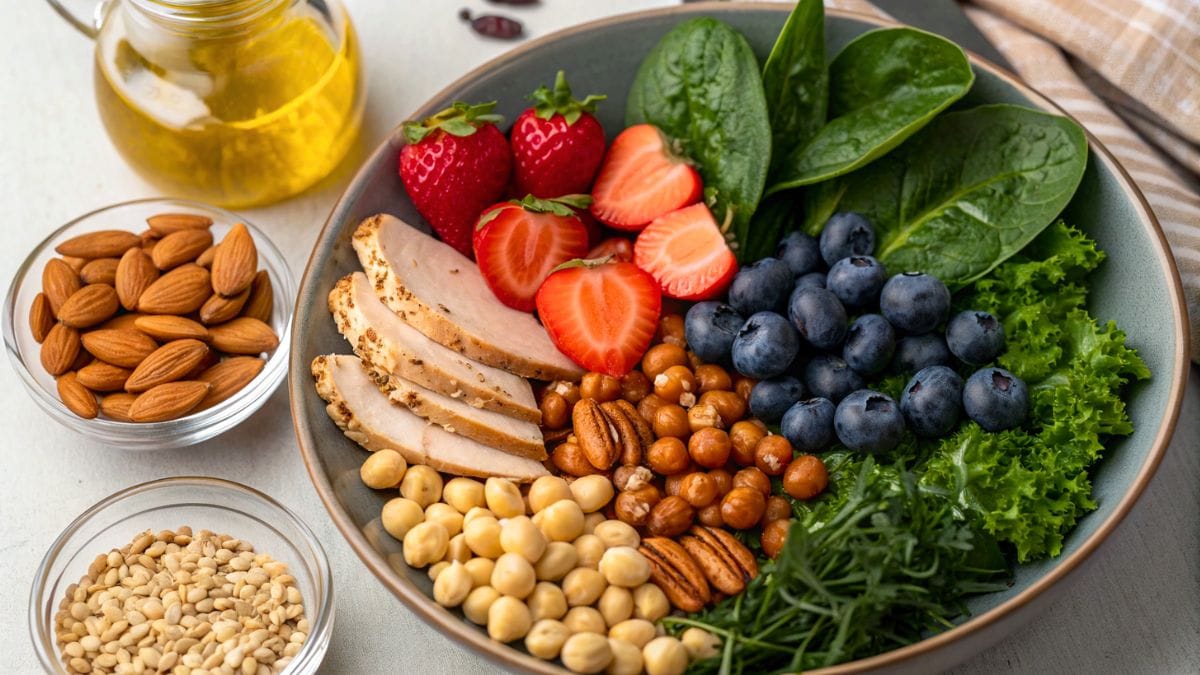
Leafy greens like spinach and kale—load up your plate at least 6 times a week. Berries (especially blueberries and strawberries)—grab them 5 times a week. Nuts—a handful 5 days a week makes a difference. Whole grains—enjoy them at every meal if you can, at least 3 servings daily. Beans—aim for 4 meals a week featuring chickpeas, lentils, or black beans. Fish—twice a week is the sweet spot. Poultry—chicken or turkey should show up 4 times weekly. Olive oil—make it your go-to cooking fat.
The Occasional Treats:
Red meat—keep it under 4 servings per week. Cheese—less than once a week. Butter—under a tablespoon daily. Pastries and sweets—save these for special occasions, under 5 weekly. Fried foods—once a week max.
Notice something? You’re not cutting out entire food groups. You’re just shifting the balance.
Making It Work in Real Life
Start small. Maybe this week you add a handful of walnuts to your morning oatmeal. Next week, you swap your usual snack for fresh berries.
Choose one fish dinner to replace a beef meal.

Toss spinach into your pasta. Drizzle olive oil instead of butter.
These aren’t earth-shattering changes. They’re simple swaps that reduce Alzheimer’s risk while still letting you enjoy food.
The beauty of the MIND diet is its flexibility. You don’t need special ingredients or fancy recipes. Most of these foods are probably already at your local grocery store.
Lastly;
The person you’ll be at 70, 80, or 90 will be grateful for the choices you make today.
So the next time you’re at the grocery store, remember: your shopping cart isn’t just feeding you for the week. It’s protecting your brain for years to come. And that might be the most delicious form of health insurance there is.