

You used to walk to the store without thinking twice. Now your legs feel heavier. Your pace has slowed. Stairs that never bothered you are suddenly something you brace for.
This is not in your head. And it is not just “getting old.” There are real, biological reasons why walking gets harder with age — and most of them are partly fixable.
The good news? The adjustments that actually help are smaller than you think. No gym. No extreme routines. Just specific, simple moves that target the exact muscles and habits your body needs right now.
This article will show you what is happening inside your body, the warning signs to watch for, and five small fitness adjustments that can make your daily walking feel easier — starting this week.
Why Walking Gets Harder — It Is Not Just Your Age
Most people blame aging in general. But the real problem is more specific than that.
Walking speed stays fairly stable until around age 70. After that, it starts to drop. The main reason, according to the Merck Manuals, is not overall aging — it is weak calf muscles.
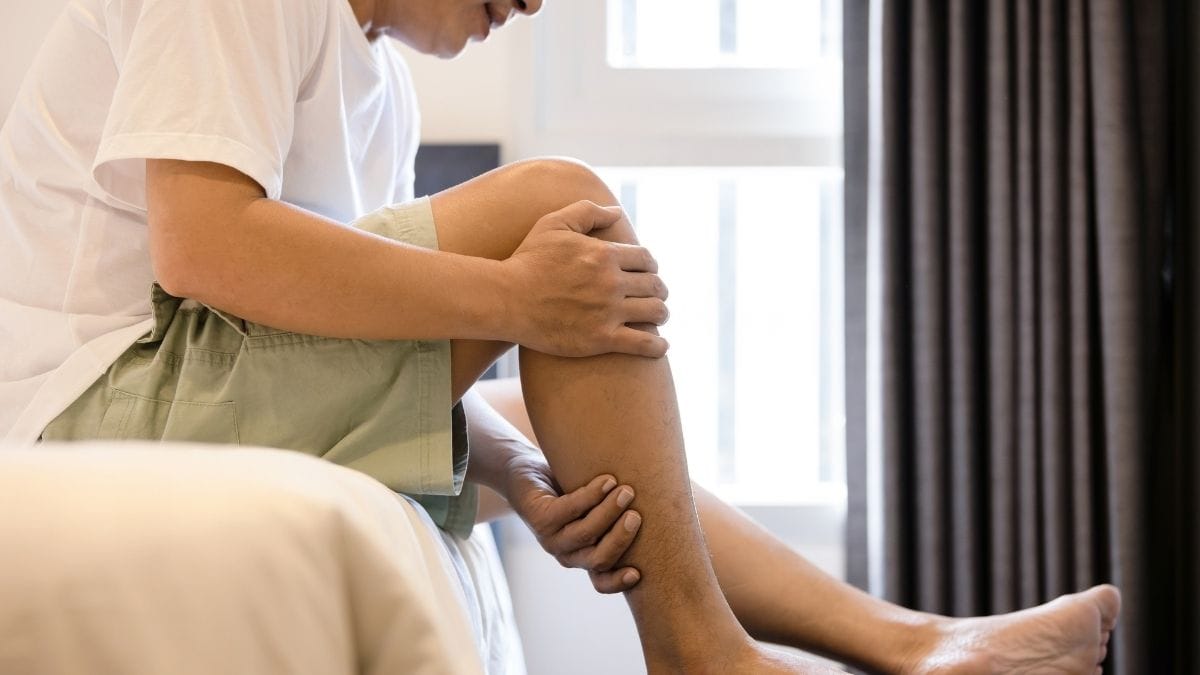
Those muscles are the ones that push your body forward with each step.
After age 30, you lose muscle mass at roughly 3 to 5 percent per decade. Between ages 65 and 80, that loss speeds up.
The Cleveland Clinic reports adults can lose up to 8 percent of muscle per decade. Muscle strength drops 1.5 percent per year between ages 50 and 60, then 3 percent per year after that.
This is called sarcopenia — which just means age-related muscle loss. It affects 5 to 13 percent of adults over 60. For adults over 80, that number jumps to as high as 50 percent.
But there is more going on than just muscle. Your posture shifts too. Older adults often walk with more pelvic tilt and a curved lower back.
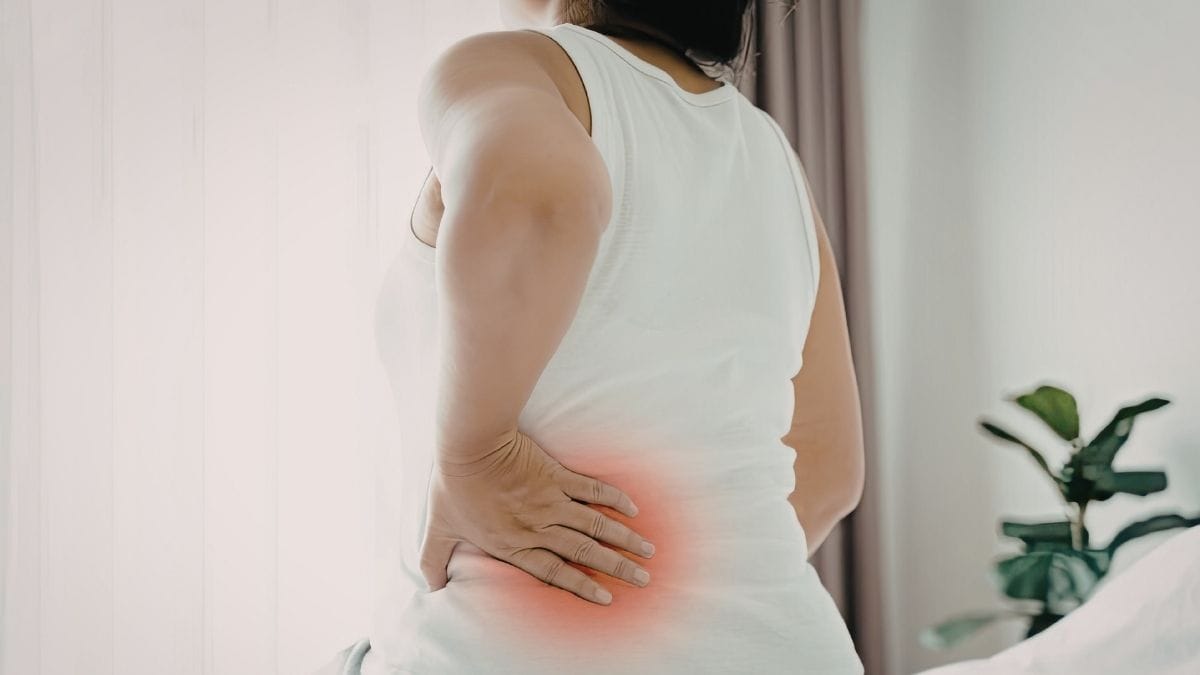
Weak abs, tight hip flexors, and extra belly fat all change how your energy moves through each step.
Your balance also gets less automatic. Your brain gets slower at combining signals from your eyes, inner ear, and feet all at once.
The Warning Signs Most People Dismiss
You might be brushing these off. Most people do.
You slow down on routes you have walked a hundred times — not because of pain, but because it just takes more effort. You grab the railing on stairs you used to ignore. You feel winded or heavy-legged after a short flat walk.
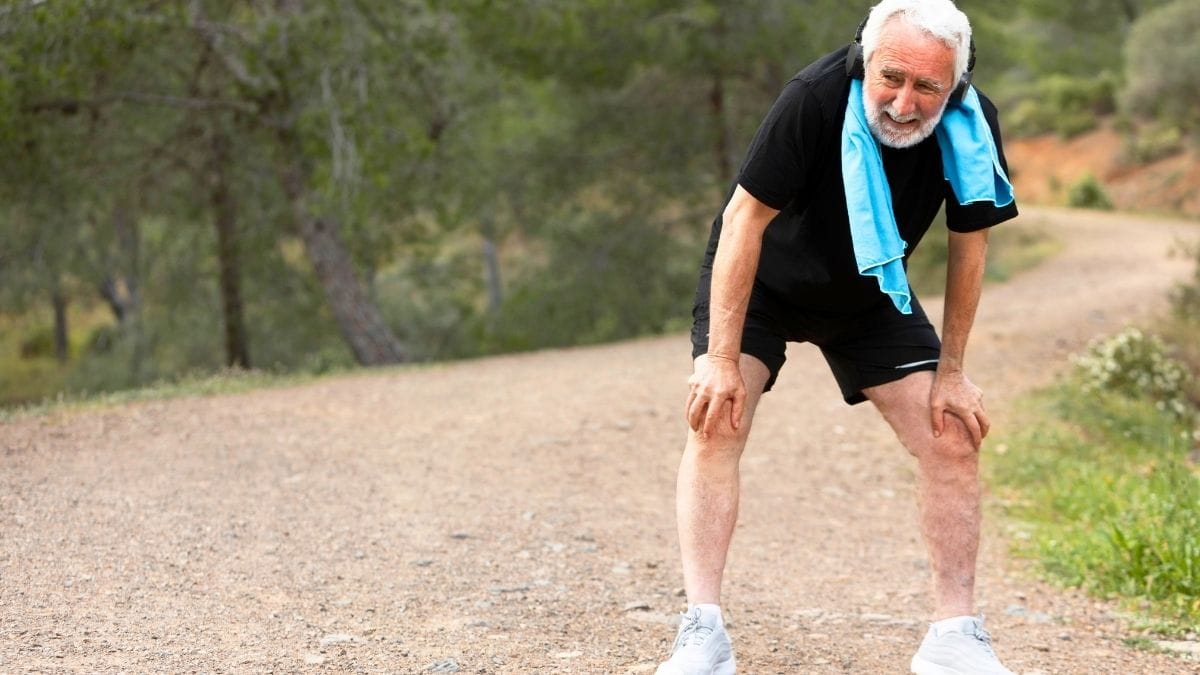
You might also notice your feet drag or shuffle more, especially later in the day. Your arms swing less. Your steps get shorter.
BodySpec lists the common red flags as: loss of stamina, difficulty on stairs, poor balance, and visible muscle shrinkage in your arms and legs.
Here is the key point. These signs do not mean something is permanently broken. They mean your body has been under-used. That is correctable.
There is a simple self-check tool called the SARC-F. It looks at five things: your strength, how easily you walk, getting up from a chair, climbing stairs, and how often you fall. A score of 3 or higher suggests probable muscle loss worth checking out.
You can find the SARC-F online for free. It takes two minutes.
Adjustment 1 — Calf Raises: The Most Overlooked Fix
Your calf muscles are the engine of your walking stride. When they weaken, your steps get shorter and slower. Yet almost nobody targets them directly.
The Merck Manuals state clearly: the most likely reason for shortened step length is calf muscle weakness. These muscles push your body forward with every single step you take.
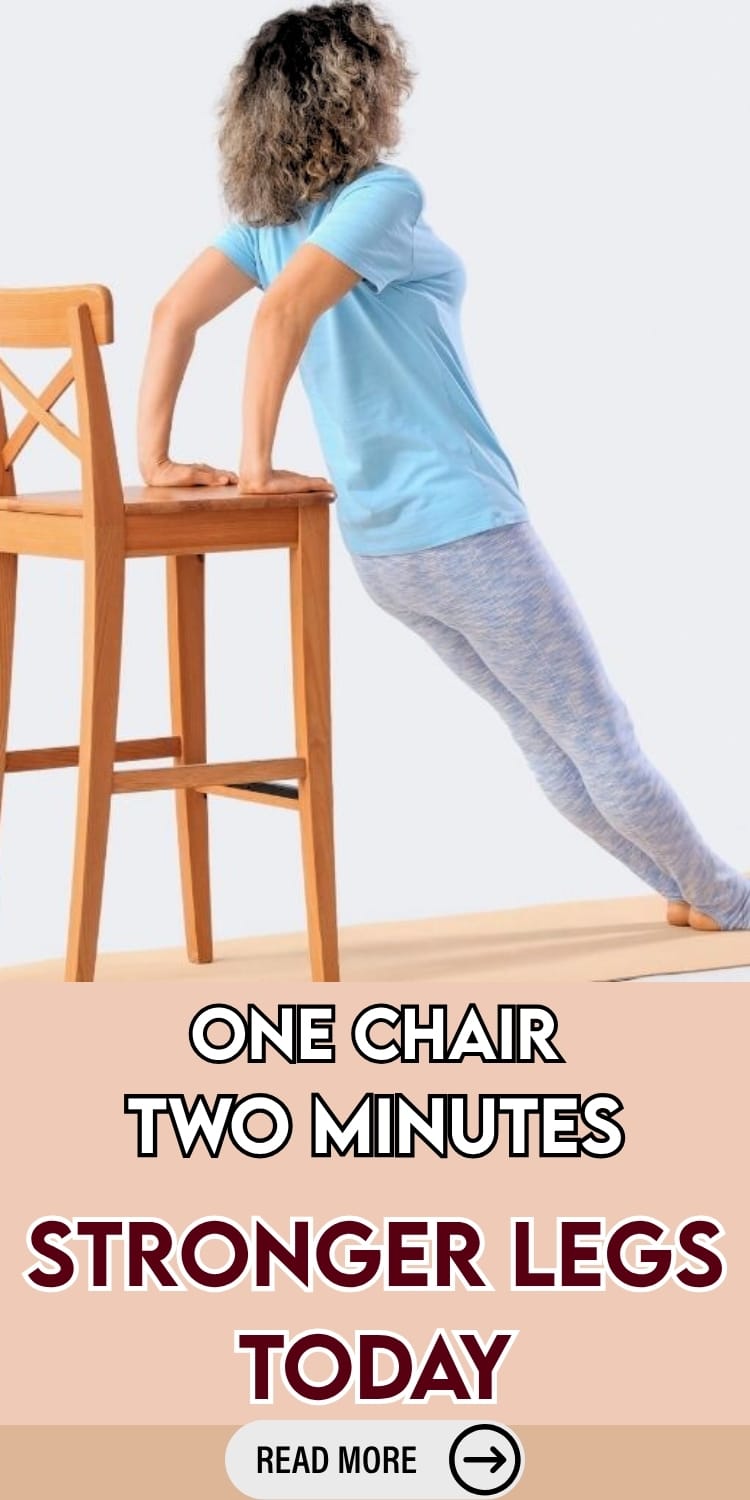
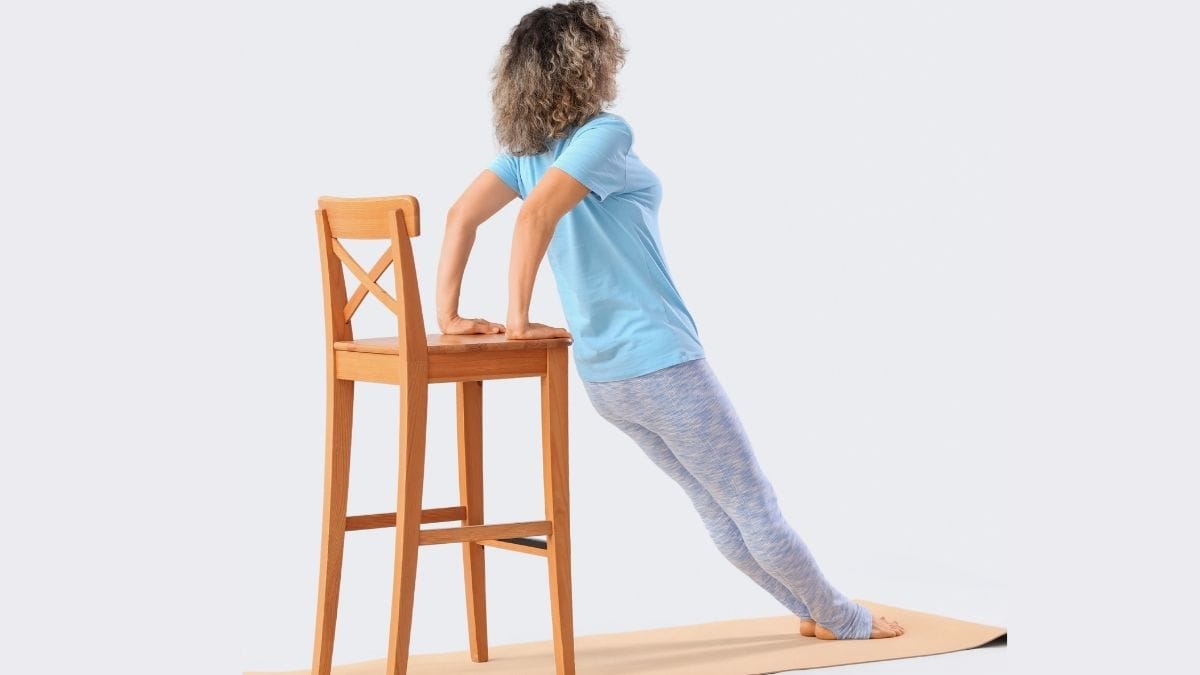
Here is how to do a calf raise. Stand behind a sturdy chair. Hold the back lightly for balance. Rise slowly onto your toes. Hold for 2 seconds. Lower back down slowly. Do 15 reps. Do this twice a day.
That is it. No equipment. No gym. Just a chair and two minutes.
You may feel soreness in your lower legs the first few days. That means it is working. Your calves have been resting too long.
Within two to three weeks, most people report that their steps feel more natural and less effortful. This is not a miracle fix. It is just targeting the right muscle at the right time.
Adjustment 2 — Single-Leg Balance: 30 Seconds Changes More Than You Think
More than 25 percent of older adults fall each year, according to the CDC. Most falls happen because balance has quietly gotten worse — and nobody noticed until it was too late.
Standing on one leg is one of the simplest ways to rebuild that balance. It trains your nervous system to hold your body steady over a single point of contact, which is exactly what every step of walking requires.
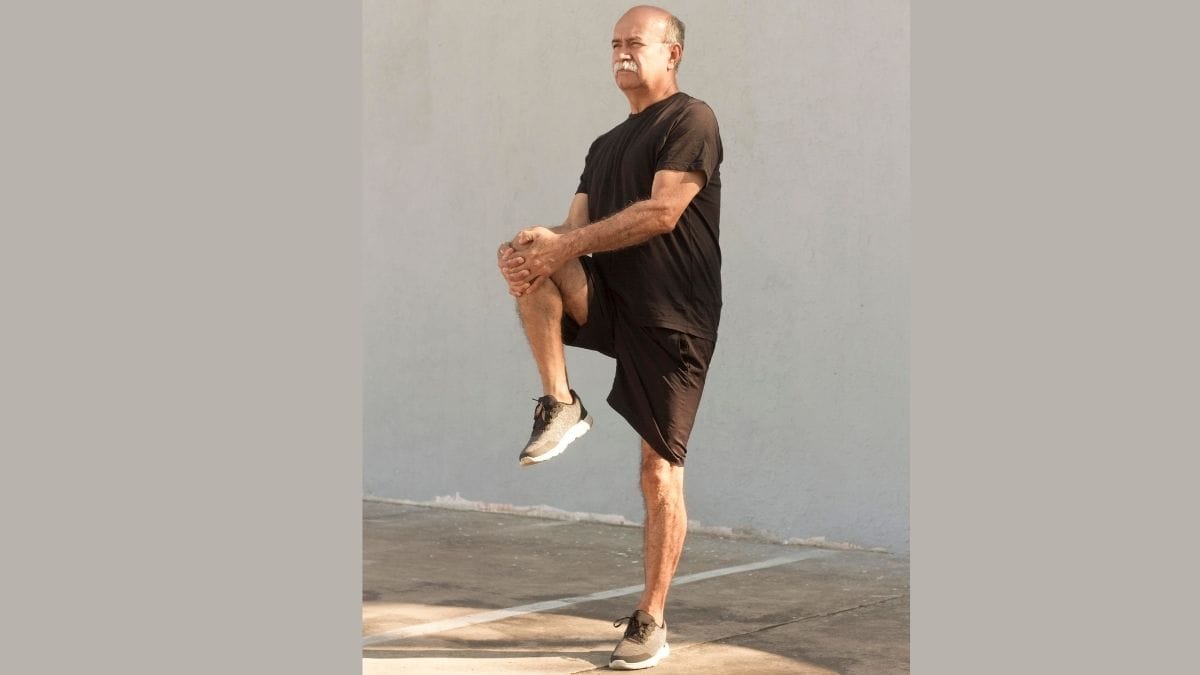
Here is how to do it. Stand near a wall in case you need it. Lift one foot slightly off the floor. Hold for 30 seconds. Switch feet. That is one set.
The easiest way to make this a habit is to do it while you brush your teeth. You are already standing there. Add balance work and the habit sticks with no extra effort.
Start with 10 seconds if 30 feels too hard. Build up over two weeks. Progress is the whole point.
Adjustment 3 — Japanese Walking Intervals: Simple Intervals That Actually Work
This method sounds trendy. But it is backed by real research from 2007, and it went viral in 2025 for good reason — nearly 3,000 percent growth in Google searches according to Athletech News.
Here is the idea. You alternate between slow walking and fast walking in three-minute cycles. A Japanese research team found that this style of walking led to greater gains in strength and endurance than walking at one steady pace the whole time.
It works because the harder intervals push your muscles to adapt. The easy intervals let you recover without stopping. Your heart and legs both get a proper workout without either one getting overwhelmed.
Here is how to do it. Walk slowly for 3 minutes. Then walk fast — harder than comfortable — for 3 minutes. Repeat that cycle 5 times. Do this 3 days per week.

You do not need a track. A neighborhood sidewalk works fine. A park path works fine. Any flat surface works.
Adjustment 4 — Chair Stands: Rebuilding the Leg Power You Lost
The chair stand is one of the most functional exercises you can do. It directly trains the muscles you use to stand up, sit down, go up stairs, and push off the ground while walking.
Research published in PubMed Central confirms that resistance exercises like this one rebuild the lower body muscles that act as the primary movers for walking — especially the quadriceps and hip flexors.
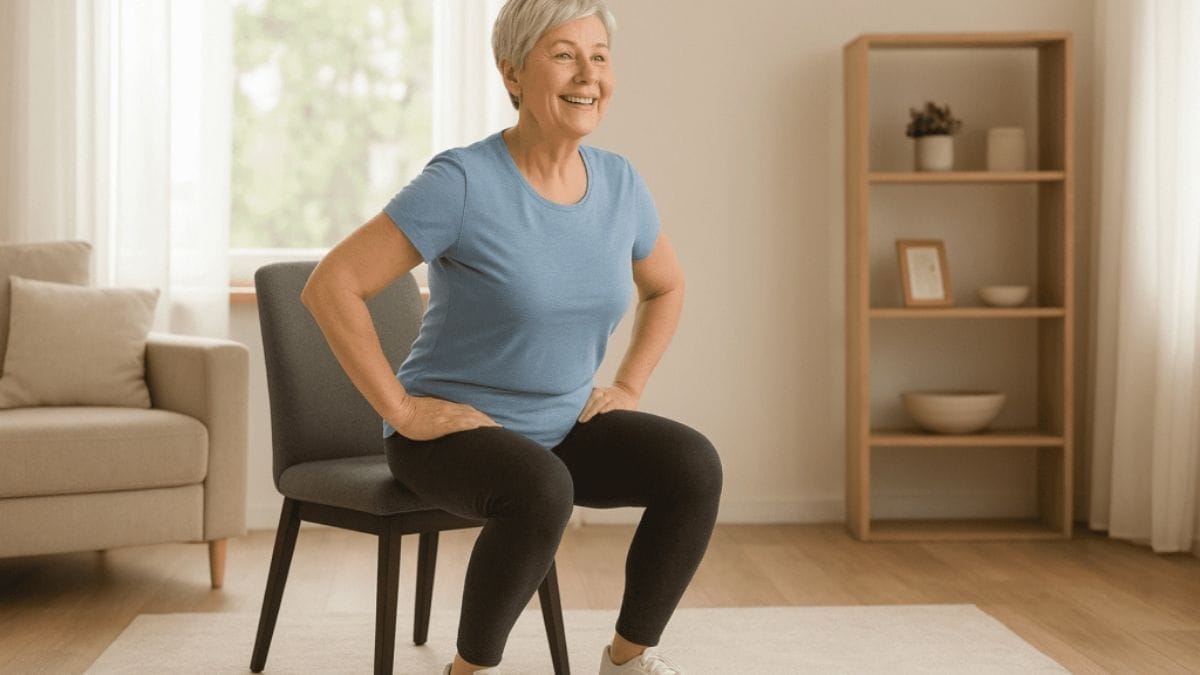
Here is how to do it. Sit in a firm chair. Cross your arms over your chest. Stand up slowly without pushing off with your hands. Then sit back down slowly. Do 10 repetitions. Do this twice daily.
Slow is the key word. The slower you move, the harder your muscles have to work. Fast and sloppy does not build strength. Slow and controlled does.
If 10 reps feels too easy after a week, try 15. If standing without hands feels impossible at first, use your hands lightly — then reduce that help over time.
Adjustment 5 — Consistency Over Intensity: The Rule That Actually Matters
You do not need to work hard. You need to show up regularly.
Research from Tufts School of Medicine found something important. People who were previously sedentary — fewer than 20 minutes of activity per week — got the biggest benefit from low-intensity movement.
Adding just 48 minutes of physical activity per week cut their risk of major mobility disability significantly.
That works out to roughly three 16-minute sessions per week. Less than half an hour every other day.
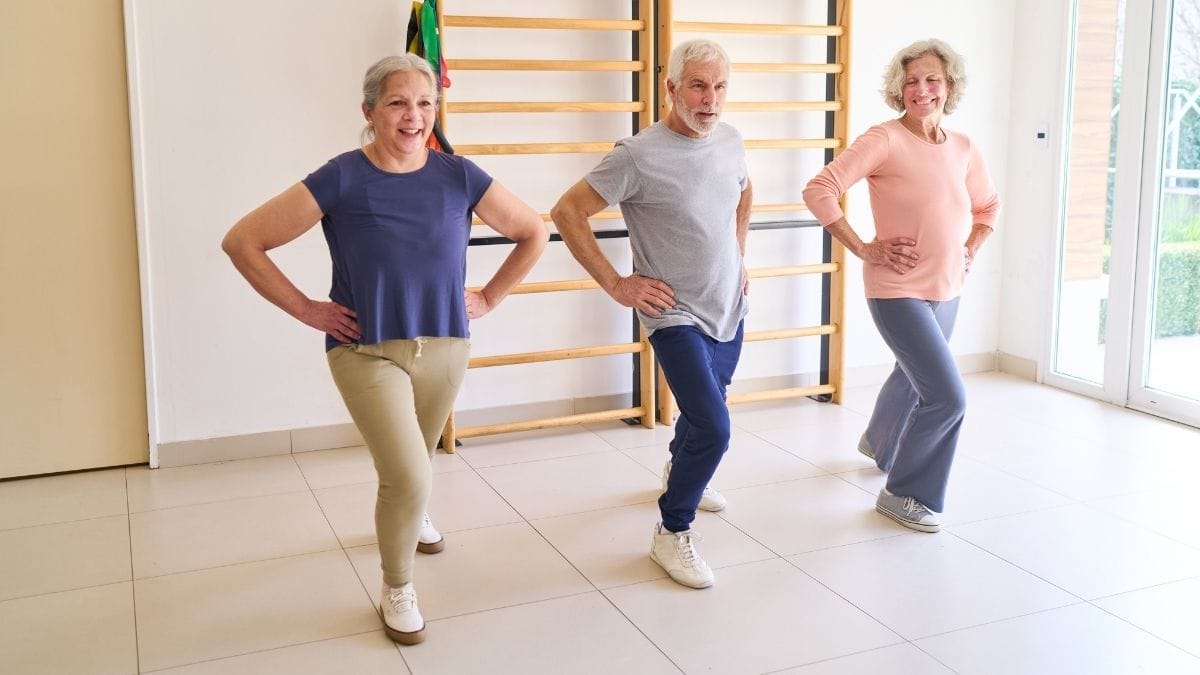
Here is what that can look like. A 15-minute walk on Monday. Chair stands and calf raises on Wednesday. A short Japanese walking session on Friday. That is it for week one.
You do not need more than that to start seeing results. The body responds to consistent, small input. It does not respond well to two weeks of hard effort followed by six weeks of nothing.
Pick a time. Set a reminder. Keep it short. Keep it regular.
What to Eat to Support Your Walking Strength
Exercise gets all the attention. But if you are doing chair stands and calf raises on a protein-poor diet, you are building on a weak base.
Protein is the most important nutritional factor for keeping your muscles working. Most adults over 50 are not getting enough. Experts now suggest 1.2 to 1.6 grams of protein per kilogram of body weight per day — more than the standard recommendation.
A simple starting point is a palm-sized portion of protein at every meal. Eggs, chicken, Greek yogurt, lentils, cottage cheese — all work well.

Vitamin D is the second big one. A deficiency in vitamin D is directly linked to muscle weakness and poor balance. It is very common in older adults. Ask your doctor to check your levels. If they are low, supplementation is straightforward.
Hydration matters too. Even mild dehydration slows muscle response and drains energy. Drink water steadily through the day — do not wait until you feel thirsty.
When to See a Doctor About Walking Difficulty
This article covers what you can fix yourself. But not everything that affects walking is a fitness problem.
Some causes need medical attention. Joint disease, peripheral artery disease, neurological changes, thyroid problems, and certain medications can all affect how you walk. A fitness routine will not fix any of those.
See a doctor if your walking ability changed suddenly. See one if you have significant pain while walking. See one if you notice one-sided weakness, or if your leg drags on one side. See one if you are falling more than occasionally.

A physical therapist who specializes in gait assessment is often the most useful first step for gradual walking decline. They can pinpoint exactly which muscles are weak and give you a plan built for your specific situation.
Getting checked is not giving up. It is getting a clear picture. And a clear picture is what lets you fix the right thing.
Conclusion:
Walking gets harder with age — but that does not mean it has to stay that way. Weak calves, lost muscle, and poor balance are all fixable with small, consistent effort.
Pick one adjustment from this article and try it today. Just one step forward is still forward.