

You reach for your morning coffee cup and your hand trembles. You grip it tighter. You hope nobody noticed.
Most people do the same thing — they dismiss it, blame stress, or quietly panic thinking it’s Parkinson’s. Neither reaction helps you.
Here’s the truth: shaky hands have at least 4 different causes. Most of them are manageable. Some are completely reversible. And one type — the last one on this list — is so rare that doctors miss it for years.
This article will walk you through all four types ofg tremors. You’ll learn what each one looks like, why it happens, and what you can actually do about it. By the end, you’ll know exactly which type fits your experience — and what your next step should be.
What Is a Hand Tremor? (And When Should You Worry?)
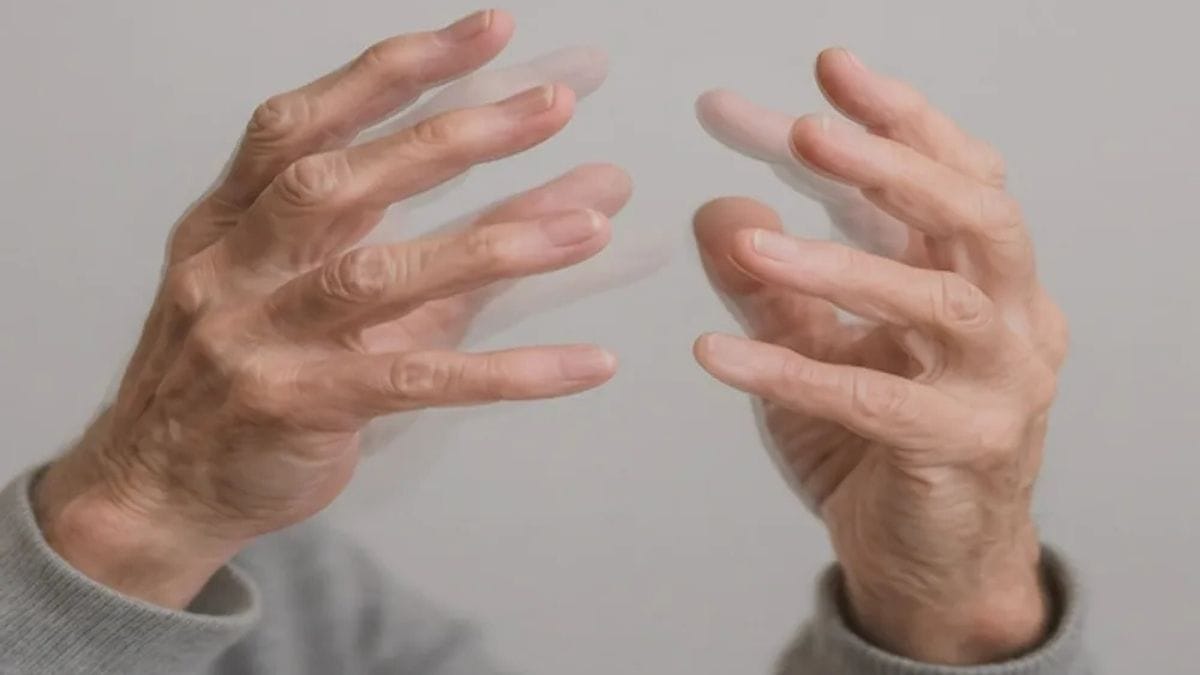
Not all shaking is the same. Before you name the type, you need to know what a tremor actually is.
A tremor is an involuntary, rhythmic muscle movement. The key word is rhythmic — it repeats in a pattern. It’s not a random twitch or jolt.
Every single person on earth has a tiny tremor happening right now. It’s called a physiologic tremor. It’s so small you never feel it. But when it becomes visible, frequent, or gets worse over time — that’s when it matters.
Tremors split into two basic families. Rest tremors happen when your hand is still and relaxed. Action tremors happen when you try to use your hand. That one difference tells doctors a lot about the cause.
Tremors won’t kill you. But they can make writing, eating, and dressing harder. About 75% of people with Parkinson’s disease have some form of tremor — but Parkinson’s is just one cause out of many.
2 Tips:
- Track when your shaking happens — at rest or during movement. Write it down before your doctor’s appointment.
- Note if anything makes it better or worse, like caffeine, sleep, or stress.
Type 1 — Essential Tremor: The Most Common One You’ve Never Named

This is the most common movement disorder in the world. Many people live with it for years and never learn its name.
Essential tremor is an action tremor. Your hand shakes when you use it — lifting a glass, signing your name, writing a check. When your hand rests in your lap, the shaking often stops. That’s the biggest difference from Parkinson’s.
Around 24.9 million people worldwide had essential tremor in 2020. In people over 65, the rate is between 5.79% and 8% — higher than Alzheimer’s in the same age group. In 2024, about 1.1 million Americans had a formal diagnosis.
In 50% of cases, it runs in the family. It can start at any age, but it’s most common after 40. The shaking produces 6 to 12 cycles per second. It’s usually slow to get worse.
The good news: treatments work. Propranolol, primidone, Botox injections, and — for severe cases — focused ultrasound thalamotomy. Simple changes like cutting caffeine and using weighted utensils also help.
Essential tremor is not Parkinson’s. It does not turn into Parkinson’s.
2 Tips:
- Ask your doctor specifically: “Could this be essential tremor?” Many doctors skip the name.
- Try weighted utensils at meals — they reduce shaking during eating without medication.
Type 2 — Parkinsonian Tremor: The One Everyone Fears But Often Gets Wrong

This is the tremor people dread most. But most people misread it.
Parkinsonian tremor is a rest tremor. It happens when your hand is completely still — sitting on your lap, hanging by your side. The moment you reach out to grab something, it often stops. That’s the opposite of essential tremor.
The classic sign is a “pill-rolling” motion — your thumb and finger rub together slowly, like you’re rolling a tiny ball. It usually starts on one side of the body first.
Parkinson’s affects over 1.1 million Americans and 11 million people worldwide. That number is expected to double by 2040. Nearly 90,000 new US cases are diagnosed every year.
Tremor is usually the first sign. But Parkinson’s also brings slow movement, stiff muscles, and balance problems. By the time someone gets diagnosed, 50% to 80% of their dopamine-producing brain cells are already gone.
If your shaking only happens when your hand is active, it’s less likely to be Parkinson’s. But if it appears at rest — see a neurologist.
2 Tips:
- Video your tremor when it happens. Show your doctor — it helps them see the rest-versus-action pattern clearly.
- Don’t self-diagnose. A neurologist can confirm or rule out Parkinson’s with a proper exam.
Type 3 — Physiologic Tremor: The One Your Lifestyle Is Causing

This one isn’t a disorder. Almost everyone gets it at some point.
Enhanced physiologic tremor is a small, fast action tremor in both hands. It’s not caused by a brain disease. It’s caused by what’s happening in your body and your life.
The triggers are things you can actually change. Too much caffeine. Not enough sleep. High anxiety. Low blood sugar. Certain medications — antidepressants, asthma inhalers, steroids, some heart drugs. Alcohol withdrawal. An overactive thyroid. Low vitamin B1, B6, or B12.
Here’s the key question: Did your shaking start around a specific trigger? A new medication? A stressful period? Cutting back on alcohol? If yes, this is likely enhanced physiologic tremor — and it’s potentially reversible once the cause is fixed.
The fix list is straightforward: stop caffeine after noon, sleep 7 to 8 hours, practice deep breathing for anxiety, ask your doctor to review your medications, and get a blood test to check your thyroid and B12 levels.
This is the tremor type where you have the most control.
2 Tips:
- Get a simple blood panel first — thyroid and B12 are cheap tests that often explain shaking no one else has looked at.
- Keep a 7-day log of your caffeine, sleep, and stress before assuming the worst.
Type 4 — Orthostatic Tremor: The 1 Nobody Talks About

This is the one that stumps doctors. And it might be the one you’ve been living with for years.
Orthostatic tremor causes rapid muscle contractions in your legs when you stand still. The shaking improves or disappears the moment you walk, sit, or lean against something. While standing, you feel unsteady — like your legs could give out.
Some people with this condition also feel shaking in their hands and trunk. The body compensates for the unsteadiness by tensing up — and that tension creates visible tremors elsewhere.
Here’s what makes it strange: the tremor vibrates at 13 to 18 Hz — so fast you can’t see it. You feel it. Press your hand against your thigh while standing still. If you feel a rapid buzzing or rippling, that’s the sign.
On average, it takes more than six years to get a correct diagnosis. Doctors often call it anxiety, aging, or “balance issues.” It’s commonly mistaken for Parkinson’s, restless leg syndrome, or psychogenic tremor. It’s more common in women, and it usually starts between ages 55 and 60.
There’s no cure yet. But clonazepam, gabapentin, and deep brain stimulation help many patients.
2 Tips:
- If you feel steady while walking but unsteady while standing, tell your neurologist those exact words — and ask about orthostatic tremor specifically.
- Request a surface EMG test done while standing. That’s the only way to confirm it.
How to Tell the Difference — A Quick Self-Check

You’ve read all four types. Here’s a fast way to figure out which one fits you.
Does your hand shake when it’s resting still? That points toward Parkinsonian tremor.
Does it shake when you’re reaching, writing, or lifting? That points toward essential tremor.
Did the shaking start after a new medication, a stressful period, or a change in sleep or diet? That’s likely physiologic tremor.
Do you feel unsteady or buzzing when standing still, but fine when walking? Ask your doctor about orthostatic tremor.
This is not a diagnosis. It’s a starting point for a real conversation with a neurologist.
See a doctor immediately if your tremor came on suddenly, appeared after a head injury, or comes with weakness, vision changes, or confusion. Those are red flags that need same-week attention — not a wait-and-see approach.
2 Tips:
- Bring this article to your appointment. Point to the type you think matches your experience.
- Ask for a referral to a movement disorders neurologist — not just a general doctor — for tremor diagnosis.
Conclusion;
Four types. Four very different causes. Most are manageable. Only one is Parkinson’s.
Essential tremor shakes during action. Parkinsonian tremor shakes at rest. Physiologic tremor comes from lifestyle. Orthostatic tremor hides in your legs while you stand.
You now have names. Use them. Knowing your type of hand tremor is how you get the right help.