

You’ve probably seen the advice: find a quiet space, close your eyes, and meditate for 20 minutes. Most standard mindfulness advice feels abstract, time-consuming, or built for people who are decades younger and have no joint pain.
If you’re one of the many adults over 60 who want simple, no-equipment mental wellness habits, this article is for you. These seven mindfulness exercises for older adults are built around daily moments you already have.
Each one takes five minutes or less, and every one attaches to something you already do. By the end, you’ll have a complete, practical toolkit you can start using today.
Why Five Minutes of Mindfulness Exercises Works Better Than Twenty for Most People Over 60
You don’t need more time. You need a different starting point. Most people over 60 who try mindfulness quit within two weeks — not because the practice failed them, but because the format was wrong from the start.
You’ve probably been told you need 20 minutes a day to see any benefit. Short, consistent sessions actually beat long, occasional ones.
A 2013 study published in Mindfulness found that brief mindfulness practice reduced perceived stress in adults aged 65 and older, with improvements seen even in participants who practiced for as little as five minutes at a time.
Consistency beats duration. Repeated short sessions give your brain regular practice at stepping back from stress. That signal compounds over days and weeks.
There are also real-world reasons longer sessions are hard for this age group. Joint discomfort makes sitting still for 20 minutes painful. Interrupted sleep means afternoons often run short on energy. Schedules filled with appointments, family, and caregiving leave few clean 20-minute windows.
The seven mindfulness exercises in this article are designed for those realities, and every one fits into the life of an older adult as it actually is. None require you to sit on the floor. None need a separate room. None take longer than five minutes.
Talk to your doctor before adding any new health routine if you’re managing a chronic condition, taking medication for anxiety or depression, or recovering from a recent illness.
The next section gives you your first exercise. You may have already had the perfect moment for it this morning.
Exercises 1 and 2: Your Morning Drink Is Already Half the Practice
Most mindfulness advice for older adults was written for people who have never needed it: people with no joint pain, no interrupted sleep, and 45 free minutes before noon. These two exercises were designed differently.
Both attach to your morning coffee or tea. Each one fits naturally into a daily mindfulness routine without adding time to your morning. You don’t need to find new time. You just need to use time you already have.
Exercise 1: The First-Sip Pause (2 minutes)
Before you do anything else with your drink, stop for two minutes.

- Hold the cup in both hands. Notice the warmth.
- Take one slow breath in through your nose.
- Before you sip, notice the smell.
- Take your first sip and hold it for a moment before swallowing.
- Name one thing you can see, one you can hear, and one you can feel.
That’s it. You’ve just completed a full sensory grounding practice. Attaching a new habit to an existing one makes it easier to repeat consistently. This approach, called habit stacking [the practice of linking a new behavior directly to an existing daily routine so the old habit triggers the new one], is supported by habit formation research showing strong automaticity effects in adults.
Exercise 2: The One-Breath Send-Off (30 seconds)

Before you leave the kitchen, take one deliberate breath: four counts in, hold for two, six counts out. That’s one breath. Done.
The next section takes mindfulness out of your kitchen and into something you likely already do every single day.
Exercise 3: The Walking Check-In: Turn Any Walk Into a Mental Reset
Walking is the most common form of exercise among adults over 60. You’re probably already doing it. This exercise adds nothing to your schedule — it just changes what you pay attention to while you walk.
The Walking Check-In: one cycle per block
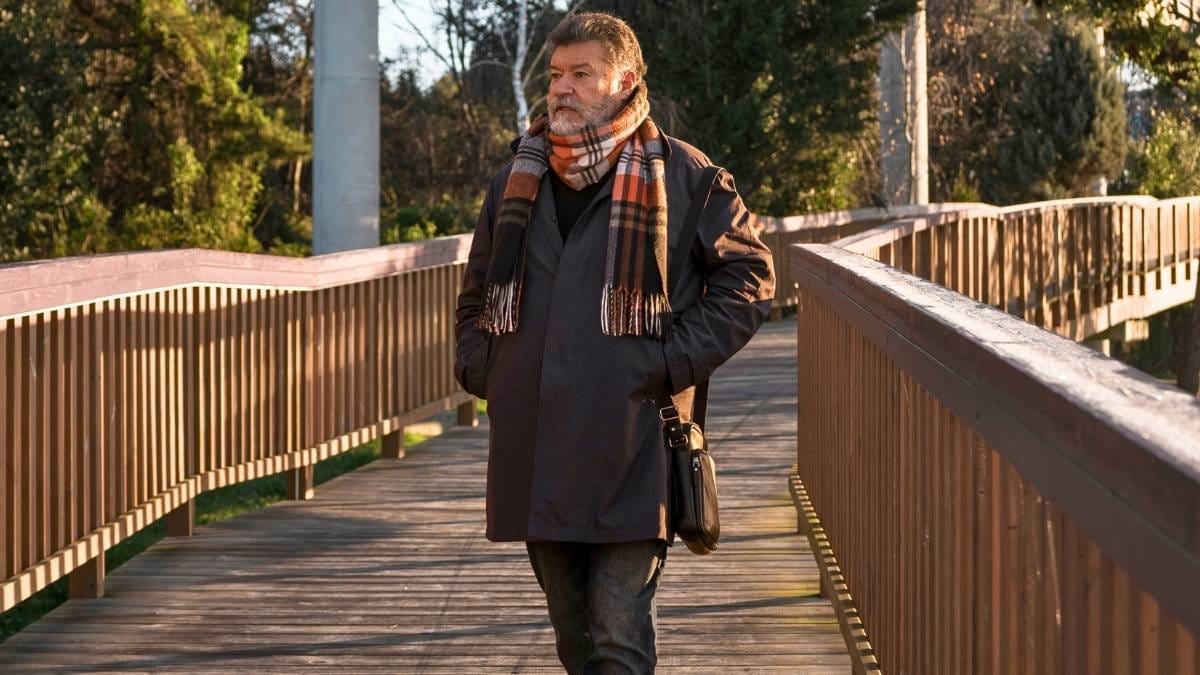
As you walk, run through this three-part check once per city block, or once every two to three minutes on a trail or open path:
- What you see: Name three things around you out loud or silently. Not categories. Specific things. Not “a tree” — “a pine tree with a split trunk.”
- What you hear: Name two sounds. Listen for one you might normally filter out.
- What you feel: Notice one physical sensation. The pavement under your heel. The air on your forearm. The weight of your jacket.
Research on mindful walking found that it reduced anxiety and improved mood in adults experiencing psychological distress. Shifting attention to direct sensory experience interrupts the loop of repetitive thinking that feeds stress and low mood.
Repetitive thinking [the habit of cycling through the same worries, regrets, or future fears without resolution] is one of the most common drivers of anxiety in older adults. Walking mindfully gives the brain a different job.
You don’t need to walk farther or faster. You just need to notice more.
The next section handles a moment most people waste entirely — and it may be the most available mindfulness window in your entire week.
Exercise 4: The Waiting Room Reset: Five Minutes You Already Had
You’re sitting in a waiting room, a pharmacy line, or a parked car before an appointment. Your phone is in your hand. You’re about to scroll. This is the most overlooked mindfulness opportunity in an older adult’s week.
Breathing exercises for seniors don’t require silence, closed eyes, or a yoga mat. This one requires only a chair and your own breath.
Exercise 4: Breath Counting (3 to 5 minutes)
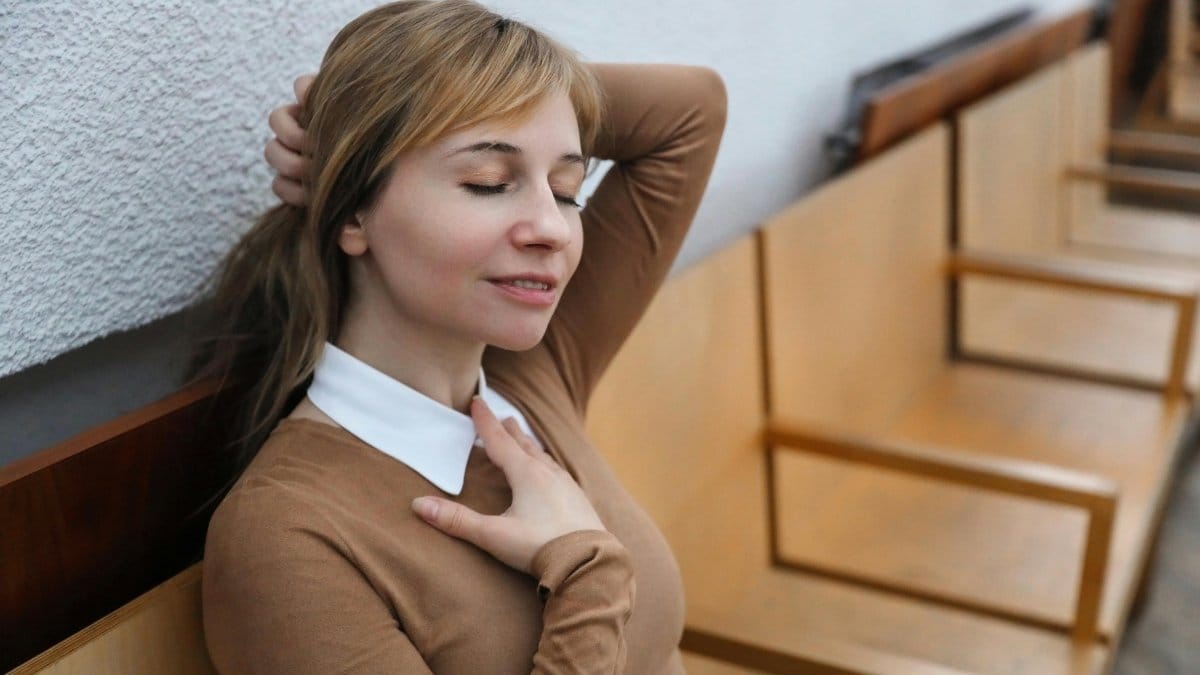
- Sit with both feet flat on the floor.
- Let your hands rest on your thighs.
- Breathe in normally. As you breathe out, count “one.”
- Breathe in again. Breathe out: “two.”
- Continue to ten. Then start again at one.
- If you lose count, start over at one without judgment.
That’s the full practice. Research confirms that slow, paced breathing is associated with activation of the parasympathetic nervous system [the part of your body’s stress-regulation system that slows your heart rate and signals safety], which reduces the physical symptoms of acute stress.
You don’t need to close your eyes. You don’t need quiet. People around you won’t know you’re doing anything at all.
Waiting Room Reminder: Keep count, not time. Ten cycles takes about three minutes. Two rounds takes about six. Let the breath set the pace.
The next section covers the moment many adults over 60 find hardest: getting to sleep and staying there.
Exercises 5 and 6: The Bedtime Pair: Two Minutes to Better Sleep
Lying awake with your mind still running is one of the most common complaints among adults over 60. These two exercises work together. Do them in order. Neither takes more than three minutes total.
Exercise 5: The Body Scan (90 seconds)
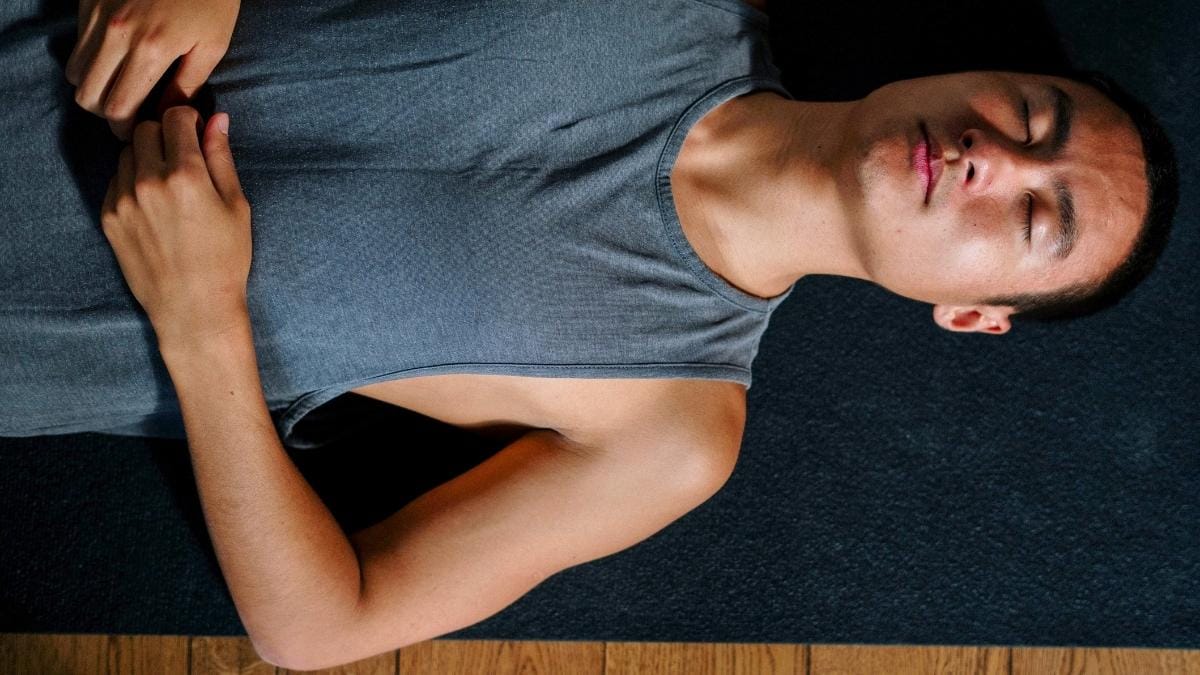
- Lie on your back. Close your eyes.
- Start at the top of your head. Notice any tension there. Don’t try to fix it. Just notice.
- Move slowly to your face, jaw, neck, shoulders, chest, arms, hands, stomach, hips, legs, and feet.
- At each spot, notice what’s there. Tight. Loose. Warm. Numb. No judgment.
- End at your feet. Take one breath. Done.
That tracks with what research confirms. A study published in JAMA Internal Medicine found that mindfulness meditation improved sleep quality and reduced daytime fatigue in adults with a mean age of 66. The body scan is one of the core practices used in that research.
Exercise 6: The Worry Drop (30 seconds)
Before you close your eyes to sleep, complete this sentence out loud or in writing: “The one thing I’m still thinking about is ___.” Then say or write: “I’m setting that down for tonight.”

Rumination [the habit of replaying the same worry or regret over and over without reaching a resolution] is closely linked to poor sleep in older adults. Naming the worry and intentionally setting it aside gives the mind a clear signal that the processing is done for the night.
The final section is the shortest practice in this article, and the one most likely to change what you notice by the end of next week.
Exercise 7: The Gratitude Pause: One Sentence That Changes What You Notice

This is the last of the seven mindfulness exercises for older adults in this article, and it asks the least of you. You don’t need a journal. You don’t need to list five things. You need one sentence.
At any point in your day — morning, afternoon, or right before bed — complete this:
“One thing that was fine today was ___.”
Not extraordinary. Not beautiful. Just fine. The exercise works precisely because the bar is low. You’re training your brain to scan for neutral and good experiences, not just problems.
Regular gratitude practice is linked to lower levels of depressive symptoms [persistent low mood, loss of interest, or feelings of hopelessness that interfere with daily life] in adults aged 65 and older. The effect builds over time, not overnight.
How to use it:
- Say it silently on your morning walk
- Write it in the Notes app on your phone before bed
- Say it to a partner or family member over dinner
- Write it on a sticky note and leave it where you’ll see it tomorrow
You’ll find, within a week or two, that your brain starts flagging fine moments as they happen — before you even sit down to name one. That’s the practice working.
All seven exercises are now in your hands. The last thing you need is a starting point.
CONCLUSION:
Choose one exercise from this list and do it today. Pick one exercise from this article and do it today for five minutes — not all seven, not a plan for next week, just one.
The simplest starting point is Exercise 1: hold your morning drink, take one breath, and name what you see, hear, and feel. These are mental wellness tools built for seniors, and the best one is always the one you’ll actually do.
Every reliable practice of mindfulness exercises for older adults starts with one repeated action, done simply and done now.