
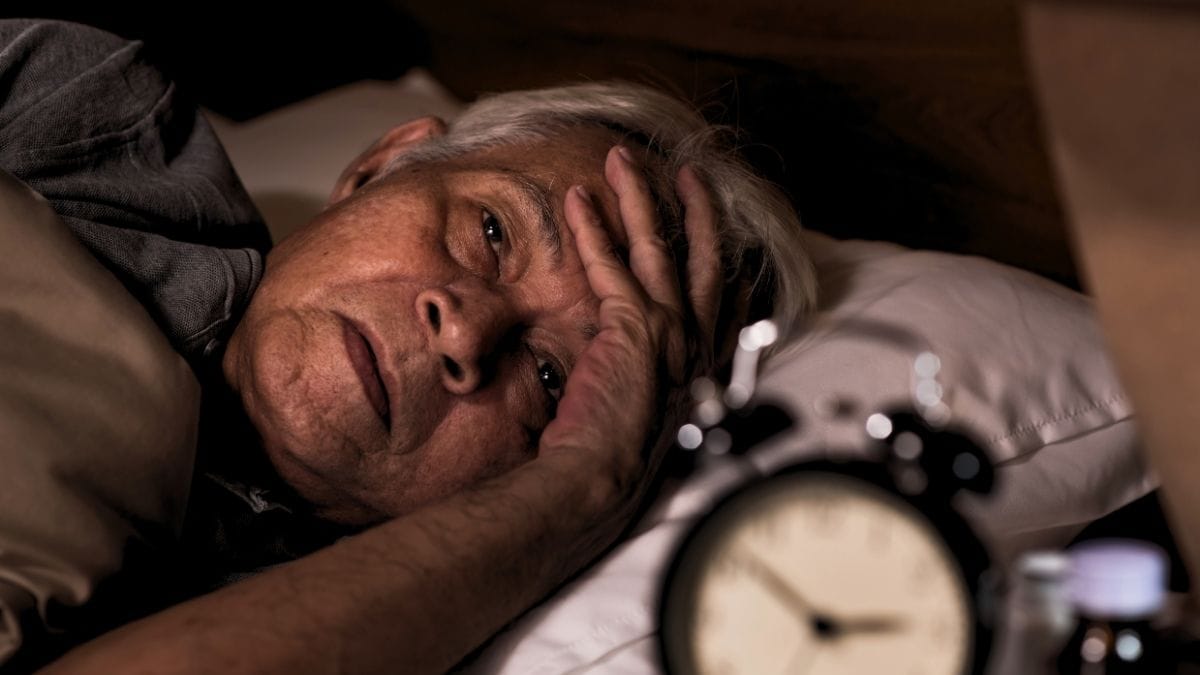
If you used to sleep through the night and now you’re wide awake at 3 a.m. staring at the ceiling — you’re not imagining things. And you’re not alone.
Sleep genuinely changes after 75. Your body makes less melatonin. Your internal clock shifts earlier. Deep, restful sleep gets shorter. Research confirms that up to 50% of older adults struggle with insomnia. That number doubles compared to younger adults.
But here’s the thing — this is not your fault. And it’s not hopeless.
These 7 fixes are backed by real clinical research. No medication. No guesswork. Just proven, practical steps you can start using this week to sleep better as you age.
Why Sleep Gets Harder After 75
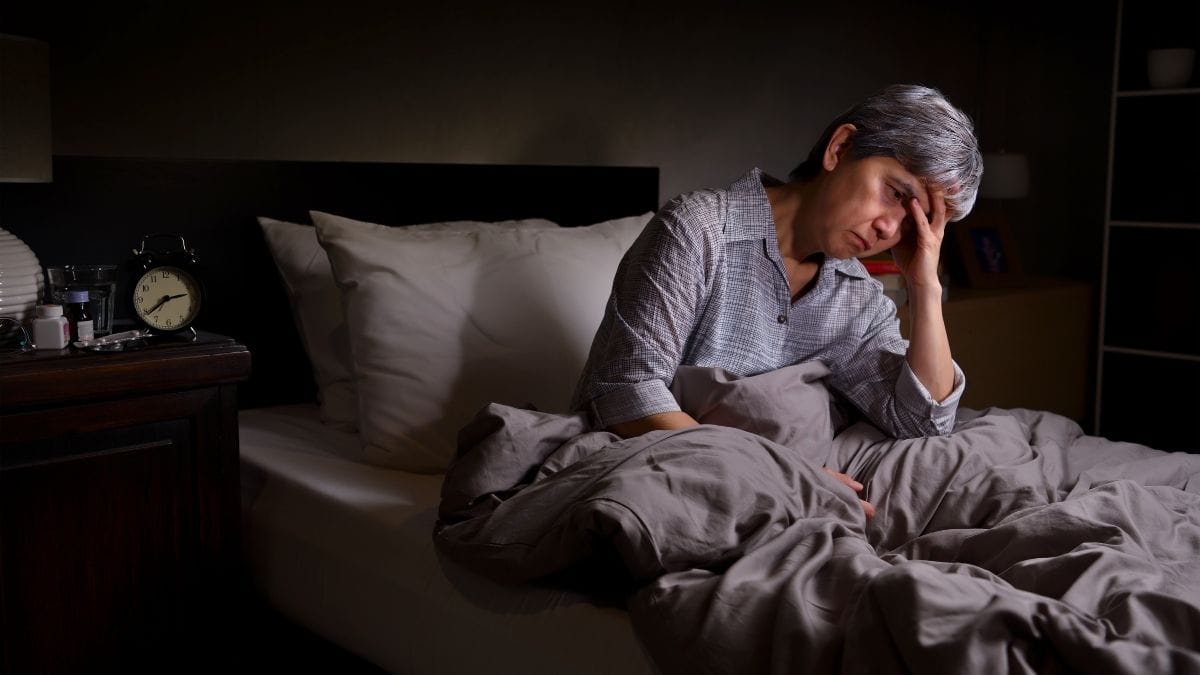
Your body clock shifts forward as you get older. That’s why you feel sleepy at 8 p.m. and wide awake at 4 a.m. This is biology, not weakness.
Deep sleep — the kind that actually restores your body — gets shorter with age. Older adults spend far less time in this stage than younger people do.
Your brain also makes less melatonin. Melatonin is the hormone that signals nighttime to your body. Less of it means weaker sleep signals.
Add in arthritis pain, frequent bathroom trips, or restless legs — and sleep breaks apart even more.
But here’s what matters most: a 2025 study from Black Hills State University, published in Frontiers in Sleep, confirmed that sleep problems in older adults are a modifiable health behavior. That means they can be changed. Non-drug fixes are both safe and effective for this age group.
You don’t have to just accept bad sleep.
Fix 1 — Use Morning Light to Reset Your Body Clock

Your body clock is controlled by light. But after 75, this system becomes less sensitive. You need more deliberate exposure to strong light in the morning.
Getting light within 30 minutes of waking tells your brain it’s daytime. This sets the timer for when you’ll feel sleepy that night.
A 7-week clinical trial with participants averaging age 75.6 found that light therapy increased total sleep time by an average of 82 minutes compared to baseline. That’s a meaningful difference — from a non-drug fix.
What to do: Open your curtains right when you wake up. Sit by a sunny window for 20 minutes. Or take a short walk outside before 9 a.m.
If mobility is limited, a 10,000 lux light therapy lamp works well. Brands like Verilux and Carex make reliable ones.
And in the evening — put the phone and tablet away by 8 p.m. Blue screen light suppresses melatonin and pushes your sleep time later.
Fix 2 — Try CBT-I Before You Try Any Sleeping Pill

CBT-I stands for Cognitive Behavioral Therapy for Insomnia. It sounds clinical. But the idea is simple — it changes the thoughts and habits that keep your brain alert at night.
The American Academy of Sleep Medicine calls it the gold-standard, first-line treatment for chronic insomnia. That means it comes before medication, not after.
A 2024 study in the Journal of the American Geriatrics Society confirmed CBT-I improved insomnia symptoms, sleep quality, fatigue, and daytime sleepiness in older adults.
A 2025 randomized controlled trial in npj Digital Medicine tested a digital CBT-I program called SHUTi OASIS — built for adults aged 55 to 95. Participants saw major improvements right after treatment, and the results held at 6 and 12 months later.
CBT-I takes 6 to 8 weeks of effort. It’s not passive. But unlike a pill, the results last.
Ask your doctor for a referral. Or try Sleepio — an FDA-authorized digital CBT-I app you can use from home.
Fix 3 — Move Your Body, But Pick the Right Time

Exercise is one of the most powerful free sleep tools available. And you don’t need to run a mile to feel the difference.
A 2025 meta-analysis in Frontiers in Medicine reviewed 26 randomized controlled trials covering 2,189 elderly participants. The finding was clear — exercise significantly improved sleep quality in older adults.
The three types that worked best: Tai Chi, regular walking, and dance-based movement. Even low-intensity exercise made a real difference — which matters if you have joint pain or limited mobility.
A 2024 study in Translational Psychiatry found that a 12-week exercise program improved sleep and actually restored brain network connections involved in sleep regulation.
Try a 20 to 30 minute morning walk. Many senior centers offer free Tai Chi classes. Chair yoga on YouTube is another good option if movement is limited.
One important rule: avoid hard exercise within 2 to 3 hours of bedtime. It raises your body temperature and delays sleep. Morning or early afternoon is the best window.
Fix 4 — Set Up Your Bedroom to Work for You

Your bedroom environment has a direct effect on how well you sleep. A few simple changes can make a real difference.
Temperature first. The Sleep Foundation recommends keeping your bedroom below 75°F. For most older adults, 65 to 68°F works even better. As you age, your body becomes less efficient at cooling itself during sleep. A cool room helps that process along.
Light and noise matter too. Blackout curtains block early morning light — which can wake you up too soon. A white noise machine covers outside sounds that interrupt lighter sleep stages. LectroFan and Marpac Dohm are two reliable brands.
Here’s one rule that makes a big difference: use your bed only for sleep. No TV. No reading. No scrolling.
This is called stimulus control. It trains your brain to link the bed with sleep — not alertness. If you lie awake for more than 20 minutes, get up. Do something calm in dim light. Then return to bed when you feel sleepy again.
Fix 5 — Watch What You Eat and Drink After 3 p.m.

What goes into your body in the afternoon and evening directly affects how you sleep at night.
Caffeine has a half-life of 5 to 6 hours. A coffee at 3 p.m. still has half its caffeine in your system at 8 p.m. For older adults, caffeine is cleared from the body even more slowly. Cut it off by 1 or 2 p.m. to be safe.
Alcohol is a common mistake. It helps you fall asleep faster — but it breaks up your sleep in the second half of the night. It reduces deep, restorative sleep stages. The American Association for Geriatric Psychiatry specifically warns against using alcohol as a sleep aid.
Big meals close to bedtime cause acid reflux and discomfort. Both interrupt sleep.
If you feel hungry before bed, a small snack works well. Try whole grain crackers with peanut butter — complex carbs with a little protein. This helps keep blood sugar stable and reduces early morning waking.
The National Sleep Foundation’s 2023 Aging Conference report named meal timing as a key recommendation for better sleep in older adults.
Fix 6 — Go to Bed at the Same Time Every Night
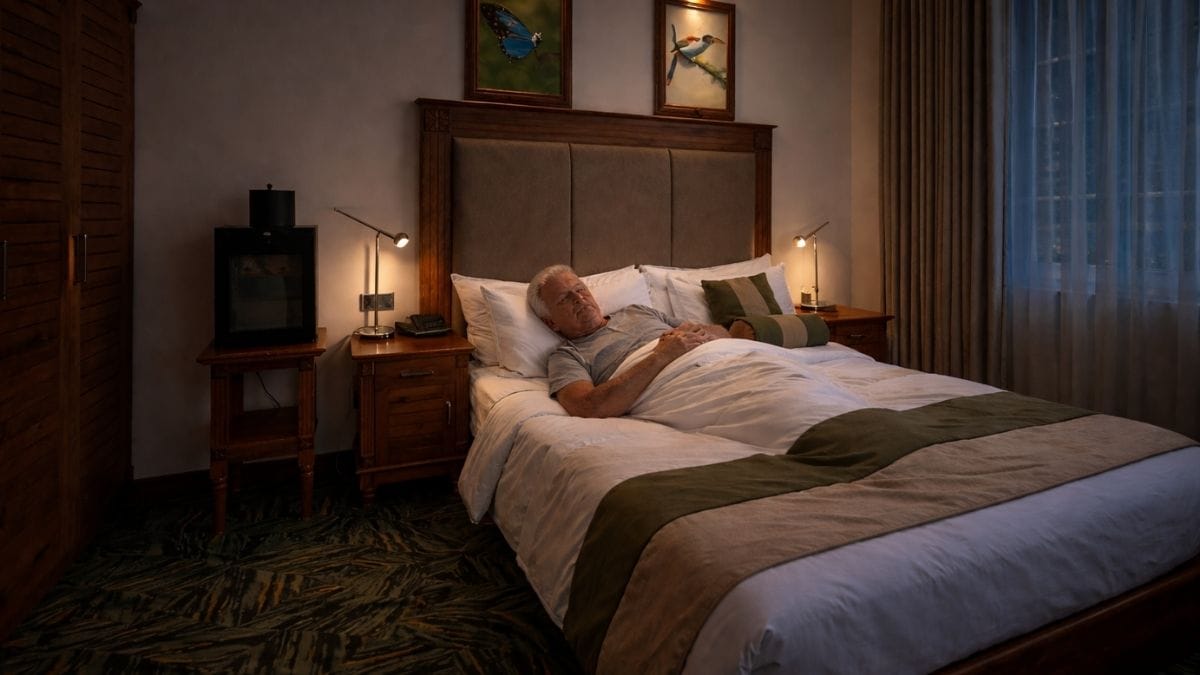
Your body clock runs on rhythm. Regularity is one of the strongest free tools you have — and most people ignore it.
Going to bed and waking up at the same time every day — including weekends — keeps your circadian rhythm stable. Even sleeping in 90 extra minutes on a Saturday can throw your internal clock off for days.
The National Sleep Foundation’s Sleep Health and Aging report (published in Sleep Health journal, 2023) lists a consistent sleep schedule as one of the top recommendations for older adults.
For many people over 75, the natural bedtime is genuinely 9 or 9:30 p.m. That’s not strange. That’s biology. Fighting it by staying up late usually makes sleep worse — not better.
About naps: short naps of 20 minutes or less before 2 p.m. are fine and can even help. But long naps or late-afternoon naps reduce sleep pressure — the natural drowsiness that builds during the day. Less sleep pressure means harder time falling asleep at night.
Fix 7 — Stop Nighttime Worry From Stealing Your Sleep
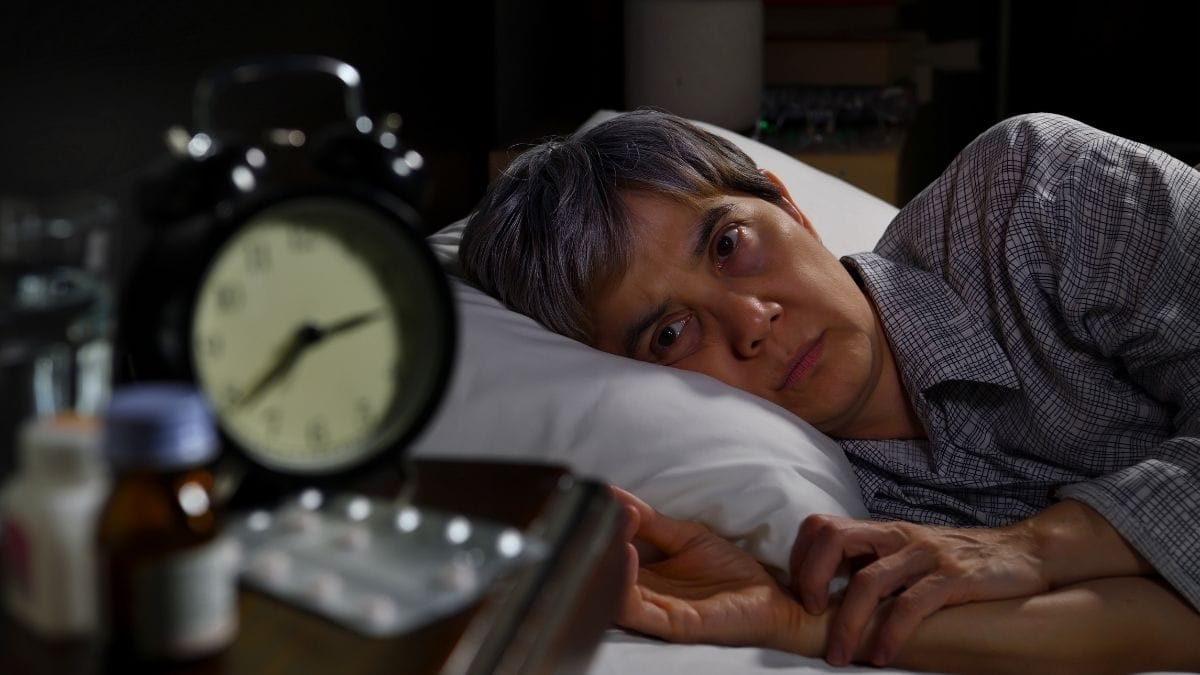
Anxiety and overthinking at night are more than just annoyances. They are a direct cause of insomnia in older adults.
A 2025 study in Clinical Gerontologist found that anxiety significantly worsens sleep quality in this age group — partly through loneliness and negative thoughts about aging.
Here’s the cycle that traps people: you can’t sleep, so you worry about not sleeping, which makes your nervous system more alert, which makes it even harder to sleep. This pattern is called hyperarousal.
Three techniques that actually help — all supported by clinical guidelines:
Progressive muscle relaxation — tense and release each muscle group from your feet to your face. It signals the body to let go of physical tension.
Diaphragmatic breathing — slow belly breathing, not chest breathing. Four counts in, hold two, six counts out.
A worry list — write down every anxious thought before bed. It gets the worry out of your head and onto paper.
Apps like Insight Timer (free) and Calm offer guided sessions built for older adults. If anxiety is severe, CBT-I directly targets this pattern.
Conclusion:
Sleep after 75 is harder. But it is not hopeless.
Light, movement, a steady schedule, CBT-I, a calm bedroom, smart eating, and managing nighttime worry — all seven are backed by current research.
Start with one fix. Give it two weeks. Build from there. If insomnia has lasted more than four weeks, talk to your doctor and ask about a sleep specialist or CBT-I program.