

You may be eating enough protein every day and still losing muscle without knowing it.
Most people over 50 load their protein at dinner. Breakfast is toast and coffee. Lunch is a salad. By the time dinner arrives, your muscles have gone hours without the signal they need to stay strong. That gap is the real problem, not the total amount of protein you eat.
This article explains what sarcopenia is and why it matters. It also explains why timing your protein across meals is more important than most people think. And it tells you exactly what to eat at each meal to keep your muscles working for you.
The fix is simpler than you expect. And it starts today.
What Is Sarcopenia and Why Should You Care?
You probably did not notice it at first. Getting up from the couch felt a little harder. Stairs took more effort. Opening a jar became a two-hand job.

These are not just signs of aging. They may be signs of sarcopenia, the medical name for age-related muscle loss. It is not a disease you catch. It is a slow, steady process that starts in your 30s and picks up speed after 60.
After 60, adults can lose 1 to 2 percent of muscle mass every single year. That adds up fast. And the early signs are easy to brush off. Feeling tired after carrying groceries. Needing your hands to push yourself up from a chair. Walking a little slower than you did two years ago.
Sarcopenia raises your risk of falls, fractures, and losing your independence. But it is not inevitable. Nutrition and movement can slow it down. In some cases, early losses can be reversed.
The problem is real. But so is the fix. And it starts with what you eat and when you eat it.
The Real Reason Your Muscles Stop Responding

Why do some people eat what seems like enough protein and still lose muscle? The answer is a biological shift called anabolic resistance.
Here is what that means in plain words. In younger adults, eating 20 to 25 grams of protein at a meal is enough to trigger muscle repair. In adults over 50, that same amount barely moves the needle.
Your muscles become less sensitive to the signal protein sends. The trigger still works, but you need to pull it harder.
Think of it like an old radio. When you were 30, turning the volume up to 4 caught the station clearly. Now at 55, you need it at 8 to hear the same thing. The station has not changed. Your receiver has.
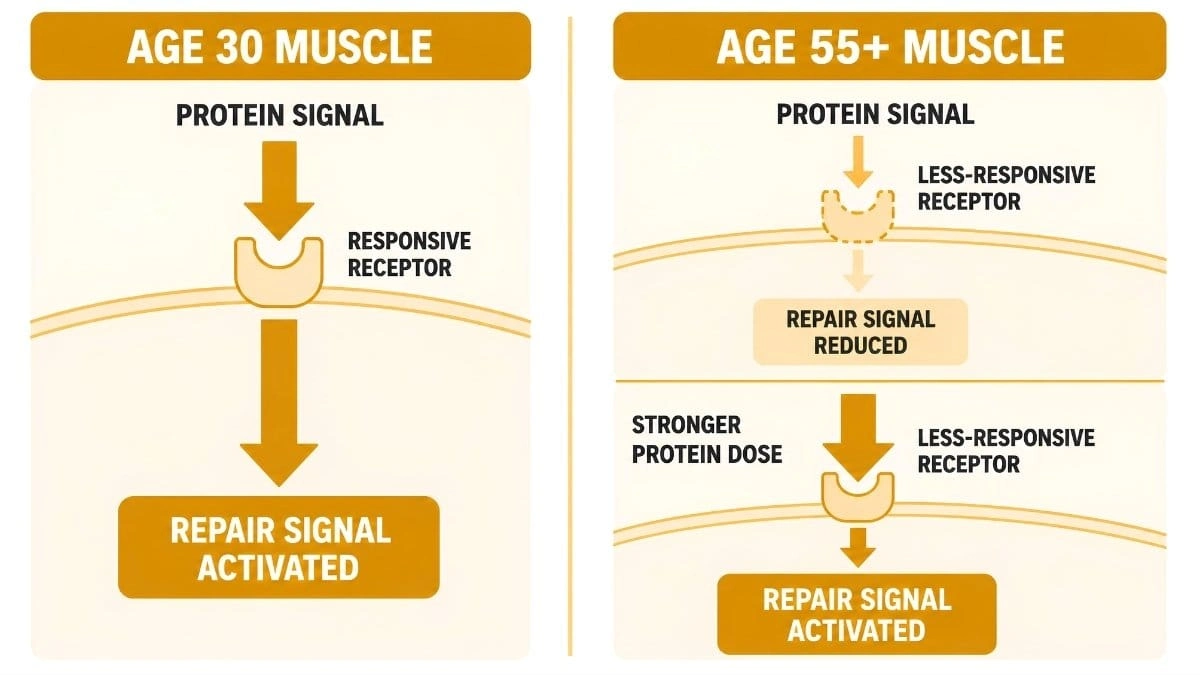
This is not a failure of effort. It is a physical change in how aging muscle works. And it is not your fault.
The fix is not complicated. You need more protein per meal, and you need it spread across the day. Knowing this changes everything about how you should eat. It is not about eating more food. It is about eating the right amount at the right time.
The Protein Timing Mistake Most People Over 50 Make
If you are eating most of your protein at dinner, you are following the most common pattern among adults over 50. It is also the pattern most likely to cost you muscle.
Here is what that looks like for most people. Toast and coffee for breakfast is about 5 grams of protein. A salad for lunch adds maybe 12 more. Then a chicken dinner delivers 60 grams. The daily total looks fine on paper. But your muscles only got one proper repair signal that day, not three.
Now compare that to spreading it evenly. Thirty grams at breakfast, 30 at lunch, 30 at dinner. Same daily total. But now your muscles get three separate windows to repair and rebuild.

That is the protein timing hack. Same food. Same total. Smarter spread.
And skipping breakfast protein makes it worse. Overnight, your body goes 7 to 8 hours without amino acids. If breakfast adds nothing useful, that gap stretches straight through the morning. Your muscles spend half the day in breakdown mode.
You do not need to eat more. You need to eat it differently.
How Much Protein You Actually Need After 50
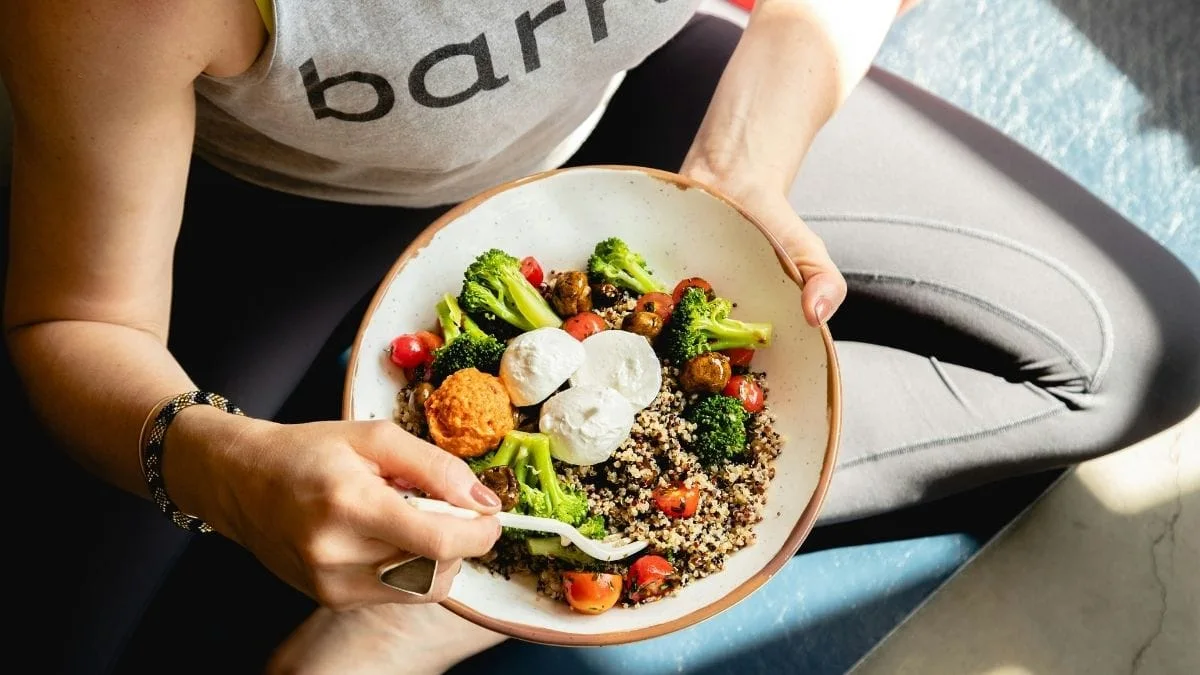
The protein number on the side of a cereal box is designed to keep you alive, not keep you strong.
The old government recommendation was 0.8 grams of protein per kilogram of body weight per day. That number was set to prevent deficiency in younger adults. It was never meant to be a target for people over 50 who want to hold onto their muscle.
Your New Protein Target
The updated Dietary Guidelines raised the daily target for older adults.
Spread across 3 meals a day
Women going through or past menopause may need to lean toward the higher end of that range. Declining estrogen speeds up muscle loss. More protein per meal helps push back against that.
Now that you know how much, here is what those meals can actually look like.
What to Eat at Each Meal to Hit Your Target
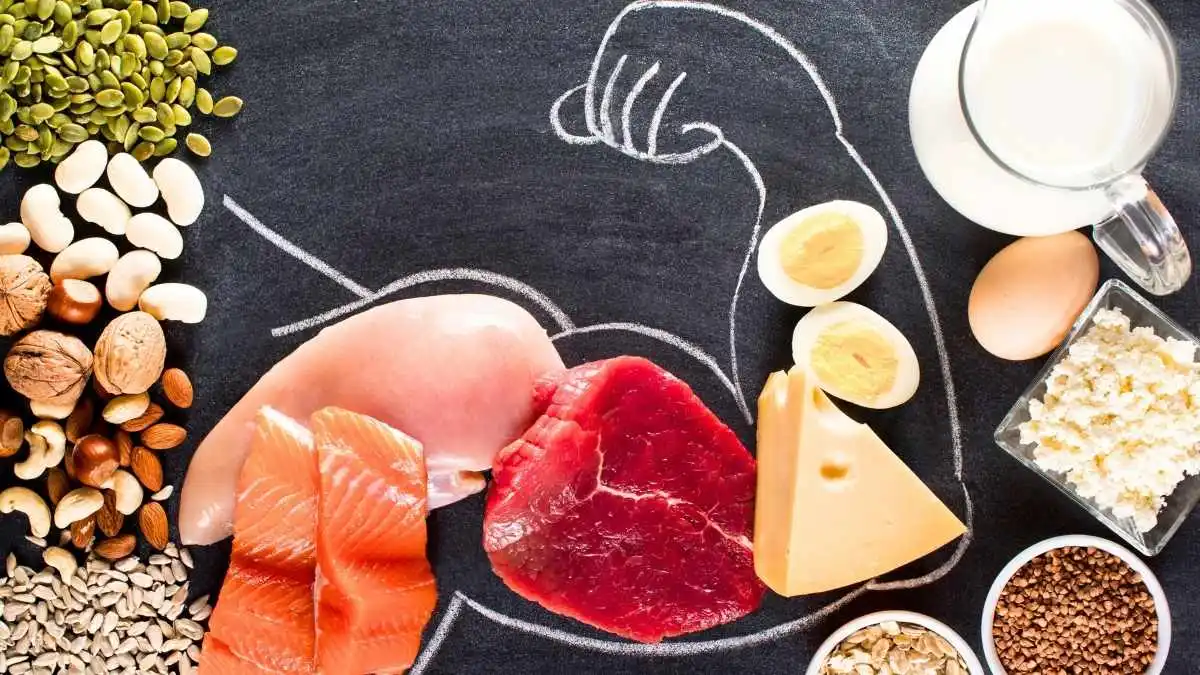
Here is what a day of protein timing looks like in real food. No complicated recipes. No counting every gram.
Breakfast is the most skipped protein window. Fix it first. Three eggs paired with half a cup of cottage cheese gives you close to 30 grams. A cup of Greek yogurt with a scoop of protein powder gets you there too. A whey protein smoothie made with milk is fast, easy, and hits 30 grams with almost no effort.
For lunch, a can of tuna over greens delivers 25 to 30 grams. A chicken or turkey wrap hits 30 grams. Lentil soup with a boiled egg on the side gets you close, especially if you add some cheese.
Dinner is already where most people do well. Salmon, lean beef, ground turkey, or chicken thighs all anchor a strong protein meal. Pair with vegetables and a grain and you are set.
One rule ties all of this together. Build every meal around the protein first. Decide what protein you are eating. Then add everything else around it.
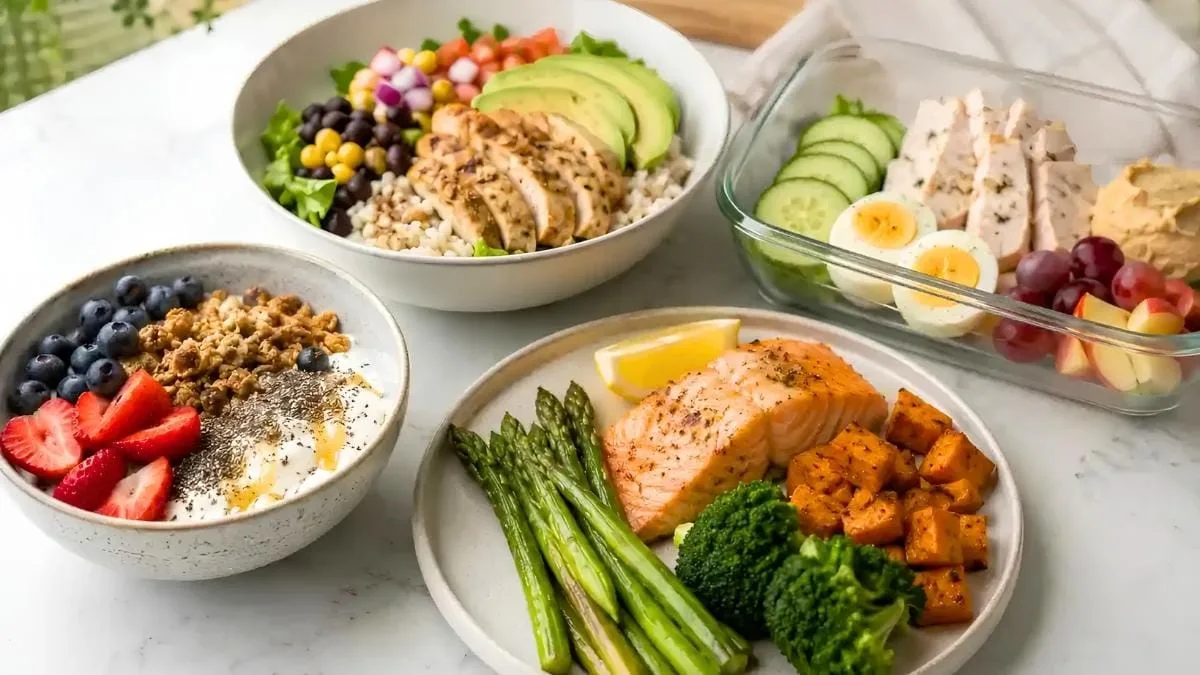
These are normal foods. Nothing exotic or expensive. The only shift is making sure each meal starts with the protein, not ends with it.
Three Simple Rules to Make Protein Timing Stick
You do not need a complicated plan. You need three rules you can actually follow.
3 Rules for Better Protein Timing
Small shifts in when and how you eat protein make the biggest difference.
Anchor Every Meal With Protein First
Before the rice, the salad, or the bread — decide what protein goes on the plate. Everything else fills in around it.
Space Meals 4–5 Hours Apart
This lets each muscle-repair window open and close before the next meal. Grazing all day doesn’t work the same way.
Never Skip Morning Protein
Your muscles go 7–8 hours without amino acids overnight. Breaking that fast with real protein is the single most valuable habit in this plan.
One more thing for people who exercise. Eat a protein-rich meal or snack within 1 to 2 hours after your workout. If you trained on an empty stomach, that timing matters even more.
And a note on safety. If you have kidney disease, talk to your doctor before raising your protein intake. Higher protein is safe for healthy adults, but your doctor’s guidance comes first.
Put these three rules into practice and your protein starts working with your muscles instead of around them.
Final Thought:
Sarcopenia is real. But so is your ability to slow it down. The fix is not eating more. It is spreading protein across all three meals, hitting 30 to 40 grams each time, and never skipping breakfast again.
Start tomorrow. Make breakfast your highest-protein meal. That one shift in protein timing for muscle loss may be the most important change you make this year.