

There is a particular silence that follows a diagnosis of mild cognitive impairment. Most people sit with it for days before telling anyone. They heard the words, nodded, and walked out of the clinic carrying a fear they could not quite name. The unspoken assumption is almost always the same: this is the beginning of a one-way decline.
I want to challenge that assumption directly. New clinical trial evidence is shifting what we know about MCI’s trajectory in meaningful ways. The science is not perfect, and I will not pretend otherwise. But the picture is more hopeful and more actionable than most patients are ever told.
What Mild Cognitive Impairment Actually Is — And Why the Diagnosis Carries So Much Weight
Most people leave their doctor’s office with a vague sense of what MCI means. They know it is something between normal aging and dementia. What they rarely hear is the full picture, and the full picture matters enormously.
The National Institute on Aging defines MCI as a measurable decline in one or more cognitive areas. These include memory, attention, language, and reasoning. The decline goes beyond what normal aging explains. Critically, it does not yet interfere with daily activities. That distinction separates MCI from dementia.
There are two main subtypes. Amnestic MCI primarily affects memory and carries a higher risk of progressing to Alzheimer’s disease. Non-amnestic MCI affects other cognitive areas, including attention, language, and spatial reasoning, and tends to follow a different path.
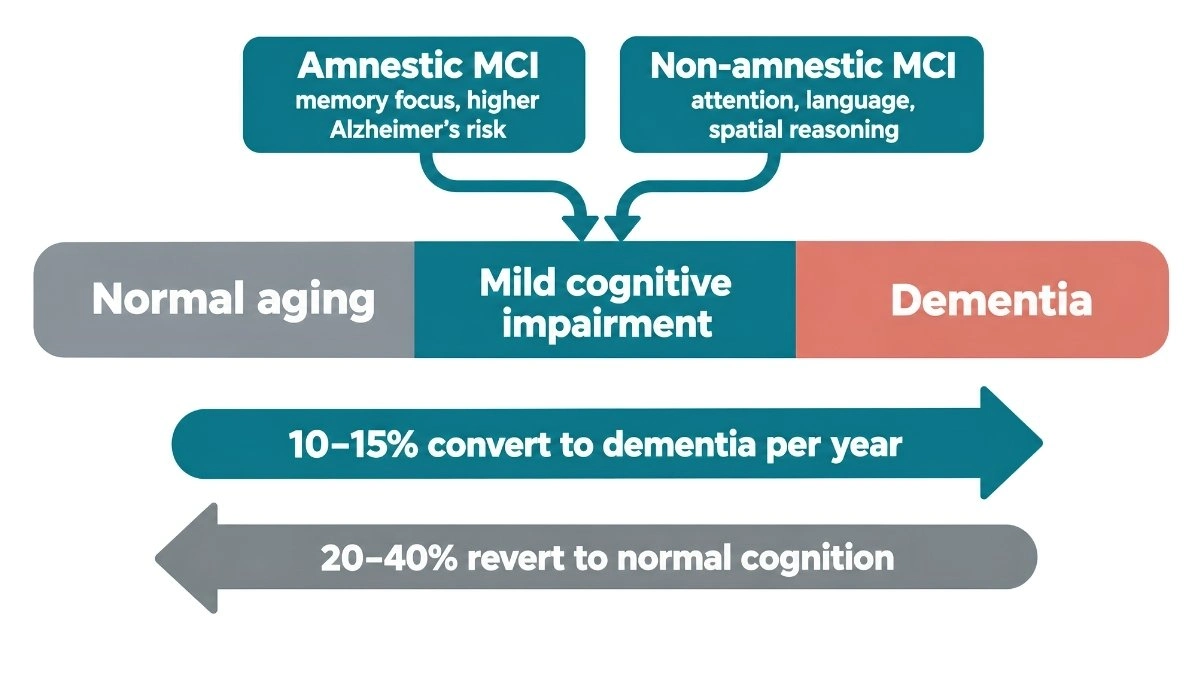
The statistics most patients never hear are these. According to the Alzheimer’s Association, about 10 to 15 percent of people with MCI convert to dementia each year. That sounds alarming. But research also shows that 20 to 40 percent of people with MCI revert to normal cognition over time. Most patients are never told that. It is a central fact, not a footnote.
In my experience, the fear that surrounds an MCI diagnosis often comes from what is left unsaid. Doctors focus on monitoring risk. They rarely mention that the condition is not fixed. Understanding that MCI exists on a spectrum, and that movement along that spectrum goes in both directions, changes how a person engages with their own health from that point forward.

A formal neuropsychological evaluation is the only reliable way to confirm an MCI diagnosis. Occasional forgetfulness or word-finding difficulty alone does not establish it.
The Old Assumption That Is Now Being Actively Dismantled
For most of the past three decades, the standard clinical response to an MCI diagnosis was watchful waiting. You came back every six to twelve months. Cognitive function was monitored. No active intervention was offered. The implicit message was clear: prepare, but do not expect to reverse course.
Alzheimer’s Trial Caution
How repeated clinical failures shifted therapeutic approaches
Calculated Caution
Current clinical restraint was not born from negligence, but arose as a strategic reaction to repeated pharmaceutical setbacks in trial history.
Amyloid Target Setbacks
Multiple drugs specifically aimed at clearing amyloid plaques failed to show meaningful cognitive benefit in large clinical trials.
Stagnant Therapeutic Pipeline
A comprehensive 2022 JAMA analysis confirmed that decades of drug trials had led to a largely stalled therapeutic pipeline.
Rise of Therapeutic Nihilism
Frequent failures cultivated widespread therapeutic nihilism and intense skepticism regarding treatment pathways for cognitive decline.
I have spoken with many adults in their late 50s and early 60s who were told, in so many words, that there was nothing to do but wait.
A 61-year-old former school principal I once worked with described her diagnosis conversation as “a slow goodbye to myself.” She had been given no framework for action. That experience is far more common than it should be.

What changed the trajectory was not a single breakthrough drug. It was a quieter revolution: the emergence of multimodal lifestyle intervention trials. Researchers began testing whether combining exercise, nutrition, cognitive training, and vascular risk management could move the needle. The results were not what skeptics expected.
The old assumption, that cognitive decline in MCI moves in only one direction, is now being directly challenged by that evidence. The next section examines what the trials actually found.
What Clinical Trials Are Actually Showing About Cognitive Reversal
The clearest signal in this field came from Finland. The FINGER Trial enrolled 1,260 older adults at elevated risk of cognitive decline. It combined aerobic exercise, dietary guidance, cognitive training, and cardiovascular risk monitoring into one structured program. Researchers published the results in The Lancet in 2015. Participants in the intervention group showed measurably better cognitive performance than the control group. This was a rigorous, randomized controlled trial.
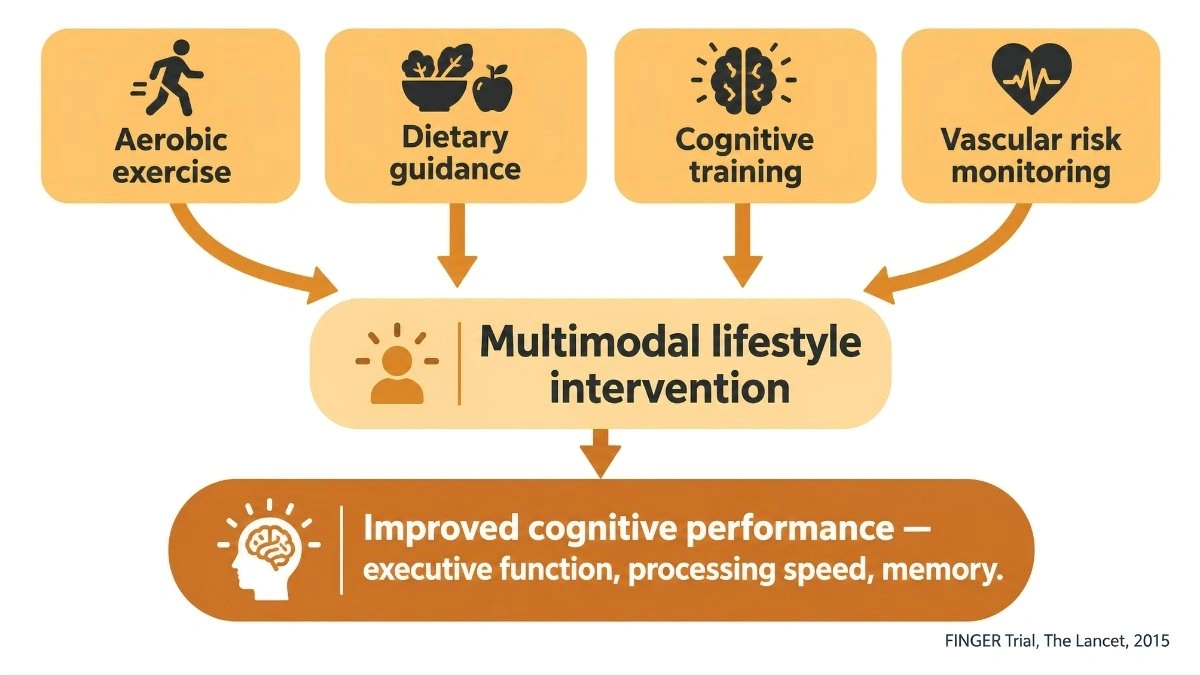
Precision matters here. The gains appeared on validated cognitive tests, including tests of executive function, processing speed, and memory. These are real, clinically meaningful improvements. They do not necessarily mean that underlying brain pathology reversed at the cellular level. That distinction is important, and I will not blur it. What the trial showed is that cognitive function itself improved with structured intervention.
France contributed another key piece of evidence. The MAPT Trial (Multidomain Alzheimer Preventive Trial), published in The Lancet Neurology in 2017, tested omega-3 supplementation combined with a multidomain lifestyle approach. The findings were nuanced. Omega-3 alone produced limited benefit. But among pre-frail participants who received the full multimodal program, cognitive outcomes were better than controls. The lesson is clear: single-ingredient approaches rarely work. Combined, sustained intervention does.

The U.S. POINTER Trial, the American adaptation of FINGER, is ongoing, with updates through 2024. Early data shows that multimodal lifestyle intervention benefits extend across racial, ethnic, and socioeconomic groups, not just the European populations studied in earlier trials.
One emerging frontier deserves mention. Research published between 2022 and 2024 in peer-reviewed journals has begun linking insulin resistance and metabolic dysfunction directly to MCI severity. Managing blood sugar and metabolic health now appears to be a legitimate cognitive intervention, not just a cardiovascular one. This line of research is still developing, but it is moving fast.
Why the Brain Can Recover: The Biology Behind the Possibility
The trial results make more sense once you understand what the brain is actually capable of. Many people assume that brain cells lost to aging or disease are gone for good. The reality is more encouraging than that.
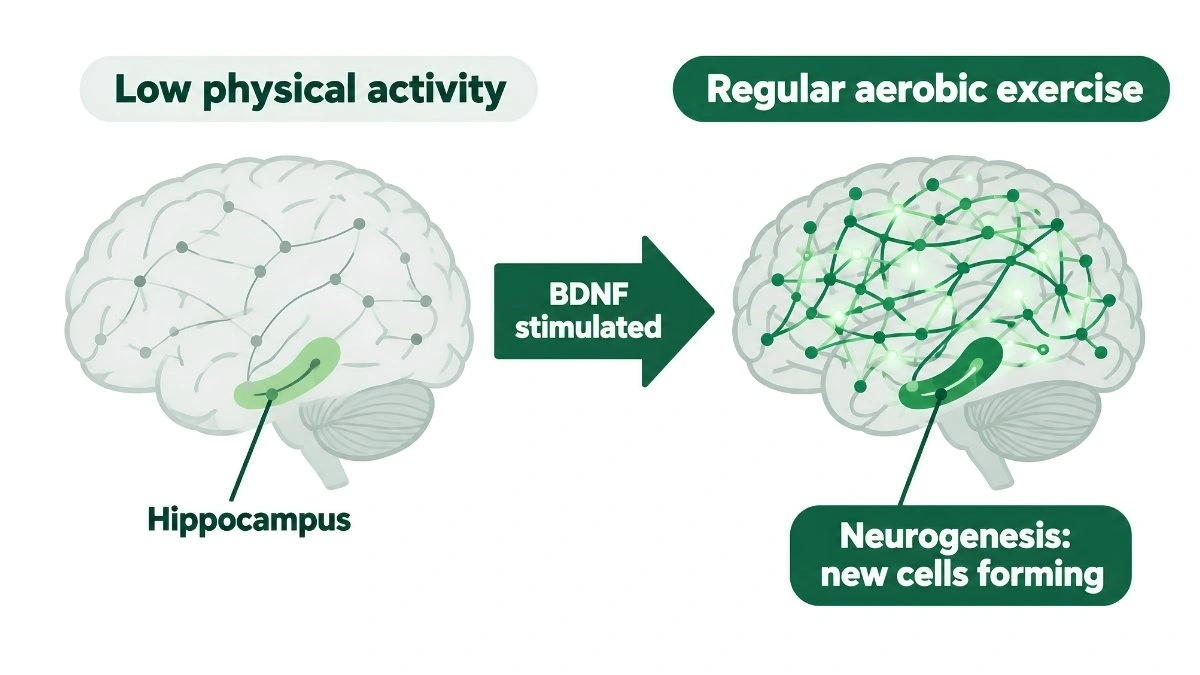
The brain retains the capacity for neuroplasticity well into older age. This means it can form new synaptic connections, strengthen existing neural pathways, and generate new cells in specific regions. The hippocampus plays a central role in memory formation. It is one of the few brain regions where neurogenesis continues in adult humans, according to research supported by the National Institute on Aging. Physical activity, in particular, appears to stimulate this process.
A second concept helps explain why some people with MCI do better than others: cognitive reserve. Neuroscientist Yaakov Stern at Columbia University has spent decades documenting this phenomenon. People who built richer cognitive lives through education, complex work, social engagement, and mental stimulation appear to have more biological buffer against MCI progression. Their brains can sustain more underlying change before function degrades visibly.
Metabolic factors play a larger role than many clinicians once recognized. Chronic insulin resistance appears to impair the brain’s ability to use glucose efficiently. Elevated blood pressure reduces cerebrovascular integrity over time. Chronic poor sleep prevents the brain’s glymphatic system from clearing metabolic waste, including amyloid proteins. Each of these factors is modifiable. That is the point.

An emerging line of research adds another layer. Studies published in 2023 and 2024 using epigenetic clock measures have found that sustained lifestyle interventions can reduce brain-age markers in older adults. This research is early, and I am cautious about overstating it. But it points in a consistent direction: the biology of brain aging is more responsive to intervention than the old model suggested.
Note: The steps below are drawn from peer-reviewed clinical trial evidence. They are not a substitute for medical advice. Any intervention plan for MCI should be developed in partnership with your healthcare provider.
What the Evidence Supports — Specific Steps Worth Taking Now
The trials reviewed above were not testing willpower or optimism. They were testing specific, structured interventions. Here is what the evidence actually supports.
Aerobic exercise has the strongest and most replicated evidence base of any single intervention for cognitive health in MCI. The American College of Sports Medicine recommends at least 150 minutes of moderate-intensity aerobic activity per week. Research shows that aerobic exercise raises levels of BDNF (brain-derived neurotrophic factor), a protein that supports the survival of existing neurons and encourages new neural growth. A 2022 review in a peer-reviewed aging journal found that regular aerobic exercise increased hippocampal volume in older adults with MCI.

Walking briskly counts. You do not need a gym.
Diet matters, and the Mediterranean-MIND diet has the clearest evidence base among dietary approaches. Developed by nutritional epidemiologist Martha Clare Morris at Rush University and published in Alzheimer’s & Dementia, this pattern emphasizes leafy greens, berries, olive oil, fish, nuts, and whole grains. Each of these food groups has independent evidence linking it to slower cognitive decline. The pattern as a whole shows additive benefit.
Sleep is not optional. It is biological maintenance. During deep sleep, the brain’s glymphatic system flushes metabolic waste, including amyloid proteins linked to Alzheimer’s pathology. Research from the National Institutes of Health confirms that chronic sleep deprivation accelerates amyloid accumulation. Seven to nine hours per night, with attention to sleep quality, is a clinical recommendation, not a lifestyle preference.
Structured cognitive training is distinct from casual brain games. The ACTIVE Trial, a large NIH-funded study, found that specific, progressive cognitive training in older adults produced measurable gains in targeted abilities, and those gains lasted years. Social engagement, layered on top, appears to amplify benefit in multimodal programs.
Finally, managing vascular and metabolic risk factors, including blood pressure, blood glucose, cholesterol, and weight, through clinical partnership is not separate from cognitive care. It is part of it. Every major MCI trial included vascular risk management as a core component. This is not coincidental.
Moving Forward
The diagnosis of MCI does not have to be a closed door. The evidence now shows that cognitive function is not fixed, and that structured, sustained effort changes outcomes in real and measurable ways.
Your most important first step this week is simple: schedule a conversation with your doctor about MCI management. Bring the names of the trials discussed here. Ask about a structured plan. You deserve more than monitoring. The science says more is possible.