

You’re exhausted. It’s past midnight. You almost fall asleep, and then it starts again. That cough.
The strange thing is, you felt fine all day. But the moment you lie down, your body decides it’s time to make noise.
You’re not imagining it. Around 22% of people worldwide deal with a cough that gets worse at night. In the US alone, chronic nighttime cough affects roughly 6.2 million adults. So if this is keeping you up, you’re far from alone.
Here’s what’s actually going on, and three things you can try tonight.
Why Does Your Cough Get Worse at Night?

During the day, gravity helps drain mucus from your nose and throat as you move around. The moment you lie flat, that drainage stops. Mucus starts pooling at the back of your throat. Your body tries to clear it. So you cough.
The three most common reasons this happens are post-nasal drip (mucus dripping from your sinuses), acid reflux (stomach acid creeping up your throat), and dry or irritated air in your bedroom. Any one of these can turn a mild cough into a sleepless night.
Your cough reflex also becomes more sensitive at night. So the same small irritant that barely bothered you at 2pm can feel unbearable at 2am.
One important note: if your nighttime cough is new and has lasted more than a few weeks, see a doctor. In rare cases, it can be a sign of something that needs medical attention, like heart failure, where fluid backs up into the lungs when you lie flat.
Tips:
- Pay attention to when you cough most. Right after lying down usually points to drainage or reflux. Coughing all night may point to dry air.
- Keep a quick note on your phone for a few nights. Timing helps you figure out the cause faster.
Step 1- Raise Your Head Before You Go to Sleep
This is one of the simplest things you can do, and it works for two of the three main causes.
When your head is higher than your stomach, gravity works in your favor again. Mucus drains down and away from your throat instead of pooling. Stomach acid also has a harder time travelling upward.
The right way to do this is to raise the head end of your bed frame by 6 to 8 inches using bed risers or blocks.
A wedge pillow also works well. Just stacking two regular pillows is not ideal. It bends your neck forward, which can cause pain and does not give you the full elevation benefit.

Your sleeping position matters too. Lying flat on your back makes post-nasal drip worse for most people. Sleeping on your side is better. If acid reflux is your problem, your left side specifically can help keep stomach acid down.
This will not help much if your cough is purely from dry air with no congestion. But if you tend to start coughing right after you lie down, this is worth trying tonight.
Tips:
- Try a wedge pillow if buying bed risers feels like too much effort. They are easy to find online and cost under $40.
- If you wake up with a sore neck, your elevation angle may be too steep. Try a lower wedge first.
Step 2- Take a Spoonful of Honey Before Bed

This one has actual science behind it, which surprises a lot of people.
A Cochrane review of two clinical trials with 265 participants found that honey worked better than no treatment, slightly better than a common antihistamine, and just as well as dextromethorphan. That last one is the active ingredient in most branded cough syrups you see at the pharmacy.
A separate clinical trial published in JAMA Pediatrics found that parents rated honey better than dextromethorphan for reducing nighttime cough and helping children sleep.
The same study found that dextromethorphan performed no better than a placebo. Meaning the ingredient in many OTC cough medicines may not do much at all.
Honey works by coating your throat. It soothes the irritated tissue that keeps triggering the cough reflex. One tablespoon before bed is enough. You can take it straight, mix it into warm water, or stir it into herbal tea.
One firm rule: never give honey to a child under one year old. It carries a risk of botulism in infants.
Tips:
- Pair honey with warm (not hot) herbal tea for extra soothing effect. Warm liquid on its own also helps thin mucus.
- Take it 15 to 20 minutes before lying down, not right as you get into bed.
Step 3- Add Moisture to the Air in Your Bedroom
If your cough is dry, scratchy, and happens throughout the night without much mucus, dry air may be the main problem.
Indoor heating in winter and air conditioning in summer both pull moisture out of the air. When bedroom air drops below 30% humidity, it dries out your throat and airway lining. That dryness keeps the cough reflex firing even when there is nothing actually there to clear.
The Mayo Clinic recommends keeping indoor humidity between 30% and 50%. A basic humidifier can get you there.
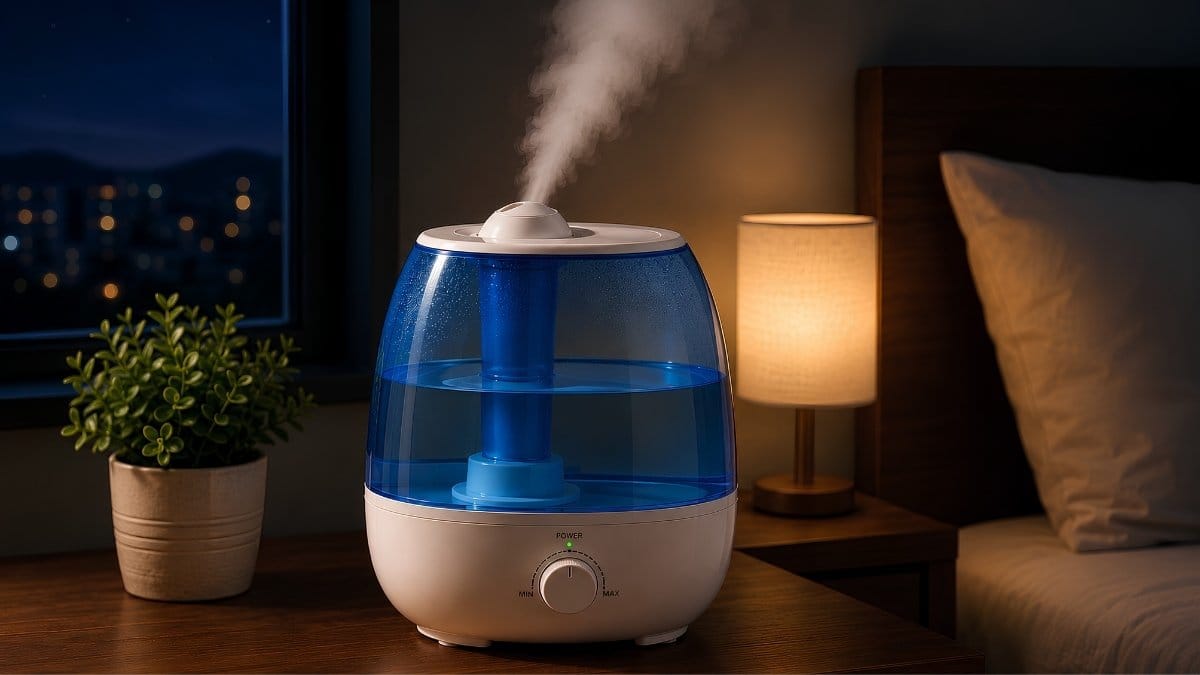
Warm mist models soothe a dry, scratchy throat and naturally kill bacteria in the water. Cool mist models are quieter, safer around kids and pets, and use less energy. Either works for a cough caused by dry air.
Be honest about what a humidifier can and cannot do. If your cough is from a virus, acid reflux, or allergies, moisture alone will not fix it. It helps most when dry air is the actual trigger.
Also, clean your humidifier regularly. A dirty one can grow mold and bacteria and make your symptoms worse, not better.
Tips:
- Buy a cheap hygrometer (a humidity meter) to check your bedroom air. They cost around $10 and tell you exactly where your humidity level sits.
- Clean your humidifier every two to three days. Empty the tank, wipe it down, and refill with fresh water.
Final Thought:
These three things work on the most common reasons a cough gets worse at night. They are not cures. But they can make your night much more manageable while your body heals.
If your cough has lasted more than two to three weeks, or comes with chest pain, shortness of breath, or fever, see a doctor. Nighttime coughing is usually manageable, but it is always worth ruling out something more serious.