
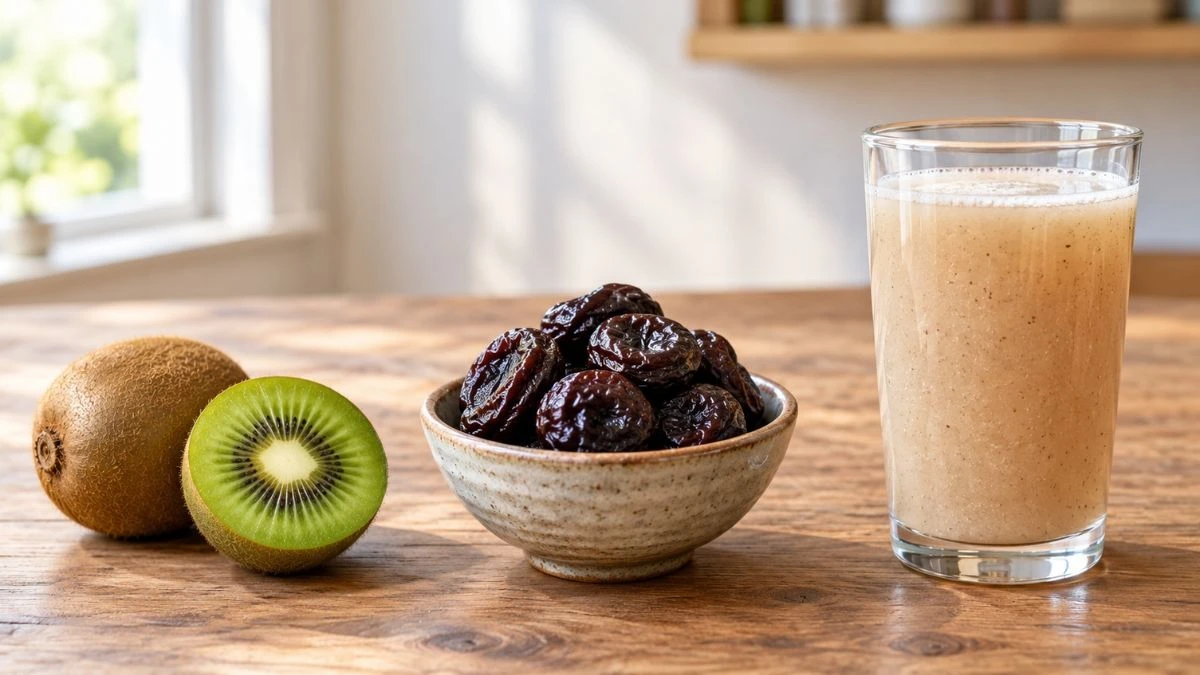
Two kiwifruit, 12 prunes, or a daily dose of psyllium: all three eased constipation in a 2021 US trial. So why did 38% of psyllium users report dissatisfaction, compared with just 7% of kiwi users? That gap tells you more than the headline result.
If you want relief without a stimulant laxative, the details matter. The dose, the way it feels in your gut, and what you drink with it all change the outcome.
I went through the trial data so you do not have to. Each option suits a different person. Below, you will see what each one did and where it can go wrong. Then you can pick one and start this week.
What the Head-to-Head Trials Actually Found
A 2021 trial in the American Journal of Gastroenterology compared all three options. Samuel Chey of the University of Michigan and colleagues enrolled 79 adults with chronic constipation. Each had three or fewer complete spontaneous bowel movements per week. They took two green kiwifruit, 100 g of prunes, or 12 g of psyllium daily for four weeks.
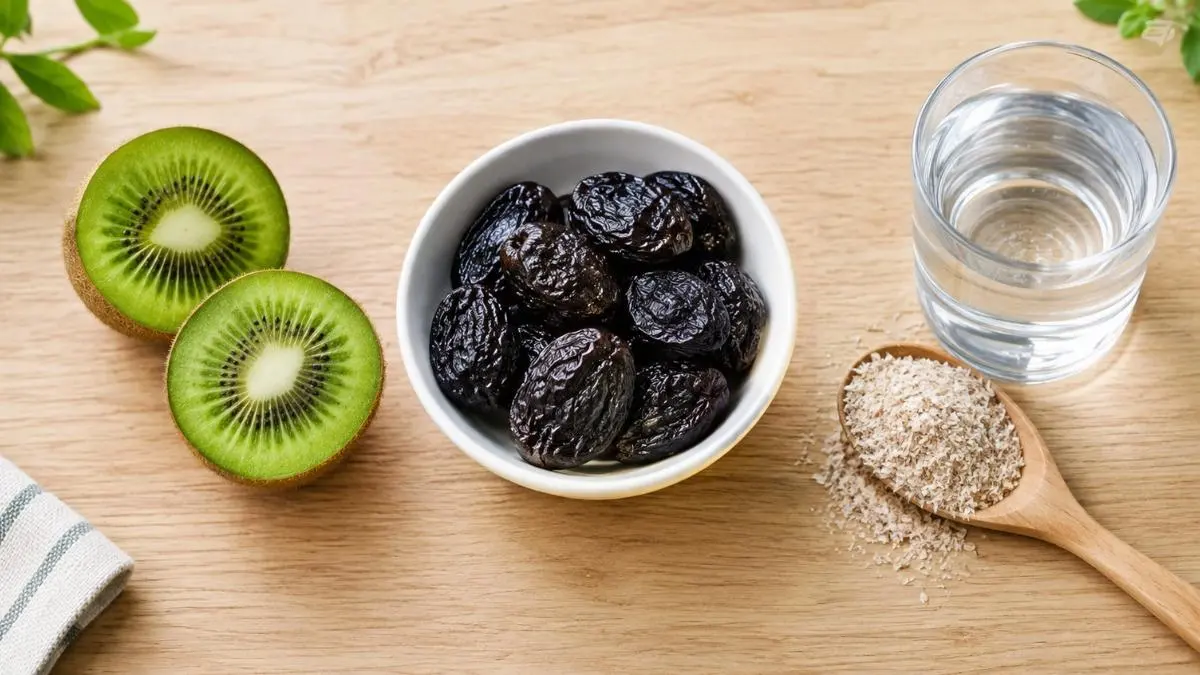
All three treatments raised the weekly count of complete spontaneous bowel movements, or CSBMs. A CSBM happens without a laxative and leaves you feeling empty. Kiwifruit and prunes also improved stool texture. Straining eased with all three.
A second trial in the same journal compared two kiwifruit with 7.5 g of psyllium. It enrolled 184 people: healthy adults, adults with functional constipation, and adults with IBS and constipation.
US Trial Overview
Average Age
The average age was about 43, the authors report.
Gender Breakdown
87% of patients were women, the authors report.
Age 55+ Guidance
Readers over 55 should treat the results as a guide, not a guarantee.
Note who joined the US trial. The average age was about 43, and 87% of patients were women, the authors report. Readers over 55 should treat the results as a guide, not a guarantee.
Both trials have limits. The US trial was small, and its authors call it partially randomized. Reuters Health reported that kiwifruit producer Zespri helped fund it. An American College of Gastroenterology commentary says Zespri also funded the second trial. Treat the results as strong hints, not final proof.
With the evidence mapped, the option with the fewest complaints comes first.
Two Kiwifruit a Day: Gentlest on the Gut
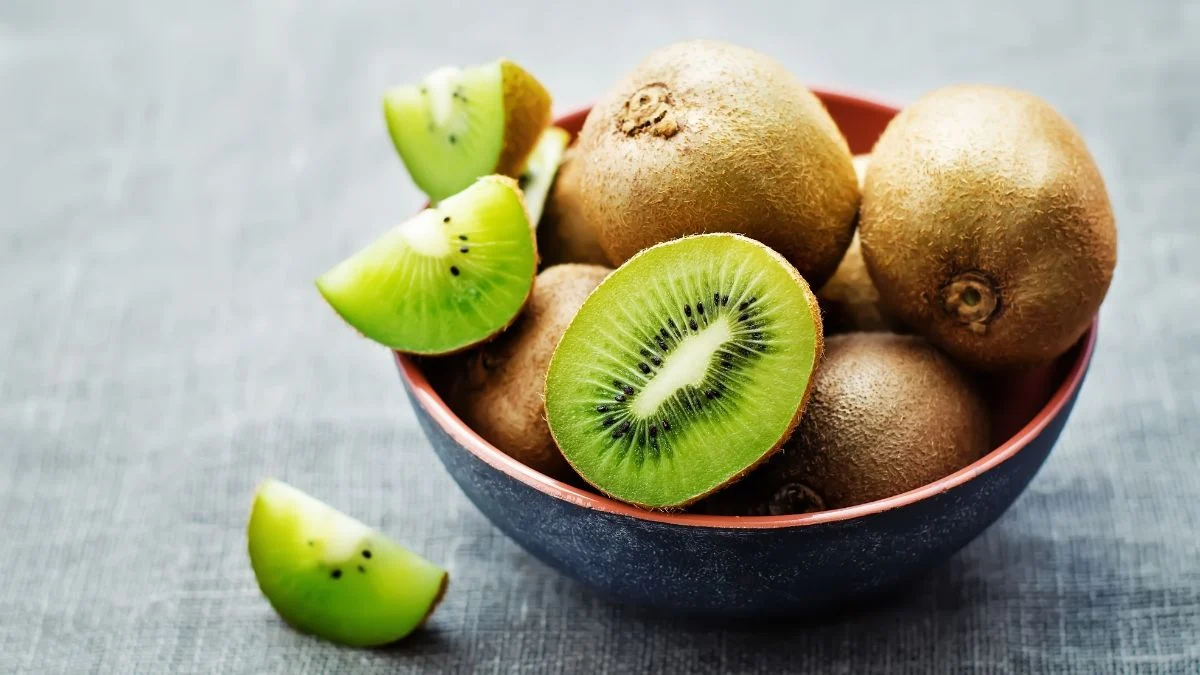
Gearry and colleagues tested two peeled kiwifruit a day. Weekly CSBMs rose by about 1.5 to 1.7 in both constipated groups. Gut comfort scores improved too. The authors call a gain of 1.5 CSBMs per week clinically relevant.
The US trial added a key detail. Kiwifruit caused the fewest side effects of the three options. It also improved bloating scores. Only 7% of kiwi users felt dissatisfied at the end, the study authors report. Harvard Health Publishing also notes that kiwifruit worked a little better than a daily fiber supplement such as Metamucil.
The US trial authors say earlier work credits fiber, carbohydrates called oligosaccharides, and an enzyme called actinidin. Two kiwifruit supply about 6 g of fiber, the Gearry authors report. Mayo Clinic lists too little dietary fiber as a common cause of constipation..
A common pattern among adults in their late 50s is that new habits fail when they need planning. Two kiwifruit need none. Keep a bowl on the counter and peel two with breakfast, as the trials did.
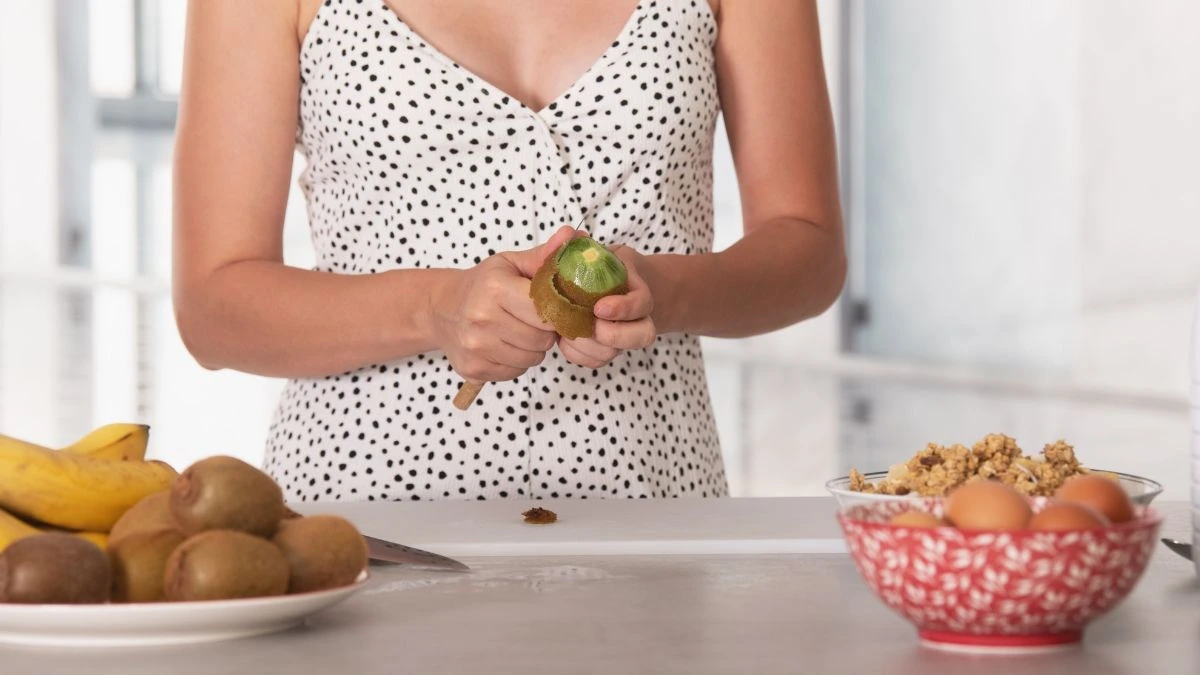
Anyone with a kiwi allergy should skip this option. Ask your doctor first if you have a latex allergy.
Kiwifruit is gentle, but another food posted the biggest response in the US trial.
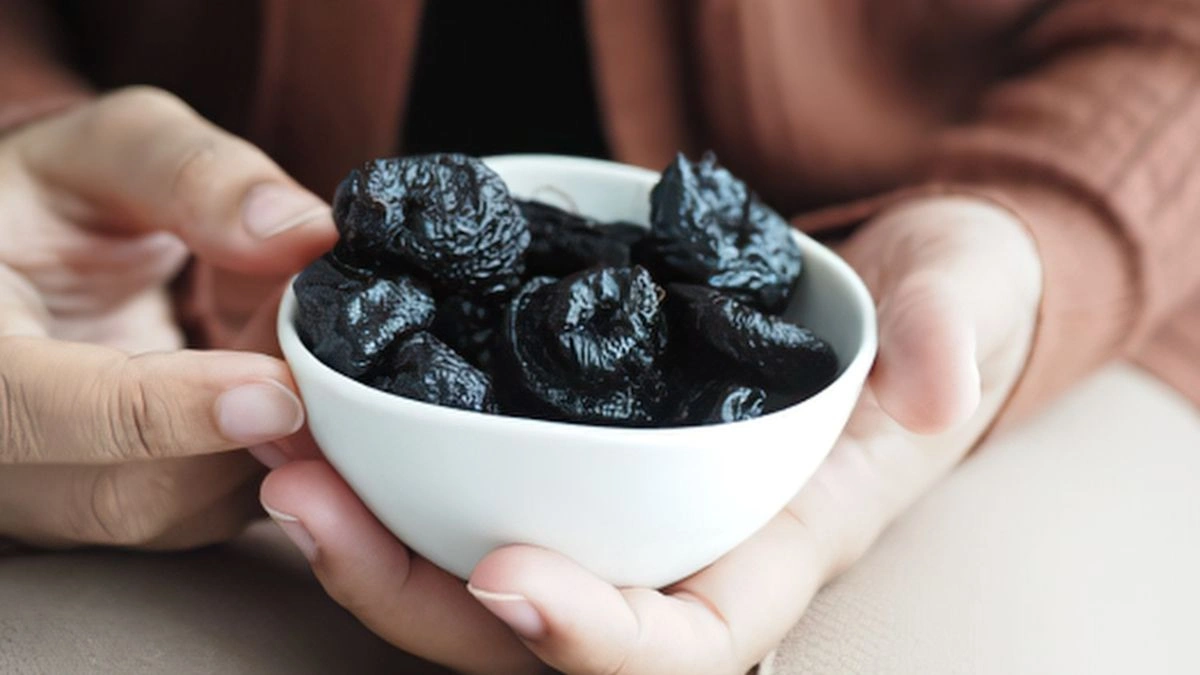
100 g of Prunes: Strong Results, With a Sorbitol Catch
Prunes showed the largest response in the US trial, Healio reported from the 2020 American College of Gastroenterology meeting. The main measure was a gain of more than one CSBM per week. By that measure, 67% of prune users responded, versus 64% for psyllium.
The gap over psyllium was only three points. Kiwifruit’s gain was a bit smaller, but Reuters Health reported the gap was not statistically significant.
A systematic review of four prune trials backs this up. In constipated people, 100 g a day for three weeks gave 3.5 CSBMs per week. A 22 g dose of psyllium gave 2.8. Only one of the four trials involved constipated people, so the evidence stays thin.
Tufts University’s Health & Nutrition Letter covered a University of Iowa trial of prunes versus psyllium. The California Dried Plum Board funded it, though Iowa researchers ran it on their own. Patients knew which food they ate. That can sway results.
Prunes work through two routes. They carry fiber, and they carry sorbitol, a sugar alcohol that pulls water into the gut. Tufts puts the sorbitol at about 15 g per 100 g of prunes.
That water pull has a cost. Prune and psyllium users more often reported belly pain and bloating than kiwi users, according to Healio. I suggest starting with four or five prunes and building up over a week. The trial split the dose into 50 g, about six prunes, twice a day, Natural Medicine Journal reported.
The third option has the longest guideline record, and it carries the strictest safety rule.
Note: Psyllium can block the gut without enough fluid. Check with your doctor first if you take medication, limit fluids, or have trouble swallowing.
Psyllium: Effective, but Only With Enough Fluid
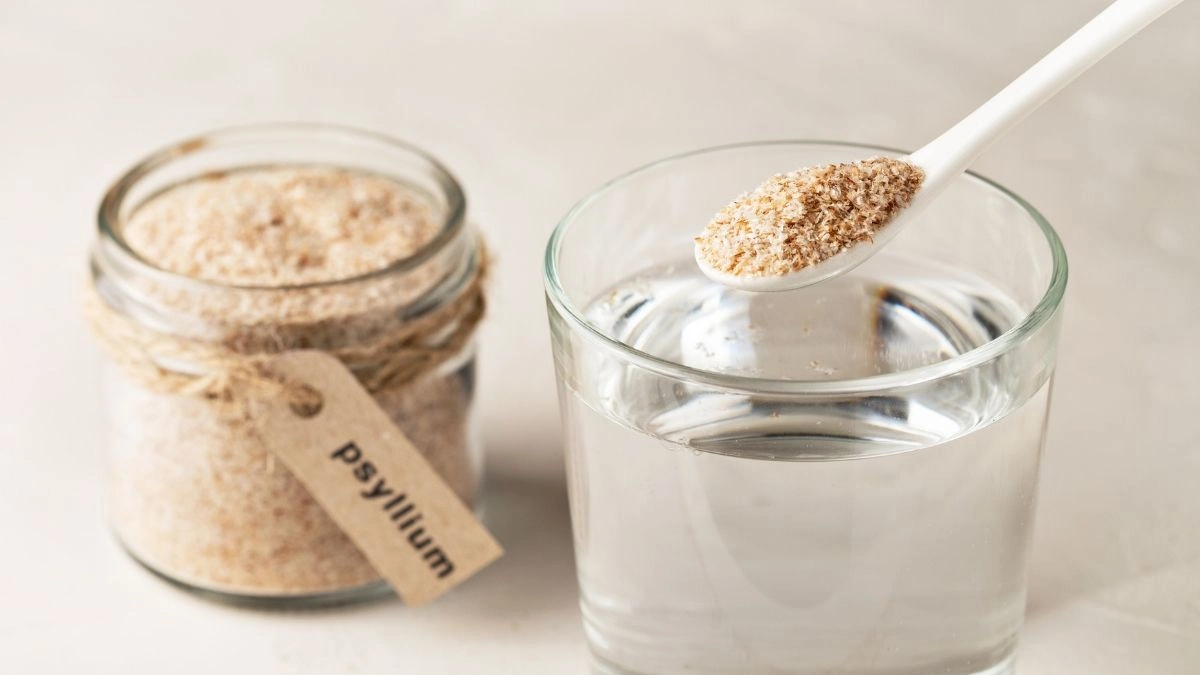
Guidelines lean toward psyllium. A review in Clinical and Experimental Gastroenterology found that European, Spanish and Korean guidelines name it a preferred option.
Psyllium does count as a laxative. University of Michigan Health calls it a bulk-forming fiber laxative. Cleveland Clinic says it adds bulk to stool. That bulk raises pressure and helps your intestine move stool along.
The US trial tells a mixed story. Psyllium improved CSBMs and straining, but not stool texture. It also caused the most side effects, and 38% of its users reported dissatisfaction, the study authors found.
The US trial used 12 g a day, and the second trial used 7.5 g. Follow your product label for your dose.
Without enough liquid, psyllium can form a solid lump in the throat or gut. The Institute for Safe Medication Practices Canada issued that warning in 2025. Never take it dry.
Cleveland Clinic says to mix each dose into a full glass (240 mL) of water or another cool drink. University of Michigan Health says to drink it right away. Cleveland Clinic also advises several glasses of water a day while you take it.

A case report and literature review on psyllium blockage says older adults must drink plenty of fluid. A common mistake among adults in their 60s is sipping a slow half glass of the mix. The mix turns thick, and the drink becomes hard to finish. Stir fast and drink it at once.
Fluid matters most when you take psyllium. If your doctor limits your fluids, ask before you start. Take other oral medicines at least 2 hours before or 2 hours after psyllium, University of Michigan Health and Cleveland Clinic say. Ask your pharmacist if you are unsure.
You now have the facts on all three, so the next step is choosing.
How to Choose Your First Option
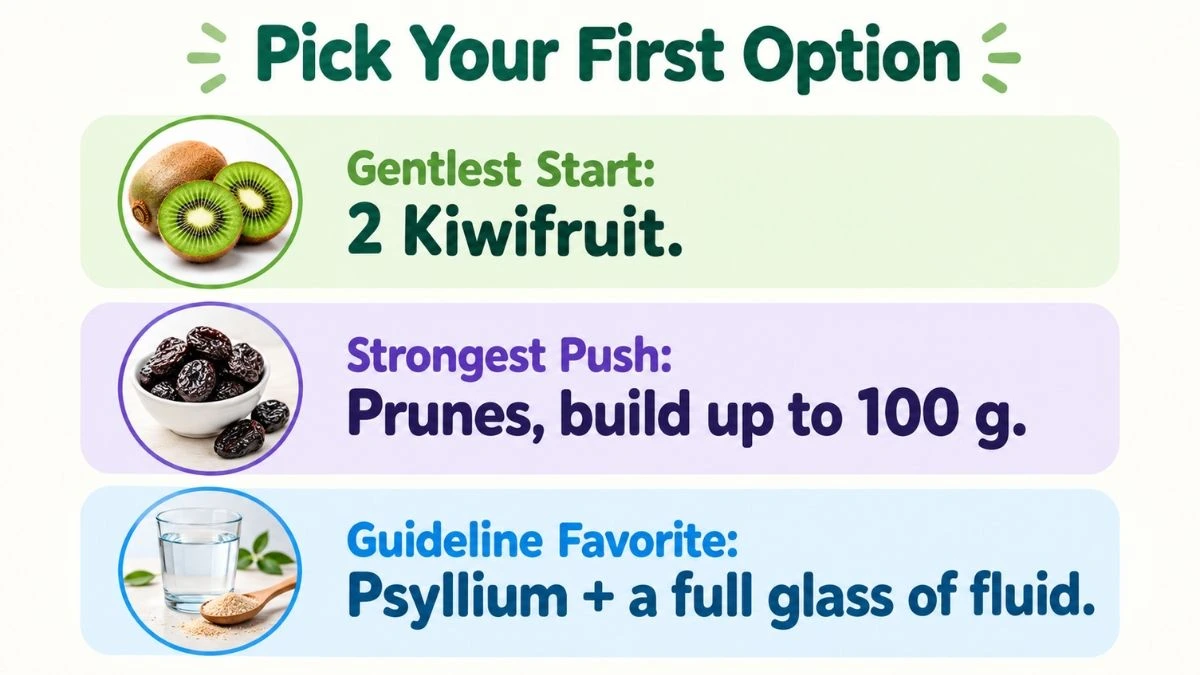
No trial proves that one option beats the others for everyone. If you want one answer, start with kiwifruit. All three options raised CSBMs in the US trial, and kiwifruit drew the fewest complaints. Otherwise, match the option to your situation:
- Gentlest start: Choose two kiwifruit. They caused the fewest side effects in the US trial.
- Strongest push: Choose prunes and build toward 100 g over a week. They led the US trial on response.
- Guideline favorite: Choose psyllium. Mix it with a full glass of fluid at every dose.
Mayo Clinic also offers two habits that pair with any option. Do not ignore the urge to pass stool. Set a regular time to sit down after a meal. Breakfast is a natural anchor for all three foods.
Give kiwifruit or prunes two to four weeks, the length of the trials. If you choose psyllium, University of Michigan Health and Cleveland Clinic both say to check with your doctor if you still need it after about one week.
When Food Is Not Enough: Signs to Call Your Doctor
Food is a first step, not a cure for every case. Mayo Clinic names these warning signs.

Time matters too. Mayo Clinic Healthcare in London advises a specialist visit when constipation lasts longer than three to four weeks. The same goes for constipation that hurts daily life. If your chosen food has not helped by then, make the call.
Long-term constipation can also come from another condition, Mayo Clinic notes. A doctor can look for one. Bring your bowel movement calendar to the visit. It gives your doctor facts, not guesses.
A Final Word
Constipation can feel like something you must live with. You have more choices than that now. On your next trip to the store, pick up whichever option fit you best. Begin tomorrow morning, and give it the full two weeks. You know your body better than any study does. Trust what you notice, and adjust. Easier mornings are well within reach.