

You know that moment when you catch your reflection in a shop window and don’t recognize how you’re standing? That’s the one.
Most people who sit at a screen all day have poor posture without knowing it, and the standard fix of stretching and reminders to sit up straight does not address the balance system that controls posture automatically.
This article is for desk workers and screen-heavy adults who slouch without meaning to. By the end, you’ll know exactly what balance exercises for posture look like, why they work when other fixes don’t, and how to start today.
| # | Section | What’s waiting for you |
|---|---|---|
| 1 | Why posture keeps slipping | The real reason reminders don’t stick |
| 2 | The brain’s role in posture | What stops working before your back does |
| 3 | The 5-minute routine | Four moves, no equipment, ready to go |
| 4 | Day 1 to Day 7 | What I noticed and what science says about it |
| 5 | Why balance beats stretching | The specific difference that changes everything |
| 6 | How to start today | Your first session, made as easy as possible |
Why Your Posture Keeps Slipping Back No Matter How Often You Correct It
You sit up straight. Ten minutes later, you’re slumped again. It’s not a willpower problem. Your posture is controlled mostly by automatic systems in your nervous system, not by conscious effort, which is why reminders only work for as long as you remember them.
This problem is more common than you’d think, and the numbers are striking.
One study on balance exercises for posture examined 88 healthy adults aged 20 to 50 and found that forward head posture was present in 66% of participants, and rounded shoulders appeared in 73%. Most of those people had no pain and no awareness they were doing it.

Sitting for long hours is associated with hip posture changes in desk workers. The body adapts to the position it spends the most time in. If that position is a slumped chair, the automatic system starts to treat that as normal.
Willpower can’t fix what the automatic system controls. Each time you remind yourself to sit straight, you’re asking your conscious attention to override a system that runs 24 hours a day. That’s a fight you’ll lose every time.
The question isn’t how to remember to sit straight. It’s how to change what your nervous system thinks straight feels like. The answer isn’t where most people look for it.
The Part of Your Brain That Controls Posture Automatically and Why It Stops Working
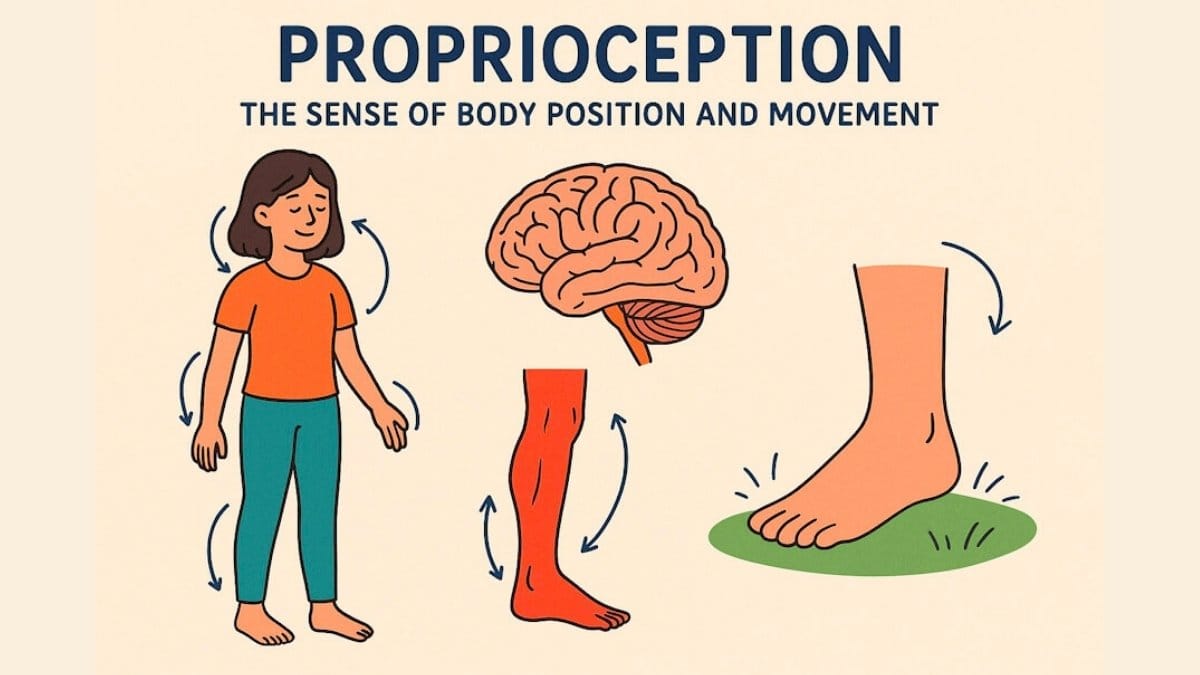
You can probably touch your nose with your eyes closed. You don’t have to look at your hand to know where it is. That’s proprioception [your body’s ability to sense its own position and movement without looking].
It’s the same system that controls whether you stand tall without thinking about it. When you practice balance exercises for posture, you’re training this exact system.
When proprioception is well-trained, your brain holds a clear map of where upright is. It sends constant small corrections to your muscles without your knowing.
Desk work weakens this system. When you sit in one position for hours, the sensory signals from your joints and muscles become quieter, the map gets blurry, and your body’s default sense of “straight” drifts toward “slumped.”
Stretching makes your muscles longer. Balance training tells your brain what straight actually feels like, and that is why five minutes of wobbling on one foot did more for my posture than two years of reminders to sit up.
A 12-week balance training study in healthy adults aged 19 to 65 found that only the balance group improved performance, and that the training increased cortical thickness in brain regions associated with vestibular and visual self-motion perception.
The brain changed. That structural shift may help explain why balance training is associated with postural improvements that extend beyond the workout itself.
The 2022 systematic review of 70 proprioceptive training studies found that this kind of training may lead to significant improvements in proprioceptive and motor function across healthy and clinical populations.
The improvements tracked most closely with active movement interventions, exactly what balance drills provide.
The next section gives you the specific routine. But knowing this first matters, because Day 1 will feel pointless. Wobbling on one leg doesn’t feel like posture work. Now you know why it is.
What I Did Every Morning for 5 Minutes: The Full Routine
Talk to your doctor before starting any new exercise routine if you have a balance disorder, chronic dizziness, a recent joint injury, or a condition affecting your bones or nerves.
You’ll need nothing except a clear patch of floor and a wall or sturdy chair within arm’s reach. These balance exercises for posture require no equipment.
Do this barefoot when possible — bare feet give your nervous system more sensory signal from the ground.
Research published in PLOS One in April 2026 found that healthy young adults who completed a short daily coordination-focused routine for two weeks showed significant improvements in static balance and movement coordination, with the improvements appearing linked to neuromuscular adaptation rather than strength gains.
That confirms the mechanism: short, consistent, movement-focused sessions train the system that matters.
The 4-Move Routine
⏱️ 5 Minutes Total Balance
Weight Shifts
Stand with feet hip-width apart. Slowly lean your whole body forward into your toes, then back into your heels. Keep your body as one straight unit without bending at the hips.
Single-Leg Stand
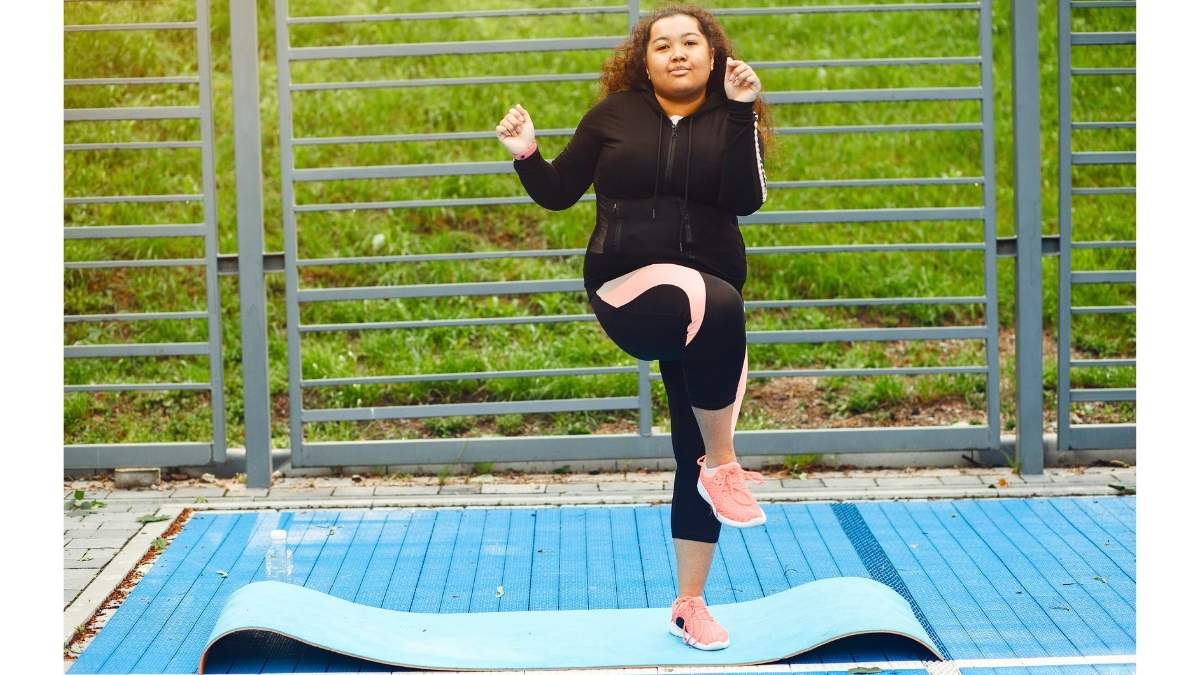
Lift one foot slightly. Hold up to 30 seconds with good posture, then switch sides. Touch a wall for balance if needed—the goal is time under load, not perfect stillness.
Heel-to-Toe Walk
Walk forward placing each heel directly in front of the opposite toes. Keep your gaze ahead and core lightly engaged. Walk 10 steps, turn carefully, and walk back.
Calf Raise Balance
Stand on one foot, rise up onto the ball of that foot, hold for two seconds, then lower slowly. Do 5 reps per side to drill essential ankle control and postural signals.
The full routine runs just under five minutes. One round per day is enough to start. What happens in Days 1 through 7 is the part nobody tells you about.
Day 1 to Day 7: What I Noticed and What the Research Says About It
You’re going to wobble on Day 1. That’s not failure. The wobble is the training signal. Your nervous system is receiving new information about where your edges are. It needs that data.

Days 1 and 2: The single-leg stand felt embarrassing. I could barely hold 10 seconds on my weaker side without touching the wall.
My ankle was doing micro-adjustments the whole time, which I’d never felt before. That sensation, the ankle working, is exactly what the research calls neuromuscular adaptation.
Days 3 and 4: The wall touches became less frequent. I started holding for 20 seconds without support. The heel-to-toe walk stopped feeling like a sobriety test and started feeling like walking.
Days 5 through 7: I noticed I was standing differently at my desk, not because I’d reminded myself, but because it felt more natural to stand taller.
That shift is consistent with what researchers found when studying how balance training affects posture: balance improvements after short training protocols may be linked to changes in how the nervous system organizes postural signals, rather than changes in muscle size.
One study found measurable improvements in balance performance after a single session, with further gains after 10 sessions.
One week is enough to feel the shift, but what changed inside, and why it happened faster than stretching ever did, is still ahead.
What Changed in My Posture and Why Balance Did What Stretching Never Could
By Day 7, I was catching myself standing taller without any effort. Not every time, but more often. What changed wasn’t my muscle length. It was the automatic postural reference point — the sense of “upright” that the nervous system uses to maintain posture without conscious input.

Sedentary adults with low physical activity are associated with higher rates of faulty postures including forward head position and rounded shoulders.
That’s not just because their muscles are tight. It’s because the proprioceptive signals that sustain upright posture are less practiced.
Balance training recalibrates the specific system that decides what “straight” feels like.
Every second you spend on one foot, your nervous system logs new data about where upright actually is. Balance work addresses the map. Over days, those corrections become habits. And habits are what posture actually is.
A shortened pectoral muscle pulls the shoulders forward. Lengthening it through stretching gives the shoulder room to move back. But if the nervous system still thinks “shoulders forward” is neutral, the shoulders go back there on their own.
That said, the best results come from combining both approaches. Use stretching to address tight tissue. Use balance exercises for posture to update the automatic system.
Neither alone does the full job, and the next section gives you the progression that makes the combination stick.
How to Start Your Own Balance Exercises for Posture Today
The routine in Section 3 is your starting point for building a daily practice of balance exercises for posture. Here’s how to progress it over the first three weeks so it stays challenging.
Balance Progression Plan
3-Week Proprioceptive Training
Build the Habit 👣
Remove the Wall 🚫
Surface Challenge 🌊
When to move beyond this routine: a five-minute daily session is a starting point. If you want to expand, add five minutes of hip and core strengthening — glute bridges, dead bugs, and side-lying clamshells — which provide the muscular support that balance training recalibrates.
The single most important thing is to start before you feel ready. Waiting to feel steady before doing balance work is like waiting to feel fit before exercising. The wobble on Day 1 is exactly where the adaptation begins.
Conclusion
Set a five-minute timer before your first cup of coffee tomorrow and do the routine from Section 3. Start a 5-minute daily balance routine today using only your body weight and a clear patch of floor.
Consistency over two to three weeks will tell you more than any article can. Your posture isn’t a habit you think your way into. It’s a system you train, and five minutes a day is enough to start training it.