Your joints don’t hurt because you’re getting old. They hurt because they’re not getting enough of the right kind of movement.
If your knees feel stiff when you get out of bed, your hips ache after sitting too long, or your shoulders complain every time you reach for something, you’re not alone. Most people over 50 make the same mistake. They stop moving to protect their joints. And that makes things worse, not better.
The good news? You don’t need a gym, a trainer, or any special equipment. These five low-impact exercises for joint health take less than 20 minutes and can start today. Each one eases stiffness, builds the muscles that protect your joints, and helps you move without the ouch.
Why Your Joints Need Movement, Not Rest
Think about how stiff you feel after sitting in a car for two hours. Now imagine your joints feel that way all day, because you haven’t moved them.
Your joints are lubricated by a fluid called synovial fluid. Think of it like oil in a machine. When you move, that fluid circulates and keeps things smooth. When you sit still for too long, it stops moving. Your joints start to feel stiff and stuck, like a rusty hinge.

As you get older, your body makes less of this fluid naturally. On top of that, muscle loss from a sedentary lifestyle means your joints take on more load than they should.
Here’s the thing: movement is the answer, not the problem. Gentle, consistent movement keeps that lubricating fluid flowing. It builds the muscles that support your joints. It reduces stiffness and can even ease arthritis symptoms over time.
The goal is not to push through pain. It’s to find movements that feel okay and do them regularly. The five exercises below are designed to work with your joints, not against them.
Exercise 1: Chair Sit-to-Stand
This one sounds almost too simple. But trainers and physical therapists consistently name it as one of the most powerful things you can do for your knees and hips.
Here’s how to do it. Sit tall in a sturdy chair with your feet flat on the floor, hip-width apart. Cross your arms over your chest. Lean slightly forward, then stand up slowly without pushing off with your hands. Pause at the top. Then lower yourself back down with control. Aim for 8 to 10 reps.
This move mirrors what you do dozens of times every day, getting up from a chair, the toilet, the sofa. By strengthening your quads and glutes, it reduces pressure on your knees and hips where joint pain is most common.
Keep the movement slow. Rounding your back or using momentum instead of muscle are the two most common mistakes. Prioritize form over speed every time.
If getting up feels hard at first, place a firm pillow on the seat to raise the height. Start with two sets and build to three over two weeks.
Do this every day, even just once. Stronger glutes mean less pressure on those joints with every step you take.
Exercise 2: Resistance Band Seated Row
If your shoulders feel tight or your upper back aches after sitting most of the day, this one is for you.
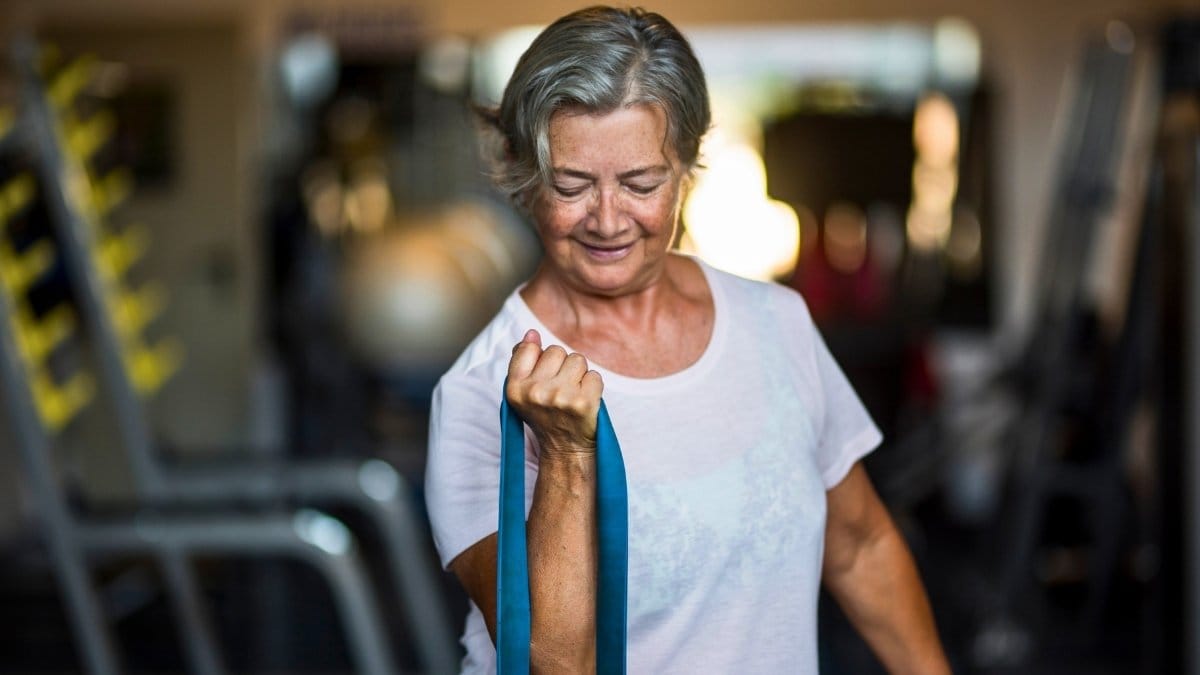
Resistance bands are one of the best tools for joint pain relief exercises over 50. They provide gentle resistance that’s easier on your joints than weights. They come in different resistance levels so you can start light and build from there.
Here’s how to do a seated row. Sit tall in a sturdy chair. Loop the band around your feet. Hold the ends with your palms facing each other. Pull your elbows back and squeeze your shoulder blades together. Then slowly release back to the start. Do 10 to 12 reps for two to three sets.
This targets the muscles in your upper back, the ones that keep your posture upright and take pressure off your shoulder joints. Weak posture muscles lead to slumping, and slumping leads to shoulder and neck pain.
To get started, pick up a light-to-medium resistance band. TheraBand and Fit Simplify are color-coded by resistance level and cost around $10.
Strong posture muscles take pressure off your shoulder joints. A $10 band is all you need.
Exercise 3: Standing Hip Abduction (Side Leg Lift)
Your hips do more work than you probably realize. They stabilize every step you take, every time you climb stairs, and every time you get out of bed.
When the muscles around your hips are weak, your knees and lower back pay the price. Weak hip muscles are directly linked to knee pain, poor balance, and a higher risk of falls.
Here’s how to do it. Stand tall and hold onto a chair or kitchen counter for support. Lift one leg straight out to the side, keeping your toes pointing forward. Don’t lean your body, keep your torso upright. Hold for a moment at the top, then slowly lower. Do 10 to 12 reps, then switch sides.
This move is both a balance exercise and a hip-strengthening exercise in one. That combination matters a lot. Exercises that challenge balance have been shown to reduce fall rates in adults over 60, and falls are the leading cause of injury-related death in adults over 65.
You need no equipment for this. Strengthening the muscles around your hips also takes load off your knee joints. One move. Two joint groups helped.
Exercise 4: Gentle Cat-Cow Stretch
This one is especially good first thing in the morning, before you even have coffee.
Cat-Cow is a slow, gentle stretch that helps your spine and the joints around it move more freely. But it does something else too. When joints feel stiff, your body often guards itself by tensing up. Gentle movement tells your nervous system it’s safe to relax. That matters more than most people realize.
Here’s how to do it. Get on your hands and knees. Slowly arch your back upward, like a cat stretching, as you breathe out. Then let your belly drop toward the floor and gently lift your head, like a cow, as you breathe in. Move slowly and smoothly. Do five to eight slow repetitions.
This is safe to do even on days when joints feel sore, as long as there’s no sharp pain. If getting on the floor is difficult, you can do a seated version in your chair, just arch and round your back gently.
Five slow repetitions of Cat-Cow in the morning can change how the rest of your day feels. Your spine, hips, and shoulders will all feel the difference.
Exercise 5: Water Walking or Water Aerobics
If your knees or hips make most exercise feel impossible, water changes everything.
When you stand in chest-deep water, the water’s buoyancy supports most of your body weight. That takes the pressure off your knees, hips, and ankles. You can move for longer without pain. And you’re still strengthening your muscles, improving your balance, and getting your heart pumping, all at the same time.
Walking back and forth in the shallow end of a pool is enough. You don’t need to swim. You don’t need a swim class. Just 20 minutes of water walking, three times a week, adds up fast.
Most community pools and YMCAs offer water aerobics classes made specifically for older adults. They take place in shallow water, no swimming skills are needed, and they’re a great way to meet people who are working on the same things you are.
If you’re on Medicare, check whether aquatic therapy is covered under your plan. Many people don’t know it’s an option.
You don’t need to swim laps. Walking through chest-deep water a few times a week can ease joint pain in ways that land-based exercise sometimes can’t.
What to Avoid (And Why It Matters)
Knowing what to skip is just as important as knowing what to do.
High-impact movements like running on pavement, jump squats, jumping jacks, or jumping rope can wear down cartilage over time. That leads to more pain and stiffness in the knees, hips, and ankles.

Trainers who specialize in knee pain reduction are clear on this: if you’re over 60 and want to protect your joints, avoid jumping exercises.
Poor form causes just as much damage as the wrong exercise. Locking out your knees and elbows, rounding your back, or using momentum instead of controlled muscle movement all add stress to your joints. Go slow. Use your muscles, not your momentum.
One more thing most people miss: your muscles build strength faster than your joints, cartilage, and connective tissue can adapt. If you push too hard too fast, your joints can’t keep up and pain follows. Add a little more each week, not each day.
Always check with your doctor before starting any new exercise routine, especially if you already have a joint condition.
Conclusion
Your joints don’t get better from rest. They get better from the right kind of movement, done consistently. These five exercises for joint health need no gym, no trainer, and very little time. Pick one today. Start with five Chair Sit-to-Stands right now. That’s where it begins.