
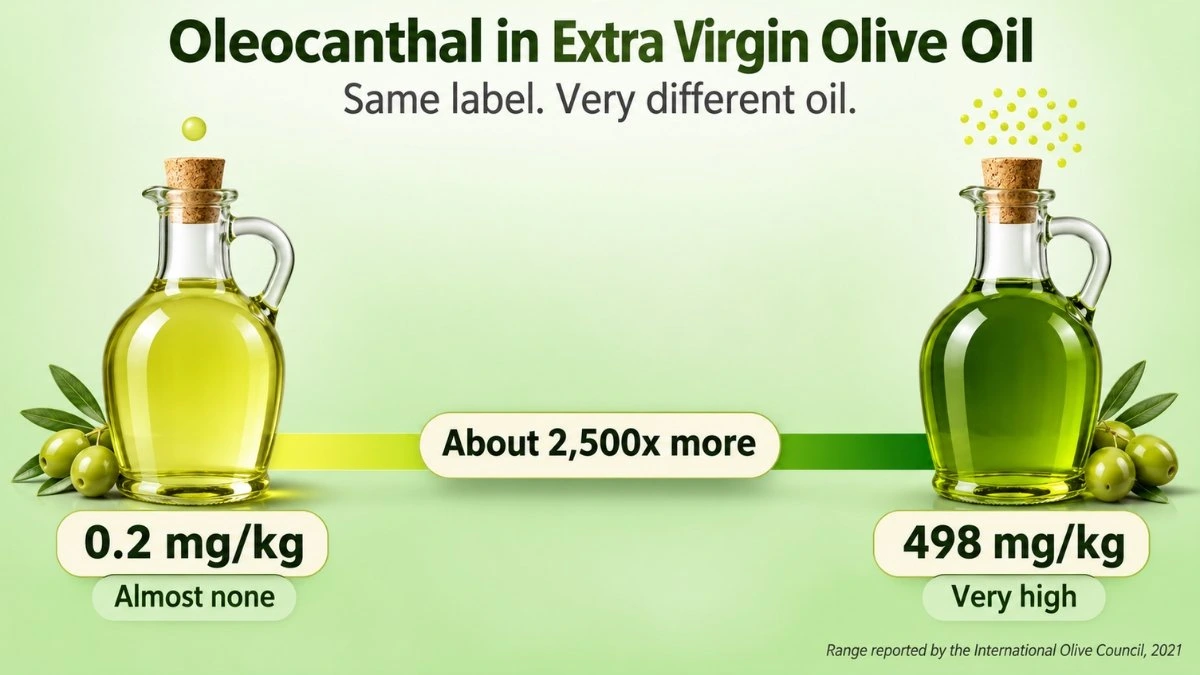
Two bottles sit side by side on a shelf. Both say extra virgin. One may hold 0.2 milligrams of oleocanthal per kilogram. The other may hold 498. That is a gap of about 2,500 times. Same label, very different oil.
Many of us buy olive oil hoping it calms inflammation. The label will not tell you whether yours can, and a higher price will not either. One clue waits at the back of your throat: a peppery sting.
This article explains what that range means and why it swings so far. It covers how to choose a better bottle. You will see what the science can promise, and what it cannot yet prove.
What the 0.2 to 498 mg/kg Range Actually Means
A 2022 article in the journal Antioxidants describes oleocanthal as a compound exclusive to the olive plant family. It sits mainly in extra virgin oil.
In 2021, the International Olive Council reported that oleocanthal in extra virgin olive oil runs from 0.2 mg/kg to 498 mg/kg. At the low end, an oil holds almost none. At the high end, it holds about 2,500 times more.
The unit mg/kg means milligrams of oleocanthal in each kilogram of oil. A kilogram of olive oil fills a little more than one liter.
A 2012 study in the Journal of Agricultural and Food Chemistry tested 175 commercial olive oils from Greece and California. Karkoula and colleagues found oleocanthal anywhere from non-detectable to 355 mg/kg. Oleocanthal and its close relative oleacein together reached 501 mg/kg at the top.
Labs use different methods, and the International Olive Council lists measurement method as one reason for the spread. Treat 498 as a published range. Other labs and methods may report different figures
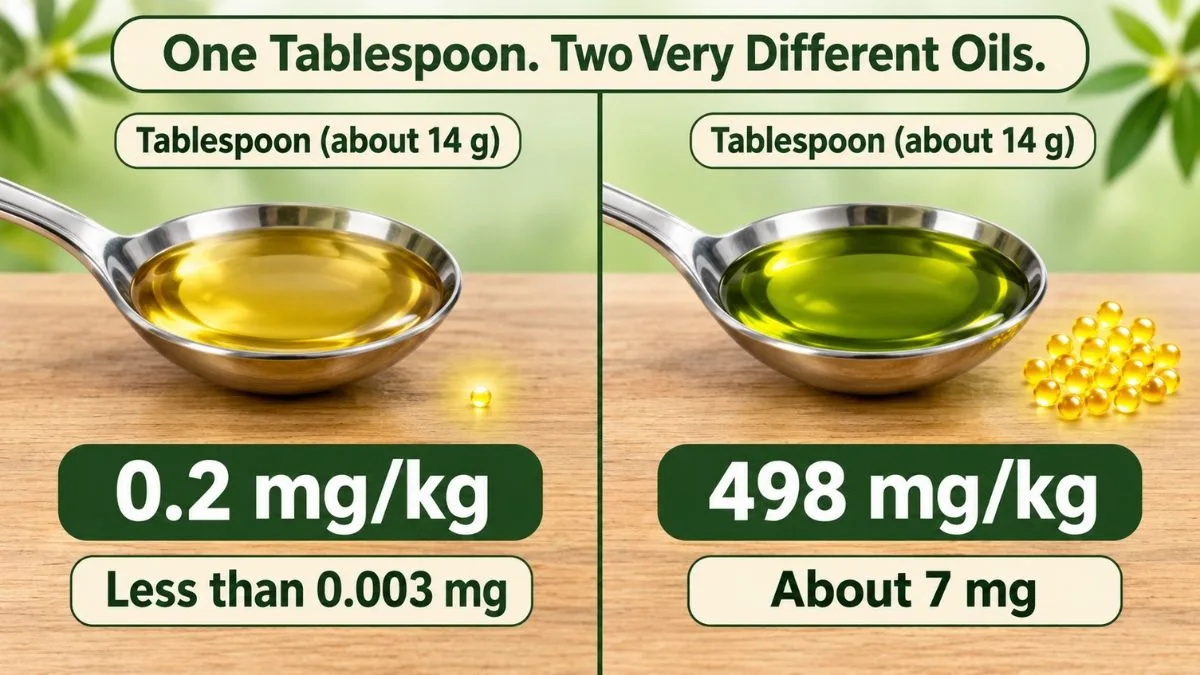
Put that in kitchen terms. One tablespoon of oil weighs about 14 grams. At 498 mg/kg, that spoon holds about 7 mg of oleocanthal. At 0.2 mg/kg, it holds less than 0.003 mg.
Your label says extra virgin. It does not list oleocanthal. So no, two bottles are not equal. Several choices on the farm and in the mill explain the gap.
Why Two Bottles of Extra Virgin Olive Oil Can Differ So Much
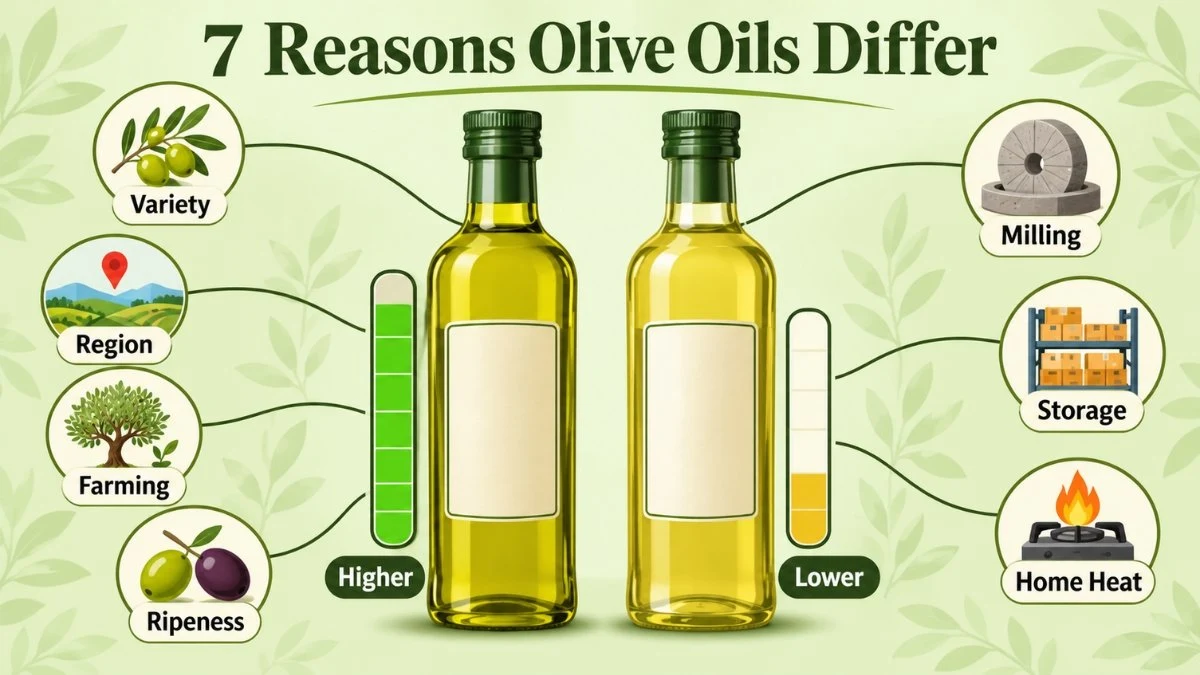
The International Olive Council lists several causes for the swing. They include cultivar, growing region, farming methods, olive ripeness, oil processing, storage, and heat at home. Each one can raise or lower the final amount.
Olive variety sets the starting point. Karkoula’s team found that some varieties make oil low in oleocanthal and oleacein. This held true wherever the trees grew and whenever growers picked the olives. A separate study of Italian single-variety oils in PubMed Central found notable oleocanthal in only two of its oils.
Region and farming add more variation. The Council names geography and farming technique as factors, so two oils of the same variety can still differ. Oil processing adds another layer. Choices at the mill change what ends up in the bottle.
Harvest Time Matters
Early harvest on a label deserves a second look.
Harvest Time
Harvest time matters too. The same 2012 study linked higher oleocanthal and oleacein to early harvest.
Early Picks
Early picks tend to give oil with more of these compounds.
On the Label
Early harvest on a label deserves a second look.
Time adds to storage. The Council lists storage among the factors, so an oil that aged in a warehouse and on a shelf may hold less than a fresh one.
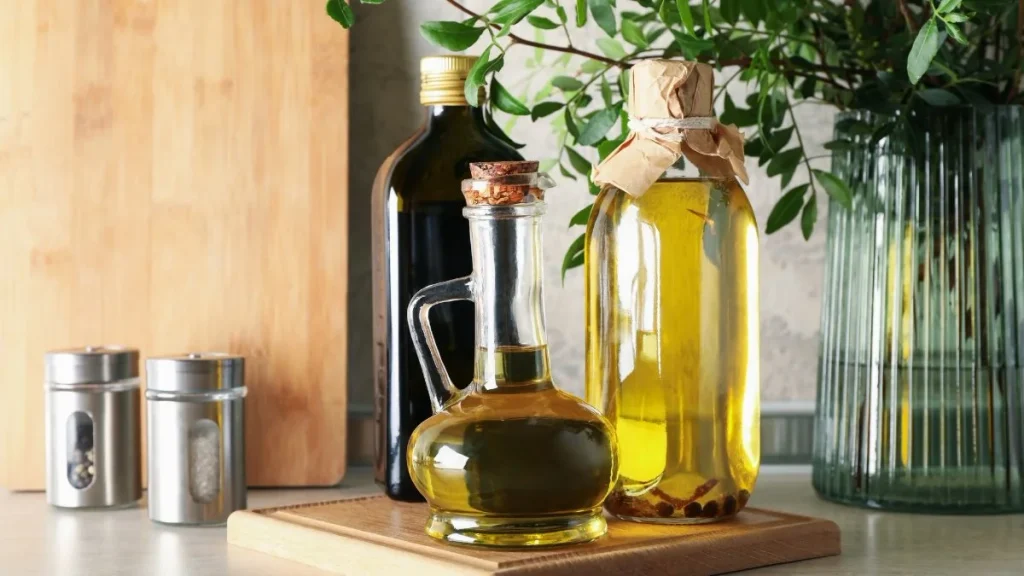
In my conversations with adults in their fifties and sixties, one habit shows up often. The big clear bottle sits beside the stove for months. The Council names storage and home heating as factors that change oleocanthal levels. That counter spot deserves a second thought.
A wide range with clear causes leads to the question that matters most: what the amount does inside your body.
What the Evidence Shows About Oleocanthal and Inflammation
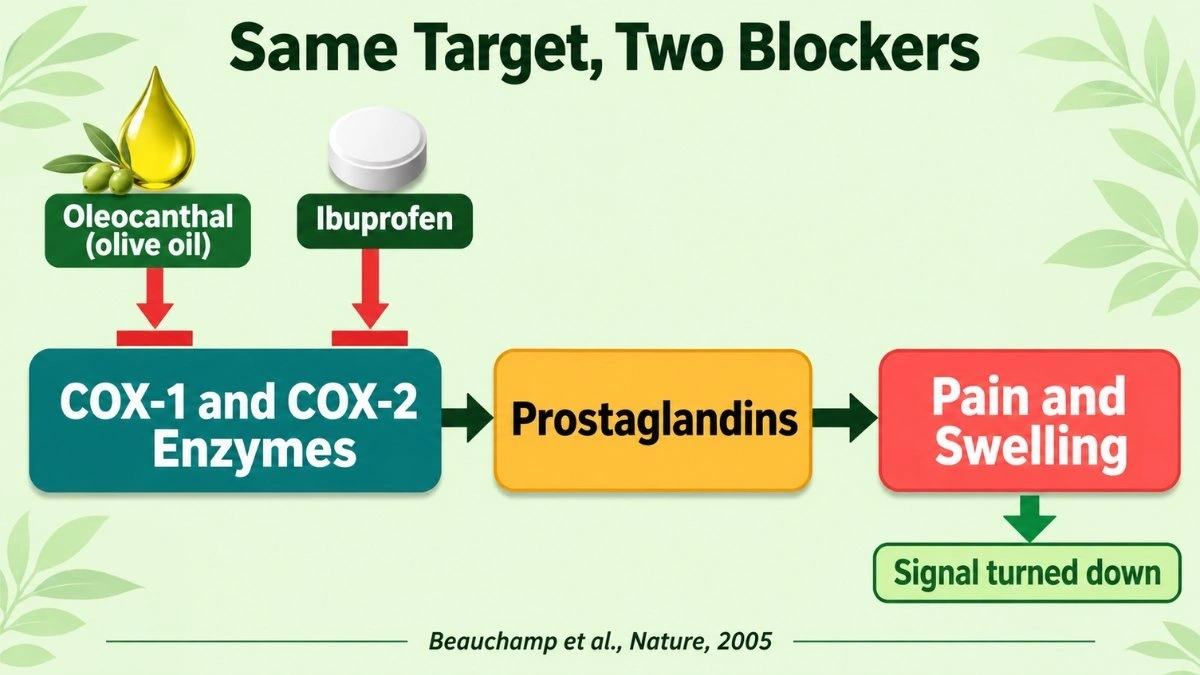
In 2005, a team led by Gary Beauchamp at the Monell Chemical Senses Center reported a finding in Nature. Oleocanthal blocks the COX-1 and COX-2 enzymes. Ibuprofen blocks the same two. Beauchamp’s team noticed the throat sting of fresh oil matches that of liquid ibuprofen.
COX enzymes help the body make prostaglandins. These chemicals drive pain and swelling. Blocking the enzymes turns that signal down. That is the mechanism behind the ibuprofen comparison.
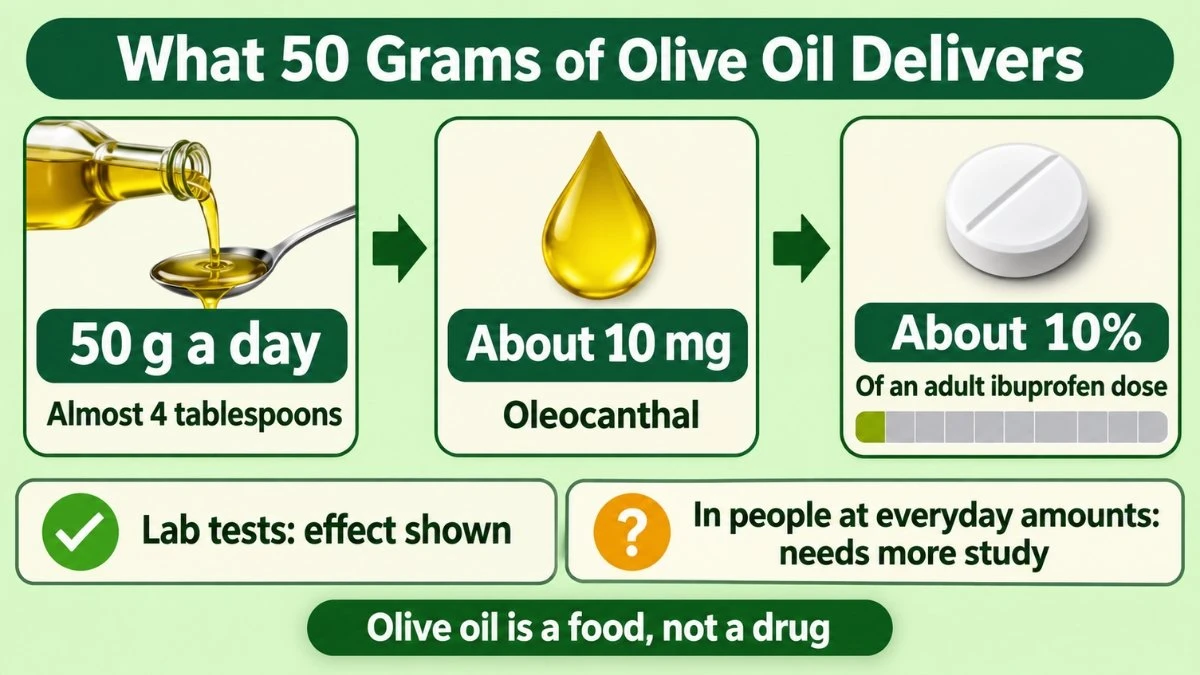
The Olive Wellness Institute reports that Beauchamp’s group estimated 50 grams of oil a day delivers about 10 mg of oleocanthal. They matched that to about 10% of an adult ibuprofen dose. Fifty grams is almost four tablespoons.
Check that estimate against the range. Ten milligrams in 50 grams works out to 200 mg/kg, which sits inside the published range. An oil near the bottom delivers a tiny fraction of that.
That work came from lab tests. Lab results do not prove the same effect in your joints or arteries. Olive oil is a food, and ibuprofen is a drug. Please do not swap one for the other.
Oleocanthal is one of several phenols at work, so no single number tells the full story. The International Olive Council notes that experts consider hydroxytyrosol the most potent olive oil antioxidant.
Regulators draw a careful line. A study of Italian oils in PubMed Central explains EU Regulation 432/2012. It lets oils with at least 5 mg of hydroxytyrosol and its derivatives per 20 g state that olive oil polyphenols help protect blood lipids from oxidative stress. The claim covers the polyphenol group, not oleocanthal alone.
The short answer is no. Not every olive oil carries the same anti-inflammatory potential.
Oleocanthal shows real anti-inflammatory action in lab tests. Whether it works the same way in people at everyday amounts needs more study. A high-oleocanthal oil is a reasonable pick inside a healthy diet. Choosing one starts at the shelf.
How to Choose and Use Olive Oil With This in Mind
Note: If you have a health condition or take medication, speak with your doctor before changing your diet. Olive oil is a food and does not replace any prescribed treatment.
Start with the label. Look for a recent harvest date and a named variety. Early harvest wording is a good sign, since Karkoula’s team linked early picking to higher levels. Some producers also publish lab results for phenols. Ask for them.
Next, check the package and the shelf. The International Olive Council lists storage as a factor in oleocanthal levels. Choose dark glass or a tin to block light. Keep it in a cool cupboard away from the stove. Buy a size you can finish in a few months.
A common pattern I notice is people saving their best oil for special meals. I suggest using it daily instead. Use it raw or at low heat on soup, beans, vegetables, and bread.
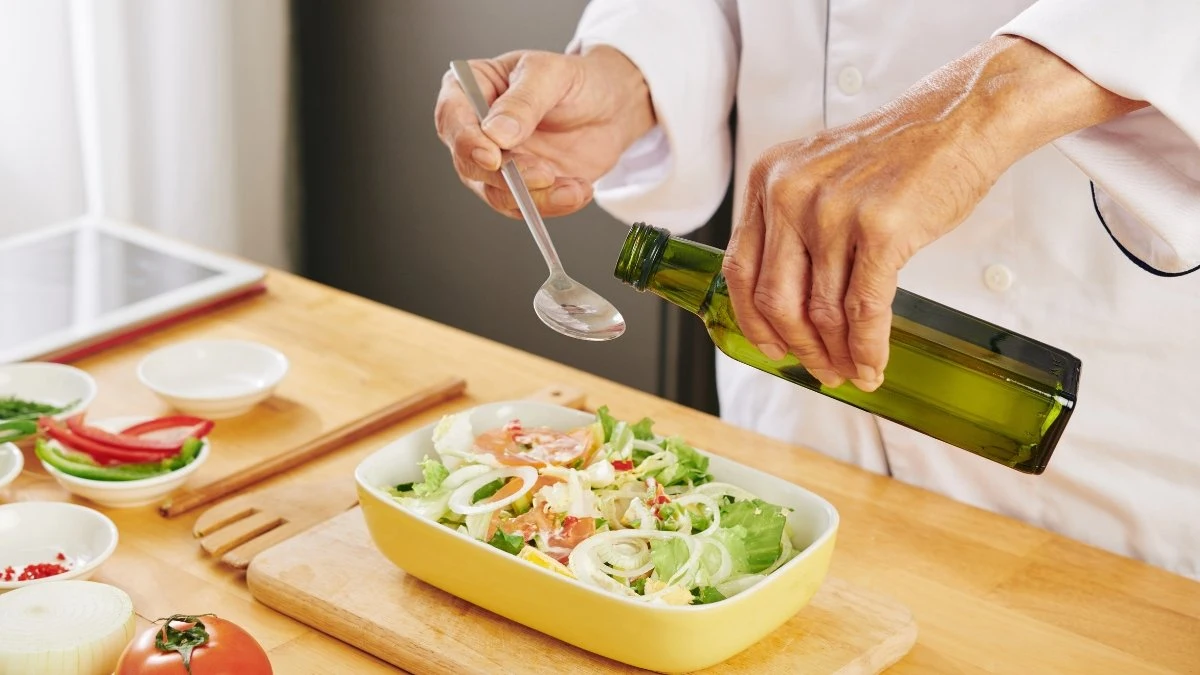
The International Olive Council notes that cooking heat degrades most olive oil phenols, though oleocanthal stays relatively stable when the oil starts with plenty of it. Gentle use still makes sense for the other phenols. A simple routine works well. Pour a spoonful over lunchtime soup or beans. Add one over cooked vegetables at dinner. Two small daily moments are easy to keep.
Read numbers with care. The Italian study measured total phenols with one method and single compounds, such as oleocanthal, with another. A figure on a bottle may mean either one. Ask which. A higher price does not prove a higher level.
Taste gives one more clue. A fresh, early-picked oil often leaves a peppery sting at the back of the throat. Beauchamp’s 2005 work ties that sting to oleocanthal. The sting is a useful clue. It cannot tell you the exact amount.
Fifty grams of olive oil carries about 440 calories, according to USDA FoodData Central. Let it replace butter or other fats instead of adding to them. One or two tablespoons a day is a practical start.
Small swaps like these cost little and need no special trip.
A Small Step Worth Taking
You can stop wondering what your bottle is worth. Tonight, pour a spoonful into a small glass and taste it. Look for a peppery finish at the back of your throat. Whatever you find, you will shop with sharper eyes next time. Small checks like this build into better choices, one bottle at a time.
References
- International Olive Council, “Oleocanthal a magic phenolic compound” (2021): https://www.internationaloliveoil.org/oleocanthal-a-magic-phenolic-compound/
- Karkoula E, et al., “Direct Measurement of Oleocanthal and Oleacein Levels in Olive Oil by Quantitative 1H NMR,” Journal of Agricultural and Food Chemistry (2012): https://pubs.acs.org/doi/10.1021/jf3032765
- “Olive Oil Antioxidants,” Antioxidants (2022): https://www.ncbi.nlm.nih.gov/pmc/articles/PMC9137961/
- “Phenolic Profile and Antioxidant Activity of Italian Monovarietal Extra Virgin Olive Oils,” PubMed Central: https://www.ncbi.nlm.nih.gov/pmc/articles/PMC6617199/
- Olive Wellness Institute, “Oleocanthal: A Phenolic Compound with Anti-inflammatory Action”: https://olivewellnessinstitute.org/article/oleocanthal-a-phenolic-compound-with-anti-inflammatory-action/
- Beauchamp GK, et al., “Ibuprofen-like activity in extra-virgin olive oil,” Nature (2005): https://www.nature.com/articles/437045a