

Her husband’s last day at the office was a Friday. By the next Tuesday, he had reorganized the pantry twice and asked about her lunch plans three times. She still had a full workday ahead of her. He felt restless. She felt watched. Neither meant to cause friction, yet it arrived anyway.
Many couples expect marriage after retirement to feel like a long vacation. For some couples, the first stretch feels more like two schedules colliding. That does not mean your marriage is failing. Research shows why this happens and who feels it most. It also shows the strain usually fades with time. Here is what the studies found, and what helps.
The Transition Strains Marriages More Than Retirement Does
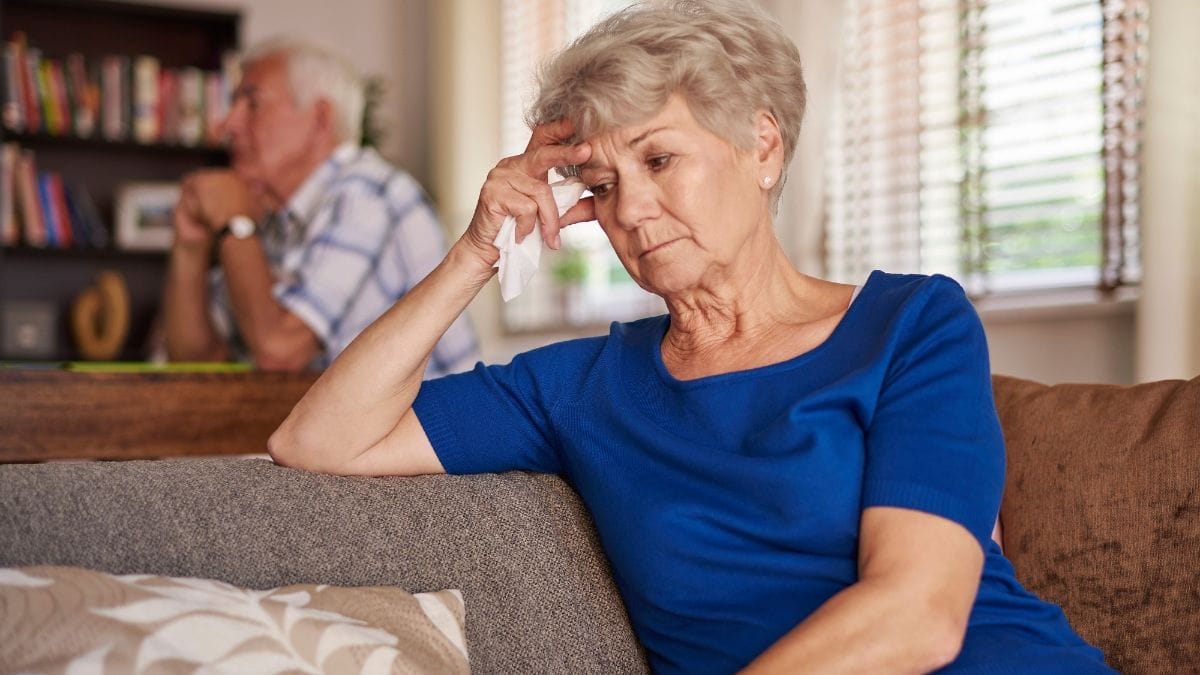
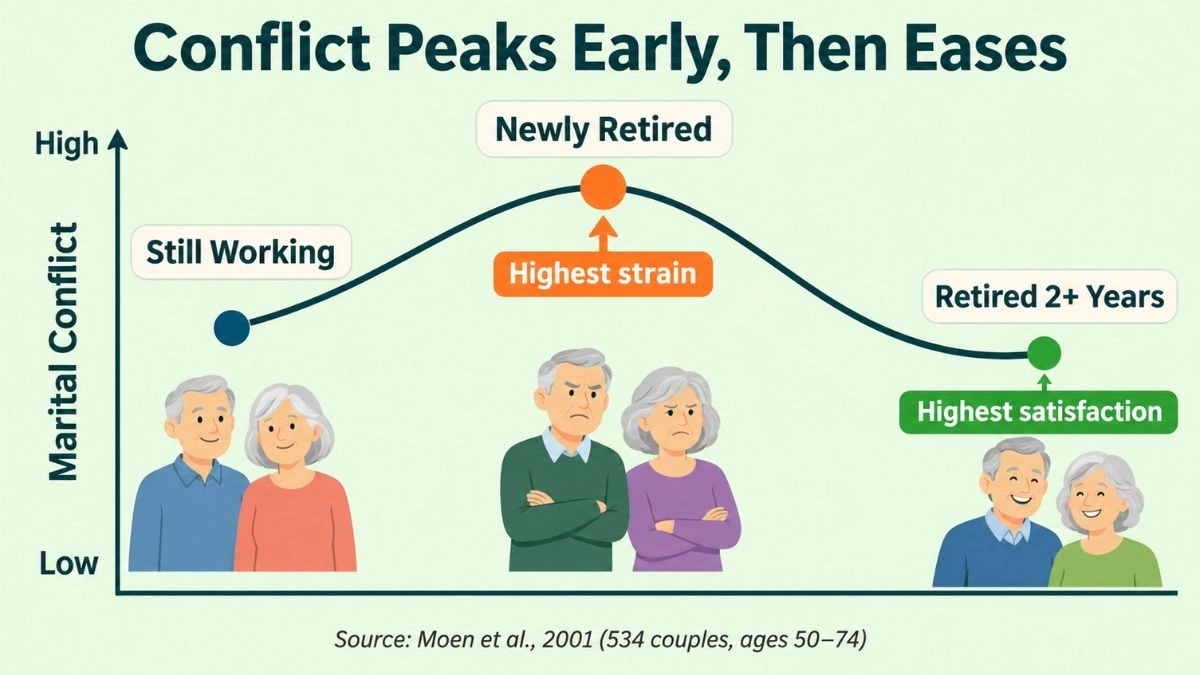
Researchers at Cornell University studied 534 married men and women aged 50 to 74 in upstate New York. Phyllis Moen and colleagues published the results in Social Psychology Quarterly in 2001. The couples were retired, newly retired, or about to retire.
The newly retired reported more marital conflict than couples who had not retired yet. They also reported more conflict than couples retired for more than two years. Moen concluded that becoming retired seems to stress a marriage more than being retired.
The good news came later. Once both spouses settled into retirement, couples reported the highest marital satisfaction. They also reported the least conflict, compared with still-working or newly retired peers.
Japanese data shows a similar pattern. Takashi Oshio studied 3,794 wives whose husbands retired during a national survey that ran from 2005 to 2016. His 2021 study in the Journal of Epidemiology found a small rise in wives’ distress over the first three years. Distress then declined toward baseline.
Not every study finds such a mild effect. In a 2017 study in Social Science & Medicine, Marco Bertoni and Giorgio Brunello studied Japanese wives. They found that each extra year of a husband’s retirement raised the chance that his wife reported stress, depression, or poor sleep. The rise was 5.5 to 6.4 percentage points.
The studies used different methods and samples, so they do not fully agree. Oshio found the syndrome had limited relevance among middle-aged Japanese couples. The label is popular, not a medical diagnosis. In the Cornell and Japanese panel data, the strain peaks early and eases with time. Still, it runs deeper for some couples than others.
Why a Gap Between Retirement Dates Hurts Most
Cornell’s team found marital quality dropped the most when only one spouse had retired. The dip was sharpest when the husband retired and the wife kept working.
Who Retires First Shapes Satisfaction
A study of working couples in Korea.
Much lower satisfaction when the husband retired first.
The Study
A 2018 study in the International Journal of Aging and Human Development looked at working couples in Korea.
The Finding
Households where the husband retired first reported much lower satisfaction than those where the wife retired first.
A Lasting Gap
That gap lasted after both spouses had retired.
A Note on Context
The study centered on Korea’s patriarchal culture, so results may differ elsewhere.
Both spouses feel it. Cornell found men reported the most conflict when they retired before their wives. The same study found women, especially those still working, reported more conflict when their husbands retired and did not return to work. The studies above focus on husbands and wives, so we know less about other households.
My reading of this research is that the mechanism is simple. A retiree can lose daily structure, work friends, and status in a single day. The retiree often turns to a spouse to fill all three. A spouse still at work has little time to give. That spouse also carries job stress home.
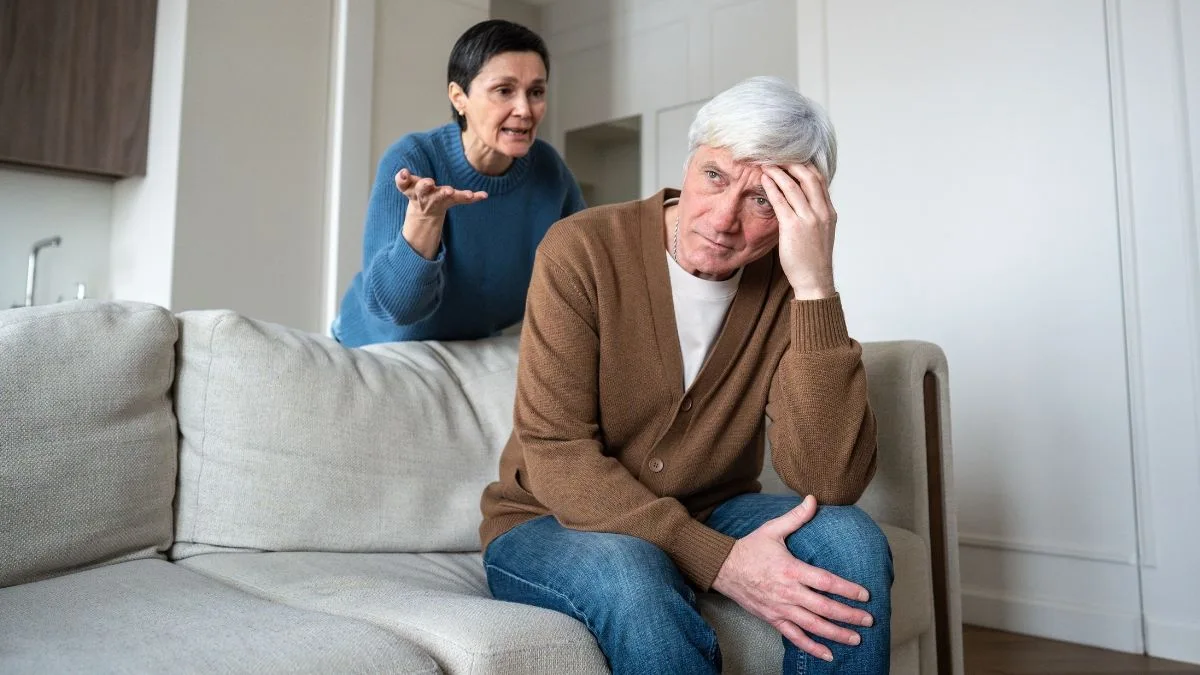
A 2007 AARP survey of U.S. adults aged 55 to 75 added a detail. Retired men said they had taken on more housework. Working wives with retired husbands disagreed. Respondents who said their spouses had done more housework since retirement were more satisfied with retirement. So how partners see the housework split may matter, though a survey like this shows links, not cause.
Here is a composite example drawn from these patterns, not one real person. A 63-year-old retires in March. His wife, 60, works until October. By May, he feels useless at 10 a.m. She feels judged at 6 p.m. Their schedules clash, and neither is wrong. That mismatch is the part couples can change.
What Helps Couples Settle In Faster
Note: These steps reflect general research, not personal medical or counseling advice. If you have a health condition, check with your doctor before changing your routine.
Oshio’s 2021 study offers useful clues. It found three factors linked to steadier mental health in wives after a husband retired, though the study could not show that they caused it. Two are in your hands. Wives with an active social life before the retirement kept steadier mental health. So did wives who interacted often with their husbands.

The third factor was having no paid job, which few couples can change. I would apply the first two to both spouses.
Start by building a social life of your own. Join a walking group, a class, or a volunteer team. I suggest two regular commitments each week that do not involve your spouse.
Next, settle the housework in writing. Retired men and working wives can see the workload differently, as the AARP survey showed. A shared list of who does what, and when removes the guesswork.
Then pick one new activity for the retired spouse. The same AARP survey found that retirees who started new activities were more satisfied with retirement. I suggest something that gets the retiree out of the house before noon, three days a week.

Here is a second composite, not a real client. A retired teacher joined a choir and a hiking group within two months. Her husband, still working, said evenings felt lighter. She had stories to share, and he had room to unwind.
Finally, schedule two check-ins. Hold the first about six months after the retirement date and the second at the two-year mark. Ask three questions: What is working? What is wearing on us? What should we change? This schedule is my suggestion, built around the two-year window in the Cornell data.
Some couples need more than these steps, and knowing the signs matters.
When Friction Is a Sign to Get Support
Some irritability is normal in the first years. Deeper signs need attention. The National Institute on Aging states that clinical depression is not a normal part of aging. Its guidance points to warning signs such as long periods of sadness or emptiness and lost interest in activities you once enjoyed.
See your doctor if low mood lasts for weeks. Seek help as well if you pull away from each other or if arguments keep getting worse. A primary care clinician, mental health professional, or couples counselor can help.

If you ever think about harming yourself, seek emergency help right away. In the United States, you can call or text 988. Outside the United States, contact your local emergency number or a local crisis line.
Conclusion
A tense kitchen at 11 a.m. is common, and you can work through it. This week, sit down for twenty minutes. Each of you describes an ideal ordinary weekday, start to finish. Listen before you answer. Then note one thing you want to share and one thing you want to keep separate. Years of shared history are on your side.
References
- Moen, P., Kim, J., and Hofmeister, H. (2001). Social Psychology Quarterly. Cornell news summary: https://www.news.cornell.edu/stories/2001/04/marital-road-retirement-bumpy
- Oshio, T. (2021). What Factors Affect the Evolution of the Wife’s Mental Health After the Husband’s Retirement? Journal of Epidemiology, 31(5), 308-314. https://doi.org/10.2188/jea.je20200071
- Bertoni, M., and Brunello, G. (2017). Pappa Ante Portas: The effect of the husband’s retirement on the wife’s mental health in Japan. Social Science & Medicine, 175, 135-142. https://research.unipd.it/handle/11577/3223795
- Effects of Working Couple’s Retirement Sequence on Satisfaction in Patriarchal Culture Country (2018). International Journal of Aging and Human Development, 87(3), 244-267. https://pure.skku.edu/en/publications/effects-of-working-couples-retirement-sequence-on-satisfaction-in/
- AARP (2007). Retired spouses survey. https://www.aarp.org/pri/topics/social-leisure/relationships/retired_spouses/
- National Institute on Aging. Depression and Older Adults. https://www.nia.nih.gov/health/mental-and-emotional-health/depression-and-older-adults
- 988 Suicide and Crisis Lifeline. https://988lifeline.org/