You already track what you eat and how much you move.
But there’s a third input most adults over 50 never factor in: who they spend time with.
Most adults over 50 treat their social life as optional, not realizing that the people around them are quietly doing as much for their body as their blood pressure medication.
Adults over 50 who are managing their physical health but haven’t connected their relationships to how their body is aging are the people this article is written for.
By the end, you’ll know exactly what your social ties are doing to your physical health, and one simple step to start changing it today.
| # | Section | What you’ll find |
|---|---|---|
| 1 | Your body keeps score | The chemical your blood makes when you’re cut off |
| 2 | Your heart notices too | A risk comparison that changes how you think about loneliness |
| 3 | What happens inside your brain | One number from a nine-year study that surprises most people |
| 4 | The sleep connection | What isolation does to your nights that stress alone can’t explain |
| 5 | Pain has a social side | Why two people with the same injury don’t feel it the same way |
| 6 | Recovery after illness | What surgeons are now measuring before they operate |
Your Relationships Change Your Body’s Inflammation Levels
You might feel fine.
But if you spend most of your time without meaningful social contact, your blood may already be showing the cost.
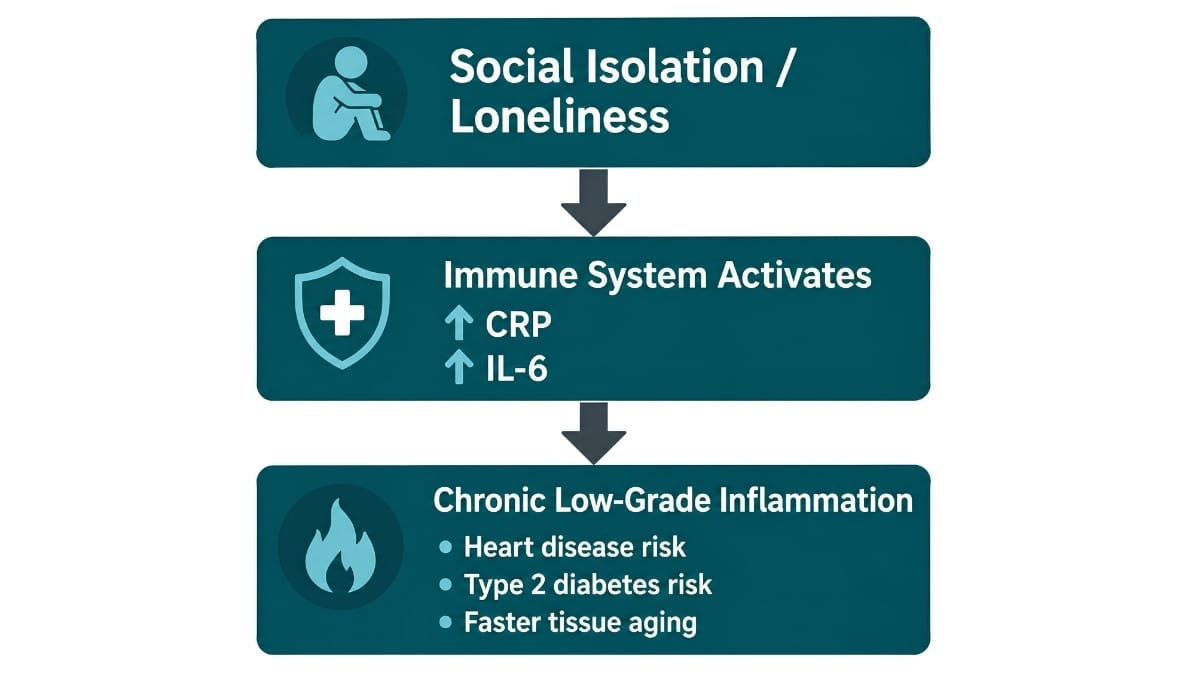
When you’re lonely or cut off from people, your body treats that state as a low-grade threat.
It responds by raising levels of C-reactive protein [CRP, a protein your blood makes when your body is fighting inflammation or an injury] and interleukin-6 [IL-6, a chemical signal that keeps your immune system on high alert].¹,²
Research suggests that chronic inflammation [the kind that stays on for months or years, unlike the short burst that heals a cut] is associated with heart disease, type 2 diabetes, and faster tissue aging.²
It’s not a mental state. It’s a measurable biological process.
A 2022 study of 222 older adults aged 70 to 90 in the Bronx, New York found that both day-to-day loneliness and overall trait loneliness were each linked to higher CRP levels, even after adjusting for age, body weight, and other health factors.¹
A separate nationally representative study of 4,648 Medicare beneficiaries aged 65 and older found that social isolation was significantly associated with higher levels of both IL-6 and CRP, even after accounting for income, tobacco use, body weight, and chronic conditions.²
This is one of the clearest examples of how social ties and physical health are connected at a biological level.
Your body doesn’t distinguish between loneliness as an emotion and loneliness as a physical state.
It reacts to both the same way.
The next section shows what that reaction is doing specifically to your heart.
How Social Ties Affect Your Heart Health
The people in your life are a biological input, and your body registers their absence the same way it registers skipping sleep or eating badly.
A 2024 systematic review and meta-analysis of 86 studies found that social isolation is linked to a 35% higher risk of all-cause mortality in older adults, while loneliness is linked to a 14% increase.³
That puts social isolation in the same territory as smoking when it comes to mortality risk.⁴
Julianne Holt-Lunstad’s widely cited 2015 meta-analysis found that both social isolation and living alone each raised the odds of early death by 29% and 32%, respectively, across populations of adults ranging in age from 28 to 92.⁴
Your cardiovascular system is particularly sensitive to this.

A 2023 analysis of data from nearly 20,000 US adults aged 18 to 64 from the 2021 National Health Interview Survey found that low social support was linked to higher odds of hypertension (adjusted OR 1.42), high cholesterol (adjusted OR 1.39), and diabetes (adjusted OR 1.53) compared to adults with high social support.⁵
Note that this study covered adults aged 18 to 64, not specifically older adults.
Blood pressure and cholesterol don’t improve because someone feels happier.
They improve in part because cortisol [a hormone your adrenal glands release when your body senses sustained threat or stress] is associated with blood pressure and cholesterol regulation, and social contact appears to moderate the stress response that elevates it.
That threat response calms.
The inflammation that comes with it quiets too.
Look next at where else this registers: inside your brain.
Your Brain Physically Changes When You Are Isolated
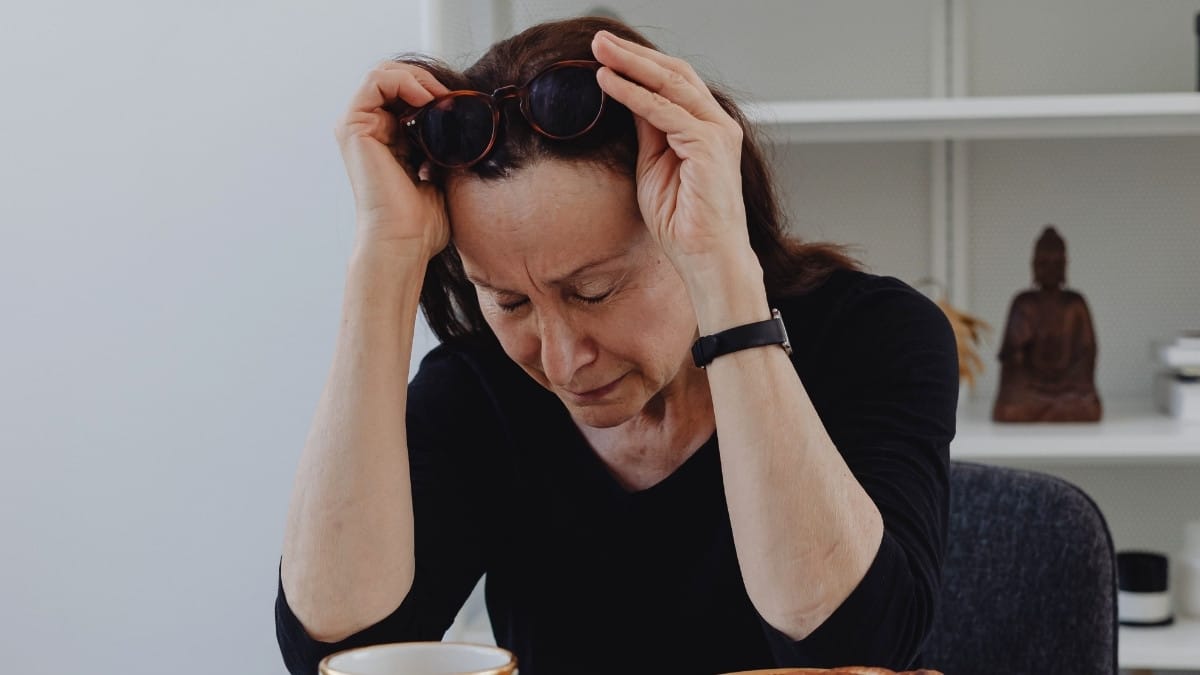
You might not think of yourself as isolated.
But about one in four adults over 65 in the United States is, according to the National Institute on Aging.⁶
Most of them don’t know it’s changing how their brain works.
A nine-year study tracking 5,022 Medicare beneficiaries aged 65 and older found that those who were socially isolated at the start of the study had a 27% higher risk of developing dementia over the following nine years.⁷
This was observed even after accounting for factors like depression and cardiovascular disease.
One likely reason is cognitive engagement [the mental processing your brain does when you hold a conversation, read another person’s facial expressions, or follow the thread of an argument].
When social contact drops away, that processing drops with it.
Research suggests that reduced cognitive engagement is associated with faster cognitive decline.
Talk to your doctor before making significant changes to your routine if you’re managing a chronic condition, recovering from illness, or on medication.
That same NHATS data showed that more than 70% of adults aged 65 and older who were not socially isolated had regular access to a working phone or computer and used it to initiate and respond to others.⁷
Your brain is one place this shows up.
The next section covers what happens at night.
Poor Social Ties Wreck Your Sleep More Than You Might Expect
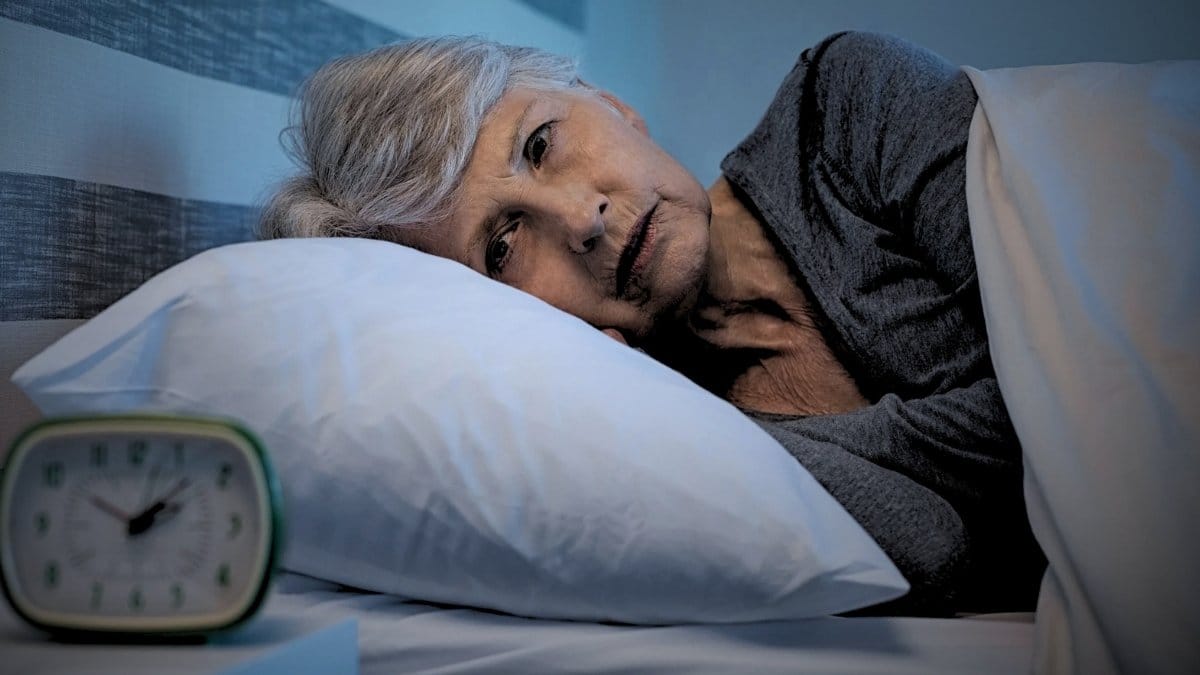
If you’re already sleeping poorly, isolation may be making it worse.
Research links poor sleep in older adults to a range of physical health problems, and social isolation compounds the risk.⁸
A follow-up study from the Swedish Good Aging in Skåne project tracked 2,897 adults with a mean age of 67.4 at baseline and 76.4 at follow-up.⁹
Researchers found that baseline loneliness and social isolation were associated with sleep disturbances measured almost a decade later, meaning the social conditions of your early 60s may shape how well you sleep in your 70s.⁹
A separate population-based cohort study using US data from middle-aged and older adults found that social isolation and loneliness were each associated with the onset of insomnia symptoms, including difficulty maintaining sleep and early morning waking.¹⁵
Baseline loneliness and social isolation are associated with elevated cortisol levels, impaired blood sugar regulation, and weakened immune function.
None of these are separate problems.
They compound the inflammation pathway covered in the first section.
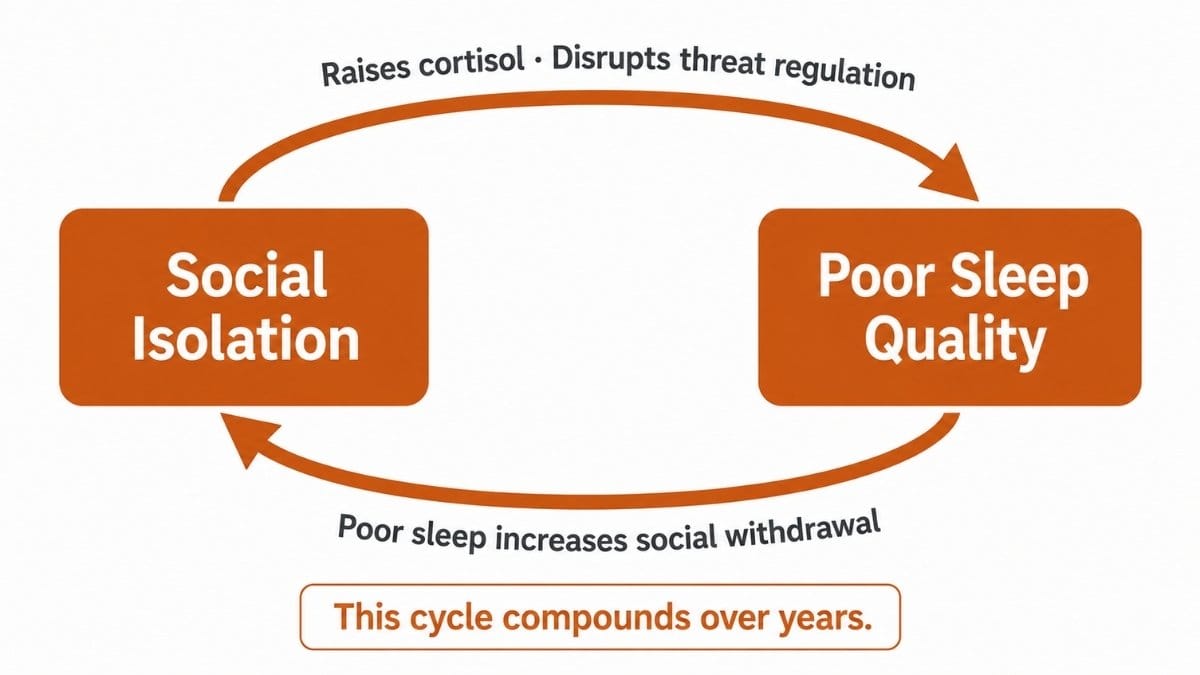
Social isolation and poor sleep appear to worsen each other in both directions.
Research suggests isolation raises the risk of poor sleep, and poor sleep may increase withdrawal from social contact.⁹,¹⁵
If you’re sleeping badly and spending less time with people, it’s worth asking which one started first.
The next section covers something you might not have connected to your social life at all: how much pain you feel.
The People Around You Raise or Lower How Much Pain You Feel
Most people think of pain as something happening inside the body.
The research says your social environment is part of the signal.
An analysis of 14,069 adults with a mean age of 68.81 from the Health and Retirement Study found that people living in neighborhoods with high perceived social ties had lower odds of moderate-to-severe and activity-limiting pain, after adjusting for age, income, education, and marital status.¹⁰
Social connection and pain aren’t linked only through mood.
A separate study tracked 317 older adults aged 70 and older from the Bronx using ecological momentary assessments taken five times daily for 14 days.¹¹
Moments of social interaction and enjoyment significantly reduced the link between negative emotional states and pain intensity.¹¹
People who had social contact and reported enjoyment during those moments felt their pain less at that specific time.
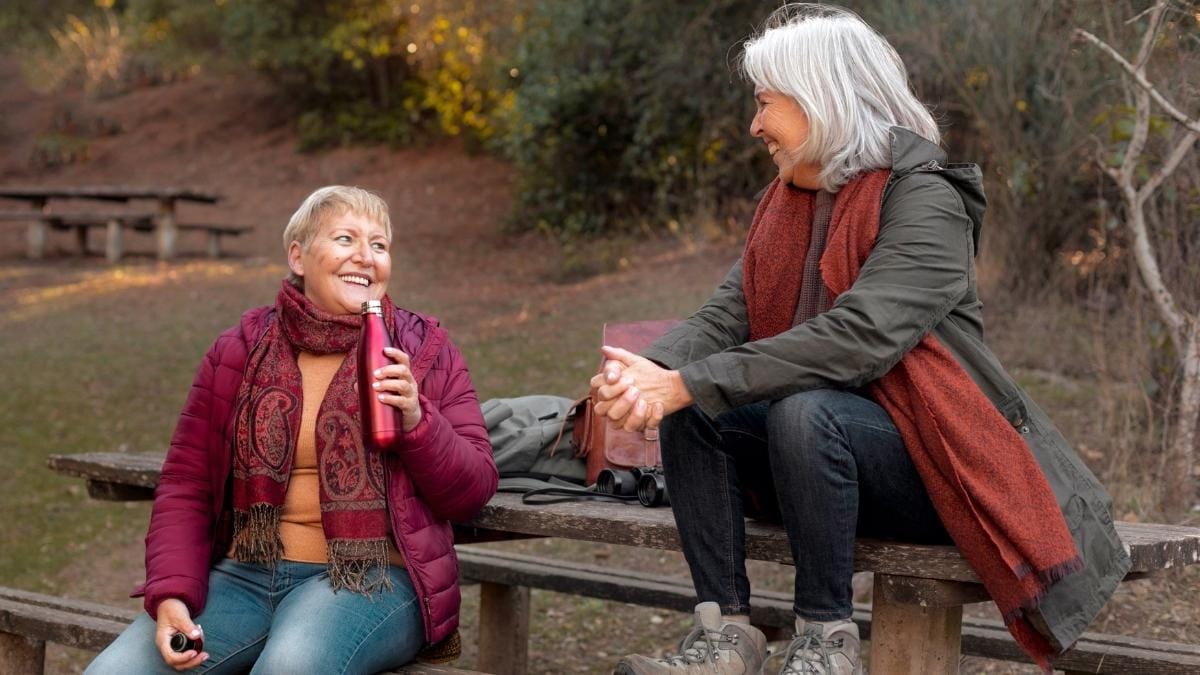
The mechanism here isn’t distraction.
Research suggests that perceived threat [your nervous system’s read on how safe your environment is] may shape how strongly pain signals are processed.¹⁰,¹¹
Social connection appears to lower that threat read.
Social isolation appears to raise it.
This doesn’t mean pain isn’t real or that it’s in your head.
It means the social conditions around you are one of several inputs your nervous system uses to calibrate pain intensity.
The people in your life aren’t just comfort.
They’re part of your pain management.
The last section covers what happens when you need your body to repair itself.
Social Support Speeds Up Your Recovery from Illness and Surgery
If you’re in good health now, this section is still worth reading.
The evidence around social ties and recovery is strong enough to change how you plan for future illness.
A 2025 retrospective registry study using UK Biobank data found that social isolation was linked to higher rates of 30-day major postoperative complications, 30-day emergency readmissions, and 90-day mortality after surgery.¹²
The researchers noted that socially isolated patients may lack the practical at-home support needed to follow medical instructions, manage complications, and get help when something goes wrong.
Medication adherence and self-care also appear to be shaped by your social network.
Eleven studies covering adults with coronary heart disease and heart failure all reported a significant positive link between social support and adherence to prescribed self-care routines.¹³
People with strong ties were more likely to take their medication, attend follow-up appointments, and stick to recommended lifestyle changes.
One 2023 analysis of 21,107 US adults found that adults with weak social support were 21.1% less likely to be vaccinated against COVID-19 than those with strong support.¹⁴
Among adults aged 65 and older specifically, weak social support was associated with an adjusted odds ratio of 0.56 for vaccination, meaning roughly half the likelihood of being vaccinated compared to those with strong support.¹⁴
Talk to your doctor before making changes to your care routine, especially if you’re managing a chronic condition or recovering from an illness.
Recovery isn’t just biology.
It’s also whether someone checks in on you, drives you to an appointment, or notices that something is wrong before it gets worse.
Start with one habit this week.
Pick one person to contact and make it a regular thing: a weekly call, a standing walk, or a recurring lunch.
Strong social ties aren’t separate from your physical health.
They’re inside it, changing your inflammation levels, your heart risk, your sleep, your pain, and your ability to recover.
The body keeps score, and it’s counting the people you keep close.
Medical Disclaimer
The information in this article is based on published research and is intended for general educational purposes only.
It is not a substitute for professional medical advice, diagnosis, or treatment. Individual health outcomes vary.
If you are managing a chronic condition, recovering from surgery, or taking prescription medication, speak with your doctor before acting on any information presented here.
References
- Van Bogart K, Engeland CG, Sliwinski MJ, et al. The Association Between Loneliness and Inflammation: Findings From an Older Adult Sample. Frontiers in Behavioral Neuroscience. 2022. https://www.ncbi.nlm.nih.gov/pmc/articles/PMC8787084/
- Cudjoe TKM, Roth DL, Szanton SL, et al. Getting Under the Skin: Social Isolation and Biological Markers in the National Health and Aging Trends Study. Journal of the American Geriatrics Society. 2022. https://pmc.ncbi.nlm.nih.gov/articles/PMC8821117/
- Echoes of Solitude: Systematic Review and Meta-Analysis Revealing Mortality Risks in Older Adults Due to Loneliness, Social Isolation, and Living Alone. PubMed Central. 2024. https://www.ncbi.nlm.nih.gov/pmc/articles/PMC12436933/
- Holt-Lunstad J, Smith TB, Baker M, Harris T, Stephenson D. Loneliness and Social Isolation as Risk Factors for Mortality: A Meta-Analytic Review. Perspectives on Psychological Science. 2015. https://journals.sagepub.com/doi/full/10.1177/1745691614568352
- Yeh EJ et al. Perceived Social Support and Cardiovascular Risk Among Nonelderly Adults in the United States. Journal of Comparative Effectiveness Research. 2023. https://pubmed.ncbi.nlm.nih.gov/37865124/
- National Institute on Aging. Social Isolation and Loneliness in Older People Pose Health Risks. NIH. https://www.nia.nih.gov/news/social-isolation-loneliness-older-people-pose-health-risks
- Cudjoe TKM et al. New Studies Suggest Social Isolation Is a Risk Factor for Dementia in Older Adults. Johns Hopkins Medicine. January 2023. https://www.hopkinsmedicine.org/news/newsroom/news-releases/2023/01/new-studies-suggest-social-isolation-is-a-risk-factor-for-dementia-in-older-adults-point-to-ways-to-reduce-risk
- Qi X et al. Associations of Social Isolation and Loneliness with the Onset of Insomnia Symptoms Among Middle-Aged and Older Adults in the United States: A Population-Based Cohort Study. Psychiatry Research. 2023. https://pmc.ncbi.nlm.nih.gov/articles/PMC10332913/
- The Association Between Loneliness, Social Isolation, and Sleep Disturbances in Older Adults: A Follow-Up Study from the Swedish Good Aging in Skåne Project. SAGE Open. 2024. https://pmc.ncbi.nlm.nih.gov/articles/PMC10798090/
- Are Perceived Neighborhood Characteristics Associated with Chronic Pain in Middle-Aged and Older Adults? Health and Retirement Study analysis. PubMed Central. 2022. https://www.ncbi.nlm.nih.gov/pmc/articles/PMC9770835/
- Disrupting the Negative Affect and Pain Connection in Older Adults: The Role of Social Interactions and Enjoyment. Einstein Aging Study. PubMed Central. 2023. https://www.ncbi.nlm.nih.gov/pmc/articles/PMC10738521/
- Association of Loneliness and Social Isolation with Postoperative Outcomes: A Retrospective Registry Study. British Journal of Anaesthesia. 2025. https://www.bjanaesthesia.org/article/S0007-0912(25)00628-2/fulltext
- Social Support and Adherence to Self-Care Behavior Among Patients with Coronary Heart Disease and Heart Failure: A Systematic Review. PubMed Central. 2023. https://www.ncbi.nlm.nih.gov/pmc/articles/PMC10936663/
- Role of Perceived Social Support in COVID-19 Vaccine Uptake Among U.S. Adults. PubMed Central. 2023. https://pubmed.ncbi.nlm.nih.gov/37362394/
- Qi X et al. Associations of Social Isolation and Loneliness with the Onset of Insomnia Symptoms Among Middle-Aged and Older Adults in the United States: A Population-Based Cohort Study. Psychiatry Research. 2023. https://pmc.ncbi.nlm.nih.gov/articles/PMC10332913/