

You walk into the kitchen and forget why you’re there. It happens more often now, and somewhere in the back of your mind, you wonder if it’s just the beginning.
Most people over 50 trying to protect their memory don’t know that what they feed their gut directly affects how well their brain works.
This article is for adults over 50 who have noticed their memory slipping and want a food-first approach with real research behind it. These five gut-brain foods linked to memory after 50 have real research behind them, and they all work the same way: through your gut first.
Why Gut-Brain Foods May Support Memory After 50
You probably didn’t expect gut health to come up in an article about memory. Most memory articles don’t mention it either.
Your gut microbiome is the first stop on the route from food to memory, and after 50, that route changes in ways most memory articles never mention. The bacteria in your gut start to shift. Beneficial strains decline. Strains that produce inflammation begin to take over.¹
That shift matters because of how your gut and brain talk to each other.
They communicate through a two-way connection involving the vagus nerve [a long nerve that runs from the brain stem down into the abdomen and carries signals in both directions], immune cells, and chemical messengers produced by gut bacteria.² When gut bacteria change, the signals change too.
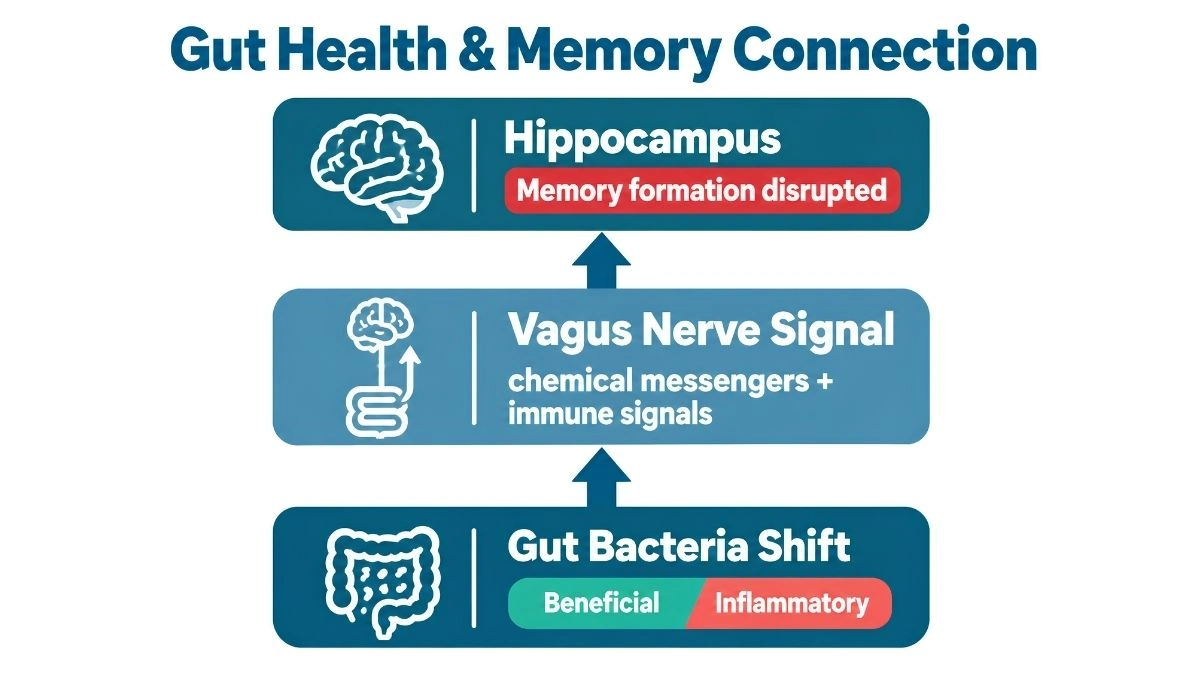
Here’s what that shift means for your memory. Animal research has shown that age-related changes in gut bacteria are linked to an inflammatory response in the gastrointestinal tract, which in turn hampers the ability of the vagus nerve to signal to the hippocampus [the part of the brain responsible for forming and storing new memories].¹
Human application of this specific finding has not yet been confirmed by human studies. Research in humans has established that distinct gut markers separate people with normal cognition from those with early memory problems.²
The Gut-Brain Connection
Is Not a Fringe Idea
Active human research explains why food may beat supplements for memory after 50.
A Recognised Scientific Pathway
The gut-brain connection is an active area of human research — not alternative medicine. The gut communicates directly with the brain via biochemical signals.Food Works Through This Mechanism
Every food on this list acts on gut pathways first. That is what makes them more targeted than supplements aimed at the brain alone — the route matters.Especially Relevant After 50
The gut-brain axis may support memory more directly after midlife — making dietary choices a more powerful lever than isolated brain supplements at this stage.
What you feed that gut is where the five foods ahead come in.
Talk to your doctor before making significant changes to your diet if you’re on medication, pregnant, or managing a chronic condition.
1- Blueberries: What Your Gut Does With Them First
You may have heard that blueberries are good for your brain. What most articles leave out is that the gut is where the real action happens.
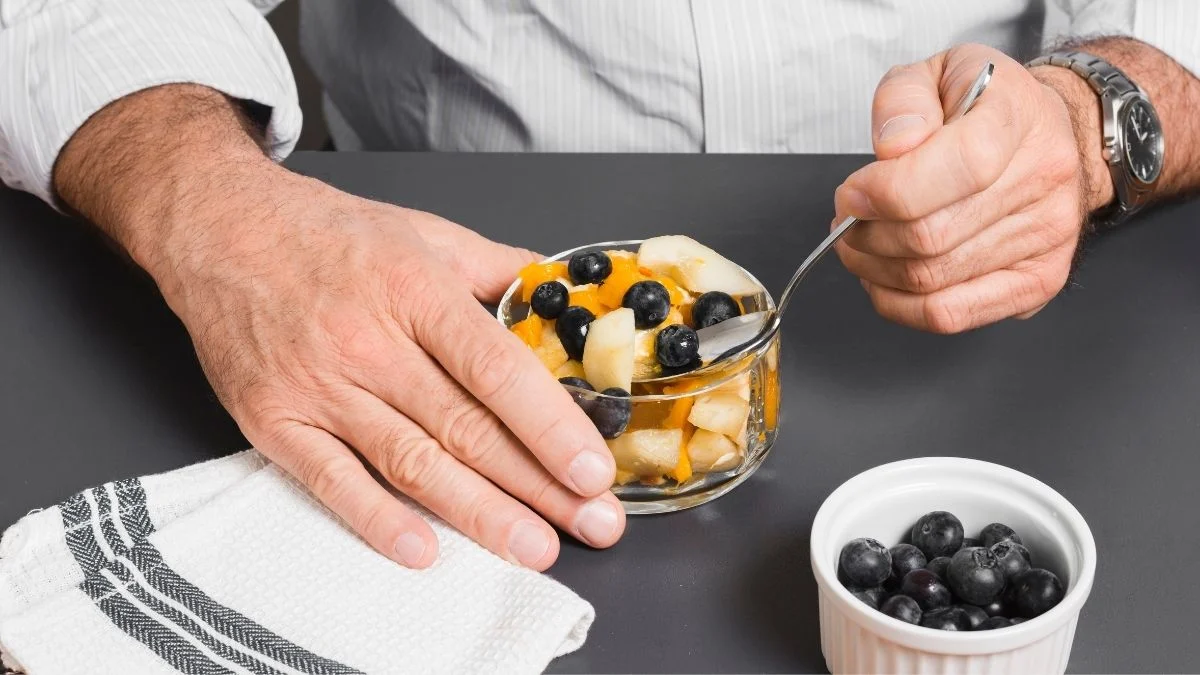
Blueberries and cognitive decline: What your gut does with them, though, is rarely mentioned. Blueberries contain a group of plant compounds called flavonoids [natural chemicals found in fruits and vegetables that have antioxidant and anti-inflammatory effects].
Your gut bacteria break these flavonoids down into smaller compounds through fermentation. Those compounds can then cross into the bloodstream and reach the brain.³
That 2025 analysis is the one worth knowing.
A 2025 systematic review and meta-analysis found that regular blueberry intake may improve episodic memory [the ability to recall specific events and experiences from your past] in older adults with mild cognitive impairment (MCI) [a noticeable decline in memory or thinking that is greater than normal aging but not yet severe enough to interfere heavily with daily life] and subjective cognitive decline.⁴
Processing speed, working memory, and visuospatial skills showed less consistent benefit in the same analysis.⁴
What the evidence supports:
- Blueberry consumption is linked to better episodic memory in people with early memory decline
- The benefit appears tied to flavonoid metabolism in the gut, not direct nutrient absorption
- Four studies in the meta-analysis used frozen blueberries, meaning fresh is not required⁴
One cup of blueberries per day was used in several trials.⁵ Frozen works. So does blueberry powder if fresh isn’t available where you live.
The gut does something with blueberries that doesn’t happen in a capsule. That matters when you’re choosing between a supplement and the food itself.
2- Kefir: A Fermented Drink Linked to Hippocampal Memory
Most people think of kefir as a digestion drink. The memory research behind it points to something more specific than that.
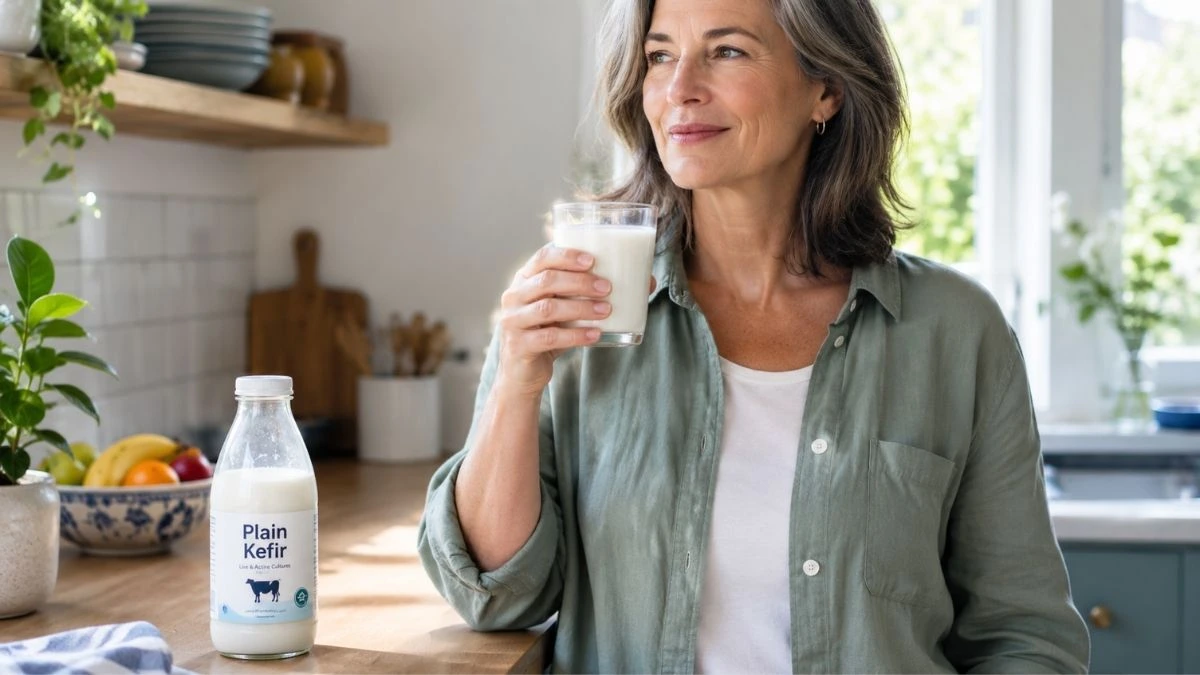
Kefir [a fermented dairy beverage made from milk and live microbial cultures, including multiple strains of Lactobacillus, Bifidobacterium, and yeast] is different from regular yogurt. It contains a larger variety of live cultures and has been shown to change gut bacteria composition after consistent consumption.⁶
The memory result from the trial is what makes kefir stand out here.
In a randomized, controlled crossover trial, healthy adults aged 25 to 45 who drank kefir for four weeks showed improvements in relational memory — the kind of memory that depends on the hippocampus [the brain region responsible for forming and retrieving memories, especially ones that link separate pieces of information together].⁶
The kefir group also showed measurable increases in probiotic microorganisms in their gut samples.⁶
The control group, which drank a non-fermented dairy beverage, did not show the same results.⁶ Note that this trial studied adults aged 25 to 45, not specifically adults over 50.
For adults 65 and older specifically, the probiotic evidence is also worth noting.
A separate 12-week, randomized, double-blind, placebo-controlled trial in healthy adults aged 65 and older found that a daily probiotic containing Bifidobacterium strains improved mental flexibility and significantly raised serum BDNF [brain-derived neurotrophic factor, a protein that helps brain cells survive, grow, and form new connections] levels compared to placebo.⁷
A practical note on kefir:
- Look for plain kefir with live and active cultures listed on the label
- Flavored versions often contain added sugar, which may offset the benefit
- Even two to four ounces daily introduces the relevant bacterial strains
Memory that depends on linking separate pieces of information is often the first kind to slip after 50. That’s the same memory the gut-brain research on kefir targets.
3- Walnuts: The Nut That Shifts Your Gut Bacteria
Walnuts are often listed as a brain food because of their omega-3 fat content. The gut microbiota data tells a more interesting story.
Walnuts and gut microbiota: The gut microbiota finding is the part most brain-food lists skip.
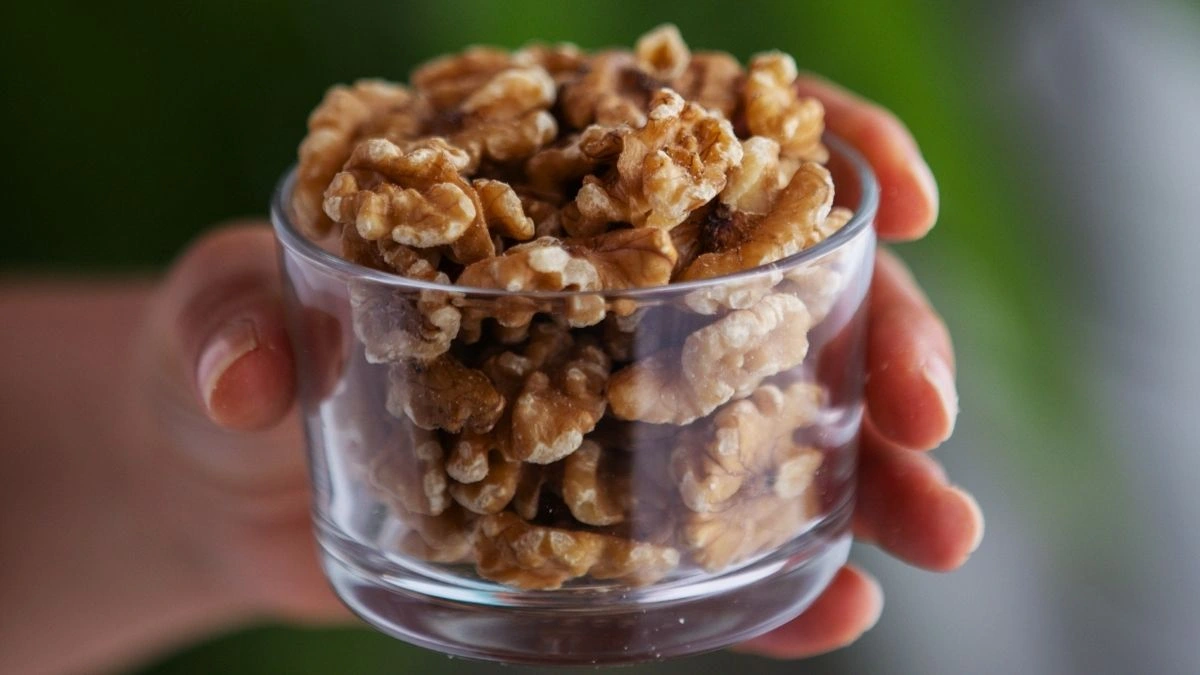
A 2025 prospective study published in Age and Ageing followed older adults at risk of cognitive decline and found that moderate nut consumption was associated with cognitive preservation and a more favorable gut microbiota profile.⁸
Higher nut consumption was linked to greater abundance of Lachnospiraceae [a family of beneficial gut bacteria known for producing short-chain fatty acids, including butyrate, which supports gut wall integrity and reduces inflammation] and lower abundance of Ruminococcaceae species that appear more frequently in gut microbiome studies of people with cognitive decline.⁸
The memory score data from a US sample adds another layer.
In a separate analysis of 6,639 adults aged 50 and older drawn from a nationally representative US sample, higher walnut consumption was associated with better word recall and higher global mental status scores at baseline.⁹
This was an observational study, so it shows a link, not a cause. Neither study is an RCT. Associative language applies here.
What the research links walnuts to:
- A gut bacteria profile that looks more like healthy cognitive aging
- Better word recall and global mental status scores in adults 50+
- These associations do not prove walnuts prevent or reverse memory decline
One serving of walnuts is roughly a small handful, about 28 grams or one ounce. The gut bacteria shift that walnuts appear to support is the same one researchers keep finding in people who age with their memory intact. The next food works on a different part of that gut profile entirely.
4- Extra Virgin Olive Oil: Two Years, One Clear Result
Not all olive oils are the same. For this particular finding, the type of oil made the entire difference.
The 2026 study: That two-year finding is the one that separates this oil from the rest.
A large prospective cohort study published in the journal Microbiome followed 656 adults aged 55 to 75 who were overweight or had metabolic syndrome [a cluster of conditions including high blood pressure, high blood sugar, excess belly fat, and abnormal cholesterol levels that together raise the risk of heart disease and other health problems] for two years.¹⁰
People who consumed more virgin olive oil showed slower cognitive decline and had more diverse gut microbiota compared to those who consumed less.¹⁰ Because this was an observational study, the findings show an association, not proof of cause.

A specific finding about gut bacteria points to why the oil type matters.
Researchers identified a specific group of gut bacteria, called Adlercreutzia, that appeared to statistically mediate the link between virgin olive oil intake and preserved cognitive performance.¹⁰ That mediation is the gut-brain pathway in action.
Why refined olive oil doesn’t apply here:
If you’re buying regular olive oil, the brain-relevant compounds may not be there at all.
The industrial refining process strips the polyphenols [natural plant compounds with antioxidant and anti-inflammatory properties] and antioxidants from regular olive oil.
The cognitive and microbiome associations in this study were specific to virgin and extra virgin varieties, which are produced mechanically and retain these compounds.
What to look for on the label:
- The words “extra virgin” or “virgin” on the label
- A harvest or best-by date, since fresher oil retains more polyphenols
- A dark bottle, which protects against light degradation
Whether the benefit applies as strongly to adults without these conditions is not yet confirmed. What is known is that the last food on this list targets a different gut pathway, and the research behind it runs through one of the most specific trials in this article.
5- Dark Chocolate: Why 85% Is the Number That Matters
If you’ve ever used “it’s good for your brain” as a reason to eat chocolate, the research is more specific than most people realize. The percentage on the wrapper is the key detail.
The gut-brain mechanism with cocoa: Dark chocolate is rich in cocoa flavanols [a specific subclass of flavonoids found in cacao that have antioxidant properties and interact with gut bacteria during digestion].
Your gut bacteria metabolize these flavanols into smaller bioactive compounds that can then influence brain function and mood.³

The trial that tested this used a specific amount and a specific cocoa content. A randomized controlled trial tested what happened when healthy adults consumed 30 grams per day of 85% cocoa dark chocolate for three weeks.¹¹
The 85% group showed a significant reduction in negative affect, the kind of persistent low mood that makes thinking feel harder, and their gut microbial composition changed in ways that corresponded to that mood shift.¹¹ The 70% cocoa group in the same trial did not show the same gut changes or the same mood result.¹¹
This trial was conducted in adults aged 20 to 30.¹¹ Human studies specifically in adults over 50 using this protocol are limited. The gut-flavanol mechanism is consistent with what is understood about how cocoa flavanols interact with gut bacteria, but the age-specific evidence is still developing.
What the 85% threshold means practically:
- The cocoa percentage determines how much flavanol content is present
- Milk chocolate and most commercial bars fall well below this threshold
- 30 grams is approximately one small square from a standard 100-gram bar
One square a day. Not a bowl. Not permission for the whole bar. The gut-brain pathway requires consistency, not volume.
Start With One
Your memory doesn’t need a complete overhaul of everything you eat. It needs a starting point, and this week you have five to choose from.
This week, pick one of these gut-brain foods to try, and add it to a meal you already eat. A handful of blueberries with breakfast. A small glass of kefir in the afternoon. A few walnuts before dinner. A drizzle of extra virgin olive oil over whatever you’re already cooking. One square of 85% dark chocolate after your meal.
The gut-brain route from food to memory is real, and the olive oil memory research, blueberry cognitive decline data, and gut microbiota findings behind every food on this list point to the same starting place: your gut. Feed it well.
References
- Thaiss C, et al. Age-related gut microbiome changes linked to vagus nerve inflammation impairing hippocampal memory signaling (animal study). Stanford University School of Medicine News. 2026. https://med.stanford.edu/news/all-news/2026/03/gut-brain-cognitive-decline.html
- University of East Anglia / Vauzour D, et al. Six gut markers distinguish cognitively healthy older adults from those with subjective or objective cognitive impairment (mean age 65.5 years, n=150). Advisory Daily Briefing summary of original research. 2026. https://www.advisory.com/daily-briefing/2026/04/07/gut-cognitive-decline
- Balasubramanian R, et al. Flavonoids and the gut microbiome: a powerful duo for brain health. PubMed. 2024. https://pubmed.ncbi.nlm.nih.gov/39632543/
- Systematic review and meta-analysis. Blueberries for brainpower: systematic review and meta-analysis with Bayesian post hoc analysis of RCTs exploring cognitive function in the elderly with prior cognitive decline (MCI and subjective cognitive decline). PubMed. 2025. https://pubmed.ncbi.nlm.nih.gov/40856863/
- Djousse L, et al. Rationale and design of a randomized controlled trial evaluating the effects of blueberry consumption versus placebo on brain health in older adults (ages 65–99). PubMed. 2025. https://pubmed.ncbi.nlm.nih.gov/40300713/
- Mailing LJ, et al. Four-week fermented dairy beverage consumption impacts gut microbiota and improves relational memory (healthy adults aged 25–45, single-blind randomized crossover trial). PMC. 2020. https://pmc.ncbi.nlm.nih.gov/articles/PMC7257713/
- Kim C-S, et al. Probiotic supplementation improves cognitive function and mood with changes in gut microbiota in community-dwelling older adults (healthy adults aged 65 and older, double-blind placebo-controlled multicenter trial, 12 weeks). PMC. 2021. https://www.ncbi.nlm.nih.gov/pmc/articles/PMC7861012/
- Alvarez-Sala A, et al. Nut consumption, gut microbiota, and cognitive function: findings from a prospective study in older adults at risk of cognitive decline (PREDIMED-Plus participants). Age and Ageing. 2025. https://academic.oup.com/ageing/article/54/7/afaf208/8219056
- Bishop NJ, Zuniga KE. Investigating walnut consumption and cognitive health in a representative sample of older US adults (adults aged 50 and older, n=6,639, observational). PMC. 2019. https://www.ncbi.nlm.nih.gov/pmc/articles/PMC6846404/
- Ni J, et al. Total and different types of olive oil consumption, gut microbiota, and cognitive function changes in older adults (prospective cohort, n=656, aged 55–75, overweight/metabolic syndrome). Microbiome. 2026. https://link.springer.com/article/10.1186/s40168-025-02306-4
- Kim JH, et al. Consumption of 85% cocoa dark chocolate improves mood in association with gut microbial changes in healthy adults: a randomized controlled trial (healthy adults aged 20–30). PubMed. 2021. https://pubmed.ncbi.nlm.nih.gov/34530112/