
If you’ve been eating the same way for years and still gaining belly fat, you’re not imagining it. Your body changed. And what worked at 35 simply does not work at 55.
After 50, hormones shift. Muscle starts disappearing. Your metabolism slows down. All of this makes belly fat easier to gain and much harder to lose.
Here’s the good news. You don’t need a 30-day plan or a list of 20 things. Experts say there are three clear starting steps backed by 2025 and 2026 research. These steps work for both men and women over 50. This guide breaks them down simply so you know exactly what to do to lose belly fat after 50.
Why Belly Fat Gets Stubborn After 50 (And It’s Not Your Fault)
After 50, your body loses about 1% of muscle every year. Less muscle means a slower metabolism. That means your body burns fewer calories even when you do the same things you always did.
There are two kinds of belly fat. The kind just under your skin is annoying, but not as dangerous. The deeper kind, called visceral fat, wraps around your organs. That’s the one that causes real health problems.
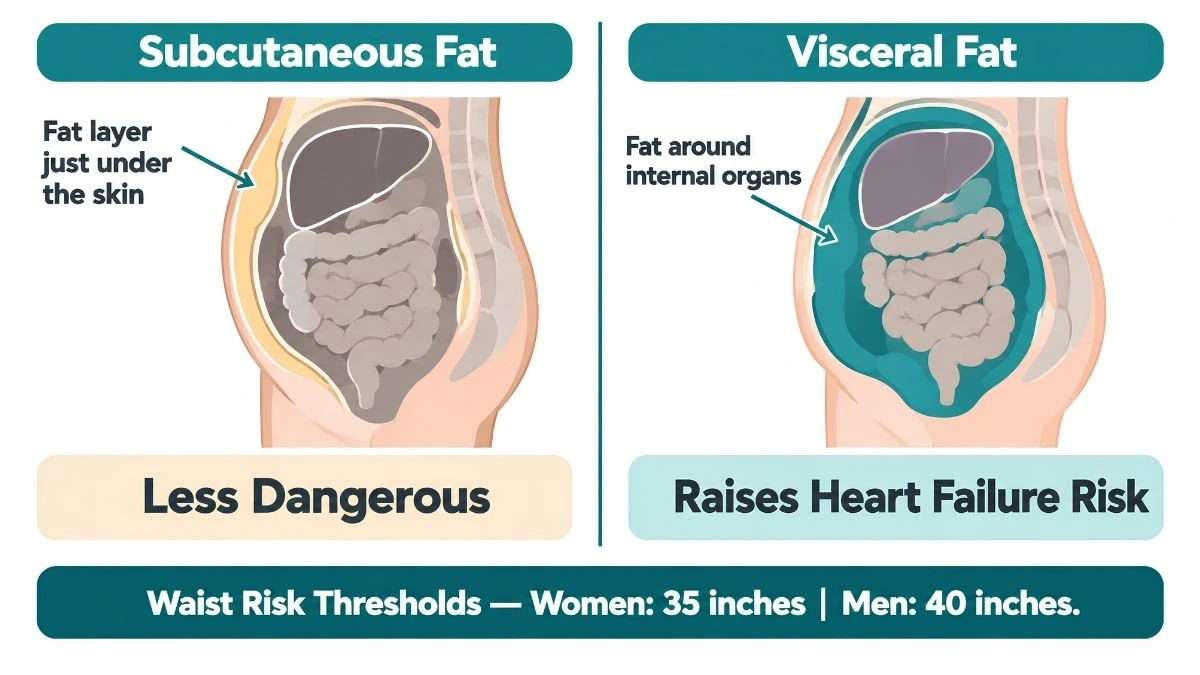
Research presented at the American Heart Association’s 2026 EPI|Lifestyle Scientific Sessions found that visceral fat raises heart failure risk largely through inflammation. Larger waist sizes were linked to higher risk even in people with a normal BMI. So the scale alone won’t tell you the full story.
A July 2026 study published in Obesity found that greater visceral fat in middle-aged adults was independently linked to higher phenotypic age acceleration. In plain terms: belly fat may age you faster from the inside.
A 2026 study also found that people with both abdominal obesity and vitamin D deficiency faced a 123% higher risk of death compared with those who had neither condition.
A Simple Check for
Unhealthy Belly Fat
Wrap a tape measure around your stomach just above the hip bone. It takes under a minute and requires no equipment beyond a standard measuring tape.
Placement matters. Measure just above the hip bone — not at the narrowest point of your waist — for a consistent and clinically relevant reading.
A reading of 35 inches or more for women, or 40 inches or more for men, may indicate an excess of visceral fat — the kind linked to metabolic health risks.
The good news: visceral fat responds to lifestyle changes faster than most people expect. Here’s where experts say to start.
First- Fix What You Eat (Protein and Fiber Do the Heavy Lifting)
Most people over 50 aren’t eating enough protein. That’s the first problem to fix. The latest Dietary Guidelines for Americans 2025–2030, released in January, increased the protein recommendation to 1.2–1.6 grams per kilogram of body weight per day for older adults. For a 150-pound person, that’s roughly 80 to 110 grams daily.
Most older adults eat most of their protein at dinner and very little at breakfast. Spread it out instead. Greek yogurt in the morning. Eggs at lunch. Fish or chicken at dinner. That small change makes a big difference over time.

Most people over 50 get about 15 grams of fiber per day. The target is at least 25 to 30 grams. When gut bacteria break down fiber, they produce short-chain fatty acids that improve insulin sensitivity and reduce inflammation linked to abdominal fat storage.
Excess sugar is one of the leading causes of belly fat. It comes mostly from added and hidden sugars in sweetened drinks, refined breads, cereals, and packaged snacks.
Simple swaps that help: white rice to quinoa, soda to sparkling water, sugary cereal to oats with berries. These are small changes that your body will notice.
Registered dietitian Brittany Dunn, MS, RDN, recommends regularly eating foods consistent with the DASH or Mediterranean diet. These are lower in unhealthy fats, higher in omega-3s, and focus on more fruits, vegetables, and whole grains with less added sugar.
Food alone won’t solve it. Muscle mass keeps your metabolism going, and you build muscle through movement.
Second- Start Strength Training (This Is the One Most People Skip)
Many people over 50 think strength training means a gym and heavy weights. It doesn’t. Strength training is any activity that works your muscles against resistance. That includes lifting weights, using resistance bands, doing squats or push-ups, or even climbing stairs. Building muscle over time helps reduce belly fat, even if you’re not dieting.
A 2026 Nature Communications report evaluated MRI scans from 533 participants who had lost weight. Researchers found that losing visceral fat, not just overall weight, was linked to slower brain shrinking, better brain structure, and improved mental performance in midlife. That’s not a cosmetic result. That’s your brain staying sharper.
A 2026 study in Nature Communications also found that walking briskly for just 75 minutes once a week reduced total body fat, body fat percentage, and waist circumference. These results were comparable to splitting that walk across three separate days. One walk a week still works.
The U.S. Department of Health and Human Services recommends 150 minutes of moderate activity per week plus strength training at least twice a week. Break that into 5 brisk 30-minute walks plus 2 short resistance sessions. That’s it.

For joint-friendly cardio, try cycling intervals or water aerobics. Short bursts of higher effort followed by easier movement burn more fat in less time than steady-state exercise.
Fixing food and moving more will take you most of the way there. But there’s a third step most people miss entirely. And it’s working against you right now.
Third- Fix Your Sleep and Manage Stress (The Silent Cause Nobody Talks About)
You can eat well and exercise regularly and still not lose belly fat. If you’re sleeping less than six hours a night and running on stress, your body is fighting against you. This is the step most articles skip.
Cortisol is linked to more abdominal fat in several studies. Sleep debt and a misaligned sleep schedule can keep cortisol elevated at the wrong time of day. For women over 50, menopause makes this worse. As estrogen drops, the body becomes more reactive to stress and slower to recover.
Chronic short sleep, typically less than six hours per night, elevates cortisol levels, particularly in the afternoon and evening when they should be declining. Target 7 to 9 hours. That’s the range most health experts agree on for adults over 50.

Long-term stress signals the body to store visceral fat around internal organs. Chronic stress increases cortisol levels, which can promote fat storage in the abdominal area.
Practical habits that actually help: take a 10-minute walk after meals to lower blood sugar, try slow breathing exercises to bring cortisol down, reduce alcohol (it disrupts sleep and adds belly fat), and cut screen time before bed.

Alcohol is one most people don’t expect. Even moderate use disrupts sleep quality and feeds visceral fat storage directly. It’s worth being honest about.
Sleep, food, and movement aren’t three separate problems. They work together as one system. Get all three moving in the right direction and your belly fat will start to respond.
CONCLUSION
You now have three expert-backed steps: fix your protein and fiber, add strength training and walking, and protect your sleep while reducing stress. These aren’t shortcuts. They’re what the research actually supports. Losing belly fat after 50 takes a different approach, but it absolutely works when you know where to start.