Most people think losing independence is just part of getting old. You slow down. You need help. That’s just how it goes, right?
Wrong.
Doctors say there is one specific thing you can do starting today that keeps you out of a nursing home, on your feet, and living life on your own terms.
You don’t need a gym. You don’t need a trainer. You don’t need to be in perfect health right now.
You just need to know what’s actually happening inside your body — and what to do about it.
By the end of this article, you’ll know what the #1 independence killer really is, what doctors say is the single most powerful solution, and exactly how to start this week.
Have You Ever Struggled to Get Off a Low Couch? Here’s What That Really Means
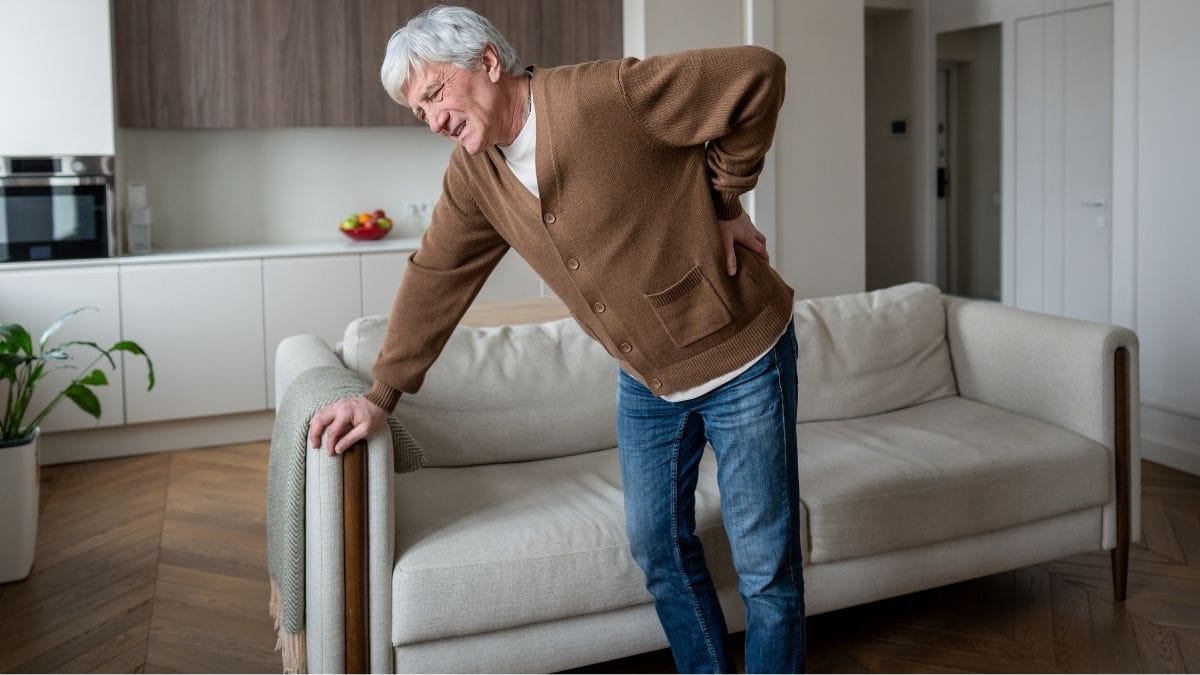
Have you ever felt shaky on the stairs? Had trouble getting up from a low chair without pushing off with your hands? Maybe you brushed it off as a bad day.
It’s not a bad day. It’s a signal.
Those moments are early warning signs of something doctors call sarcopenia. That’s the medical word for age-related muscle loss. And almost nobody talks about it.
Here’s what the research shows. After age 30, adults lose 3% to 8% of their muscle mass every decade. After age 60, that loss speeds up fast. And after age 50, your strength drops 1 to 2% every single year.
That might not sound like much. But over ten years, that adds up to real weakness.
Sarcopenia affects your ability to get out of a chair, carry groceries, catch yourself if you stumble, and climb stairs. These are the exact things that define living on your own.
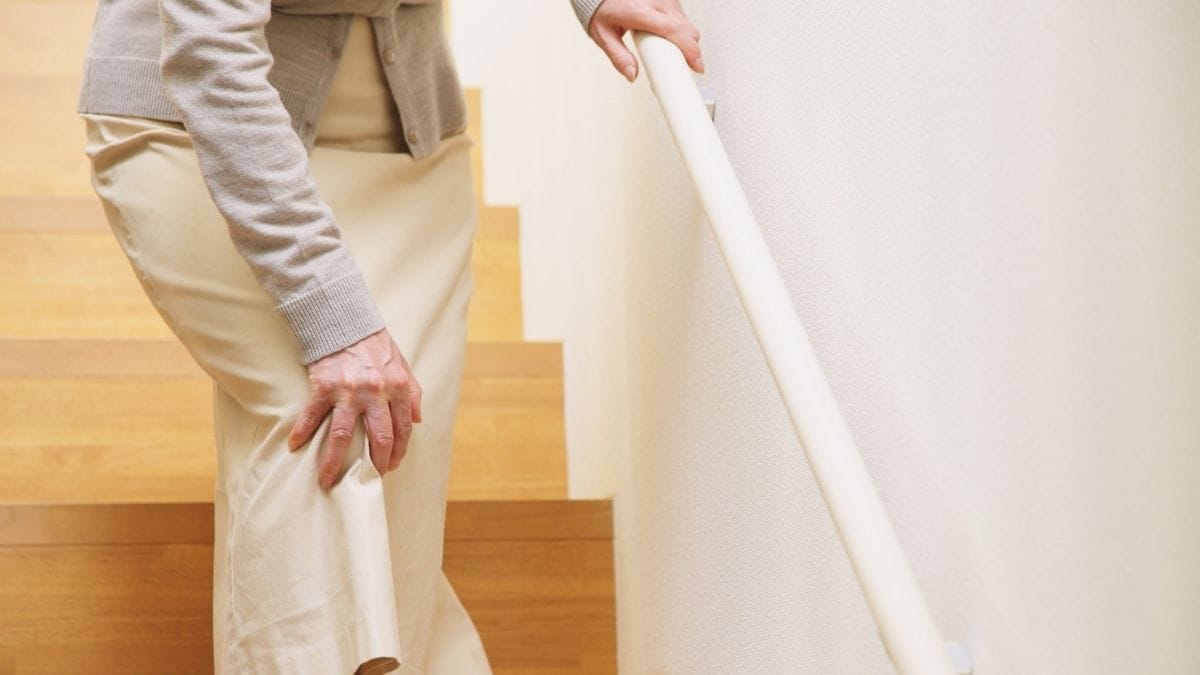
According to CNN Health, when this muscle loss goes unchecked, it compromises your balance, your bone density, your metabolism, and your ability to live independently.
The good news? Doctors say this is not your destiny. And you don’t need a gym to fight it.
What Doctors Actually Say Is the #1 Way to Stay Independent
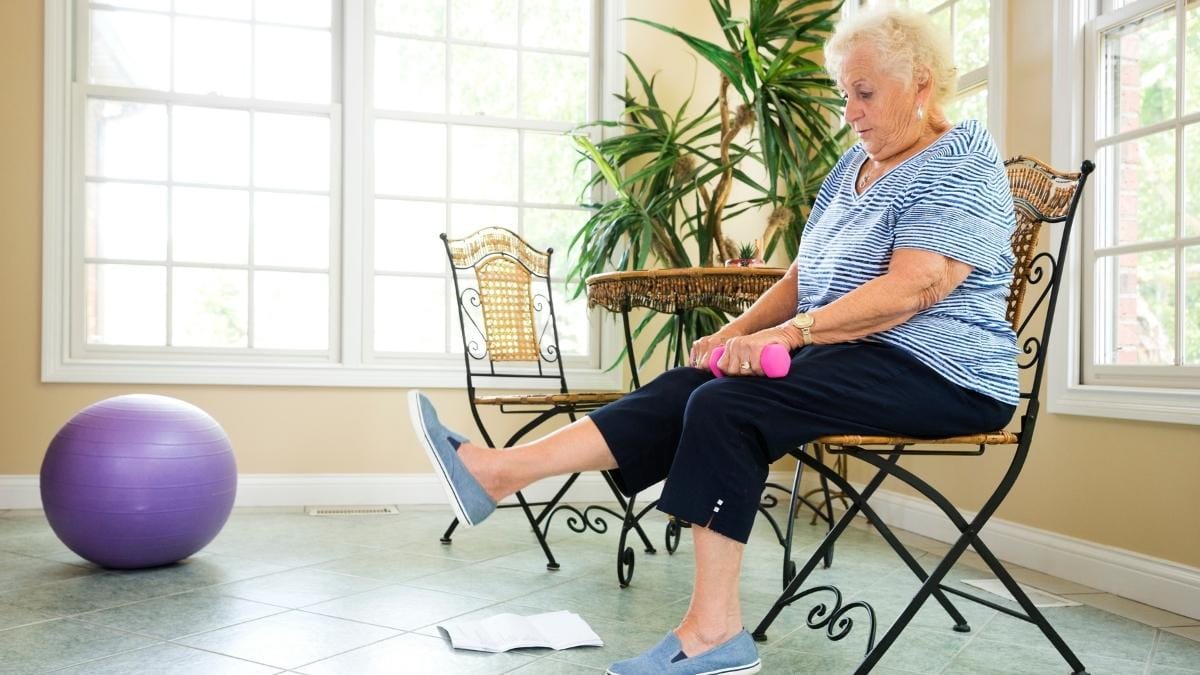
You might be thinking — I already knew exercise was good for me. But here’s what most people miss.
It’s not just any exercise. It’s one specific type. And four major medical institutions — the American Medical Association, the National Institute on Aging, Stanford Medicine, and the CDC — all point to the exact same answer.
That answer is strength training. Also called resistance training.
Dr. Solomon, a physician at Northwell Health, put it clearly: “When we reach our sixth, seventh decade of life, it’s really difficult to build muscle and really easy to lose muscle. We really do emphasize having some type of strength training, even if it’s very lightweight — things like gardening. Just moving your muscles around for strength could help maintain that muscle mass.”
NIA scientist Dr. Eric Shiroma said: “Some of these limitations can be slowed down through an active lifestyle that includes strength training.”

Here’s the stat that should wake you up. A 2024 study in the International Journal of Epidemiology found that any amount of weight training lowered all-cause mortality, cardiovascular death, and cancer death — for people with an average age of 70. Any amount.
And yet, less than 15% of adults aged 65 and older get the recommended muscle-strengthening activity, according to the 2023 Physical Activity Guidelines for Americans.
The evidence is settled. The question is: what does this actually look like on a Tuesday morning in your living room?
How to Start Strength Training After 50 (No Gym, No Trainer, No Equipment)
Here’s what nobody tells you. You do not need a gym membership. You do not need a personal trainer. Your living room is enough.
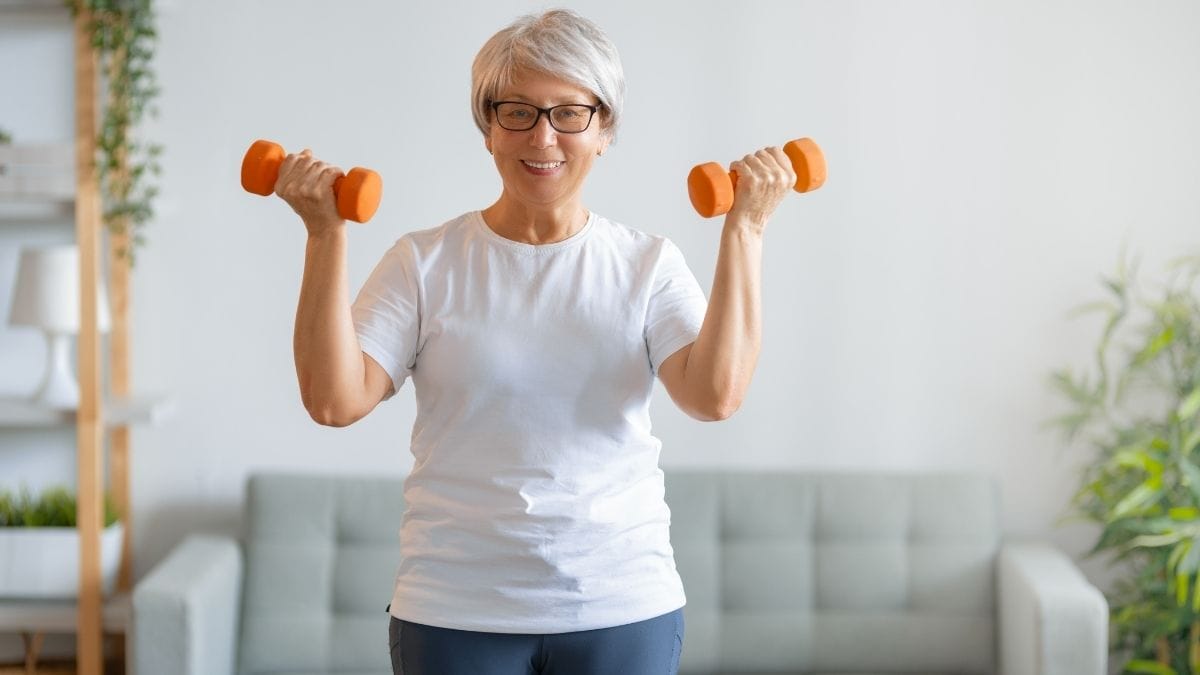
The U.S. Department of Health and Human Services recommends muscle-strengthening activities at least twice a week. CNN Health confirms that even 10 to 30 minutes of focused resistance exercise can produce real results. The key is one simple principle: progressive overload. That just means you gradually make things a little harder as you get stronger.
Start with these five exercises:
1. Chair Squats — Sit down and stand back up from a sturdy chair. Repeat 10 times.
2. Wall Push-Ups — Stand facing a wall. Place your hands on it and do a push-up. No floor needed.
3. Calf Raises — Stand at the kitchen counter and rise up onto your toes. Hold for two seconds.
4. Single-Leg Stand — While brushing your teeth, lift one foot off the ground. Switch sides.
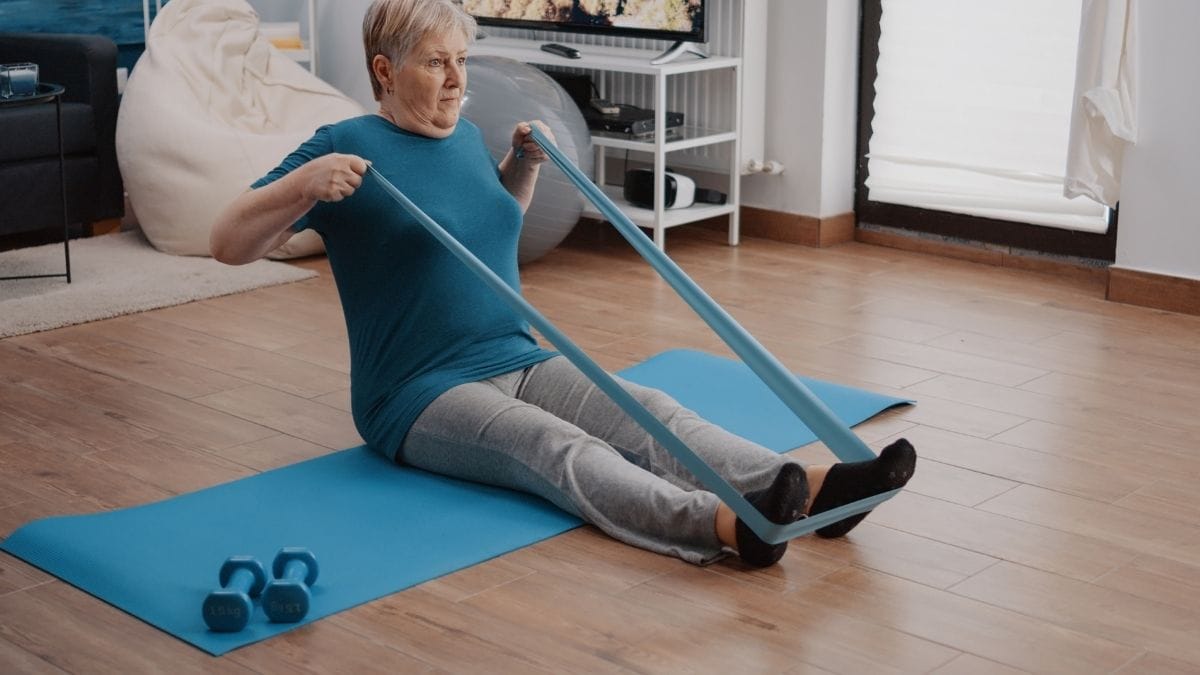
5. Resistance Band Rows — Sit in a chair, loop a band around a doorknob, and pull it toward your chest.
NIA scientist Dr. Shiroma also suggests adding a small weighted backpack to your daily walk. This is called rucking. It adds resistance without any extra time.
Commit to two 20-minute sessions this week. That’s the entire ask. The payoff is years of independence.
Strength Training Works Better When You Add These 3 Things
Think of strength training as your engine. But protein is the fuel, balance is the steering, and social connection is the road.
Protein: Stanford Medicine research shows older adults need about 1.0 to 1.3 grams of protein per kilogram of body weight daily. For a 150-pound person, that’s 68 to 88 grams a day. You can hit that with three meals, each containing 20 to 30 grams — a chicken breast, a cup of Greek yogurt, a can of tuna, or three eggs.

Balance: Stanford also confirms that falls are the leading cause of injury and independence loss in older adults. Simple habits help — stand on one leg while waiting for coffee to brew. Try tai chi or yoga on YouTube.
Social Connection: This one surprises people. Research shows that people who visited friends almost daily were 12% less likely to develop dementia. Social isolation affects more than 8 million Americans aged 65 and older and has been linked to heart disease, depression, and cognitive decline.
None of these are complicated. They all serve the same goal — staying in your home, on your terms, for as long as possible.
Free Tools and Resources to Help You Start This Week
You have zero excuses to wait. All of these are free or very low cost.
Go4Life — A free exercise video and guide program from the National Institute on Aging. Find it at nia.nih.gov. Built specifically for older adults.
SilverSneakers — Free gym access and fitness classes included with many Medicare Advantage plans. Check your coverage at silversneakers.com.
Area Agencies on Aging (AAA) — Local government offices that offer free in-home safety checks, exercise programs, and support services. Find yours at eldercare.acl.gov.
MyPlate for Older Adults — A free USDA tool at myplate.gov to track your protein and nutrition.
YouTube: Pahla B Fitness — A free channel made specifically for women over 50. Real exercises, real pacing, zero intimidation.
Resistance Bands — The single most useful piece of home equipment. A full set costs $10 to $20 online.
Smart home tools like voice assistants and video doorbells also help seniors stay safer and more connected day to day.
Start with one resource today. Pick the one that fits your life right now.
Lastly:

Staying independent as you age is not about luck. It’s about muscle — and muscle responds to action at any age.
Start with two chair squats and a can of tuna for lunch. That is literally how simple the first step is. Build from there.
The #1 way to stay independent as you age is already inside you. You just have to wake it up.