

You’ve probably stood in the health aisle staring at a probiotic supplement and felt, quietly, like you were guessing. Most people who eat a standard Western diet and feel bloated, sluggish, or digestively off have already tried something and seen nothing change.
The problem is not willpower or effort. Most people want better gut health but do not know which specific foods actually shift gut microbiome composition, so they buy expensive supplements instead of making simple food swaps.
This article will walk through four distinct categories of foods for gut health, explain what each one does differently, and give you a clear starting point by the time you finish reading.
Talk to your doctor before making significant changes to your diet if you are pregnant, on medication, or managing a chronic health condition.
What your gut is actually doing — and why food is the main switch
You have felt your gut respond to food your whole life. The connection between what you eat and how you feel is real, and science is now explaining exactly why.
When scientists started measuring what lives inside the gut, the scale was stunning. Your gut contains approximately 39 trillion microbial cells and more than 20 million microbial genes.

That community is called the gut microbiome [the full population of bacteria, fungi, viruses, and other microorganisms living in your digestive tract]. It helps regulate digestion, trains parts of the immune system, and produces compounds that circulate through the body. Among all the factors that shape its composition, diet is one of the most modifiable.
Food is the switch your microbiome responds to most directly and most quickly.
This is the reason two people can follow the same general “healthy diet” and still have very different gut health outcomes. Their starting microbiome populations differ, and different bacteria respond to different food inputs.
The four categories of foods for gut health in this article each work through a separate, named process. They are not interchangeable.
Knowing which does what is the part most gut-health advice skips.
Foods for gut health: feeding what’s already there
Most of what you already eat either feeds your beneficial gut bacteria or leaves them without fuel. The difference often comes down to one nutrient.
Most people are not getting enough of it. According to the 2020-2025 Dietary Guidelines for Americans, more than 90% of American women and 97% of American men consume less than the recommended daily fiber intake.
One nutrient does most of the feeding. Prebiotic fiber [plant-based carbohydrate that gut bacteria ferment for energy, producing short-chain fatty acids as a byproduct] is the primary food source for beneficial bacteria already living in your gut.
That gap matters because when bacteria ferment prebiotic fiber, they produce short-chain fatty acids [small molecules including butyrate, acetate, and propionate that support the cells lining the colon and help regulate inflammation].
Without enough fiber, the bacteria that make these compounds lose their advantage over less helpful species.
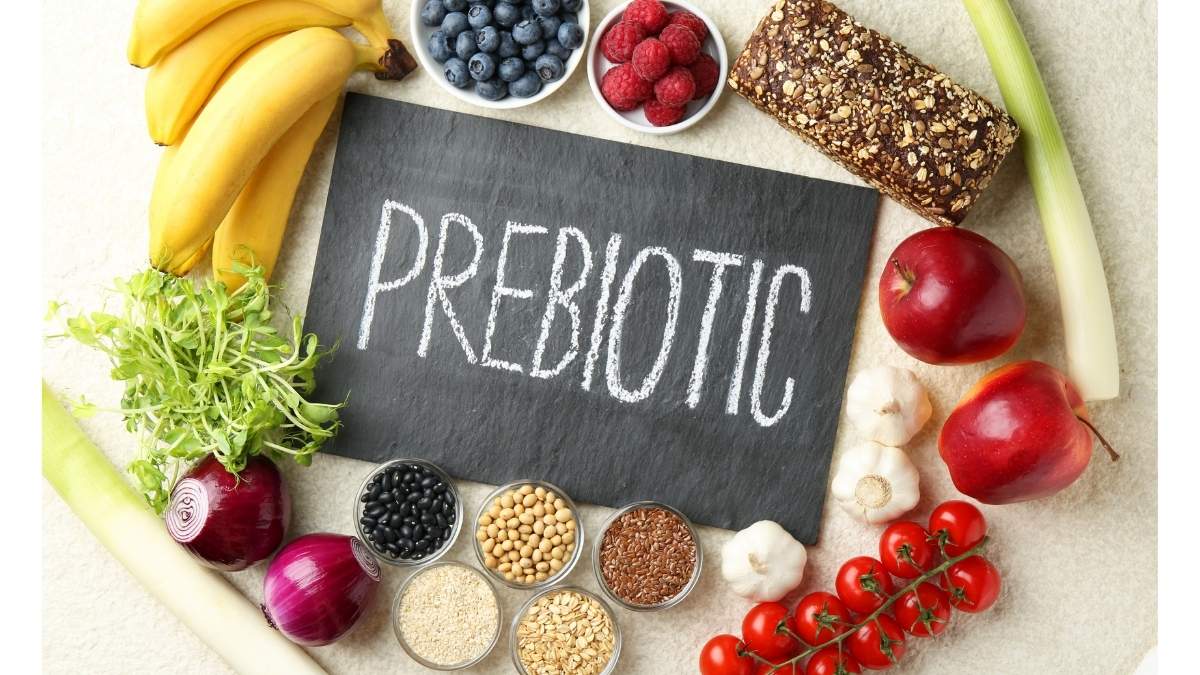
Foods richest in prebiotic fiber include:
- Oats
- Garlic
- Onions and leeks
- Asparagus
- Green (unripe) bananas
- Chicory root
- Jerusalem artichokes
A meta-analysis of 64 controlled trials in healthy adults found that fiber interventions led to significantly higher levels of Bifidobacterium [a beneficial bacterial genus linked to immune regulation and reduced gut inflammation] and Lactobacillus [another beneficial genus associated with improved gut barrier function].
The strongest effects came from fructans [a type of prebiotic fiber found in garlic, onions, and chicory] and galacto-oligosaccharides [prebiotic compounds found in legumes and some dairy].
Fiber feeds what is already there. But it does not bring anything new in. That is a different category entirely.
Foods that bring new bacteria in
You have probably been told that fiber is the main tool for gut health. The finding below challenges that.
The bacteria already living in your gut decide whether the food you eat actually helps you, so two people eating the same yogurt may get completely different results.
In a 17-week randomized controlled trial with 36 healthy adults, researchers at Stanford University compared a high-fiber diet against a high-fermented-food diet. Participants who ate more fiber took in significantly more of it each day.
Their gut microbiome diversity did not increase. The high-fermented-food group saw gut microbiome diversity increase steadily across the full 17 weeks, and levels of 19 measured inflammatory proteins in the blood decreased.
Fermented foods [foods produced through controlled bacterial or yeast activity that survive to enter the gut] introduce microbial species that the fiber-only approach cannot. Both categories serve different functions.
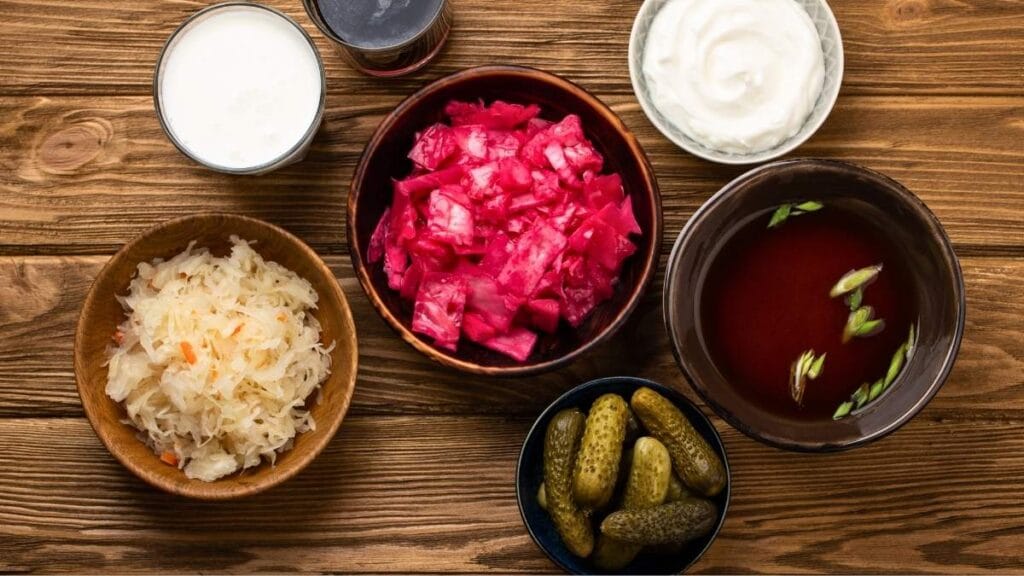
Foods in this group include:
- Plain yogurt with live active cultures
- Kefir
- Kimchi
- Sauerkraut
- Miso
- Tempeh
- Kombucha
Diversity [the number and variety of distinct bacterial species present in the gut, associated with resilience and better health markers] increased in proportion to how much fermented food the participants ate. Larger servings produced stronger effects.
One practical note: start low with fermented foods and increase slowly. This is common and usually settles.
A high-fiber diet alone was not enough to build diversity in this controlled setting. A high-fermented-food diet was.
These are two separate tools, and there is still a third category that neither one covers.
Gut Health Guide
Your Gut Food Matrix
Four categories. One thriving microbiome.
Category 01
Feed
Nourish your bacteria with prebiotic fiber — oats, garlic, onions, asparagus, and green bananas are prime fuel.
Category 02
Add
Introduce live cultures via fermented foods — yogurt, kefir, kimchi, sauerkraut, and miso seed your gut ecosystem.
Category 03
Protect
Shield your lining with polyphenols and omega-3s — berries, extra-virgin olive oil, dark chocolate, and fatty fish.
Category 04
Reduce
Limit dysbiosis-linked culprits — ultra-processed snacks, sugary drinks, and refined grains disrupt microbial balance.
Foods that protect the gut lining itself
Your gut is not just a tube. It has a lining, and that lining can either hold tight or develop gaps. The food category most people miss is the one that directly supports that barrier.
Polyphenols [plant compounds that gut bacteria convert into anti-inflammatory molecules in the colon] are found in high concentrations in:
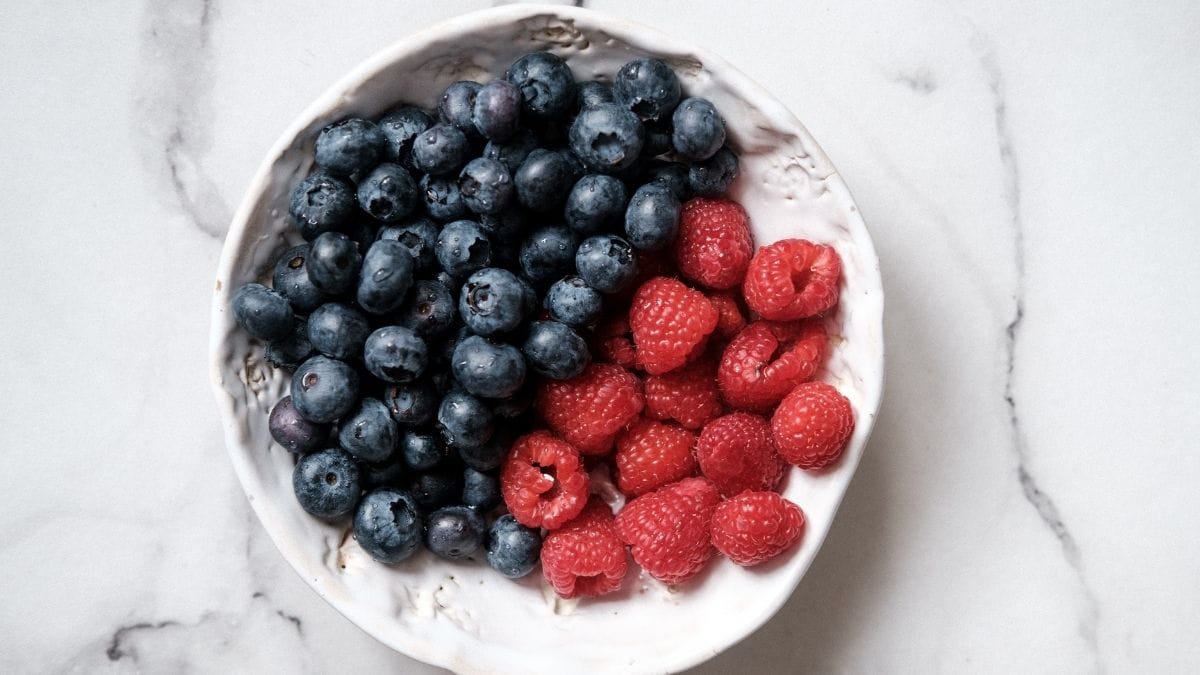
- Blueberries, raspberries, and blackberries
- Dark chocolate (70% cocoa or higher)
- Extra-virgin olive oil
- Green tea
- Coffee
The research on berries is more specific than most people expect. In healthy subjects, research suggests that berry polyphenols may lead to increases in Bifidobacterium, Lactobacillus, and Akkermansia [a bacterial species associated with a healthy gut mucus layer], consistent with a prebiotic-like effect.
The language here is appropriately cautious: this is review-level evidence, not a single controlled trial with a causal finding.
A separate line of research looks at omega-3 fatty acids [polyunsaturated fats found in fatty fish, walnuts, and flaxseed that the body cannot produce in adequate amounts on its own].
A study of 876 middle-aged and elderly women found that both total omega-3 levels and DHA [docosahexaenoic acid, the main omega-3 found in fatty fish and brain tissue] serum levels were significantly associated with higher gut microbiome alpha diversity.
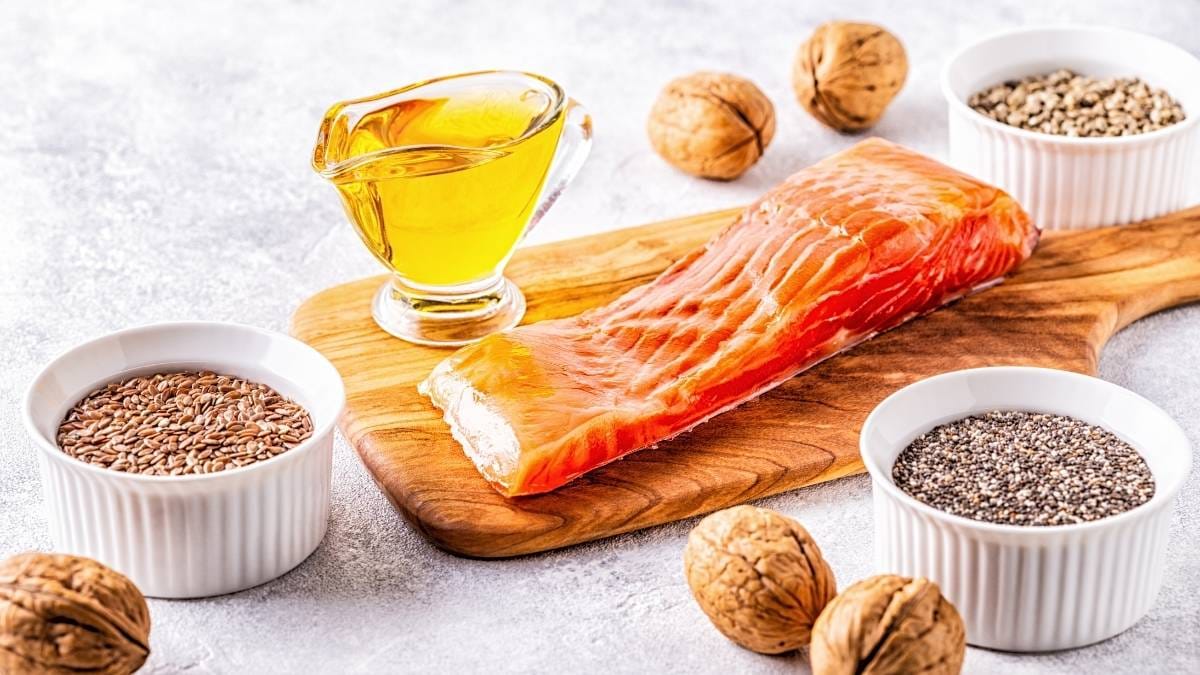
Foods richest in omega-3s include:
- Salmon, mackerel, and sardines
- Walnuts
- Flaxseed and chia seeds
These two food groups, polyphenol-rich plants and omega-3 sources, target the gut differently from fiber or fermented foods. Adding them means covering the part of the picture the other two categories do not reach.
Foods that work against a balanced microbiome
Most articles on gut health spend all their space on what to add. But what you remove matters too.
Dysbiosis [an imbalance in the gut microbiome’s composition and function, associated with reduced microbial diversity and increased inflammation-linked species] is consistently linked to dietary patterns high in ultra-processed foods and low in fiber.
The research on this is observational, so the language here is associative. Western dietary patterns that are high in refined grains, added sugars, and ultra-processed products appear to reduce gut microbial diversity and shift bacterial populations toward species associated with low-grade inflammation.
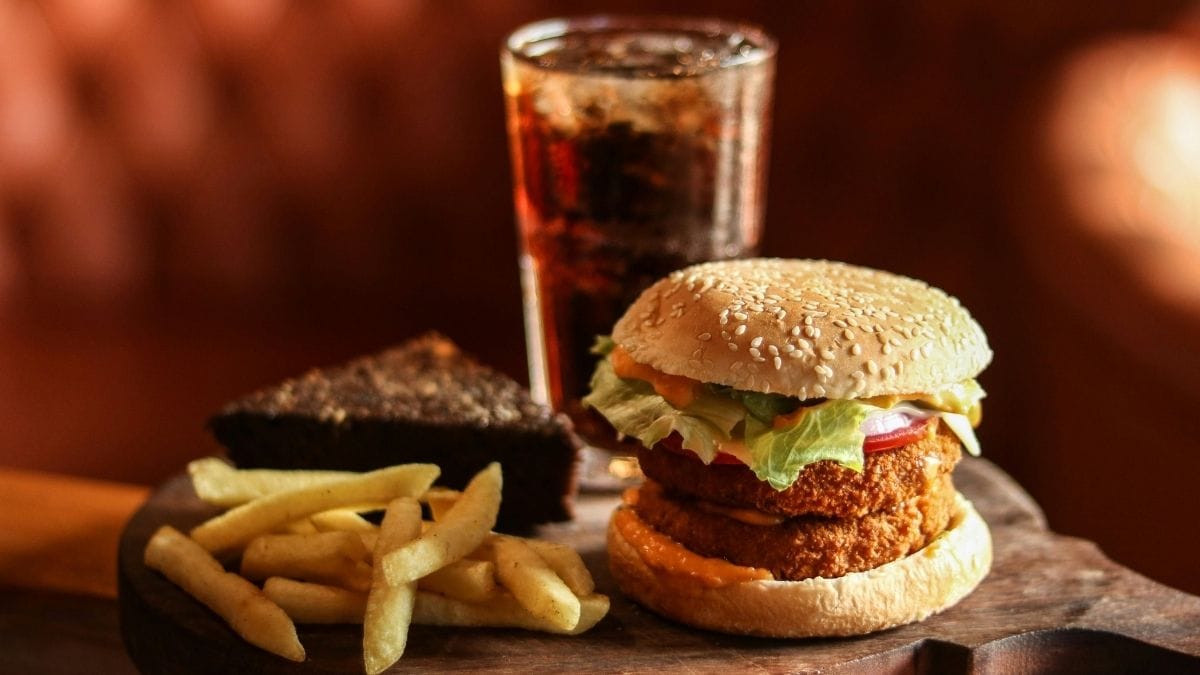
Foods most consistently linked to unfavorable microbiome shifts include:
- Ultra-processed packaged snacks and ready meals
- Sugary drinks and sodas
- Refined white bread and white rice consumed as staple foods without fiber-rich additions
- Excessive processed red meat
This does not mean a single serving of any of these foods causes damage. It means consistent daily patterns built around them may crowd out the fiber, polyphenols, and variety that the gut microbiome depends on.
Crowding out is often the more accurate frame than “harm.” When most of your meals come from ultra-processed sources, there is simply less room for the foods in the previous three categories.
The simplest way to use this section: rather than cutting foods out cold, add one of the foods for gut health from this article before you consider removing anything.
The addition changes the ratio automatically, and the next section shows how to stack all four categories without starting from scratch.
A simple weekly pattern that ties all four categories together

You do not need to change everything at once. You need a pattern that makes it easy to hit all four categories across a week without thinking about it.
Thirty plants per week is associated with higher gut microbial diversity in large observational data, according to findings referenced by the American Gut Project and cited in Mayo Clinic’s gut health guide.
A plant includes every distinct fruit, vegetable, grain, nut, seed, herb, and spice. That sounds like a lot. It is not.
A simple daily structure that covers all four categories:
- Morning: Oats topped with blueberries and a tablespoon of flaxseed (prebiotic fiber + polyphenols + omega-3)
- Lunch: A side of kimchi or sauerkraut with whatever your main meal is (fermented)
- Dinner: Salmon or sardines with a side of roasted asparagus drizzled with extra-virgin olive oil (omega-3 + prebiotic + polyphenol)
This pattern does not require a new grocery budget. It requires swapping, not adding on top.
The CTA from the start of this article still stands: add one new gut-supporting food to your next grocery shop, starting with a high-fiber or fermented option from this article. Start there. One food, one week.
Conclusion
Pick one food from this article and buy it this week. Start with something from the fermented or prebiotic fiber list, since those two categories have the most direct evidence for shifting gut microbiome composition.
Add one new gut-supporting food to your next grocery shop, starting with a high-fiber or fermented option from this article. A gut health diet does not require a plan for everything at once. You need a starting point for foods for gut health, and now you have one.