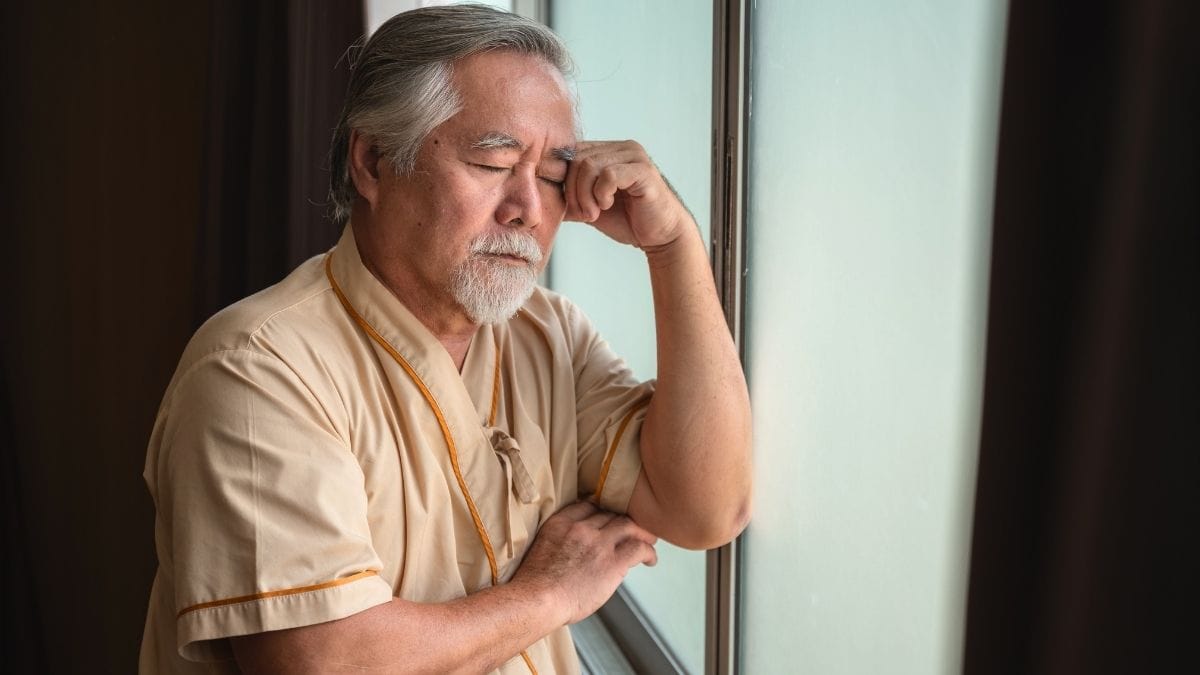
You’re doing most things right. That’s exactly what makes this so frustrating.
Most people over 50 are unknowingly holding on to habits that feel normal but are quietly speeding up physical decline, low energy, and health problems.
Not the obvious ones. Not the habits you already feel guilty about. The ones you’ve decided are fine. This article is for adults 50 and older who feel like they are doing most things right but still feel worse than they expected to at this age.
By the end, you’ll know exactly which five habits that work against you after 50 and what to replace each one with today.
(Talk to your doctor before making changes to your diet, exercise routine, or pain management plan if you are managing a chronic condition, on any medication, or have had a recent injury or surgery.)
Habit 1: You Cut Back on Food Because You Think You Need Less
You’ve probably heard that metabolism slows down after 50, so you eat a little less. Maybe you skip the second portion. Maybe breakfast is lighter than it used to be. It feels responsible. It feels like the smart move for someone your age.
The habits hurting you most after 50 are not the ones you feel guilty about. They are the ones you have already decided are fine.
Cutting back on food after 50 without paying attention to protein is associated with accelerated muscle loss. Here’s why. The body’s ability to use protein to build and maintain muscle becomes less efficient with age.
This is called anabolic resistance [a condition where the muscles respond less strongly to protein intake, requiring more protein to achieve the same muscle-building effect]. In younger adults, a moderate amount of protein is associated with a strong muscle-building response. In older adults, the same amount produces a weaker one.
Most older adults are not eating enough protein, even when they think they are. A large cross-sectional study found that 77 percent of older adults consumed less protein than recommended levels.

At the same time, multiple studies cited in the NIH-indexed literature indicate that 25 to 30 grams of high-quality protein per meal may be needed to adequately stimulate muscle protein synthesis in older adults, compared to roughly 20 grams in younger people.
Sarcopenia [the gradual, age-related loss of muscle mass and physical strength] is associated with higher fall risk, reduced mobility, and loss of independence.
Getting enough protein after 50 means making sure each meal meets your body’s higher threshold. It is not about eating more food overall. Eggs, chicken, fish, Greek yogurt, legumes, and cottage cheese are practical starting points.
Pain is the next habit on this list, specifically the habit of deciding that pain is just part of getting older. That decision has a real cost.
Habit 2: You Sit for Hours Without a Single Break
You’re not lazy. You sit because it’s what the day asks you to do. Breakfast, the drive, the desk, the couch, the news, the book, and then bed. Sitting is the frame of modern life after 50, and most people never stop to count how many hours that actually adds up to.
Most people genuinely don’t realize how many hours they sit each day. Older adults spend an average of 9.4 hours a day sitting, which equals between 65 and 80 percent of their waking day.
That number comes from objective measurements across 22 studies and nearly 350,000 adults aged 60 and older.¹ And here’s the part most people don’t know: the health risks tied to prolonged sitting are separate from whether you exercise.
Research suggests that going for a 30-minute walk does not cancel out seven hours of unbroken sitting.
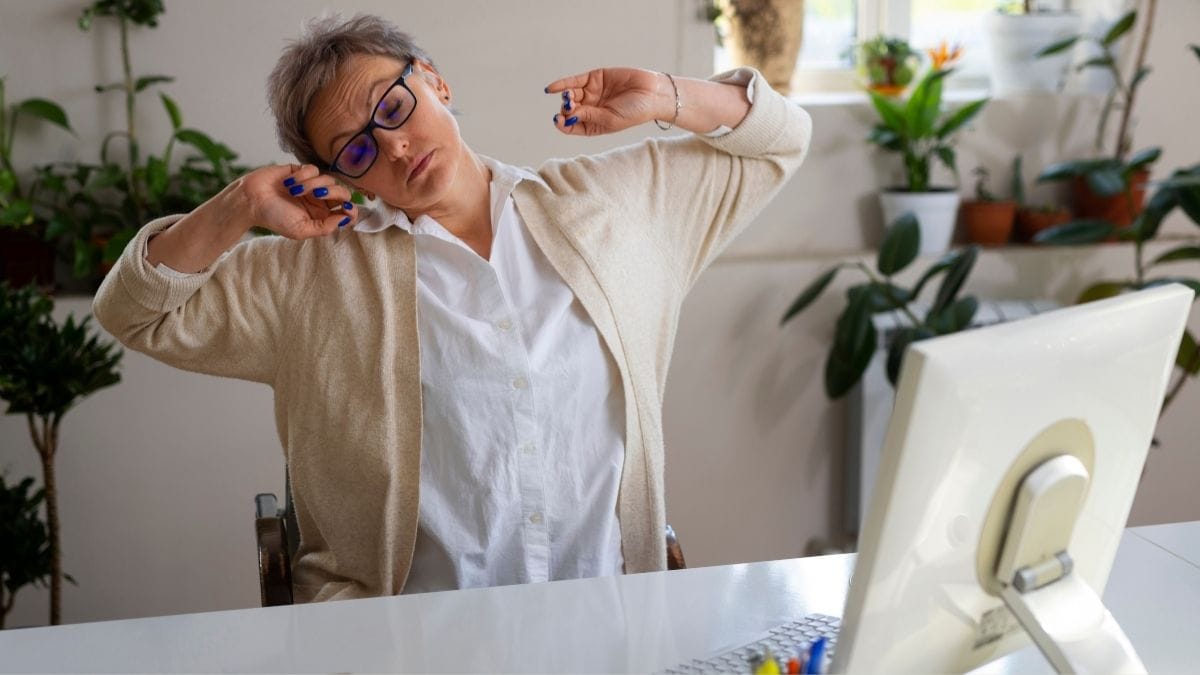
Your total sitting time may matter more than your exercise time. Research suggests that total sitting time is associated with higher risk of cardiometabolic disease and all-cause mortality, even after accounting for time spent exercising. That means the sitting itself is the problem, not just the absence of movement.
Breaking up sitting time works. Short bouts of light-intensity walking interrupted into prolonged sitting were associated with lower blood sugar levels after meals compared to sitting straight through. The research didn’t require long workouts. It required breaks.
One simple change to try this week:
Set a timer for every 30 minutes. When it goes off, stand up and walk for two to three minutes. That’s it. Not a workout. A break. Done consistently, this is one of the more effective adjustments for people working against the habits that work against you after 50.
This habit is about the body staying still. The next one is about what goes into it, and the answer may be the opposite of what you’ve been told.
Habit 3: You Treat Pain as a Normal Part of Getting Older
You wake up stiff. Your knee aches when you go down stairs. Your lower back complains after an hour in the car. And at some point, without realizing it, you stopped expecting it to get better. You started working around it instead of working on it.
Pain & Aging:
What the Numbers Say
A Swedish study of 1,141 adults aged 65–103 reveals what’s real — and what’s myth.
chronic pain
threshold
Chronic pain — lasting more than three months — is widespread in over-65s, with 38.5% of study participants reporting it.
Pain was more likely to persist over time in those who reported greater pain intensity at the start of the study — a key predictor of chronicity.
Persistent pain was more likely in women, reflecting a well-documented pattern of sex differences in pain processing and chronification.
It was pain characteristics — not age itself — that predicted persistence. Chronic pain is not an inevitable feature of getting older.
Source: Longitudinal study, Swedish adults aged 65–103 · Chronic pain defined as ≥3 months duration
Chronic pain [persistent pain lasting more than three months, regardless of its cause or location] is common in adults over 65.
One longitudinal study of 1,141 Swedish adults aged 65 to 103 found that 38.5 percent reported chronic pain, and pain was more likely to persist in women and in those with greater pain intensity at the start of the study.
What the same study found matters: pain characteristics, not age itself, predicted whether pain persisted. That means pain is not simply a fixed feature of aging.
Pain is also associated with real downstream effects. Research published in BMC Medicine found that chronic pain in older adults is associated with reduced mobility, avoidance of activity, falls, depression, sleep disruption, and social isolation. These are not small quality-of-life issues. They compound each other.
Accepting pain as inevitable delays the evaluation and treatment that could prevent further decline. That delay has a cost.
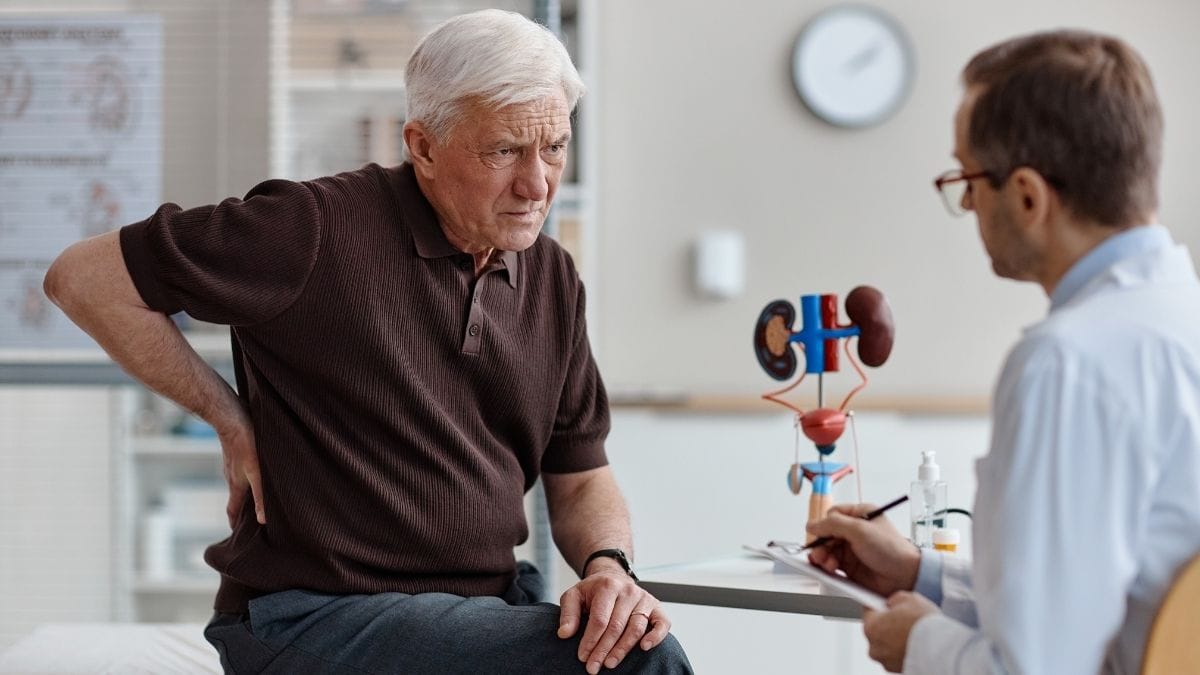
A useful starting point:
- Write down where your pain is, how often it happens, and what makes it better or worse
- Bring this log to your next doctor visit instead of mentioning pain in passing
- Ask specifically whether your pain has a treatable cause, not just a manageable one
You don’t have to live with it before someone looks at it. Pain is a signal. The next habit is about the type of movement that actually answers that signal.
Habit 4: You Only Do Cardio and Skip Strength Training
You walk every day. Maybe you swim. Maybe you take a yoga class. You’re staying active, and that matters. But if strength training is not part of your week, your muscles and your bones are losing ground that cardio alone cannot recover.
Strength work builds what cardio cannot. A 2022 systematic review and meta-analysis found that progressive resistance training programs in adults aged 65 and older were associated with simultaneous increases in lower-body muscle strength and femur and hip bone mineral density.
Aerobic exercise such as cycling and swimming, by contrast, has been shown to have little or no effect on bone health.
This gap matters because bone density loss accelerates after 50, and muscle loss, called sarcopenia [the gradual, age-related decline in muscle mass and physical strength], begins earlier and compounds over time.
Cardio supports cardiovascular health. It does not apply the mechanical load to bone and muscle tissue that resistance training does.
Many adults over 50 avoid strength training out of fear, which tends to accelerate the very decline they are trying to prevent.
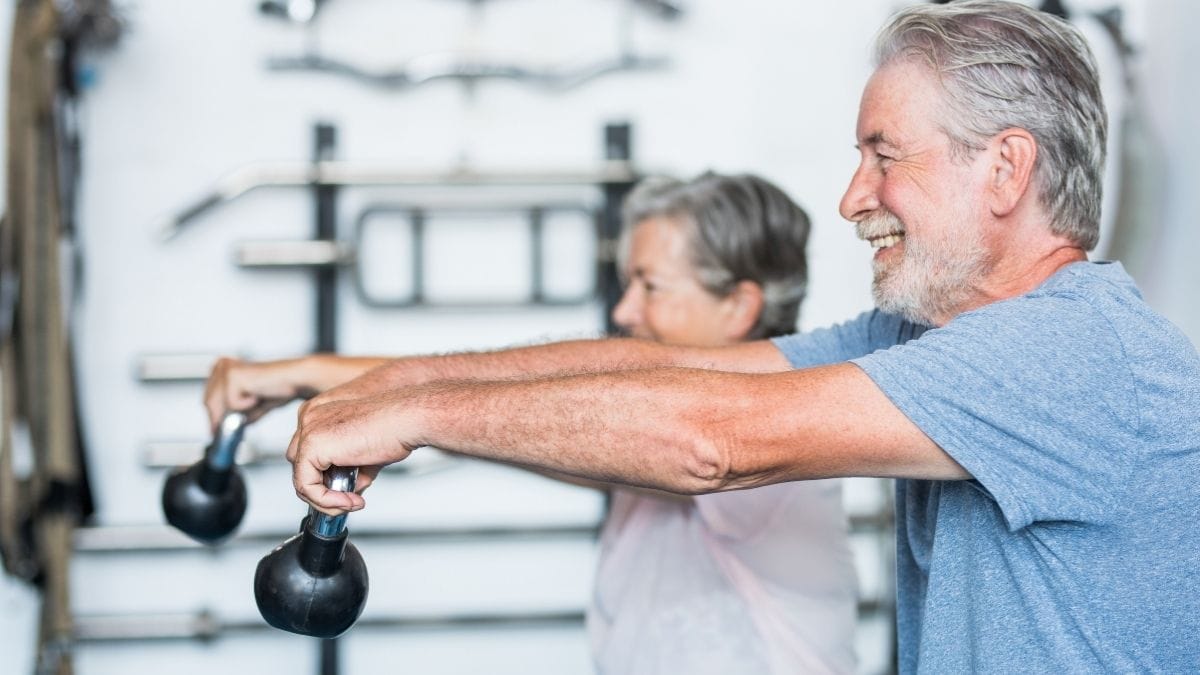
Starting is simpler than most people expect:
- Two to three sessions per week is the evidence-supported minimum for muscle and bone benefits
- Bodyweight exercises, resistance bands, and light free weights all count
- Squats, step-ups, and upper-body pressing movements cover the major muscle groups
- Increasing resistance gradually over time is what drives the benefit
Strength training after 50 is one of the most direct responses to the habits that work against your health. The next habit shifts from how you move your body to how you recover it.
Habit 5: You Sleep More Hours but Still Wake Up Exhausted
You went to bed at a reasonable hour. You may have slept eight or nine hours. And you still woke up tired. So you go to bed earlier. Or you sleep in longer. But the tiredness doesn’t really go away, and you start to wonder if this is just what getting older feels like.
Sleep architecture [the structure and pattern of sleep stages that cycle through the night] changes significantly in middle age and beyond.
Healthy aging is associated with decreased time in the deepest stage of non-REM sleep, known as slow-wave sleep, and this reduction becomes more pronounced as aging progresses. Rapid eye movement sleep, the stage most tied to memory and emotional processing, also declines with age.
The result is that total hours in bed may stay the same or even increase while the quality of those hours falls. More time asleep is not the same as more restorative sleep.
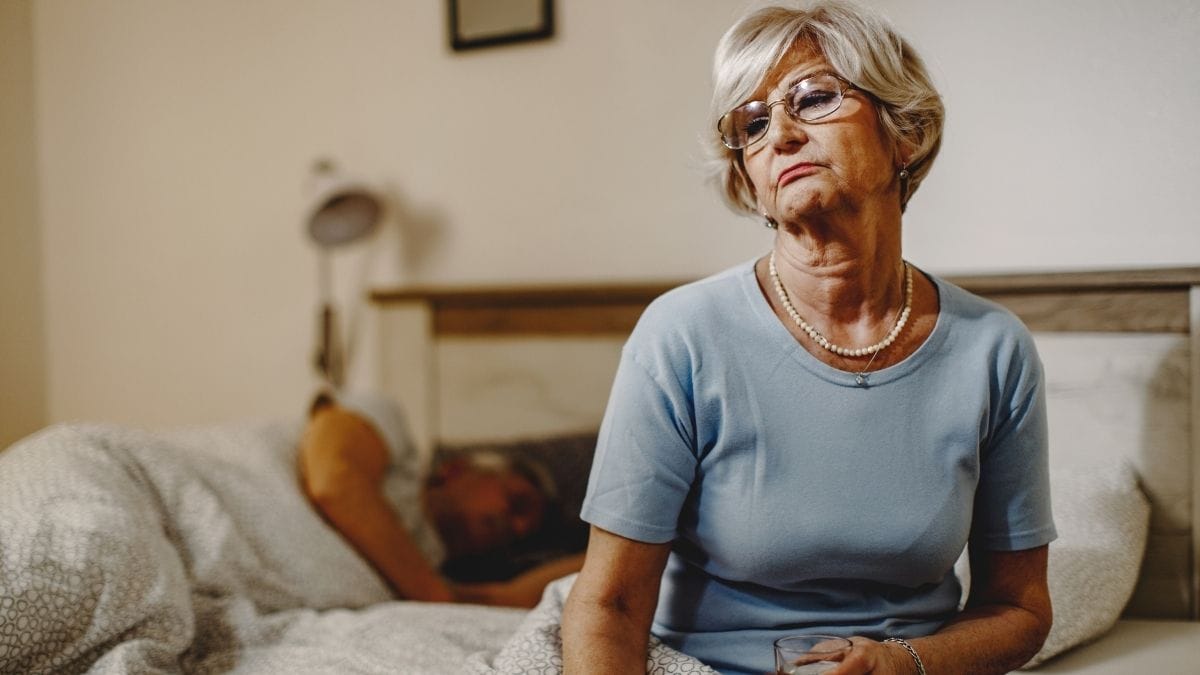
Habits that are common after 50 can make this worse:
- Eating a heavy meal within two to three hours of bed
- Alcohol in the evening, which disrupts sleep architecture in the second half of the night
- Screen exposure before sleep, which affects the body’s natural melatonin production
- Long daytime naps that reduce sleep pressure at night
A consistent sleep and wake time, even on weekends, is one of the most consistently supported habits for improving sleep quality in older adults.
There is one more habit on this list. It is the quietest one, the one that doesn’t feel like a habit at all.
One More to Watch: You Pull Away from People Without Realizing It
Nobody decides to become isolated. It happens in small steps. The group you used to meet with stopped meeting.
Daily contact that used to happen automatically is gone. Kids moved out. A few friendships drifted. And slowly, gradually, the circle got quieter. It felt like a preference. It felt like rest.
A 2025 longitudinal study drawing on data from 101,581 adults over 50 across 24 countries found that social isolation was significantly associated with faster cognitive decline over time.
This pattern held across different countries, different demographics, and different methods of measuring both isolation and cognitive function.
Brain changes tied to isolation are not abstract. Research suggests that prolonged lack of social interaction may reduce cognitive stimulation, diminish neural activity, and contribute to changes in brain structure over time.
Social contact keeps the brain doing things that require it: conversation, reading social cues, adapting, listening, responding. Without those demands, the brain gets fewer of the signals that sustain its function.
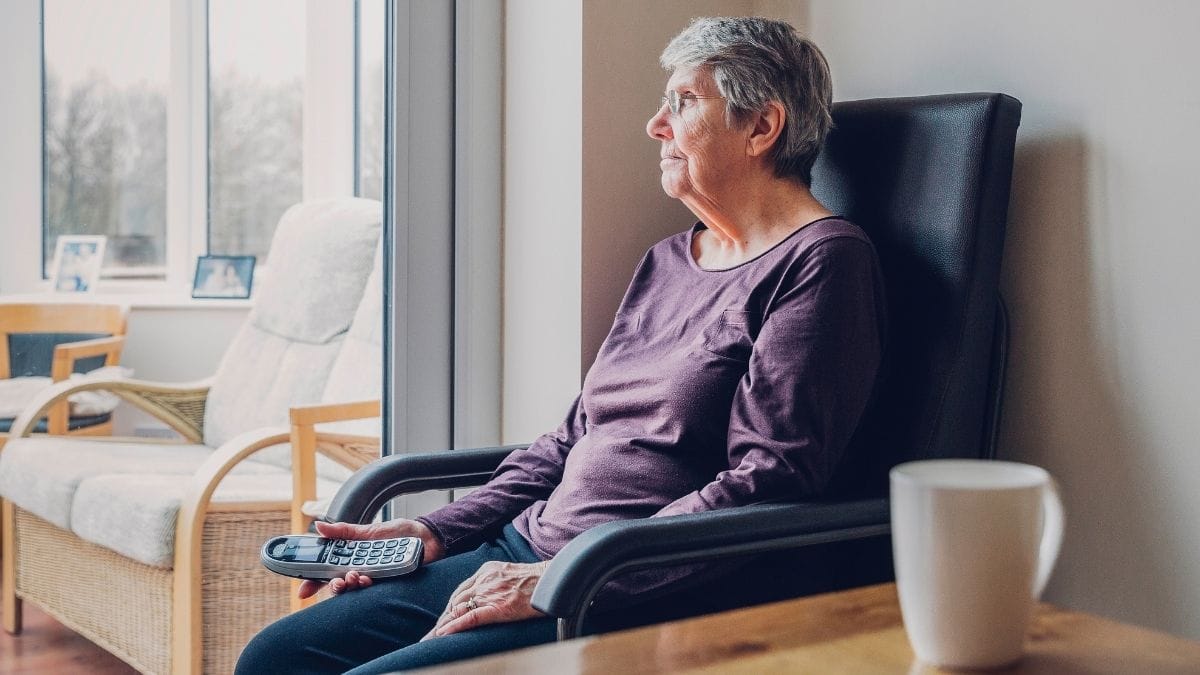
Loneliness and social isolation are also linked to depression, anxiety, and worsened physical health outcomes, according to the National Institute on Aging.
Fixing this does not require a packed social calendar. It is regular, meaningful contact. A weekly call, a standing lunch, a volunteer role, a class, a neighbor. Frequency matters more than scale. Showing up consistently to something matters more than making it impressive.
This is the last of the habits that work against you after 50. It is also the one most people leave off the list entirely.
One Change Is Enough to Start
Pick the habit from this list that you recognized most in yourself. That one is your starting point. Pick one habit from this list, commit to changing it this week, and track how you feel after seven days. Small changes made consistently do more than large changes that don’t stick. You know more now than you did before you started reading. Use it.