You already know something has shifted. Adults over 50 who are active but not yet consistent with strength training often feel the change before they can name it: energy dips, blood sugar creeping up, the number on the scale staying put no matter what.
The problem isn’t motivation. It’s that most exercise advice aimed at this age group skips the specific question: which movements actually move the needle on metabolic health?
This article names three of them, explains why each one works, and tells you how to start this week without overdoing it.
What Metabolic Health Actually Means After 50 (and Why Muscle Is the Key)
If your doctor has mentioned your blood sugar, blood pressure, or cholesterol lately, metabolic health is what they’re talking about.
It’s a measure of how well your body manages five markers: blood glucose, blood pressure, triglycerides [a type of fat carried in the bloodstream], HDL cholesterol [the kind that helps clear the blood vessels], and waist circumference, all kept within a healthy range without medication.
Most people assume this is mainly a diet problem. It isn’t.
Muscle is the missing piece. Skeletal muscle is one of the body’s primary sites for pulling glucose out of the bloodstream after a meal.

When muscle mass declines, there is less tissue available to do that job, and blood sugar regulation becomes harder. That’s not a theory. It’s a basic fact of how the body works.
Here is the part that surprises most people. After age 60, adults lose roughly 1% of muscle mass per year, but strength drops two-and-a-half to four times faster, at 2.5% to 4% per year. The visible problem and the functional problem are not the same size.
Here’s how rare good metabolic health actually is. Only 12.2% of American adults are currently meeting healthy targets for all five metabolic markers, according to a 2019 study from the University of North Carolina at Chapel Hill that analyzed data from 8,721 adults.
That number covers all ages. For adults over 50, the picture is harder still.
The exercises in this article target the largest muscle groups in the body. That is not a coincidence. Bigger muscle groups mean more tissue doing the metabolic work. The exercises that target those groups are in the next three sections.
Track one metabolic marker at your next check-up, then recheck it after 12 weeks of strength training.Pair each strength session with a short walk after eating to extend the blood-sugar benefit..
The Goblet Squat: Your Biggest Muscle Group Is Also Your Best Blood Sugar Manager
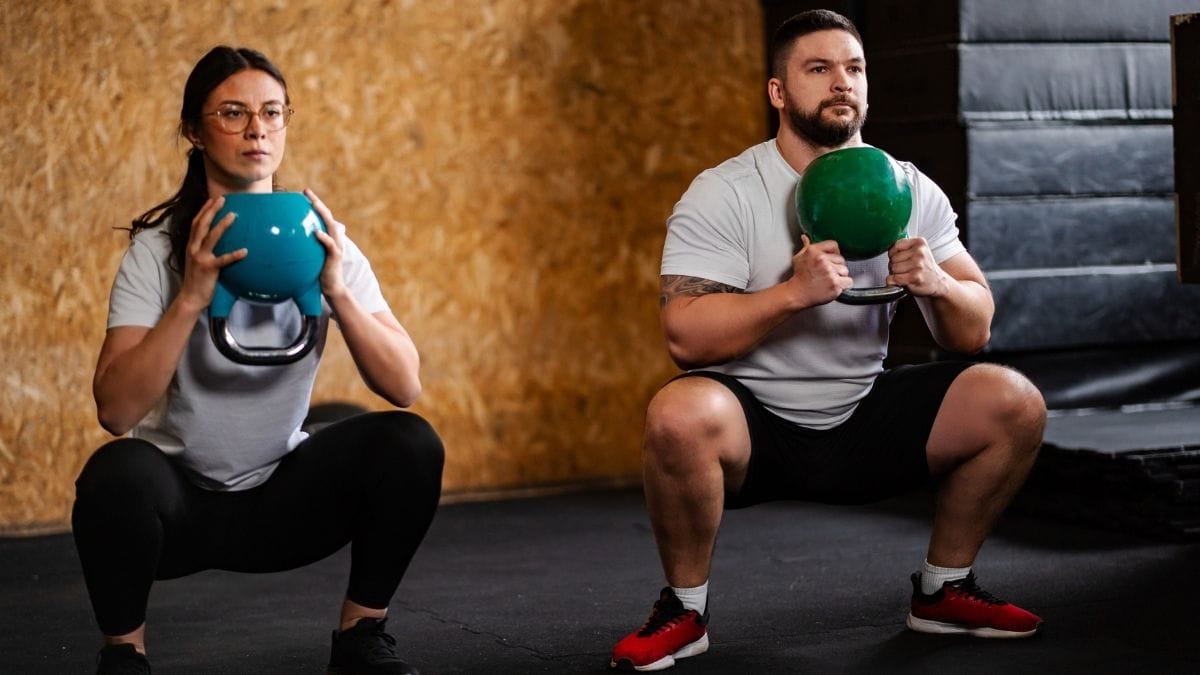
Most people think of squats as a leg exercise. That’s underselling them. The squat pattern works the quadriceps [the large muscle group on the front of the thigh], glutes [the muscles that make up the backside], and hamstrings [the muscles running along the back of the thigh] all at once.
Together, those three groups make up the largest collection of muscle tissue in the body.
The muscle you build from these exercises keeps working on your blood sugar and blood pressure all day, even when you are on the couch.
That’s the metabolic argument for lower body training. More muscle in these groups means more tissue available to absorb glucose when blood sugar rises after a meal.
A 2025 meta-analysis covering 43 randomized controlled trials found that resistance training in middle-aged and older adults with type 2 diabetes was associated with a reduction in fasting glucose of roughly 7 mg/dL and a reduction in HbA1c [a measure of average blood sugar over the past three months] of about 0.55%, though insulin levels did not change significantly.
Why trainers pick the goblet squat specifically for adults over 50: holding a dumbbell or kettlebell at the chest is associated with a more upright torso position and is generally considered to place less load on the lower back than a barbell back squat.
It also self-corrects form, pushing the knees out and the hips back naturally. You don’t need a spotter, a rack, or any equipment beyond one weight.
Talk to your doctor before starting any resistance training program if you’re managing a chronic condition, are on medication, or have had a recent joint injury.
How to do the goblet squat:
- Hold a dumbbell or kettlebell vertically at your chest.
- Stand with feet shoulder-width apart, toes angled slightly out.
- Push your hips back and bend your knees, keeping your chest up.
- Lower until your thighs are roughly parallel to the floor, or as deep as is comfortable.
- Press through your heels to stand back up.
Start with a light weight and three sets of eight to 10 reps. The biggest form mistake adults make is letting the chest fall forward. If that happens, use a lighter weight.
The goblet squat builds the front of the lower body; the back of the body is what the next exercise is for.
Film yourself from the side to check chest position; a dropping chest is the most common early error. If knee discomfort appears, reduce depth first before reducing weight..
The Romanian Deadlift: The Back-of-the-Body Move That Helps Your Metabolism Work Overnight
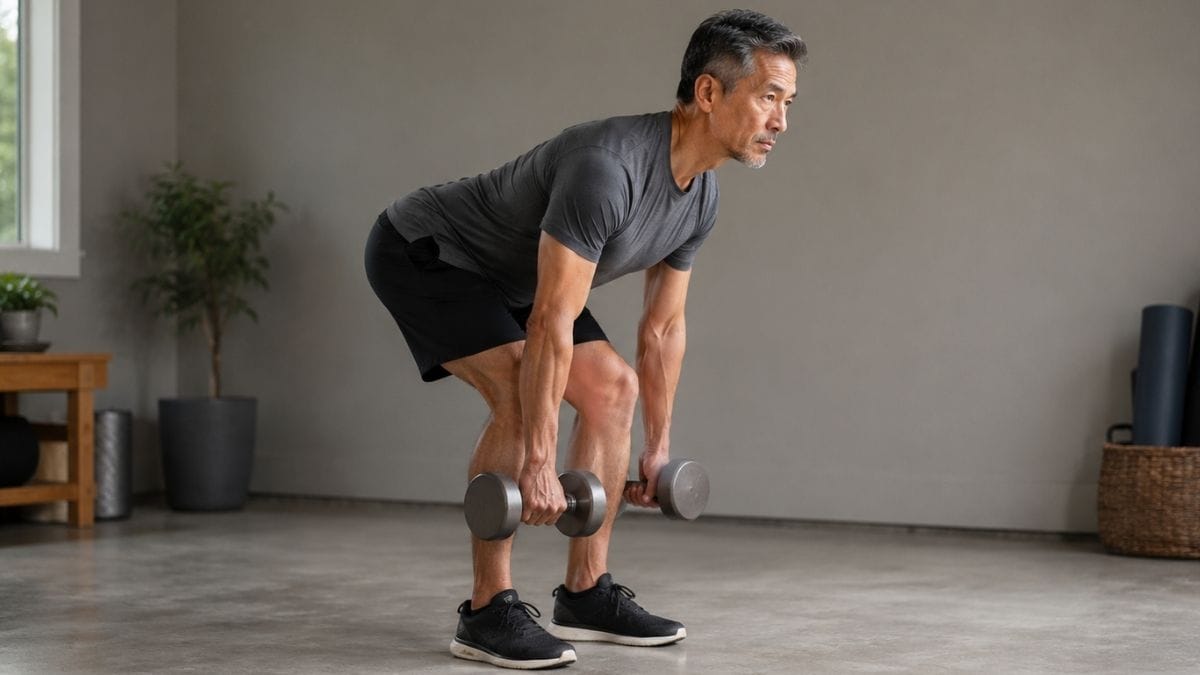
You feel the goblet squat in the front of your legs. You feel the Romanian deadlift in the back.
That’s the point. The posterior chain [the connected group of muscles running along the back of the body, including the hamstrings, glutes, and lower back] is a region most adults over 50 have never specifically trained.
Strong posterior chain muscles matter beyond the gym. Every time you pick something up off the floor, you use the same pattern as the Romanian deadlift. Training it is associated with lower injury risk in daily life.
A 2020 systematic review published in PLOS ONE found that deadlift variations produce strong activation in the hamstrings and erector spinae [the muscles that run alongside the spine], with technique and exercise choice determining which muscles take the most work.
The Romanian deadlift, which starts from a standing position and lowers under control without touching the floor, places particular emphasis on the hamstring muscles during the lowering phase.
According to the NSCA’s position statement on resistance training for older adults, resistance exercise may improve metabolic capacity of skeletal muscle through improved glucose homeostasis [the body’s process of keeping blood sugar stable] and prevention of fat buildup inside the muscle itself.
How to do the Romanian deadlift:
- Hold a pair of dumbbells in front of your thighs, arms straight.
- Stand with feet hip-width apart and a soft bend in the knees.
- Hinge at the hips, pushing them back as you lower the weights along your legs.
- Stop when you feel a stretch in the back of your thighs, usually when the weights reach mid-shin level.
- Drive your hips forward to return to standing.
Keep the weights close to your legs throughout. If your back rounds, stop and reduce the weight. The posterior chain handles the floor. The next section covers what happens above the waist.
Think “push the floor away” when returning to standing to fire the glutes, not just the lower back. Keep a soft bend in the knees throughout; locking them out shifts too much load to the lower back.
The Overhead Press: The Forgotten Exercise That Protects More Than Your Shoulders
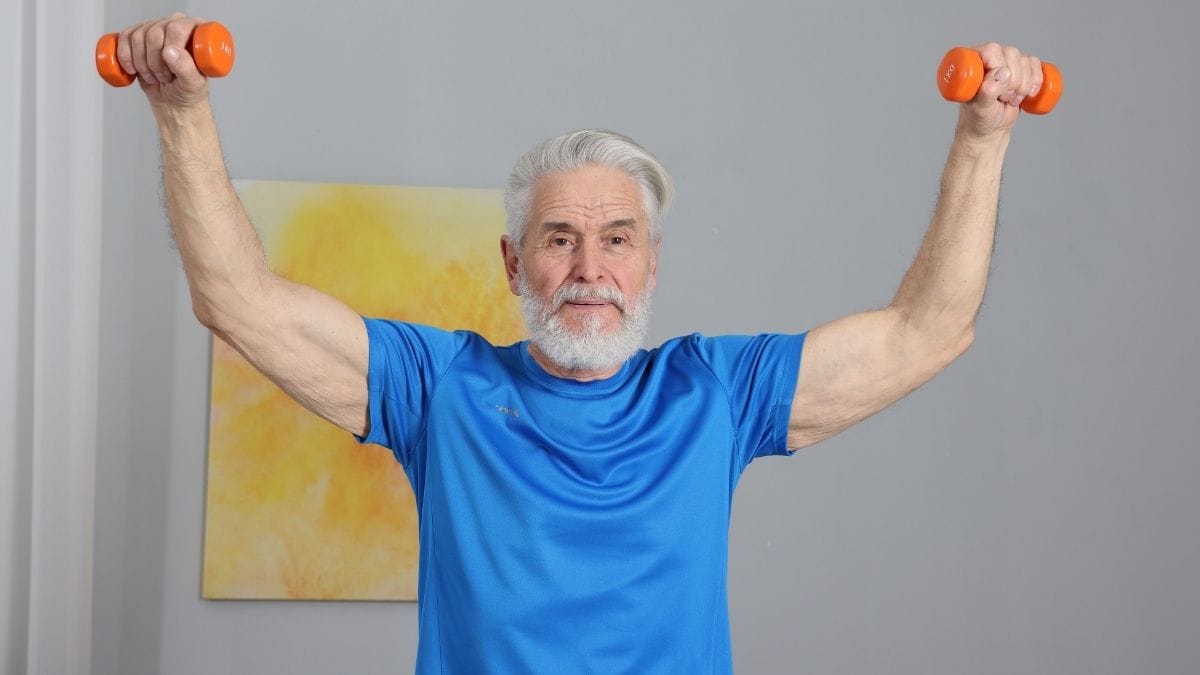
Most adults over 50 have strong opinions about their shoulders. Either they hurt and they avoid pressing, or they feel fine and press without thinking about why it matters. The overhead press deserves more attention than either of those approaches gives it.
Most adults over 50 have gone years without training a single muscle above the shoulder. That gap builds quietly, and it shows up in daily life before most people connect it to strength training.
Once that range narrows, daily tasks, reaching a high shelf, lifting a bag into an overhead bin, putting on a jacket, get harder in ways that compound over time.
The overhead press works the deltoids [the rounded muscles that cap the shoulder], triceps, and upper back, and requires the core to stabilize the whole movement. That’s more muscle engaged than most people expect from one exercise.
For bone health, the case is also compelling.
A 2025 systematic review and meta-analysis found that an eight-month program of free-weight exercises including the overhead press at high effort levels was associated with significant improvements in bone mineral density [a measure of how dense and strong the bones are] in postmenopausal women with osteoporosis or low bone mass.
There is also a cardiovascular link that catches most people off guard.
A 2015 Lancet study following nearly 140,000 adults across 17 countries found that grip strength, the same strength built through pressing and pulling movements, was inversely associated with cardiovascular mortality, with each 5 kg reduction in grip strength linked to a 17% higher risk of cardiovascular death.
Three exercises, two of which directly build that grip strength, is the question the next section answers.
Press from seated if shoulder stability is a concern; seated pressing reduces the balance demand. Stop the rep if you feel a pinch rather than tension; reduce range of motion before reducing weight.
Why Three Exercises Is Enough (and Why Trainers Keep Coming Back to These Three)
You might be wondering whether three exercises are really enough. The honest answer, and the one trainers return to again and again, is yes, when those three exercises are chosen well.
Trainers who work with adults over 50 consistently point to three compound movements as their starting point for metabolic benefit: the squat, the hinge, and the press.
These three cover the major movement patterns. The goblet squat is a lower-body push. The Romanian deadlift is a lower-body hinge. The overhead press is an upper-body push. Together they work the front of the lower body, the back of the lower body, and the upper body in one session.
More muscle worked in a session means a larger metabolic response. More sessions is not always better.
A 2025 meta-analysis found that three weekly sessions for 12 weeks or fewer were associated with optimal improvements in markers of insulin resistance, including fasting glucose and HbA1c, in middle-aged and older adults.
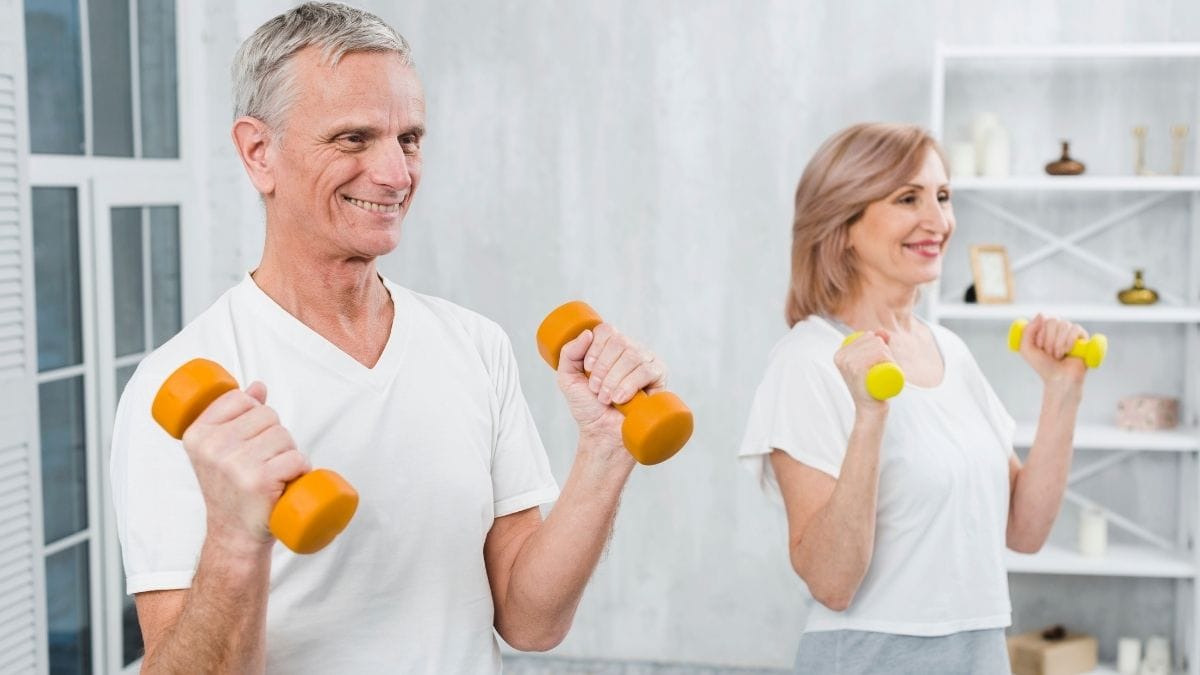
Adding more exercises to each session or more days per week beyond that threshold did not consistently produce better metabolic outcomes.
According to the NSCA’s position statement on resistance training for older adults, resistance training is safe and beneficial for healthy older adults and frail older adults alike, and meaningful results come from consistent, progressive effort, not from volume alone.
What that start looks like in practice is in the next section.
Log each session’s weight and reps in a note on your phone; progress tracking is what makes three sessions feel like enough. Rest 60 to 90 seconds between sets to balance recovery with keeping the heart rate up.
How to Start This Week Without Overdoing It
The most common mistake adults over 50 make when starting strength training isn’t picking the wrong exercise. It’s adding weight too quickly before the movement pattern feels natural.
Start with two sessions per week, not three. Two sessions per week, done consistently, give the body the recovery time it needs to adapt. The body needs more recovery time between sessions than most people expect in the first four to eight weeks.
A 2015 study published in PMC found that brief resistance training sessions, under 15 minutes per workout, done twice weekly, produced significant strength gains in older adults with a mean age of 55 years over 12 to 19 weeks.
The sessions used overhead pressing and other compound movements. Volume was not the key variable. Consistency was.
Add weight only when every rep of every set feels controlled and easy. That usually means adding two to five pounds when you can complete all reps with solid form for two sessions in a row.
Form matters more than load. A controlled rep with a lighter weight builds the movement pattern. A sloppy rep with a heavier weight risks injury and slows progress. The conclusion names the single action to take before this week ends.
Set a recurring calendar reminder for both sessions; habit research consistently shows that scheduled exercise is completed far more often than intended exercise. Do not skip the two-day rest window; muscle adapts during rest, not during the workout itself.
Conclusion
Pick one of the three exercises from this article and put it in your next workout. Add one of these three exercises to your next workout this week, starting with whichever movement you feel most confident attempting.
You don’t need to master all three at once. You don’t need a gym membership or a trainer on day one.
The goblet squat, the Romanian deadlift, and the overhead press each strengthen the muscle tissue that keeps your blood sugar stable, your blood pressure in range, and your metabolic health strong well past 50. Start with one. That’s enough.