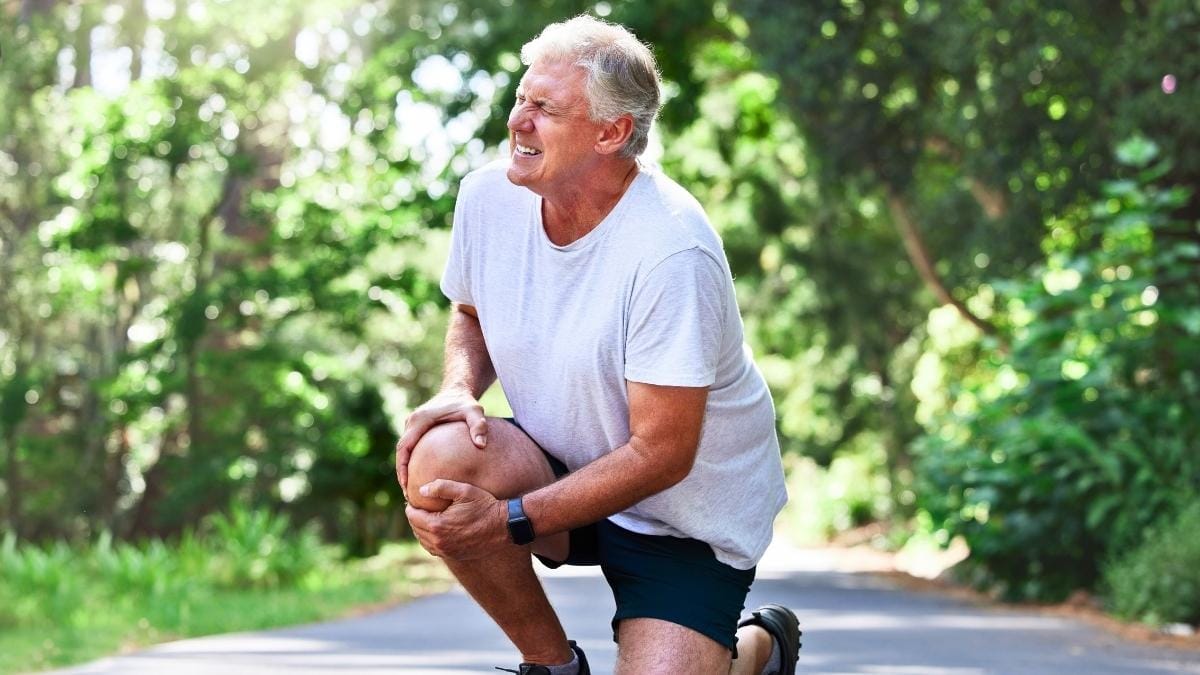
You work out. You show up. You put in the effort, and your joints still hurt afterward. Many active adults over 50 who work out regularly but are starting to notice joint pain or stiffness are unknowingly accelerating joint damage through common workout habits they believe are keeping them healthy.
This is not about working out too hard. These are quiet, routine habits that feel completely fine until one morning they do not. By the end of this article, you will know exactly which five habits to watch for and have one direct swap for each.
Here is what these five workout habits are doing to your joints, one by one.
| # | Section | What’s at stake |
|---|---|---|
| 1 | The Warm-Up Skip | Your joints pay a price before the first rep |
| 2 | The Surface You Run On | Something inside the joint cannot come back once it is gone |
| 3 | How You Squat | A familiar move may be loading the wrong structure |
| 4 | Missing Rest Days | The math on joint repair does not work without this |
| 5 | The High-Impact Habit | What feels manageable now may not stay that way |
Talk to your doctor before changing your exercise routine if you have an existing joint condition, are on medication for pain or inflammation, or have recently had a joint injury.
Habit 1- This Common Workout Habit Damages Your Joints Before You Even Begin
You have probably skipped a warm-up before. The problem with workout habits that damage joints is that the consequences are slow. Cold joints produce less synovial fluid [the slippery liquid inside a joint that reduces friction between the bones], which means the cartilage surfaces in your knees, hips, and shoulders are grinding against each other with less cushioning right from the first rep.
After 50, this matters more. Muscles and connective tissue lose elasticity with age, so your body needs longer to get ready for movement than it did in your 30s.
The research supports what your body is already telling you. A systematic review of five high-quality randomized controlled trials found that the weight of evidence supports warm-up for reducing injury risk in physically active adults. Three of the five studies found a significant injury reduction.
Warming up is simple. Five to ten minutes of dynamic movement is enough. Think leg swings, arm circles, hip openers, and light walking — not static stretching, which works better after exercise.
Quick Warm-Up Checklist (do these before every session)
Dynamic Warm-Up
5 Steps To Prime Your Body
STEP 012 MINUTESLight Walking or Marching
Execute continuously in place to raise core body temperature.
STEP 0210 REPSLeg Swings
Per side. Perform both forward and sideways movements cleanly.
STEP 0310 REPSArm Circles
Per direction. Switch seamlessly from forward to backward motions.
STEP 0410 REPSHip Openers
Per side. Rotate outwards to expand joint range of motion.
STEP 055 REPSBodyweight Squats
Slow cadence with a deliberate, deep pause at the bottom.
Skipping this step costs you less than 10 minutes. Skipping it repeatedly over months and years costs you cartilage, and that brings us to the next habit.
Habit 2- Running on Hard Surfaces Is Grinding Cartilage That Cannot Grow Back
Most joint damage from exercise is not caused by pushing too hard. It is caused by small, daily habits that feel completely normal right up until the morning you can barely bend your knee.
If you are over 50 and running on hard surfaces, joint pain after your runs may not be just soreness. It may be something more structural.
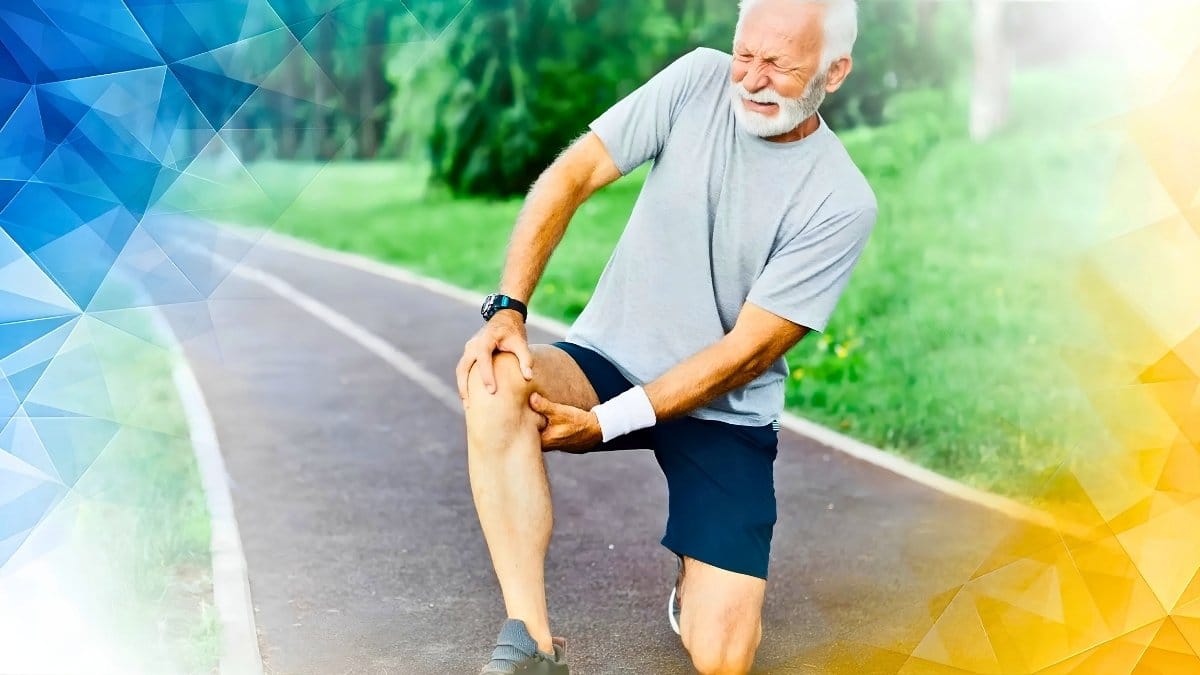
Here is something your cartilage cannot do that the rest of your body can. Cartilage [the smooth, rubbery tissue that cushions the ends of your bones inside a joint] does not have a blood supply, so when it wears down, it cannot repair itself the way muscle or skin can.
Running on concrete and asphalt sends force up through your feet, ankles, and knees with every stride.
A large cohort study using UK Biobank data, with a mean participant age of 64.5 years, found that high levels of physical activity were associated with a 25% increased risk of knee osteoarthritis [a condition where the protective cartilage inside a joint gradually breaks down, leading to pain, stiffness, and reduced movement] compared to lower activity levels. The study found an association, not a confirmed cause-and-effect relationship.
The swap is straightforward. Trails and grass absorb impact. Rubber tracks reduce it. Swimming and cycling eliminate it almost entirely. You do not have to stop moving; you need to change where and how you do it.
The surface is one part of the equation. How your body moves on any surface is the other, and that is where most people are making a mistake they do not even know about.
Habit 3- The Way You Squat May Be Quietly Wrecking Your Knees
Poor squat form is a workout habit that damages your joints through a force called shear, and most people have no idea it is happening. You have been squatting your whole life, which is exactly the problem. A movement done thousands of times with slightly wrong form adds up to a significant load on the wrong structures.
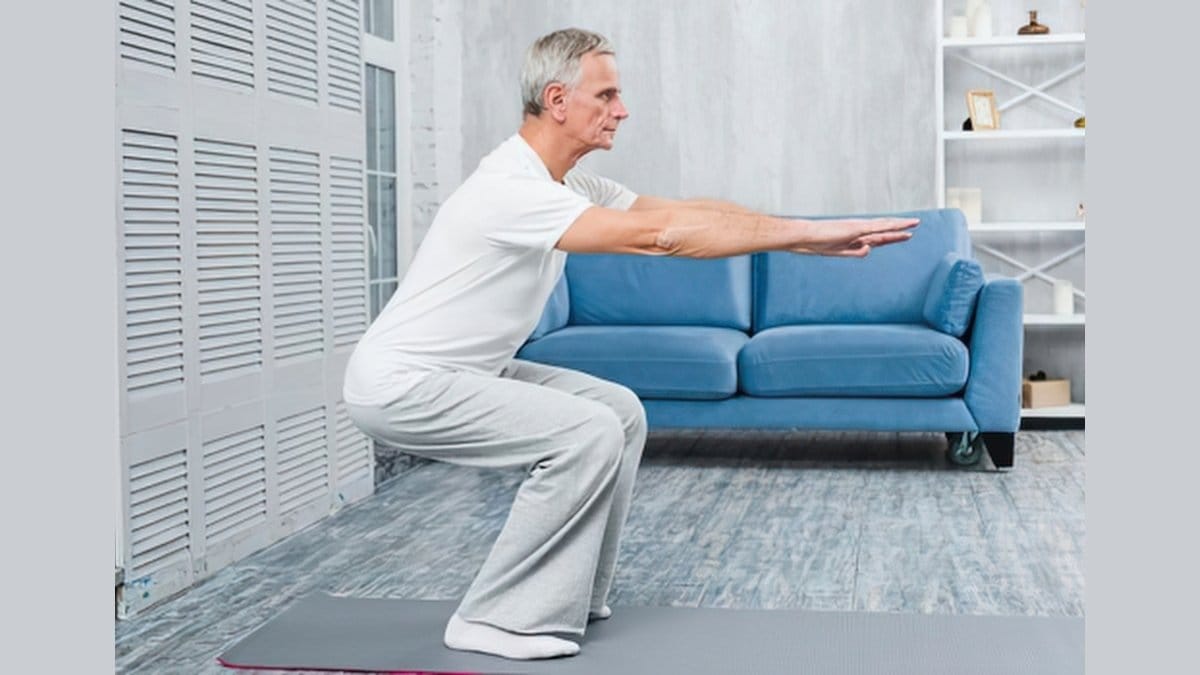
Your knee has a design limit, and bad squat form pushes right against it. When you squat with your knees caving inward, or when your knees push too far past your toes, the force that should travel through your large leg muscles instead lands on your kneecap and the ligaments around it.
This can lead to patellofemoral syndrome [pain behind or around the kneecap, caused by the kneecap moving out of its normal track during movement] — one of the most common exercise-related joint problems in adults this age.
The same issue applies to lunges, step-ups, and leg press if form is off.
Here is what correct squat form looks like:
- Feet shoulder-width apart, toes pointed slightly outward
- Knees tracking directly over your second and third toes, not collapsing inward
- Hips drop back and down, as if sitting into a chair behind you
- Chest stays up; do not round forward
- Weight stays through your full foot, not just your heels or toes
The numbers make clear why form matters this much. Osteoarthritis in the knee is diagnosed in 22.6% of adults aged 55 to 64 and 28.4% of adults aged 65 to 74. That number rises with age, and form errors over years are one of the factors that push it higher.
Good form protects you during the set. But it cannot protect joints that are never given time to heal, which is the next problem on this list.
Habit 4- No Rest Day Means No Repair Day, and Joint Damage Stacks
You might feel like resting is falling behind. It is not. Overuse injury [damage that builds up gradually from repeating the same movements too often without enough recovery time] does not happen from one hard session. It builds slowly, one workout at a time, until the tissue cannot keep up.
Skipping rest has documented consequences. Mayo Clinic notes that overuse injuries including tendinitis and stress fractures typically result from training errors like going too often, too hard, or for too long without variation or rest.

This kind of overuse injury over 50 takes longer to heal, because research on aging finds a greater susceptibility to exercise-induced damage and a slower repair response in older adults.
Stopping exercise is not the fix. It is programming rest or active recovery into your week the same way you program a hard session.
Active recovery keeps you moving without loading the same joints repeatedly:
- Light walking at a comfortable pace
- Swimming or water aerobics
- Gentle yoga or stretching
- Foam rolling and mobility work
One or two recovery days per week is enough for most adults in this age group. If your joints are sore going into a session, that is a signal, not something to push through.
The pattern that leads to overuse injury is clear: no rest, plus the same hard movements repeated over and over. That is exactly what the next habit describes.
Habit 5- High-Impact Habits That Feel Fine Now Can Shorten Your Active Years
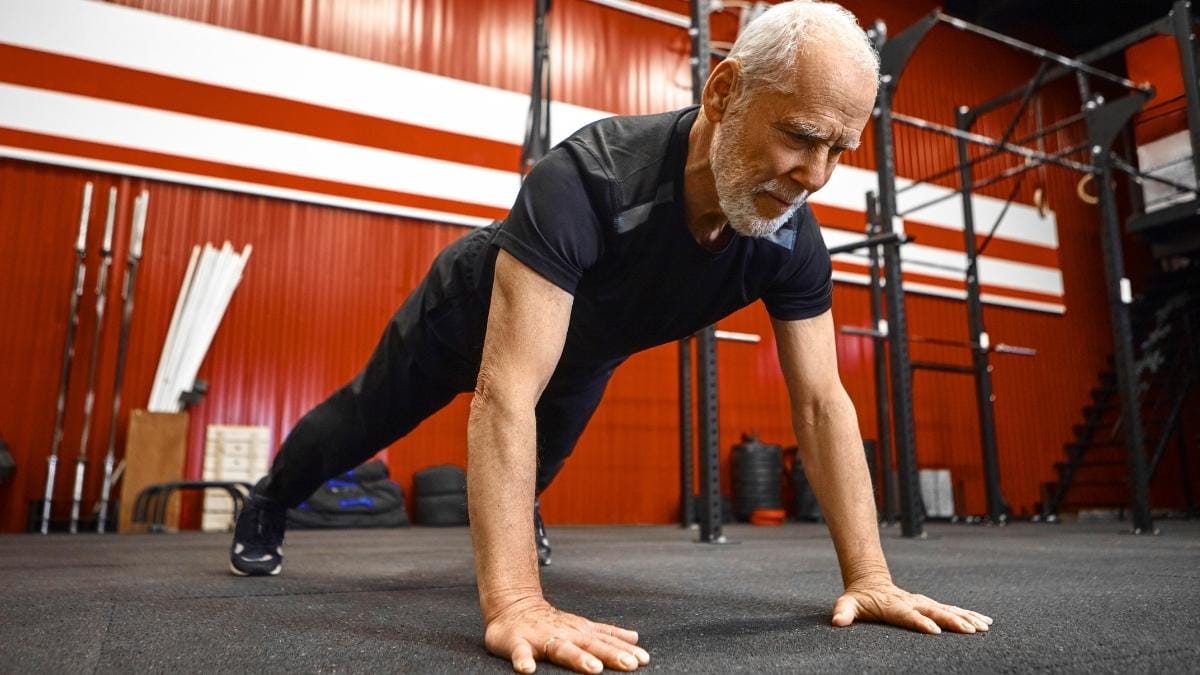
This is the workout habit most likely to damage your joints without warning, because it feels productive right up until it does not. Jumping exercises feel powerful. Burpees, jump squats, and box jumps are effective exercises, and they are also among the highest-load movements you can put a joint through.
Research on vertical jumping and landing found that the tibiofemoral joint in the knee experiences peak loadings of 6.9 to 9.0 times body weight during these movements.
The risk grows steadily with age. The CDC reports that arthritis affects 44% of adults aged 65 to 74. After 50, those joints are less able to absorb and recover from that kind of repeated impact than they were two decades ago.
Strength training builds the muscles that act as shock absorbers for your joints. Both the American Geriatrics Society and the American College of Rheumatology endorse resistance training and aerobic exercise as key components of joint protection in older adults.
Consider swapping high-impact moves for these lower-impact alternatives:
- Jump squats → slow-tempo bodyweight squats or goblet squats
- Burpees → step-back lunges or plank holds
- Box jumps → step-ups at a controlled pace
- Running → cycling, swimming, or brisk walking
None of these swaps means giving up intensity. They mean putting that intensity somewhere your joints can handle it, for years longer than the current approach allows.
Conclusion
Start with one swap, not five. Audit your current workout routine and swap out one joint-damaging habit this week — just one. Drop the hard-surface run for a trail. Add a ten-minute warm-up.
Schedule one recovery day. Low-impact exercise like cycling, swimming, or walking can replace almost anything on this list, with less stress on your joints. The workout habits that damage joints do not happen all at once, and fixing them does not have to either. Small changes made consistently protect your ability to keep moving for the long term.