

You’ve heard the advice a hundred times: cut the saturated fat, use vegetable oil instead. Most people who cut saturated fat don’t know that what they replace it with determines whether they get any benefit at all.
This article is for health-conscious adults who cook regularly and want to know what replacing saturated fat with vegetable oils actually does. By the time you finish reading, you’ll know exactly which oils deliver the science-backed benefits, which swap quietly cancels the benefit out, and how to make one change this week that actually moves the needle.
Talk to your doctor before making significant changes to how you eat if you’re pregnant, on medication for heart disease or cholesterol, or managing a chronic condition.
Point First: What the Science Actually Tests When You Make the Swap
You’re standing in the grocery aisle, comparing bottles, wondering if any of this matters. It does, but the science says something the label never will: the benefit doesn’t come from cutting saturated fat. It comes from what you put in its place.
Randomized controlled trials that replaced saturated fat with polyunsaturated vegetable oil found that cardiovascular disease risk fell by roughly 30%, a reduction comparable in size to statin drug treatment. That number comes from the American Heart Association’s review of the strongest available trial evidence.
It is striking. It is also specific: the swap was to polyunsaturated fat, not to any oil on the shelf.
Not every analysis agrees on how large the benefit is.
A separate meta-analysis that looked only at what the researchers considered adequately controlled trials found the effect smaller and, in some measures, not statistically significant when the replacement fat was mostly the omega-6 polyunsaturated fatty acid [a fat with two or more double bonds in its chemical chain, found in soybean, corn, and sunflower oils] linoleic acid.
The disagreement between these analyses matters because it tells you the type of oil, the dose, and the context all shape the result.
What this means for you: the swap itself is not magic. What you swap to is the variable the research is actually measuring.
The next section breaks down what happens in the body when the destination is a polyunsaturated fat, and why the most common worry about these oils turns out to be a misreading of the evidence.
Point Second: Swap to Polyunsaturated Oil: What Changes in Your Body
Swapping saturated fat for the wrong thing is one of the most common dietary mistakes people make without ever knowing they made it.
Before getting to the wrong swaps, it’s worth understanding what the right swap actually does inside your body, because the evidence here is some of the strongest in nutrition science.
LDL drops. Your LDL cholesterol is one of the first things that shifts when you make this swap.
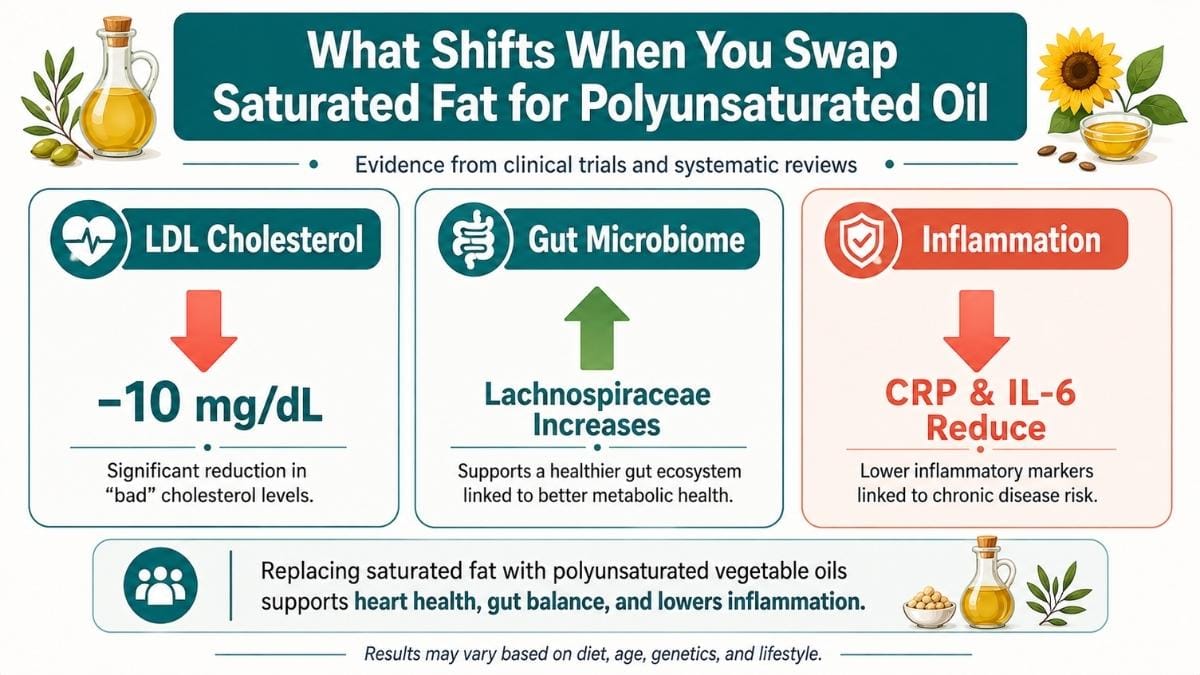
A meta-analysis of 24 randomized controlled trials found that diets with a higher ratio of polyunsaturated to saturated fat reduced LDL cholesterol [a fat-carrying particle in the blood that, at high levels, is linked to artery damage] by 10 mg/dL compared with lower-ratio diets.
Heart disease risk falls. The long-term picture looks even better.
Two large American cohort studies following more than 127,000 adults for up to 30 years found that replacing 5% of daily energy from saturated fat with polyunsaturated fat was associated with a 25% lower risk of coronary heart disease.
The studies tracked women in the Nurses’ Health Study and men in the Health Professionals Follow-up Study, both free of cardiovascular disease at the start.
The gut microbiome shifts, too. The benefit reaches further than your arteries.
In a randomized controlled trial in healthy Norwegian adults, replacing saturated fatty acids with polyunsaturated fatty acids increased the abundance of Lachnospiraceae [a family of gut bacteria associated with producing short-chain fatty acids that support metabolic health], alongside reductions in total cholesterol.
What about the inflammation concern? Seed oils rich in omega-6 fats have attracted criticism online for allegedly raising inflammation.
A 2022 pooled cohort analysis found that higher linoleic acid [the main omega-6 fat in most seed oils] in the blood was associated with lower systemic inflammation, lower cardiometabolic disease risk, and lower all-cause mortality, not higher.
A 2018 review of omega-6 fatty acids and inflammation found no strong evidence linking dietary omega-6 intake to systemic inflammation in humans.
The word “seed oils” covers a wide range of products.
Soybean, sunflower, and corn oils are all polyunsaturated-fat-dominant and carry the cardiovascular evidence. That evidence does not automatically extend to every labeled vegetable oil on the shelf.
Point Third: Swap to Monounsaturated Oil: A Different Mechanism, a Proven Trial
Extra-virgin olive oil sits on your counter for a reason. The trial evidence behind it is among the strongest available in dietary fat research.
The largest randomized dietary trial ever run on this question tells you exactly what to expect.
The PREDIMED trial enrolled 7,447 adults aged 55 to 80 in Spain who were at high cardiovascular risk but free of heart disease at the start.
Over a median of 4.8 years, participants assigned to a Mediterranean diet supplemented with extra-virgin olive oil at roughly 50 mL per day showed a 31% reduction in the primary composite endpoint of heart attack, stroke, and cardiovascular death compared with a control group following a low-fat diet.
This is a randomized controlled trial, the highest level of evidence available in dietary research.
The active fat in olive oil is oleic acid [a monounsaturated fatty acid, meaning it has one double bond in its chain, that makes up roughly 70% of olive oil’s fat content].
Monounsaturated fats lower LDL without significantly reducing HDL cholesterol [the fat-carrying particle that moves cholesterol away from arteries, often called “good cholesterol”], which gives them a slightly different risk profile than polyunsaturated fats.
Olive oil also carries anti-inflammatory benefits beyond its fat content.
A meta-analysis of 15 clinical trials covering 2,477 adults aged 23 to 80 found that a Mediterranean diet enriched with olive oils was associated with significant reductions in IL-6 [a protein the immune system releases during inflammation] and CRP [C-reactive protein, a blood marker that rises when inflammation is active in the body].
Switching to olive oil from a saturated fat is associated with a meaningful drop in heart disease risk on its own.
The Nurses’ Health Study and Health Professionals data show that replacing 5% of energy from saturated fat with monounsaturated fat [fat with one double bond in its chain, found in olive oil, avocado oil, and nuts] was associated with a 15% lower coronary heart disease risk.
That’s meaningful, and it’s achieved with a fat most people already own.
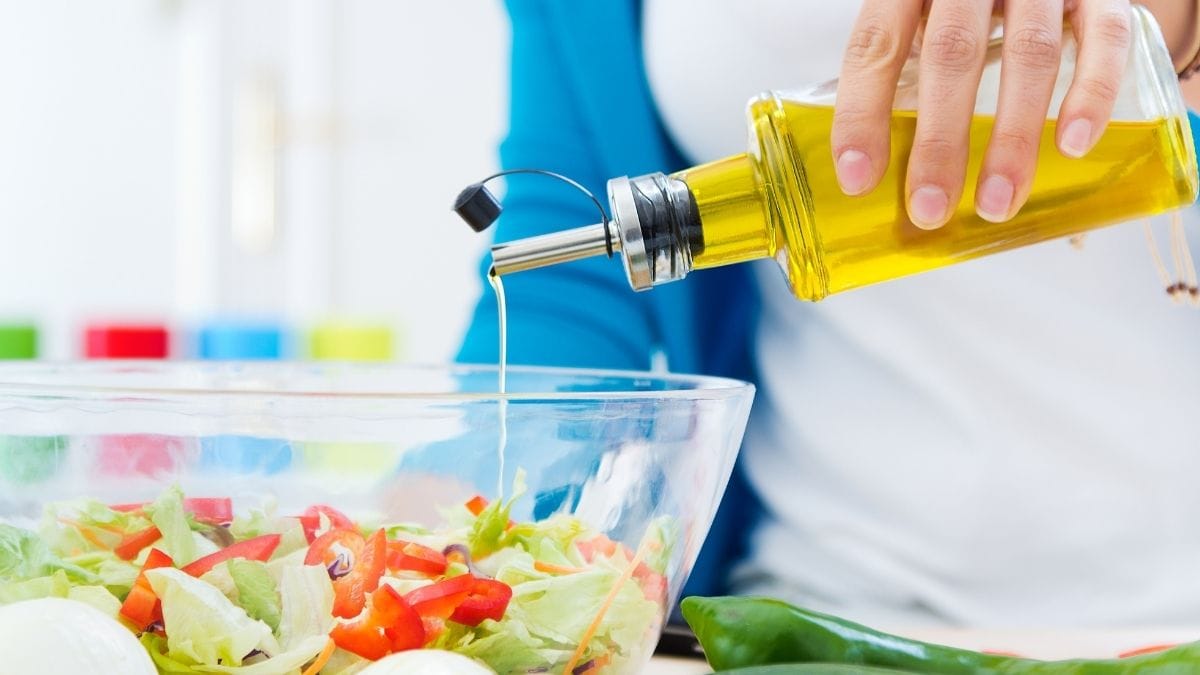
Quick reference: EVOO vs. refined avocado oil
- Cold use, dressings, low heat: extra-virgin olive oil
- Medium heat, sauteing, roasting: extra-virgin olive oil performs well here too
- High heat, searing, stir-fry: refined avocado oil (see Section 5)
- Both are predominantly monounsaturated and carry strong safety records for cooking
The gap between monounsaturated and polyunsaturated oil for cardiovascular benefit is modest. The bigger gap is between either of these and the swap most people actually make.
Point Four: Swap to Refined Carbs or Sugar Instead: Why This Backfires
Here is something almost every article about saturated fat skips: when public health guidance told people to eat less saturated fat and didn’t specify what to eat instead, most people filled the gap with refined carbohydrates and added sugar, not with olive oil or sunflower oil.
That swap does not work.
The same long-term cohort data that showed a 25% lower heart disease risk when saturated fat was replaced with polyunsaturated fat showed no significant benefit when saturated fat was replaced with refined starch and added sugars.
Replacing saturated fat with carbohydrates from refined starches and added sugars was even associated with a small increase in coronary heart disease risk in those cohorts.
The mechanism is specific. Replacing saturated fat with refined carbohydrates is associated with higher triglycerides [fats carried in the blood that, at high levels, are associated with heart disease risk] and a shift in LDL toward smaller, denser particles that are more strongly linked to artery damage, as well as lower HDL cholesterol.
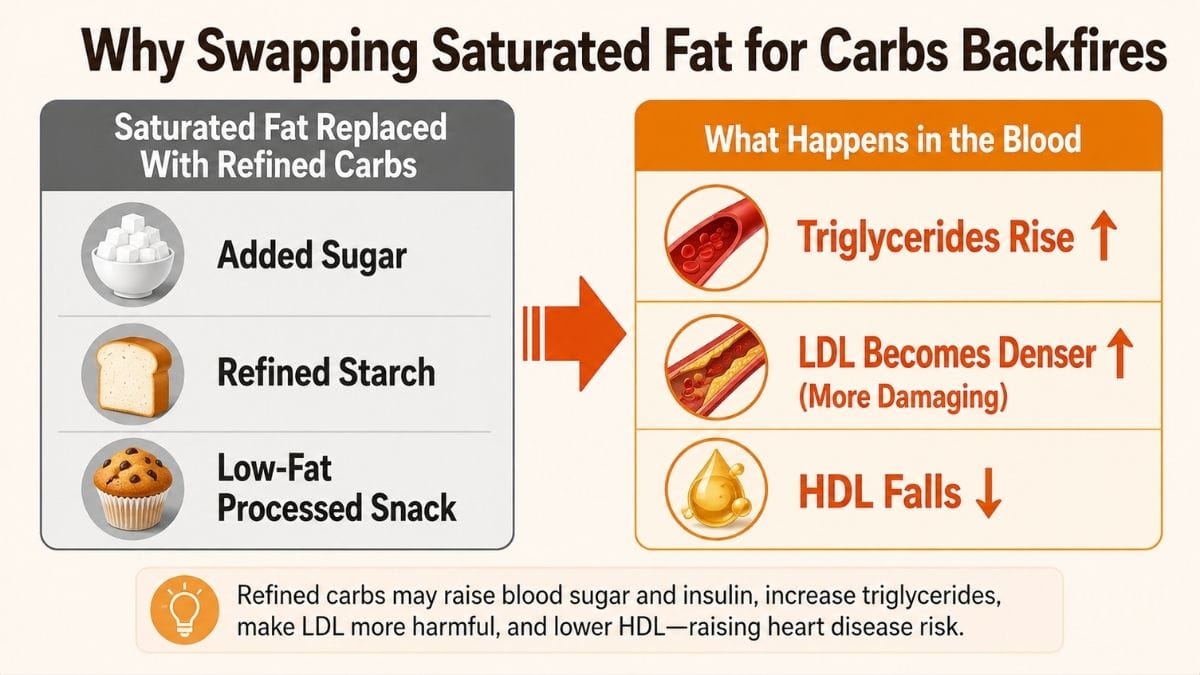
A diet high in added sugars was associated with a threefold higher risk of death from cardiovascular disease in a separate review of the evidence.
That review synthesized multiple human studies, so language of association applies.
The straightforward version:
- Swap saturated fat for polyunsaturated oil: cardiovascular risk markers improve
- Swap saturated fat for monounsaturated oil: cardiovascular risk markers improve
- Swap saturated fat for a low-fat muffin, sweetened yogurt, or white bread: markers may worsen
This is where the article’s core point lands: cutting saturated fat is not the end of the sentence. The second half of the sentence decides whether any of it was worth doing.
The next question is practical. If you’ve chosen olive oil or avocado oil, does it matter what temperature you cook at?
Point Five: Which Oils Hold Up When You Cook at High Heat
A lot of people assume olive oil burns at high heat and switch back to butter or lard when a recipe calls for a hot pan. That assumption is worth examining, because the research tells a different story.
Smoke point is not the right measure. The number on the label isn’t telling you what you need to know.
What matters at cooking temperatures is oxidative stability: how much harmful breakdown product an oil generates when heated.
A 2018 study published in Acta Scientific Nutritional Health tested 10 common cooking oils at up to 240°C and at 180°C for six hours, measuring polar compounds [oxidation products that form when fats break down under heat, some of which are linked to cell damage in laboratory research] and aldehydes [volatile compounds produced during fat oxidation at high temperatures].
Extra-virgin olive oil produced the lowest levels of polar compounds and oxidative byproducts. Canola oil produced high levels.
Refined avocado oil performs exceptionally well at high heat.
Virgin avocado oil, minimally refined avocado oil, and virgin olive oil all stayed below 20% polar compounds after nine consecutive deep-frying operations in a 2024 study, placing them within accepted food safety thresholds.

Refined avocado oil has a smoke point near 500°F and roughly 70% oleic acid content, which resists oxidation.
Polyunsaturated seed oils are less stable here. Corn, sunflower, and soybean oils carry strong cardiovascular evidence when used at appropriate temperatures, but their high PUFA content makes them more vulnerable to oxidation at frying temperatures.
One practical note: heat degrades the polyphenols [plant compounds in extra-virgin olive oil that contribute to its anti-inflammatory properties] that give EVOO advantages over refined olive oil.
For dressings, finishing, and low-heat cooking, EVOO is the stronger choice. For sustained high heat, refined avocado oil preserves fat quality without the polyphenol concern.
The last section turns that knowledge into a single repeatable kitchen decision.
Point Six: Replacing Saturated Fat with Vegetable Oils: Making It Stick in a Real Kitchen
The goal is not to overhaul every bottle in your pantry. One change, made consistently, is where the benefit lives.
Start by identifying the one fat you reach for most often. If it’s butter for cooking, replace it with extra-virgin olive oil for medium-heat tasks and refined avocado oil for high-heat ones.
A generic “vegetable oil” label usually means soybean or a blend, which is fine for moderate heat and cold use but not ideal at high frying temperatures.
Three-job framework for replacing saturated fat with vegetable oils:
- Cold use, dressings, finishing: extra-virgin olive oil. Full polyphenol benefit, strongest research base.
- Medium heat, sauteing, roasting up to 375°F: extra-virgin olive oil or refined avocado oil. Both are stable at these temperatures.
- High heat, searing, stir-fry above 400°F: refined avocado oil. Highest smoke point and oxidative stability of widely available plant oils.
If you’re cutting back on cooking fat altogether rather than swapping the type, there is a parallel benefit available through carbohydrate quality.
Replacing 5% of daily energy from saturated fat with carbohydrates from whole grains was associated with a 9% lower coronary heart disease risk in the same large cohort studies cited earlier.
Replacing it with refined starch, as covered in Section 4, provides no benefit.
The one thing this article is not asking you to do is make a dozen changes at once. Pick the fat you use most. Swap it once. Let it stick.
Conclusion
Start this week with one swap: the cooking fat you use most often, replaced with extra-virgin olive oil or avocado oil.
Swap one saturated-fat cooking fat in your kitchen for extra-virgin olive oil or avocado oil this week, starting with the fat you use most often.
The evidence behind replacing saturated fat with vegetable oils is strong, but only when the replacement is a monounsaturated or polyunsaturated fat, not refined carbs, not sugar, and not whatever generic oil happens to be cheapest.
The destination of the swap is the whole point.