
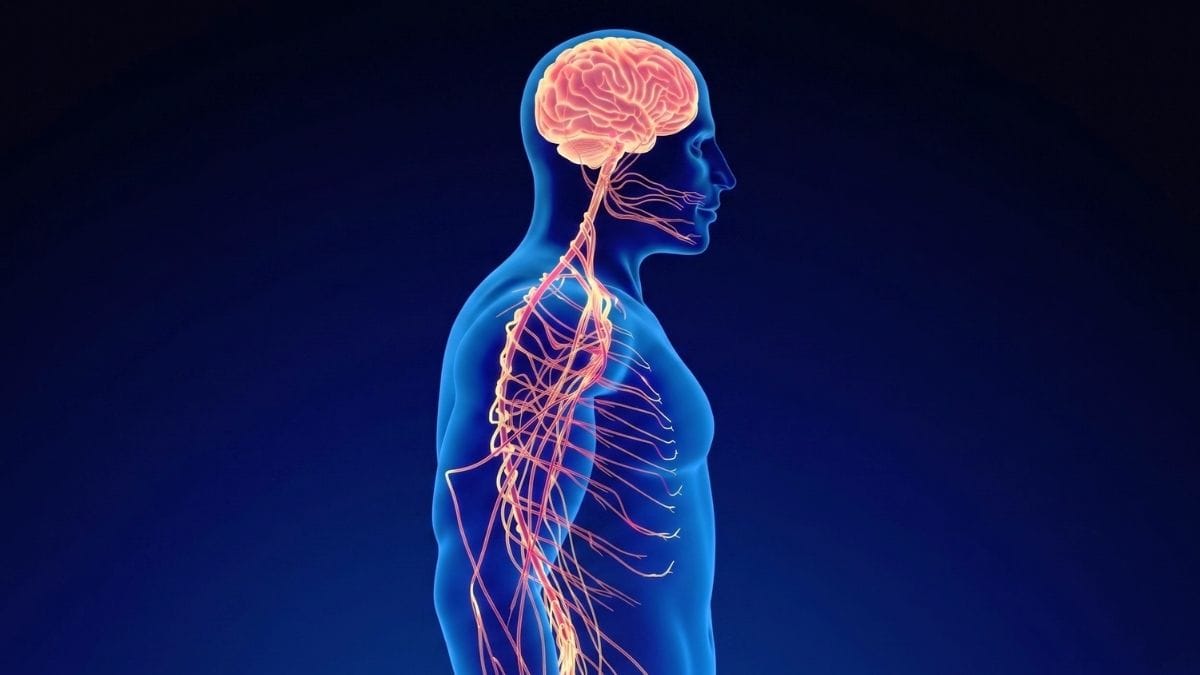
Your nervous system isn’t broken. It’s just been trained by years of stress to treat everything like a threat.
You feel anxious for no clear reason. You can’t fully relax. You wake up tired even after eight hours. You snap at small things. That’s not a character flaw. That’s a nervous system stuck in survival mode.
According to the APA’s Stress in America 2025 report, at least two-thirds of Americans say stress now shows up as physical symptoms — nervousness, fatigue, and headaches being the most common.
These 9 daily habits are backed by current research. Each one sends a small “you’re safe” signal to your body. Do them consistently and they quietly shift your baseline — from reactive to regulated.
Habit 1: Cyclic Sighing — 5 Minutes, Anytime

This is the most research-backed nervous system reset you’re probably not doing.
Cyclic sighing was studied by Dr. Andrew Huberman’s team at Stanford University. The method is simple. Take a deep breath in through your nose.
Without exhaling, sneak in a second short inhale. Then breathe out slowly and fully through your mouth. Repeat for five minutes.
A randomized controlled trial published in Cell Reports Medicine tested this against mindfulness meditation over 28 days. Cyclic sighing won — it produced greater mood improvement and reduced respiratory rate more than meditation did.
A 2025 review in Stress and Health confirmed it: slow, extended exhales improve vagal tone, heart rate variability, and emotional control. They also lower cortisol, anxiety, and PTSD symptoms.
You can do this after a stressful email. Before a hard conversation. When you can’t sleep. No app. No equipment. Just your lungs and five minutes.
The bottom line: Do this every morning before coffee. That’s the whole habit.
Habit 2: Morning Sunlight Within 30 Minutes of Waking

Most people know sunlight affects sleep. Fewer know it directly controls your stress hormones.
Every morning, your body is supposed to release a clean cortisol spike — called the cortisol awakening response. This gives you energy and mental clarity. But it only fires properly when your eyes get natural light early in the day.
Research shows that bright morning light (2,500–10,000 lux) significantly enhances this cortisol response compared to dim indoor light. When cortisol rises correctly in the morning, it falls predictably by evening — leaving you calmer and more able to sleep.
A 2025 study published in Chronobiology International confirmed that reduced morning light disrupts cortisol, melatonin, and sleep quality together.
Go outside within 30 minutes of waking. Stay for 10–15 minutes. No sunglasses. Don’t look at the sun directly. If you can’t get outside, a bright light therapy lamp works as a substitute.
The bottom line: Sunlight in the morning sets the stress tone for your entire day.
Habit 3: Cold Water on Your Face — 30 Seconds

You don’t need an ice bath. You need a sink.
When cold water hits your face, a reflex called the diving reflex activates. Your trigeminal nerve signals your brainstem to slow your heart rate. This is involuntary. It happens whether you want it to or not — and it’s immediate.
Research from SweatDecks (March 2026) explains that cold exposure causes a short sympathetic spike, followed by a strong parasympathetic rebound.
Over time, people who do this regularly show higher heart rate variability — a direct marker of better nervous system regulation.
You don’t need to do this for long. Thirty seconds of cold water on your face. Or cold water on the back of your neck. Or ending your shower with 30 seconds of cold. All three trigger the same reflex.
The diving reflex is one of the oldest survival tools in your body. It was built to calm you down fast.
The bottom line: Cold water on the face is the fastest one-minute nervous system reset that actually works.
Habit 4: Humming, Chanting, or Singing Daily

The vagus nerve runs right past your vocal cords. When you vibrate your vocal cords — through humming, singing, or chanting — you are physically stimulating that nerve. It’s direct contact.
Higher vagal tone means your nervous system can shift between states more easily. You calm down faster after stress. You sleep better. You feel less emotionally raw day to day.
Vagal tone is measured by heart rate variability. And research confirms that people with low HRV are at higher risk of anxiety, depression, and chronic illness.
You can hum while making coffee. Sing in the car. Chant “om” for 60 seconds before bed. None of this requires extra time.
Dr. Stephen Porges noted in his 2025 Clinical Neuropsychiatry paper that acoustic interventions — including vocal sounds — produce measurable effects on emotional regulation through the vagal pathway.
The bottom line: Hum for two minutes today. Your vagus nerve will feel it.
Habit 5: A 20-Minute Walk — Preferably Outside

Walking is not just exercise. For a stressed nervous system, it’s one of the most regulating inputs available.
Walking combines rhythmic movement, bilateral body engagement, and sensory input from the environment. All three of these are calming signals to the brain.
Add outdoor exposure — birdsong, changing light, natural smells — and you add a parasympathetic activation layer on top.
Physical movement also increases BDNF — brain-derived neurotrophic factor. This protein strengthens neural connections. A 20-minute walk raises BDNF levels enough to improve cognitive clarity and emotional regulation for hours.
A study from SuperAge (2026) confirms that even small daily actions create structural brain changes over time. These shifts aren’t just mood-based — they’re physical. Repeated inputs reshape the baseline.
The goal here is not fitness. It’s rhythm and safety. A slow, easy walk outside is more regulating than a hard run for someone already in chronic stress.
The bottom line: Walk for 20 minutes outside daily. Slow is fine. Consistent is what counts.
Habit 6: Protect the First 10 Minutes of Your Morning

This is a behavioral habit — and probably the most impactful one on this list.
Most people check their phones within 60 seconds of waking up. Emails. News. Social media. Notifications. In those first few minutes, you hand your nervous system over to everything that is designed to create urgency and threat.
Research cited by Georgetown University (published in Nature Communications, December 2025) found that environmental cues set up in the morning directly shape how your nervous system responds to stress throughout the day. The morning window is when habit loops are most actively formed.
The fix is not complicated. Wait 10 minutes before touching your phone. Use that time for sunlight (Habit 2), breathwork (Habit 1), stillness, or even just drinking water slowly.
You’re not avoiding your phone forever. You’re giving your nervous system a “safe start” before the day’s demands begin.
The bottom line: Ten phone-free minutes every morning changes what your nervous system expects from the rest of the day.
Habit 7: Keep Your Sleep and Wake Times Consistent

Sleep duration gets all the attention. Sleep timing barely gets mentioned. But for nervous system regulation, timing matters more.
When you go to sleep and wake up at different times each day, your HPA axis — the command center for stress hormones — loses its rhythm. Cortisol starts firing at random times. That’s what creates background anxiety that has no obvious cause.
The APA’s Stress in America 2025 report found that 78% of Americans lose sleep due to financial worries, and 65% said work stress disrupts their sleep. In 2024, adults said stress (53%) and sleep (40%) had the biggest impact on their mental health.
Two 2024 studies also showed that reactivating positive memories before sleep — even briefly — reduces emotional distress and strengthens resilience. What you think about before closing your eyes shapes what your nervous system processes overnight.
Wake up at the same time every single day — weekends included. This one habit has more impact on HRV than most supplements or interventions.
The bottom line: Consistency beats duration. Same wake time daily is the single most underrated sleep rule.
Habit 8: Real Conversation With Someone You Trust

This is the most neurologically fundamental habit on the list. It’s also the one most people replace with texting — which does not work the same way.
Polyvagal Theory explains that your nervous system is constantly scanning for cues of safety. The presence of a regulated, safe human being is one of the strongest “you’re safe” signals it can receive. This process is called co-regulation.
Tone of voice, eye contact, and physical presence all send data directly to your vagus nerve. A calm voice lowers your heart rate. A familiar face shifts your autonomic state. Texting bypasses all of this — it’s information without the safety cues.
The APA’s 2025 report found that 80% of adults with high loneliness levels reported living with a chronic illness. Loneliness is not just emotional — it is a measurable nervous system stress state.
One real conversation per day. Ten to fifteen minutes. With someone you actually feel safe around.
The bottom line: A real conversation is nervous system medicine. Texting is not a substitute.
Habit 9: Specific Gratitude Before Sleep — 2 Minutes

“I’m grateful for my family” does almost nothing neurologically. It’s too vague. Your brain can’t locate a specific memory to consolidate.
“I’m grateful for the way my coworker laughed during our 2pm call” — that’s specific. That gives your brain a real memory to work with.
And research from two 2024 studies shows that reactivating positive memories before sleep reduces emotional distress and builds psychological resilience over time.
Sleep is when your brain files memories and reinforces emotional patterns. The tone of what you focus on before sleeping shapes what gets strengthened overnight. Gratitude, done specifically, sends a “today was safe” signal to your nervous system right before it goes into consolidation mode.
An fMRI study also found that gratitude practice produces measurable changes in brain regions linked to emotional regulation.
Two minutes. No journal needed. Three specific moments from the day, recalled slowly before you close your eyes.
The bottom line: Specific gratitude before sleep quietly trains your nervous system to expect safety instead of threat.
Final Thought:
Your nervous system was trained into this reactive state. That means it can be trained out of it.
Pick two habits from this list. Run them for 14 days before adding more. Small, consistent inputs create real structural change.
This is how you rewire your nervous system — not with one big fix, but with nine quiet daily signals.