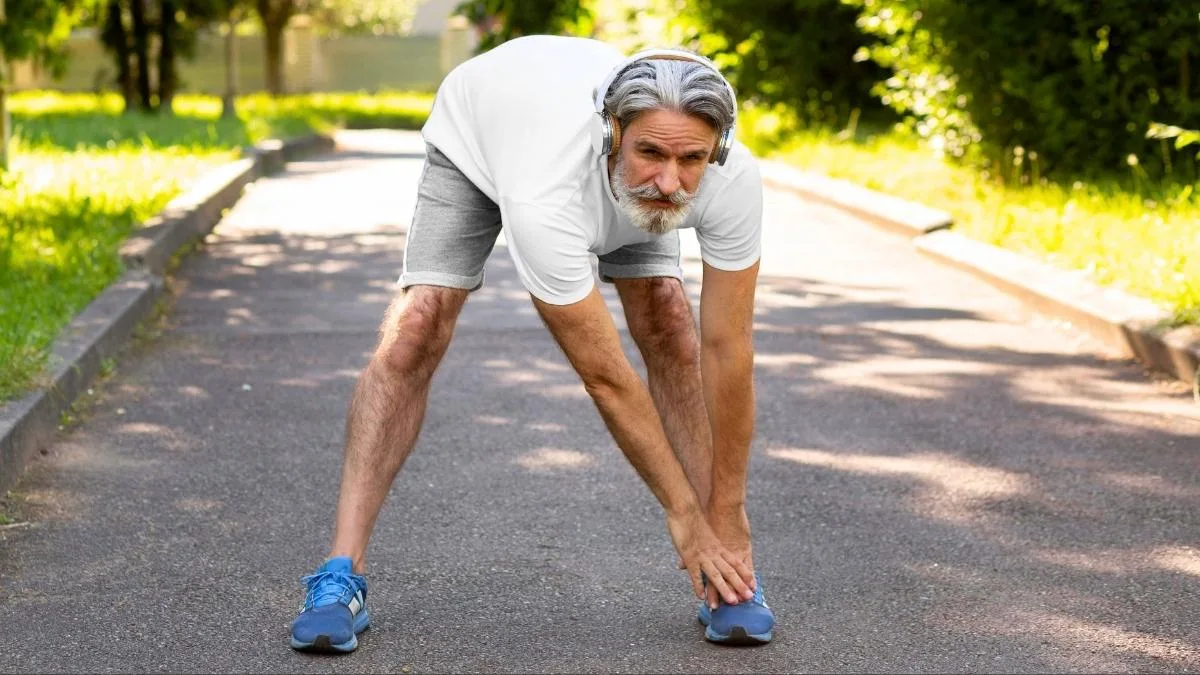
Most people over 50 who tell me they want to move again share one worry. They fear the first week most. They picture a sore knee, a pulled back, or a setback that proves they waited too long. So they wait a little longer.
I understand that fear. I hear it in almost every first conversation. But I have also seen what happens when someone chooses the right kind of start. The joints stay calm, and confidence grows.
The key is knowing what separates a gentle start from a weak one. Low-impact exercise sits right in that gap. Once you see how it works and what the research says, the first step gets much easier.
Low-Impact Does Not Mean Low-Effort
Low-impact exercise usually keeps at least one foot on the ground, or equipment or water holds some of your weight. Walking, cycling, swimming, and chair-based work all count. They spare your joints, but they can still work your heart and muscles.
Low-impact and low-intensity are not the same thing. Impact describes the force on your joints. Intensity describes how hard your heart and muscles work. You can raise one without raising the other. Brisk walking and slow walking both spare your joints, but only one lifts your heart rate.

In my conversations with adults in their late 50s, I hear the same belief again and again. A gentle workout does not count. That belief keeps many people on the couch.
Stanford Exercise Insights
Guiding active aging for adults 50 and older
Comprehensive Review
Assessed options based on impact, equipment needs, and social setting.
Core Objectives
Recommended exercises that actively improve strength, endurance, and balance.
Weekly Routine Mix
Suggested mixing both kinds each week as you build up capacity.
Progressive Growth
Remember that a gentle start is not a weak start on your fitness journey.
A University Hospitals guide on older adults and exercise says exercise benefits people with joint pain, back pain, arthritis, or osteoporosis. It also lowers the risk of falls and serious injuries like hip fractures. Next, you need a target that fits your life.
What the Guidelines Actually Ask of You
The CDC sets a clear weekly target for adults 65 and older. Aim for 150 minutes of moderate aerobic activity, such as brisk walking. Add muscle-strengthening work on 2 or more days. Include balance activities too.
Adults aged 50 to 64 fall under the CDC’s general adult guidance. It sets the same aerobic and strength targets.
Strength work does more than build muscle. The CDC says stronger back, abdomen, and leg muscles also improve balance. Better balance helps prevent falls. That is why I never skip it.
I use a simple talk test for moderate effort. You can talk, but you could not sing a song. If you can only say a few words, slow down. Write your minutes on a calendar. A tick mark each day keeps the target in view.
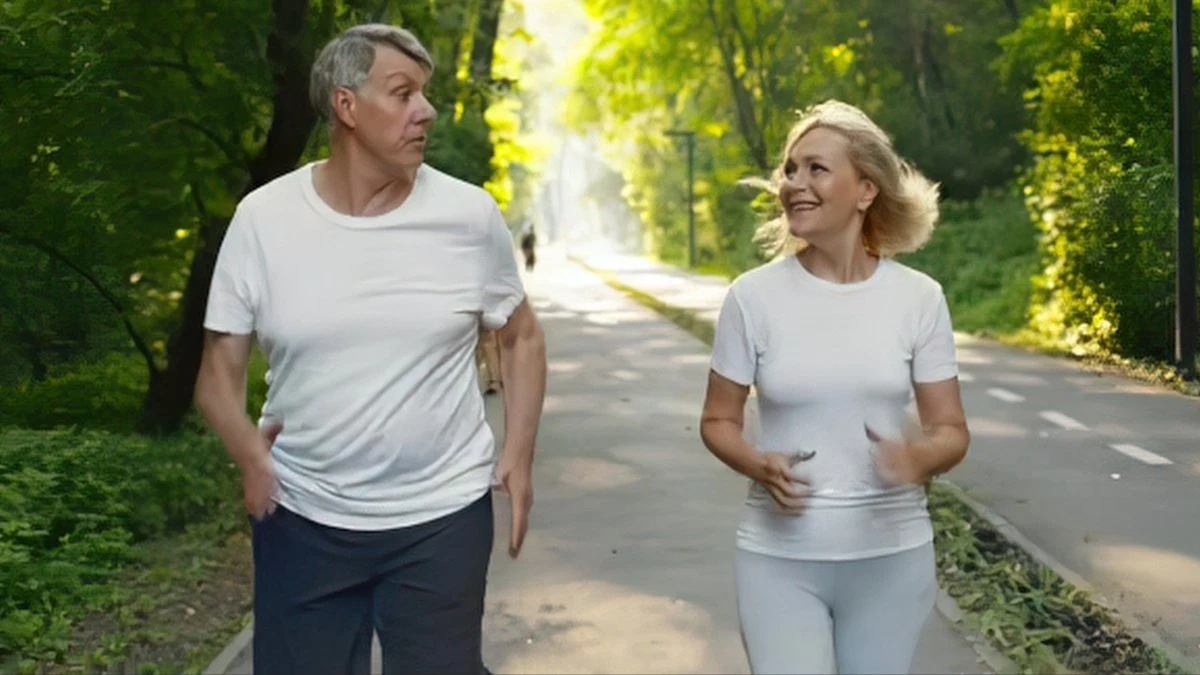
Steps give you a second yardstick. A 2022 meta-analysis in The Lancet Public Health pooled 15 studies and nearly 50,000 adults. Among people 60 and older, the risk of early death kept falling as steps rose. It leveled off at about 6,000 to 8,000 steps a day.
This was observational data. It shows a link, not proof of cause. Adults under 60 saw the benefit level off at 8,000 to 10,000 steps. Check your daily steps on your phone for three days. Then add one short walk a day. Next comes the harder part: starting.
Note: If you have been inactive for a long time, begin with even shorter sessions and stop if you feel sharp pain.
How I Suggest You Begin
Start well below the target. The CDC says some activity is better than none, and your benefits grow as you do more. A small start still counts.
University Hospitals notes that you do not need to exercise all at once. Split your time into short bouts if that feels easier. Three 10-minute walks add up to 30 minutes.
One pattern shows up often in my work. People begin with one long, hard session. Then they quit within a few weeks. The ones who last start with 10 minutes a day. They treat the first month as practice, not a test.
Choose the activity you will repeat. If walking bothers your knees, try a pool or a stationary bike. In my experience, gentler moves leave people less sore, so they show up again the next day. A routine you enjoy beats a plan you dread.
I often suggest this plan. It adds time first and effort later.
- Weeks 1 and 2: Walk, cycle, or swim for 10 minutes, five days a week. Keep a pace where you can talk.
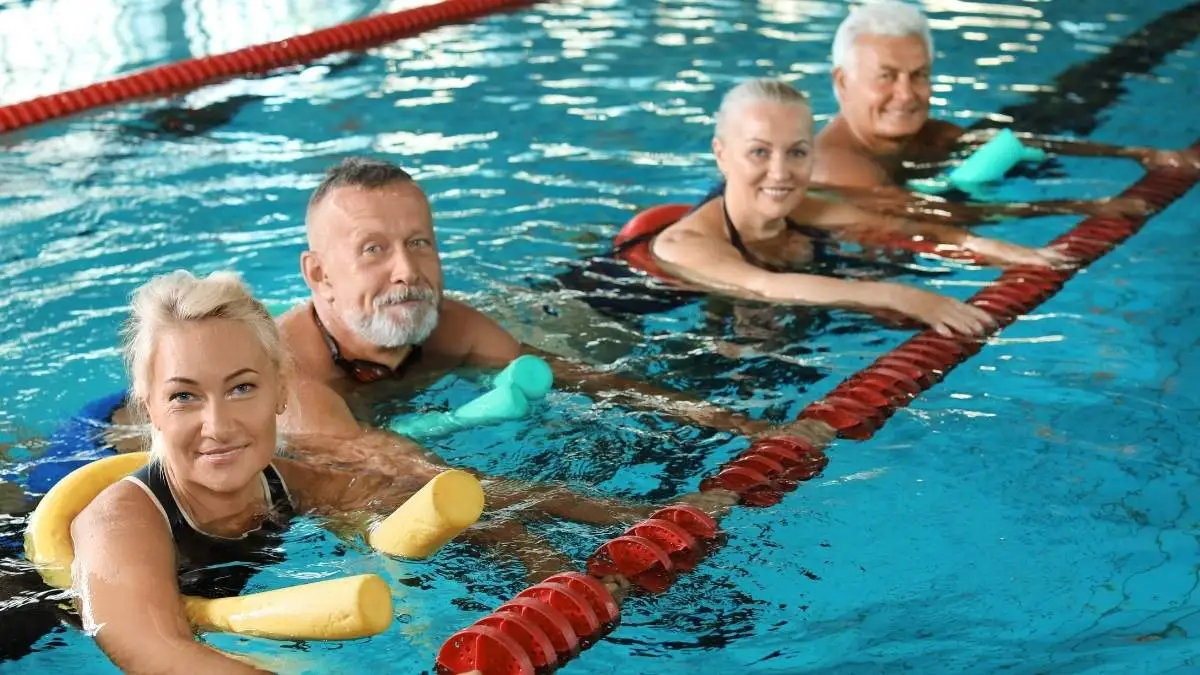
- Weeks 3 and 4: Raise each session to 15 or 20 minutes. Add two short strength sessions, such as standing up from a sturdy chair 8 times.
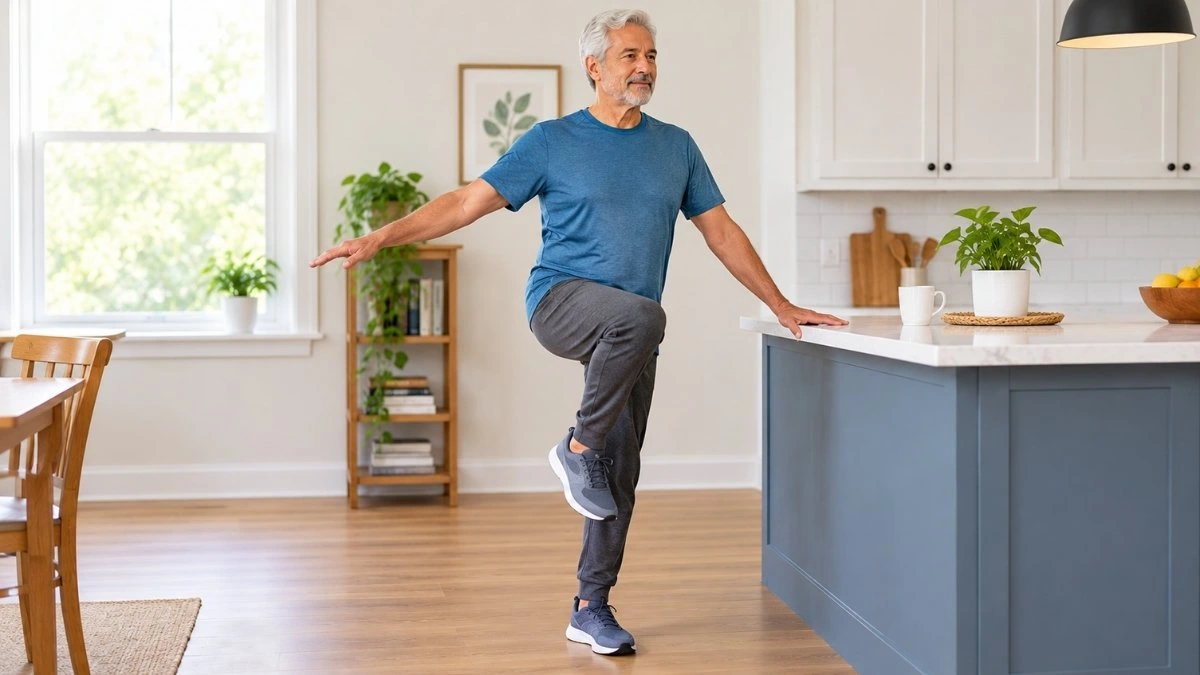
- Weeks 5 and on: Build toward 30 minutes, five days a week. Add balance work, such as standing on one leg beside a counter for support.
A 2025 study in the Althea Medical Journal followed 42 older adults through three months of low-impact aerobics. Their fitness and quality of life both improved. Most were aged 60 to 65. The study was small and had no comparison group. Treat it as encouraging, not final. Before you start, a few people need one extra step.
When to Check In With Your Doctor First
I ask people to talk with their doctor first in a few cases. These include heart disease, uncontrolled high blood pressure, diabetes, and osteoporosis. They also include a recent injury or surgery. A long gap without exercise counts too.
Stop at once if you feel chest pain, unusual shortness of breath, or dizziness. Get medical help. New joint swelling also needs a check. Do not push through any of these signs.
One more point on bones. Swimming and cycling go easy on joints, but they load your bones less than walking does. The CDC’s Growing Stronger guide lists maintaining bone integrity among the goals of strength exercises. Keep walking and strength work in your week.
If you take medicine for blood pressure or diabetes, ask how exercise may change your needs. Your doctor can tell you what to watch for.
A visit helps you fit the plan to your body. Your doctor can adjust it for your medicines and your goals. Bring the starter plan above to your next visit.
Conclusion
The first week does not have to hurt. This week, choose one day, lace up your shoes, and walk for 10 easy minutes. That is the whole assignment. Let your body show you what it can do. Every long routine starts with a short walk like this one, and I am glad you are ready.
References
- Centers for Disease Control and Prevention. What Counts as Physical Activity for Older Adults. https://www.cdc.gov/physical-activity-basics/adding-older-adults/what-counts.html
- Centers for Disease Control and Prevention. Older Adult Activity: An Overview (includes the Growing Stronger resource). https://www.cdc.gov/physical-activity-basics/guidelines/older-adults.html
- Centers for Disease Control and Prevention. How much physical activity do older adults need? https://www.cdc.gov/physical-activity-basics/adding-older-adults/index.html
- Paluch AE, et al. Daily steps and all-cause mortality: a meta-analysis of 15 international cohorts. The Lancet Public Health. 2022;7(3):e219-e228. https://pubmed.ncbi.nlm.nih.gov/35247352/
- Stanford Lifestyle Medicine. Recommended Exercises for Adults 50+. https://lifestylemedicine.stanford.edu/recommended-exercises-for-adults-50/
- University Hospitals. Exercise and Older Adults. https://www.uhhospitals.org/health-information/health-and-wellness-library/article/adult-diseases-and-conditions-v0/exercise-and-the-aging-person
- Setiawan C, Ramadhani AN, Rahayu UB. Effectiveness of Low-Impact Aerobic Exercise to Improve Cardiorespiratory Fitness and Quality of Life in Elderly. Althea Medical Journal. 2025;12(1):44–50. Available via Garuda: https://garuda.kemdiktisaintek.go.id/journal/view/5776?page=109