
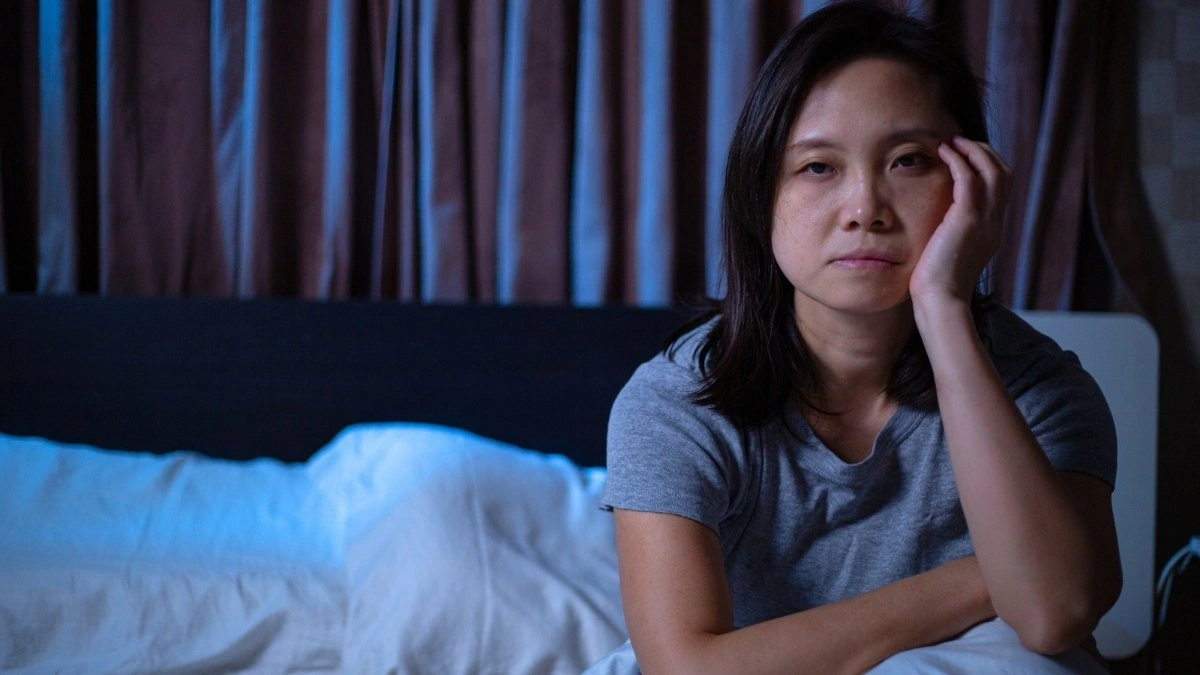
You wake at 3:40 a.m. again. The room is dark, your mind is clear, and sleep will not return. At 45, this happened once in a while. Now it feels like a pattern.
Many people in their 60s blame one hormone and hope one pill will fix it. The research tells a more mixed story. Cortisol, testosterone and melatonin all shift with age, and each one affects sleep in its own way. Some changes are normal. Others point to a problem a doctor can treat.
Hormones and sleep after 60 work in both directions. Poor sleep shifts your hormones, and shifting hormones disturb your sleep. The sections ahead show what the evidence says about each one, and what you can do this week.
Cortisol: Why a Calm Evening Matters More After 60
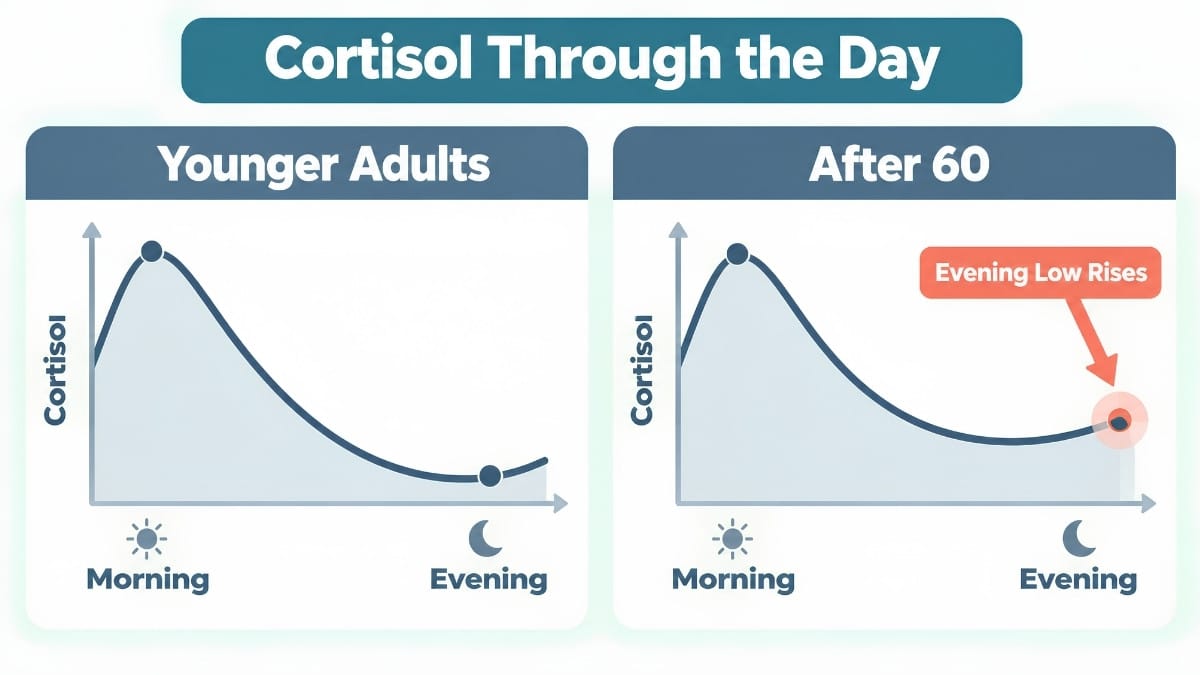
Cortisol is your body’s alarm hormone. A review on PubMed Central explains that it peaks near waking and falls to its lowest point in the evening.
Age changes that curve. In 2000, Eve Van Cauter and colleagues at the University of Chicago tracked sleep and cortisol in 94 healthy men. Their JAMA study found that the evening low rose with age. Morning peaks stayed the same. The study captured one moment in time, so it cannot prove cause.
A larger study points the same way. The National Social Life, Health and Aging Project measured 672 adults aged 62 to 90 with sleep monitors and saliva tests. Adults with more broken sleep had higher daytime cortisol.
The link also runs both ways. A PubMed Central review describes work by Yap and colleagues across more than 900 nights of sleep. Higher cortisol before bed predicted shorter, less efficient sleep that night. Poor sleep also tracked with a flatter cortisol curve the next day.
Many readers will recognize this evening: late news, a second coffee, and worries replayed at 9 p.m. That routine may keep your stress hormones high when they should fall. Testosterone shifts with age too, and it draws plenty of attention.
Testosterone and Sleep: What the Evidence Does and Does Not Show
Testosterone follows its own night schedule. A 2019 meta-analysis in Frontiers in Endocrinology notes that it peaks during the first three hours of unbroken sleep. Fragmented sleep can blunt that rise.
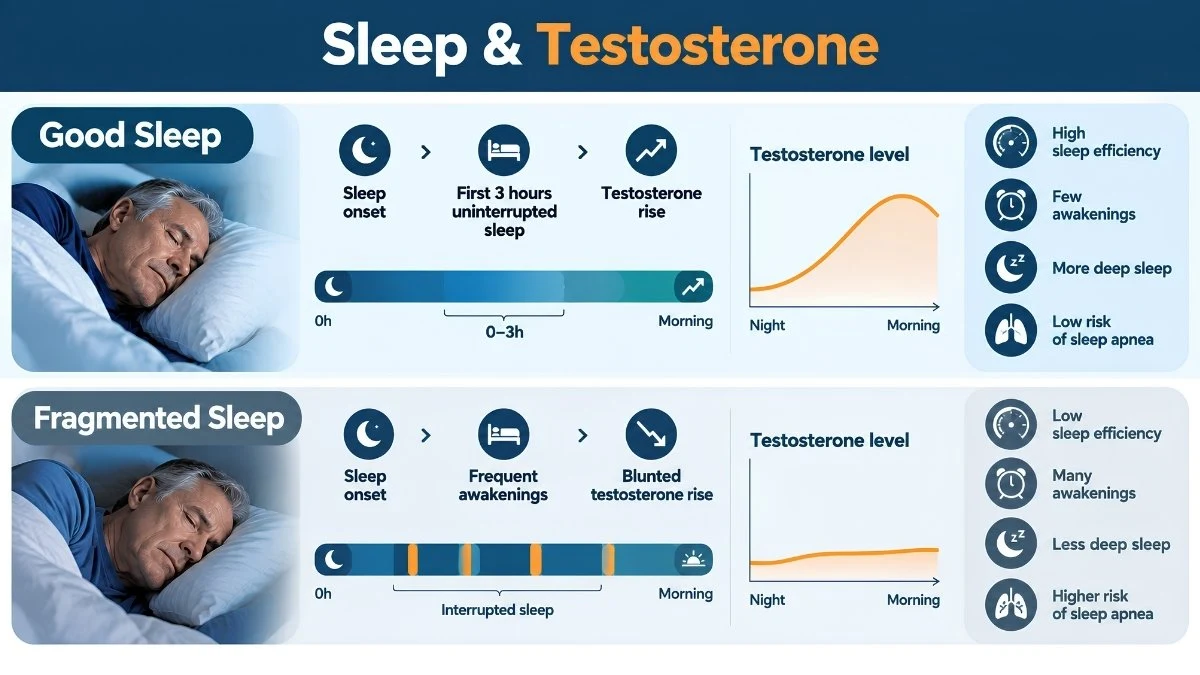
Low testosterone tracks with poorer sleep in older men. The Osteoporotic Fractures in Men study measured sleep in 3,135 men. Those with low total testosterone slept less well. A PubMed Central review describes men 65 and older with low levels. They had lower sleep efficiency, more awakenings, and less deep sleep.
Cause and effect remain unclear. The same Frontiers analysis notes that earlier links weakened once researchers adjusted for body weight and waist size. A 2022 Springer review reports lower testosterone in men with sleep apnea even after adjusting for age and obesity.
Testosterone therapy is not a proven sleep treatment. The authors of the Osteoporotic Fractures in Men analysis note that earlier trials of testosterone for sleep problems gave mixed results. Some trials using high doses caused or worsened sleep apnea.
The Testosterone Trials
Summary of key outcomes in 1-year clinical research
Evaluated 790 men aged 65+ presenting low hormone levels and symptoms, testing daily gel application versus placebo over one year.
Men treated with testosterone experienced clear improvements in sexual function compared to those receiving the placebo.
Participants receiving active treatment showed noticeable gains in overall mood during the 12-month study period.
According to the American College of Cardiology summary, vitality did not improve significantly during treatment.
The Testosterone Trials gave gel or placebo to 790 men aged 65 and older with low levels and symptoms. After one year, treated men had better sexual function and some mood gains. An American College of Cardiology summary says vitality did not improve.
Safety matters too. Cleveland Clinic led the TRAVERSE trial. The trial found no higher rate of major heart events. The men had low testosterone, plus heart disease or a high risk of it. Dr. Steven Nissen says men without confirmed low levels should not take testosterone.
Doctors also weigh sleep apnea. One review notes that it often counts as a reason for caution before starting testosterone therapy. Women face hormone shifts too. Swinburne University notes that changes in sex hormones affect sleep in both men and women. Estrogen and progesterone deserve their own talk with your doctor.
That leaves the hormone you can buy over the counter.
Melatonin: Lower Levels, Mixed Advice on Supplements
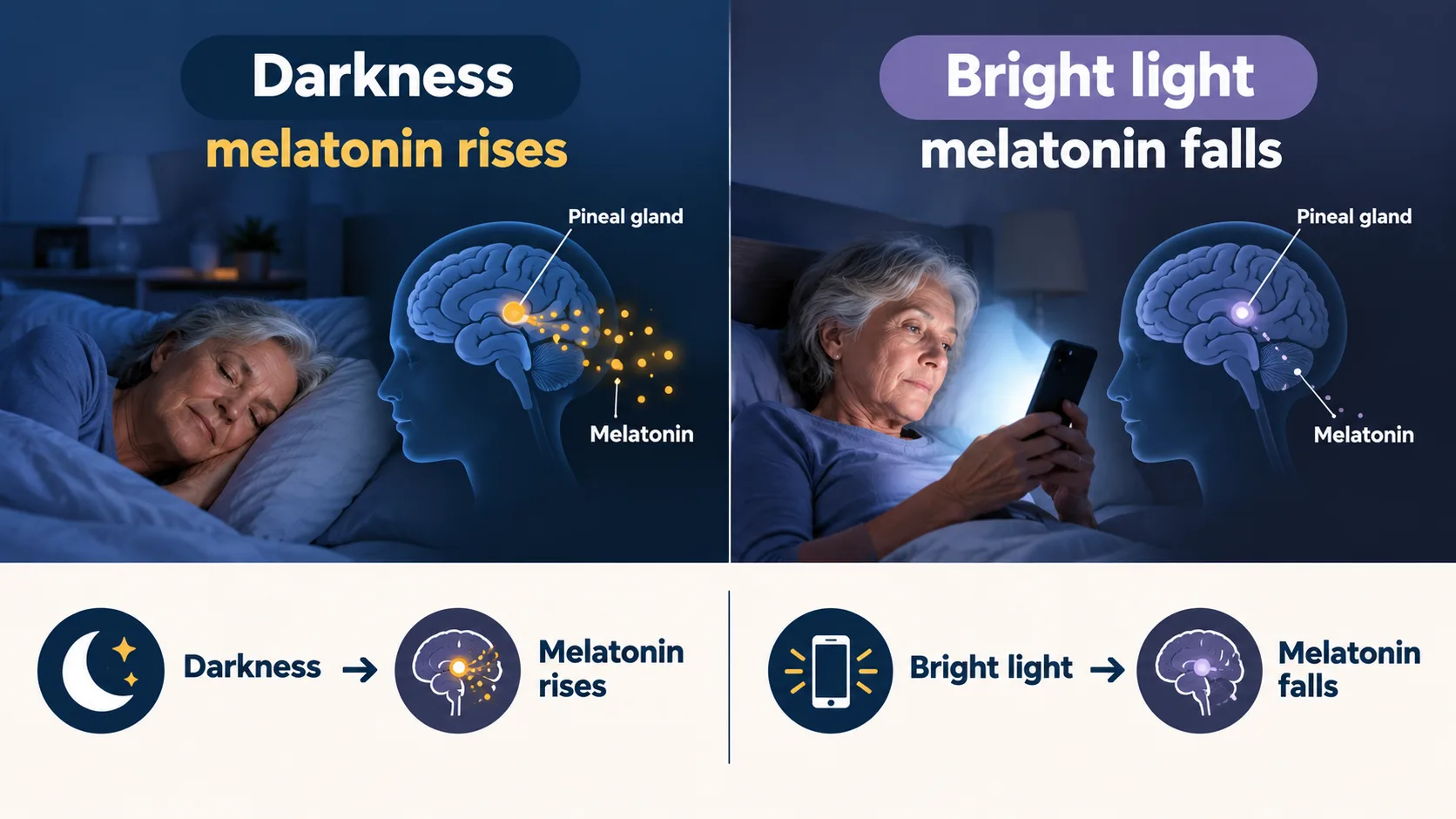
Melatonin tells your body that night has arrived. Swinburne University explains that your brain releases it with darkness. Bright light before bed can block that release. Levels also tend to run lower in older adults, say researchers at Brigham and Women’s Hospital.
Supplements show promise in one small trial. In 2022, Jeanne Duffy and colleagues at Brigham and Women’s Hospital tested melatonin in 24 healthy adults over 55. Each person spent two weeks on placebo and two weeks on either 0.3 mg or 5 mg.
The 5 mg dose raised sleep efficiency at night. Harvard reports that nighttime sleep rose by more than 15 minutes versus placebo. The 0.3 mg dose did not clearly help at night. It was a small trial, and volunteers had no major sleep complaints. Results may differ for you.
Guidelines disagree. In 2017, the American Academy of Sleep Medicine gave a weak recommendation against 2 mg melatonin for insomnia. The American Academy of Family Physicians reports that the group cited small benefit in very low-quality trials.
Mayo Clinic is more positive. It says melatonin appears to be the safest option for many older adults. Side effects include daytime drowsiness. That raises fall risk. Melatonin may also cause drug interactions with diabetes and blood pressure medicines.
The American Academy of Sleep Medicine names cognitive behavioral therapy for insomnia, or CBT-I, as the first treatment for chronic insomnia. Mayo Clinic adds that older adults often benefit from it. CBT-I is a structured program that retrains sleep habits and thoughts about sleep.
Hormones are hard to change directly, so daily habits are the next place to look.
Note: If you have an existing health condition or take medication, speak with your doctor before changing your sleep or exercise routine.
Habits That Work With All Three Hormones
The National Institute on Aging lists simple sleep habits. I pair each one below with the hormone it most likely helps. The pairing is my practical guide, not a proven rule.
For cortisol, keep the same bedtime and wake time, even on weekends. The institute also says to avoid caffeine late in the day. It adds that alcohol will not help you sleep. Even small amounts make it harder to stay asleep.
An evening workout feels like a fair way to burn off stress. The institute suggests ending exercise at least three hours before bed. Move your walk or workout to the morning or afternoon.

For testosterone, protect your first hours of sleep. A 2019 Frontiers meta-analysis describes sleep apnea as repeated airway blockage that fragments sleep. Ask your doctor about a sleep apnea test if you are a loud snorer or a partner sees you stop breathing.
For melatonin, dim the lights in the evening and keep screens out of the bedroom, as the institute recommends.
Aim for quality, not extra hours. Mayo Clinic says older adults need the same 7 to 9 hours as younger adults. Sleep changes matter only when they cause you trouble. Some problems will not budge with habits alone. The next section covers how to spot them.
When to Talk With Your Doctor

Some sleep trouble needs a medical check. The National Institute on Aging lists sleep apnea as a common sleep disorder in older adults. Loud snoring, gasping, or pauses in breathing deserve a sleep apnea test. So does waking tired after a full night in bed.
The institute also calls insomnia the most common sleep problem in adults 60 and older. See your doctor if poor sleep lasts for weeks or makes daytime driving unsafe.
Bring a list of every medicine and supplement you take. Mayo Clinic notes that many conditions behind poor sleep in older adults are treatable. Ask whether any of your medicines could affect your sleep.
Be cautious with home hormone kits. Researchers in the Midlife in the United States study note that stress, waking time, and sample timing can affect cortisol readings. A single cortisol reading says little about your usual pattern. Ask your doctor which tests, if any, make sense.
Before that visit, one small step makes it far more useful.
A Final Word
Waking at 3 a.m. does not have to feel like a verdict on aging. Start tonight with a simple sleep diary. Each morning, jot down your bedtime, wake-ups, caffeine, evening light, and any snoring. After seven days, you will have real patterns to share with your doctor. You can do this, one quiet night at a time.