

You switch to bran cereal for breakfast and add beans to dinner. Two days later, your belly feels tight and swollen, and nothing moves. You decide fiber is not for you.
That reaction is common, and it has a clear cause. Fiber after 50 does not work the way it did at 30. Your gut can move food more slowly, and your stomach can make less acid. Your medicines and daily habits have changed too.
The fix is simpler than most people think, and a few small changes ease most of these problems. Below, you will learn what shifts in your body, how much you need now, and how to start without the bloat.
What Changes in Your Gut After 50
Why Fiber Feels Different With Age
Understanding how gut changes and lifestyle factors impact regularity in older adults.
Gut Adaptation
Your gut changes with age, altering how your digestive system processes and responds to dietary fiber.
Reduced Activity
A 2019 Brazilian study highlights lower physical activity as a primary driver of constipation.
Chronic Illness
Underlying health conditions and associated treatments frequently impact normal gut function.
Repetitive Diet
Eating the same routine foods daily reduces microbiome diversity and regularity.
Digestion slows in other ways. Michelle Kwan, a research assistant at the Chinese University of Hong Kong, coauthored a 2021 paper in Nutrients on healthy aging. She told AARP that older stomachs make less acid and that intestines can struggle to move food along. Both changes can alter how you absorb nutrients.
Eating less lowers your fiber without you noticing. A smaller appetite means fewer vegetables and whole grains on your plate. Sore gums or tired jaws can push you toward soft, refined foods that hold little fiber. Some medicines also slow your bowel, Mayo Clinic notes.
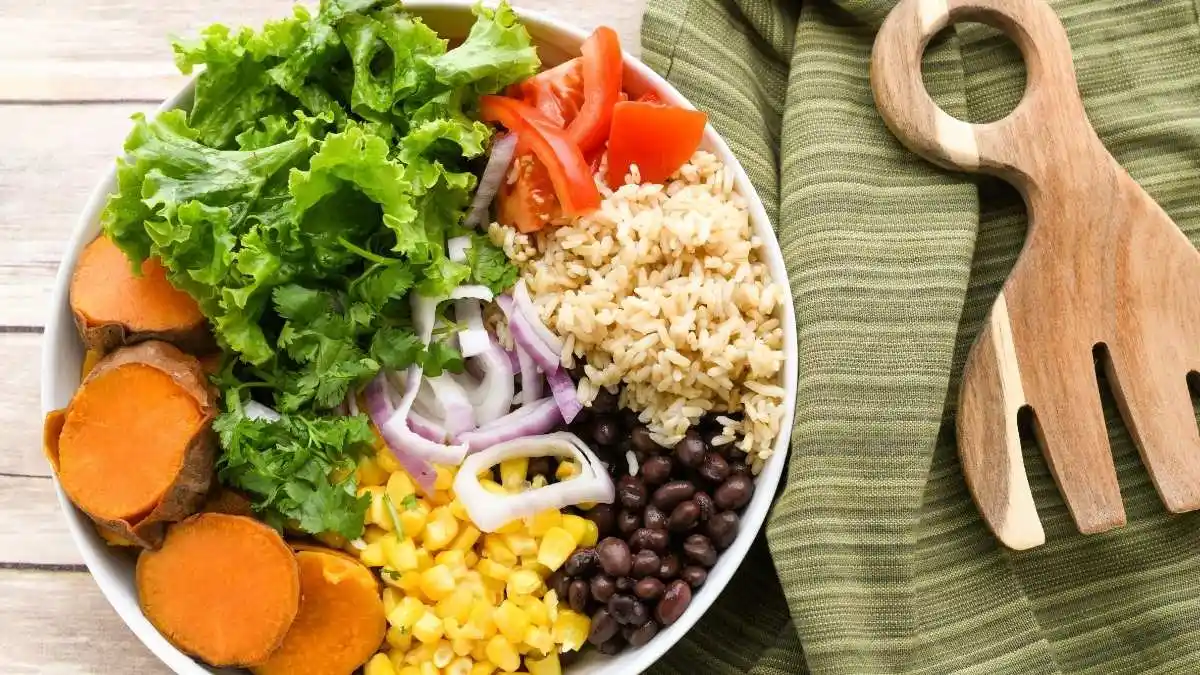
In my conversations with adults in their late 50s and 60s, one pattern repeats. Their fiber jumps, but their water and walking stay the same, so they blame the fiber.
Start with a simple habit this week. Write down everything you eat for three days, and circle the plant foods. That list shows where fiber can fit. Next, you need the number to aim for.
How Much Fiber You Actually Need Now
The National Academies set daily fiber targets for adults over 50 at 30 grams for men and 21 for women. Both the National Academies and the Dietary Guidelines for Americans tie fiber to calories, at 14 grams for every 1,000 calories.
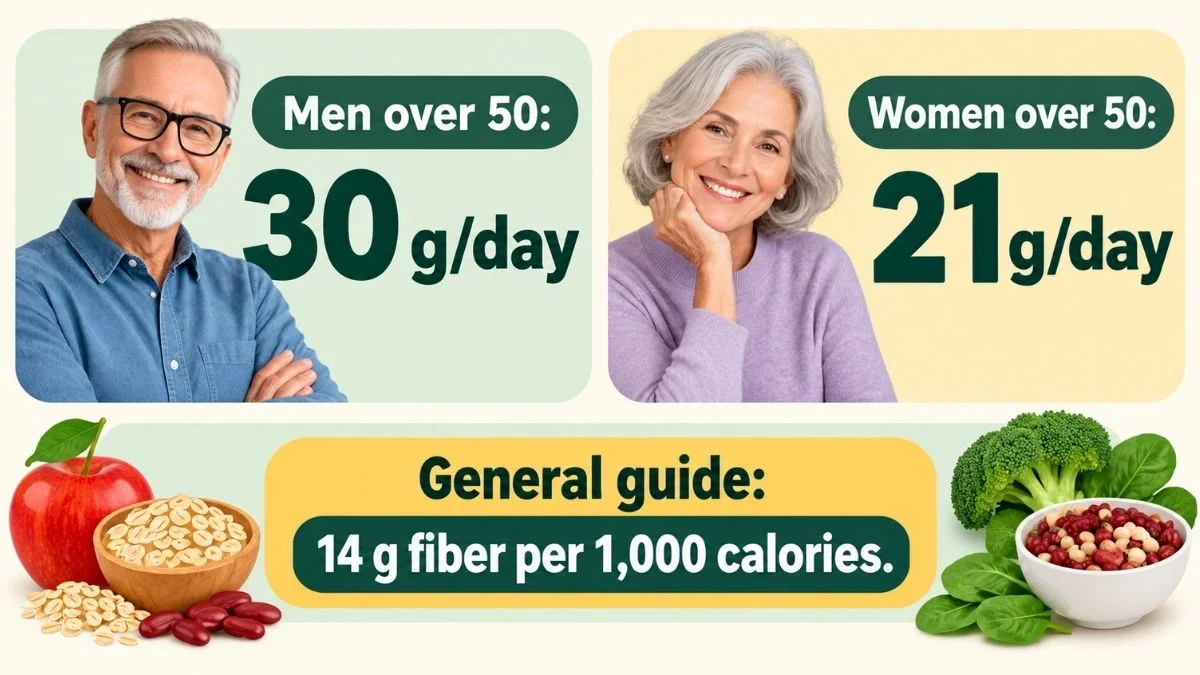
You may see 28 grams for men and 22 for women in guides such as AARP’s. The gap comes from the calorie level each guide assumes. At 2,000 calories, 14 grams per 1,000 gives a man 28 grams, and at 1,600 calories, a woman lands near 22. Either range is a fair goal.
Most people fall short. AARP reports that only about 7 percent of Americans eat enough fiber. Kwan told AARP that older adults average just 16.1 grams a day. A 2019 Brazilian study of adults over 60 found many eat too little fiber.
The payoff goes beyond regularity. AARP reports on a 2016 study in the Journal of Gerontology that followed more than 1,600 adults for 10 years. It tied a high-fiber diet to successful aging, which researchers defined as no memory problems, disability, depression, or chronic disease. This was an observational study, so it shows a link, not proof.
To check your own number, use the food list from the last section. AARP advises reading labels for fiber content. Add the grams for one day, then compare the total with your target.

Note: If you take medicine or have a digestive condition, talk with your doctor first. Check with a doctor or dietitian before you add supplements.
How to Add Fiber Without the Bloating
Start slow. AARP advises raising your fiber over several weeks. Gut bacteria ferment fiber and make gas, so a slow climb gives your gut time to adapt. A sudden jump gives you the bloat.
Next, add one new fiber food at a time. Try oats at breakfast for a few days, then add lentils or beans to a soup. After that, add a pear or berries as a snack. AARP also suggests you spread fiber across meals and snacks to limit bloating.
Fiber comes in two types, as AARP explains. Soluble fiber turns gel-like in water, while insoluble fiber does not dissolve. Most plant foods hold a mix of both. Choose foods you can chew with ease, such as oatmeal, cooked carrots, and stewed fruit.
Here is one easy day. Eat oatmeal with berries at breakfast and have lentil soup at lunch. Snack on a pear with the skin on. Add cooked vegetables and brown rice at dinner. Repeat this for a week before you add more.

Water matters as much as fiber. Fiber soaks up water as it moves through your gut. Mayo Clinic advises more fluids as you add fiber, so keep a glass of water beside each fiber-rich meal.
In my experience, adults who add one new fiber food each week stick with it. Those who overhaul every meal at once often quit within two weeks. Slow wins. Even a gentle plan does not suit everyone, so the next section covers when to pause.
When to Slow Down and Check With Your Doctor

Some situations call for a doctor before you add fiber. Mayo Clinic notes that fiber supplements can change how your body absorbs certain medicines. Ask your doctor or pharmacist when to take your pills.
Bowel conditions change the rules. A history of blockage, narrowed intestines, or trouble swallowing needs a doctor’s input first. Ask which high-fiber foods are safe for you. Try food first, and ask your doctor before you buy a powder or capsule.
Some symptoms are not fiber problems at all. See a doctor if you notice blood in your stool, unexplained weight loss, or a sudden change in your bowel habits. The NIDDK, part of the NIH, lists these as reasons to call a doctor. Constipation that lasts for weeks also deserves a visit.
In my work with older adults, I tell people that fiber is a tool, not a test. If a plan leaves you feeling worse, pause and call your care team. Changing the plan is part of doing this right.
Conclusion
You can make fiber work for your body, and now you know why it once did not. This week, pick one meal and add one fiber food. Pour a full glass of water beside it. Small steps add up, and your gut adjusts to each one. You have time, and you are already on your way.
References
- AARP, 8 Ways to Get More Fiber Into Your Diet
- AARP, 25 Great Ways to Get More Fiber in Your Diet
- Revista Brasileira de Epidemiologia (2019), High prevalence of inadequate dietary fiber consumption and associated factors in older adults
- National Academies, Dietary Reference Intakes for Energy, Carbohydrate, Fiber, Fat, Fatty Acids, Cholesterol, Protein, and Amino Acids
- Mayo Clinic, Chart of high-fiber foods
- NIDDK, Symptoms & Causes of Constipation
- Kwan et al., Nutrients (2021), Healthy Diet for Healthy Aging
- Journal of Gerontology (2016), 10-year study on fiber and successful aging