
You cut tomatoes from your plate and bought turmeric capsules, yet your knees still ache on the stairs. Those two choices sit at opposite ends of the evidence. Most people try something on their own first, and that is a sensible instinct. It just needs better information.
Anti-inflammatory foods may ease joint pain for some people, but the proof is uneven. I went through the main trials, the pooled reviews, and the guidance from Harvard Health Publishing and the Arthritis Foundation.
Below, I sort what holds up from what does not, then show you a safe way to test it on yourself. I kept the science plain, because joint pain deserves clear answers.
What the Best Evidence Says About Eating for Joint Pain
Start with the biggest finding. A 2020 review in the Journal of Nutritional Science combined trials of low-inflammatory diets and supplements in people with arthritis. Two to four months in, those plans had lowered body weight and inflammation markers.
The same review found no clear drop in joint pain. The pain result fell short of proof, and the authors called for more high-quality trials.
Harvard Health Publishing says the best evidence links Mediterranean and other plant-based diets to less inflammation. It adds that arthritis experts now recommend such diets more often. Researchers are also studying how diet changes gut bacteria, which might ease arthritis symptoms. Much about diet and arthritis remains unknown.
Here is how this may work. Extra weight loads your knees and hips, and the 2020 review saw body weight fall alongside inflammation markers. Inflammation also matters inside the joint itself.
Researchers behind a 2022 feasibility study in BMC Musculoskeletal Disorders link inflammation to pain and joint changes in knee osteoarthritis. That is the wear-and-tear form of arthritis. They note that common non-drug care, such as exercise and calorie cutting, seldom targets it.
Knee Osteoarthritis and a Nine-Week Anti-Inflammatory Diet
What the study found
The Question
The study asked whether adults aged 40 to 85 with painful knee osteoarthritis could follow a nine-week anti-inflammatory diet.
The Answer
The answer was yes.
What Is Still Needed
A larger trial must still show whether the plan eases pain.
Better answers are on the way. BMJ Open published the FEAST trial plan in April 2024. It compares an anti-inflammatory diet with a standard low-fat diet in 144 adults aged 45 to 85 with knee osteoarthritis. The diet group gets six visits over 12 weeks.
The plan notes that no fully powered trial had tested this diet in knee osteoarthritis. A 2025 paper from the team reported only baseline data. UC San Diego lists a similar trial on ClinicalTrials.gov, and I found no published results from it either. Until results arrive, an anti-inflammatory eating pattern is a reasonable, low-risk thing to try, not a proven pain treatment.
Foods and Supplements With a Real Signal
Note: If you take medicine or have a health condition, check with your doctor or pharmacist before you add supplements.
Begin with the plate. The Arthritis Foundation backs an anti-inflammatory way of eating. It says hundreds of studies support it for inflammatory arthritis, such as rheumatoid arthritis. It tells people to limit red meat, sugar, and processed foods.
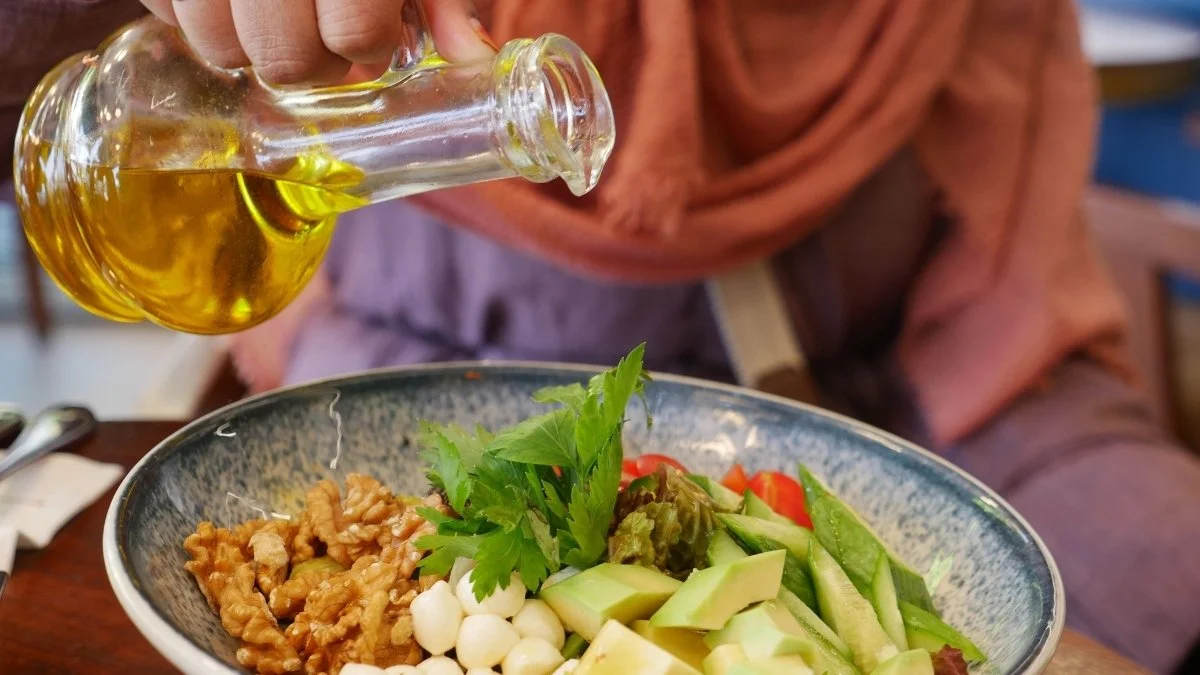
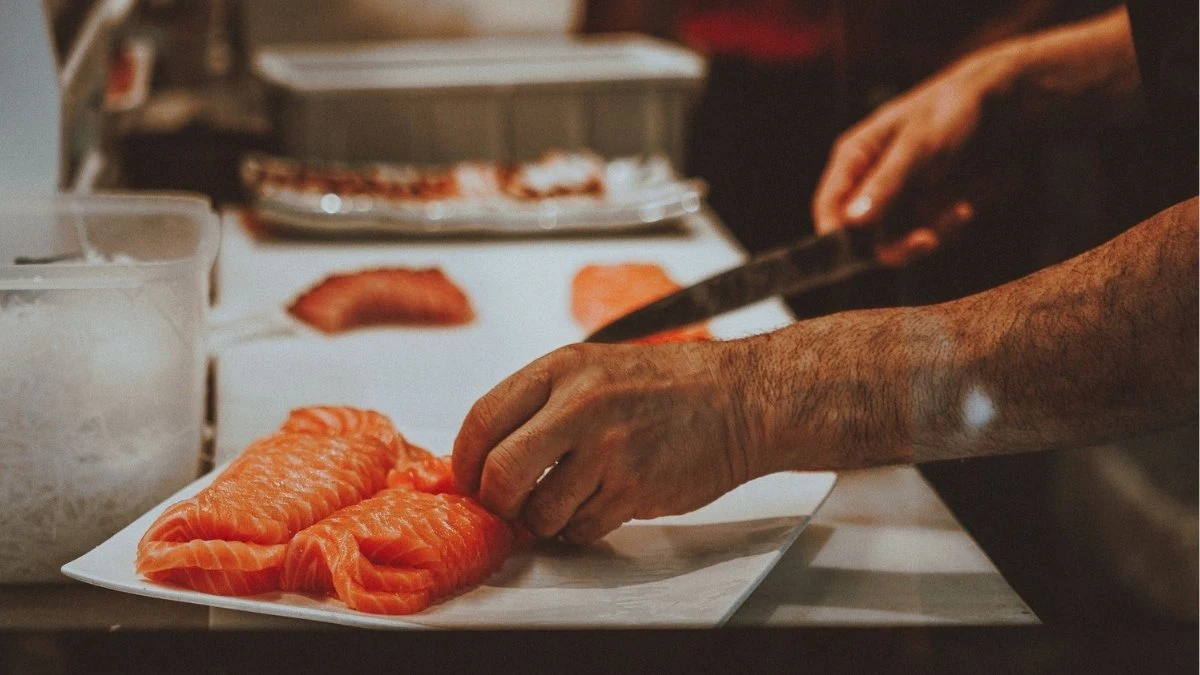
Harvard Health links Mediterranean-style eating to less inflammation. That pattern centers on vegetables, fruit, nuts, whole grains, fish, and olive oil. A simple day can start with oatmeal and walnuts, then bean soup at lunch, then baked salmon and greens.
Supplements show more mixed results. A 2022 analysis in Nutrients reviewed 52 papers, 50 of them on knee osteoarthritis. Twelve studies compared 724 people taking curcumin, the main compound in turmeric, with 714 controls. Curcumin beat placebo for pain and function.
Curcumin did not beat active treatments such as NSAID painkillers, chondroitin, or paracetamol (acetaminophen). Ginger lowered pain in three small trials, and vitamin D helped with pain and function. Omega-3 and vitamin E showed no change.
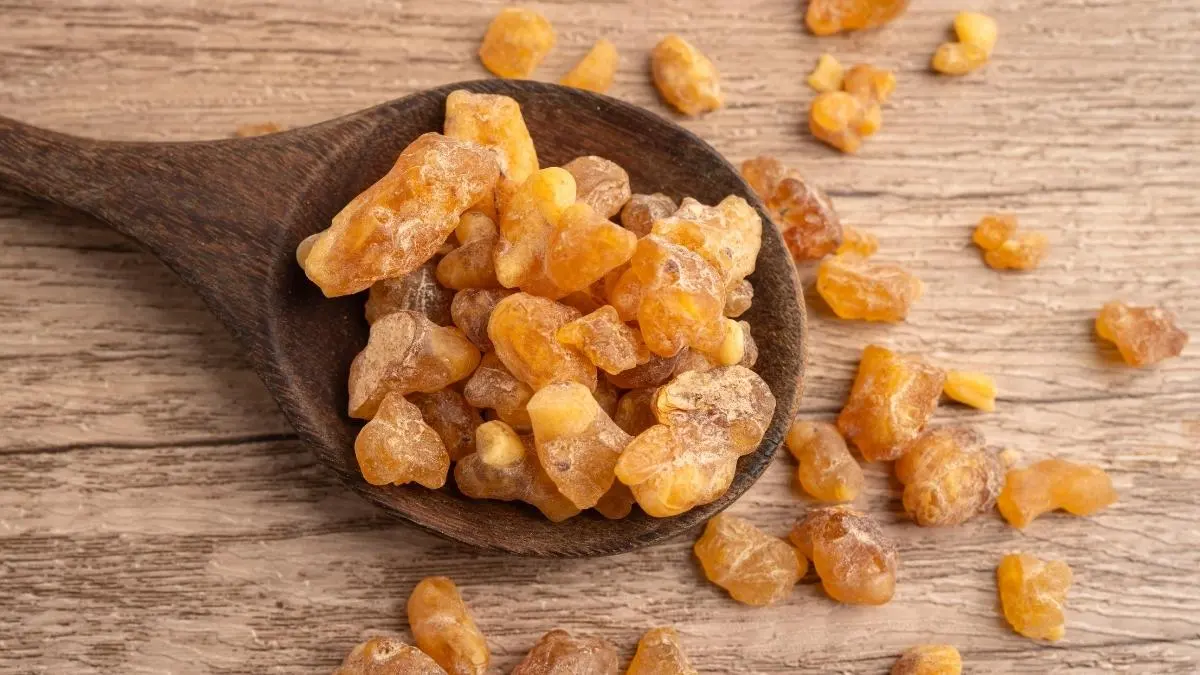
A 2019 meta-analysis by Tufts Medical Center researchers pooled 11 trials with 1,009 people. Curcumin extracts and boswellia, a tree-resin extract, both beat placebo for pain and function.
A 2025 network meta-analysis in Nutrients covered 39 trials with 4,599 people. It ranked boswellia first for pain and stiffness.
On the WOMAC pain scale, curcumin, ginger, and vitamin D scored better than placebo, but not by enough to count. On the simple 0–10 pain scale (VAS), curcumin and ginger did reach significance, though the authors note the evidence is weak and the trials were small.
Fish oil tells a split story. The 2022 analysis found no effect from omega-3. Yet in a separate trial analysis, DHA-rich fish oil eased osteoarthritis pain in sedentary older adults with overweight or obesity. Curcumin did not help in that same trial.
Pooled results blend many small trials, and doses, products, and patients differ from study to study. That helps explain why a supplement can fail in one analysis and win in another.
A systematic review on turmeric notes the American College of Rheumatology found thin evidence for most supplements. That includes fish oil and vitamin D. The Arthritis Foundation lists both among helpful options for arthritis.
Experts do not fully agree, so I treat supplements as a side dish, never the main meal. Next, I want to clear up a few claims that do not hold up.
Popular Claims That Don’t Hold Up
Nightshades take the most blame. This plant family includes tomatoes, peppers, eggplant, and potatoes, and many people with arthritis cut these foods out. Sweet potatoes are not nightshades, so they stay on the menu.
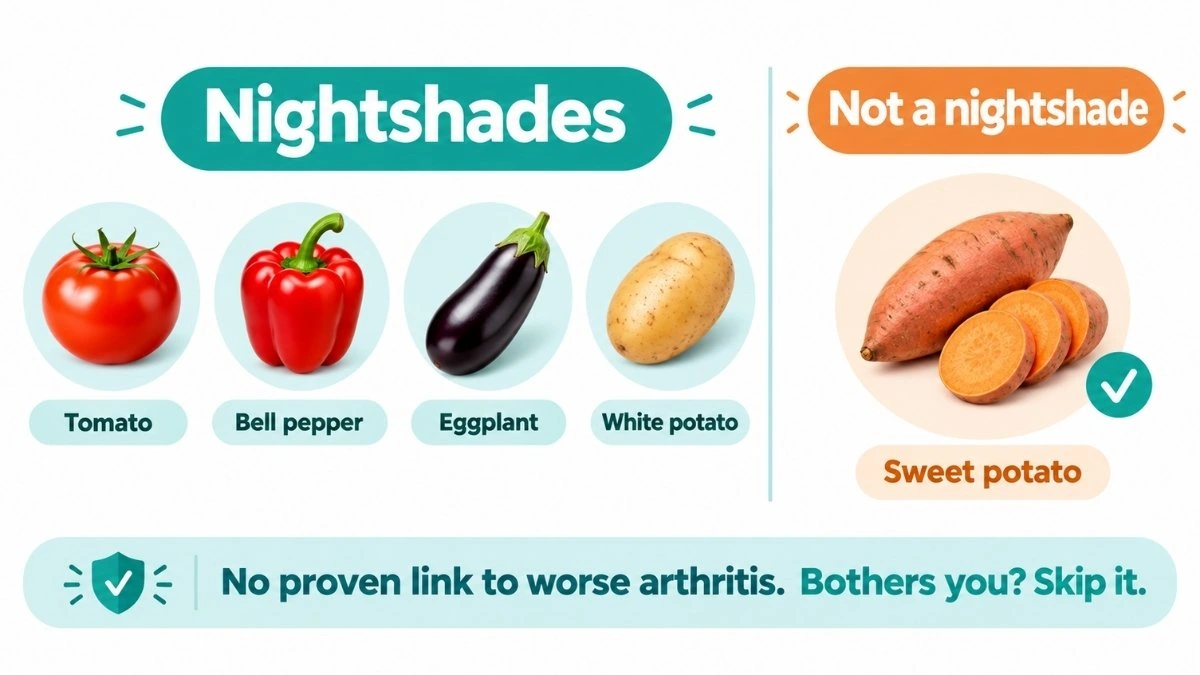
Marcy O’Koon Moss of the Arthritis Foundation told the Tufts Health & Nutrition Letter that research found no evidence nightshades worsen arthritis.
Some people still feel worse after eating them. The foundation notes that people can be sensitive to many foods. It says you can stay healthy without nightshades, so skip any food that bothers you. I show a fair test below.
A common pattern is to cut several foods at once, see no change, and quit. People never learn which food, if any, mattered.
Single superfoods fall short too. Harvard Health Publishing ties the best evidence to whole eating patterns. The curcumin trials also used extracts, so a sprinkle of turmeric in soup may not act the same way.
A label that says anti-inflammatory does not prove a food eases pain. Even in the 2020 review, the diets and supplements showed no clear pain drop.
Joint pain also has other causes. Gout and rheumatoid arthritis need individual advice, so ask your doctor if you have either. With the noise cleared, you can build a simple routine.
How to Try This Without Guessing
Note: This article is general education, not medical advice. If you have a joint condition or take medication, talk with your doctor before big diet changes or new supplements.
Change one meal first. Pick one meal you eat often and rebuild it with olive oil, vegetables, and fish or beans. Aim for that meal most days this week.
Many people quit when a plan feels big, so start small. One new dinner a week, then two, is easier to keep.
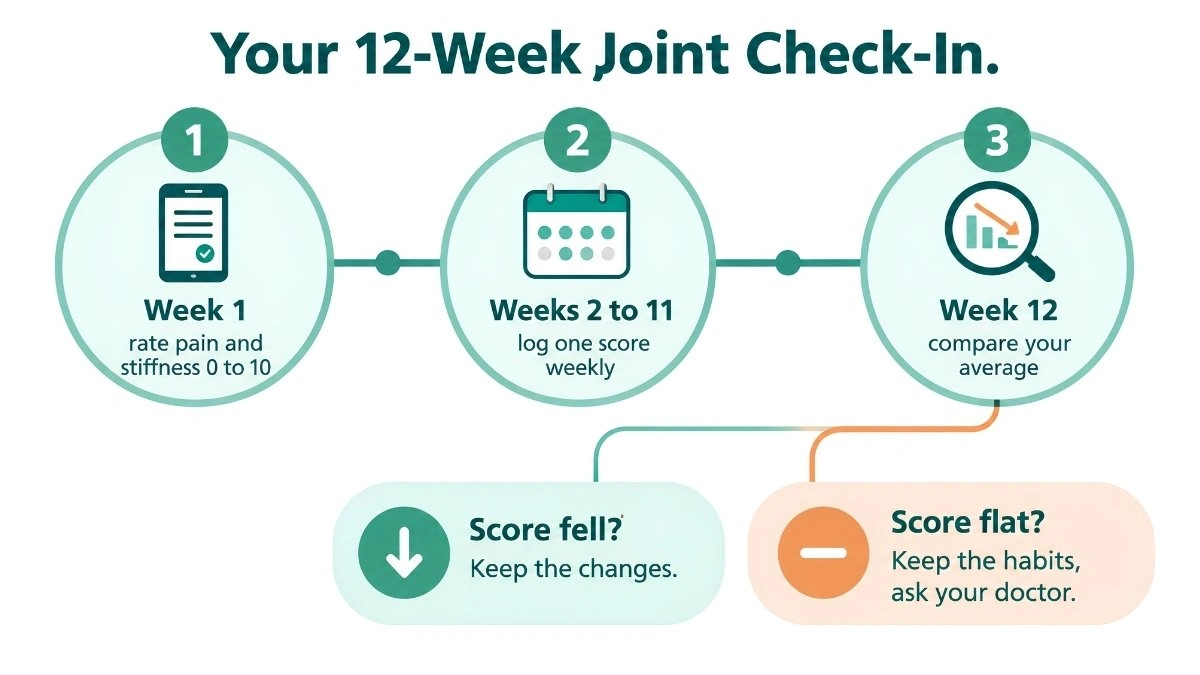
Give it time. The FEAST plan measures results at 12 weeks, so track your pain once a week for that long. Write down a score from 0 to 10 for pain and stiffness. A note on your phone works fine.
At week 12, compare your average score with your starting score. If it falls, keep the changes. If it stays flat, keep the healthy habits and ask your doctor what else to add.
If you suspect one nightshade, run a fair test. The Arthritis Foundation suggests skipping the food for two weeks. Track your pain, then add it back and watch for a change. Keep the rest of your diet the same.
Support helps. The FEAST diet group gets six visits over 12 weeks. Ask your doctor about seeing a registered dietitian.
Get medical care soon if a joint turns red, hot, or swollen. Night pain and pain that keeps getting worse also need a check. Diet works alongside movement and medical care, never in place of them.
Those aching knees on the stairs now have a plan behind them. This week, pick the dinner you will rebuild and write it on your calendar today. Writing it down makes it real, and small steps add up over 12 weeks. You have more say in this than you think, and I am cheering for you.
References
- Health effects of a low-inflammatory diet in adults with arthritis: a systematic review and meta-analysis. Journal of Nutritional Science, 2020. https://pubmed.ncbi.nlm.nih.gov/32983422/
- Harvard Health Publishing. Do nightshade vegetables worsen rheumatoid arthritis? https://www.health.harvard.edu/bones-and-joints/do-nightshade-vegetables-worsen-rheumatoid-arthritis
- An anti-inflammatory diet intervention for knee osteoarthritis: a feasibility study. BMC Musculoskeletal Disorders, 2022. https://pmc.ncbi.nlm.nih.gov/articles/PMC8757404/
- Effectiveness of an anti-inflammatory diet versus low-fat diet for knee osteoarthritis: the FEAST randomised controlled trial protocol. BMJ Open, 2024. https://bmjopen.bmj.com/content/14/4/e079374
- The inflammatory potential of diet in adults with knee osteoarthritis: sex-specific associations with quality of life, sleep, fatigue and mental health (FEAST baseline data). Frontiers in Nutrition, 2025. https://www.frontiersin.org/journals/nutrition/articles/10.3389/fnut.2025.1624852/abstract
- Effect of Anti-inflammatory Diet in Osteoarthritis (UC San Diego). ClinicalTrials.gov. https://clinicaltrials.gov/study/NCT06080347
- Mathieu S, et al. A Meta-Analysis of the Impact of Nutritional Supplementation on Osteoarthritis Symptoms. Nutrients, 2022. https://pmc.ncbi.nlm.nih.gov/articles/PMC9025331/
- Bannuru RR, et al. Efficacy of curcumin and Boswellia for knee osteoarthritis: systematic review and meta-analysis. Seminars in Arthritis and Rheumatism, 2019. https://pmc.ncbi.nlm.nih.gov/articles/PMC6131088
- Zhang Y, et al. Comparative Effectiveness of Nutritional Supplements in the Treatment of Knee Osteoarthritis: A Network Meta-Analysis. Nutrients, 2025. https://doi.org/10.3390/nu17152547
- Fish oil supplementation reduces osteoarthritis-specific pain in older adults with overweight/obesity. Rheumatology Advances in Practice, 2020. https://pmc.ncbi.nlm.nih.gov/articles/PMC7494084/
- Paultre K, et al. Therapeutic effects of turmeric or curcumin extract on pain and function for individuals with knee osteoarthritis: a systematic review. BMJ Open Sport & Exercise Medicine, 2021. https://pmc.ncbi.nlm.nih.gov/articles/PMC7812094/
- Arthritis Foundation. What You Should Know About Nightshades and Arthritis. https://www.arthritis.org/health-wellness/healthy-living/nutrition/anti-inflammatory/how-nightshades-affect-arthritis
- Tufts Health & Nutrition Letter. The Buzz about Nightshades. April 10, 2019. https://www.nutritionletter.tufts.edu/healthy-eating/the-buzz-about-nightshades/