

A Dutch analysis of older adults’ diets reports a gap. Breakfast averages just 11 grams of protein. Lunch averages 18 grams. Both fall well short of the 25 to 30 grams that experts link to better muscle upkeep.
That gap matters. A review of protein and muscle function in older adults ties sarcopenia to frailty and lost independence. Sarcopenia is the slow loss of muscle mass and strength. It starts without warning. Small shortfalls at breakfast and lunch can build over the years, and you may not feel them until later.
If you are weighing protein after 50, start here. You will see what the research shows, where it falls short, and how to plan your own meals around it.
Why Your Muscles Need a Bigger Protein Dose Than They Once Did
Muscle rebuilds itself after you eat protein. A 2013 position paper from the PROT-AGE Study Group says older people respond less to the protein they eat. Researchers call this anabolic resistance.
In a 2009 review in Current Opinion in Clinical Nutrition and Metabolic Care, Douglas Paddon-Jones and Blake Rasmussen set a target. They concluded that about 25 to 30 grams of high-quality protein per meal triggers peak muscle protein synthesis. This process builds new muscle. That holds for young and older people alike.
The catch is that many older adults never reach that mark. A 2015 review titled Protein Requirements and Recommendations for Older People noted that many eat little protein at each meal. The Dutch figures above point the same way.
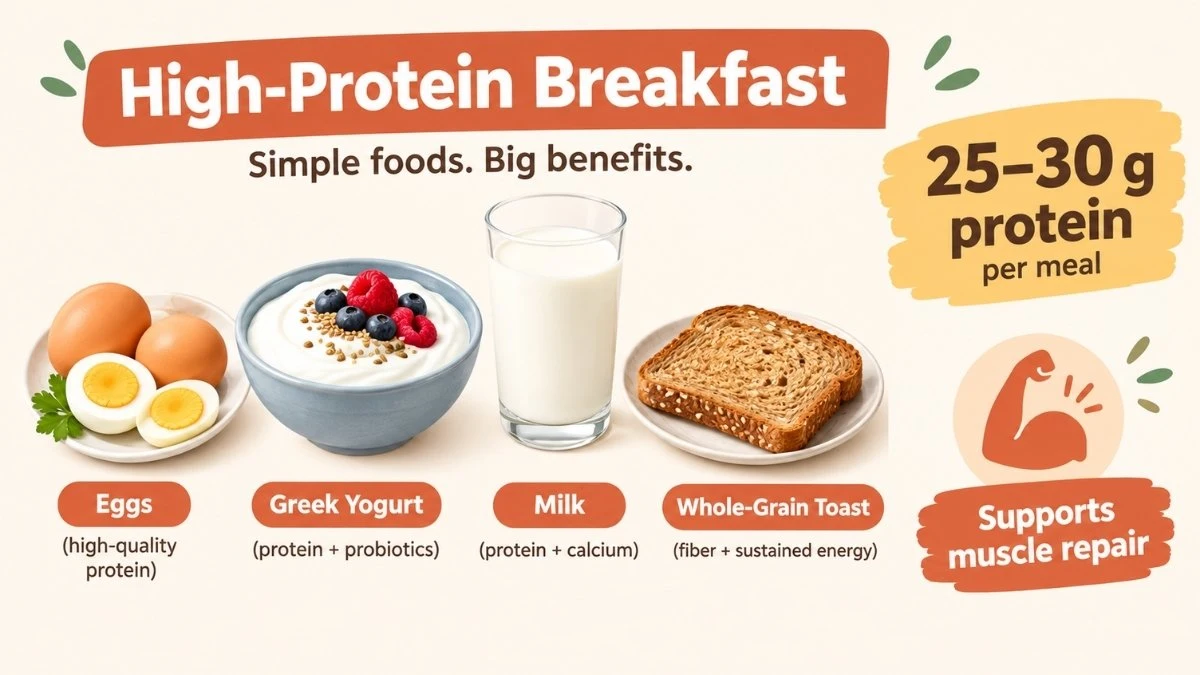
In my conversations with adults in their late 50s, one pattern comes up often. They have coffee and toast at 7 a.m., a light lunch, and a big dinner. Their daily total can look fine, yet two of three meals fall short.
Daily totals matter too. The PROT-AGE paper appeared in the Journal of the American Medical Directors Association. It recommends 1.0 to 1.2 grams of protein per kilogram of body weight each day for people over 65. The group calls the standard 0.8 grams too low for older adults.
These targets suit healthy older adults, and some conditions change them. The last section explains who should check first.
Breakfast Protein Intake
Daily goals, plate auditing & evidence check
Daily Requirement
For a 70 kg (154 lb) person, your optimal daily range means consuming 70 to 84 grams a day.
The Breakfast Opportunity
Breakfast is often the easiest place to close the nutritional gap and kickstart your daily intake.
Audit Your Plate
This week, check the protein grams in your usual breakfast and write the exact number down.
Examine the Evidence
Before you make any drastic changes to your plate, you should know how firm this evidence actually is.
What the Research Shows, and What It Doesn’t Yet Prove
The strongest evidence comes from short-term lab studies. These studies track how muscle responds to a single meal.
Observational work adds a second piece. A 2025 review in Nutrients cites a positive link between muscle strength and how often meals reached 0.4 grams per kilogram. It describes people’s habits, not a controlled test.
Long-term results look less clear. In 2018, Kim and colleagues ran an 8-week randomized trial in older adults. An even spread of protein across meals did not change lean mass, strength, or physical function, compared with a lopsided pattern.
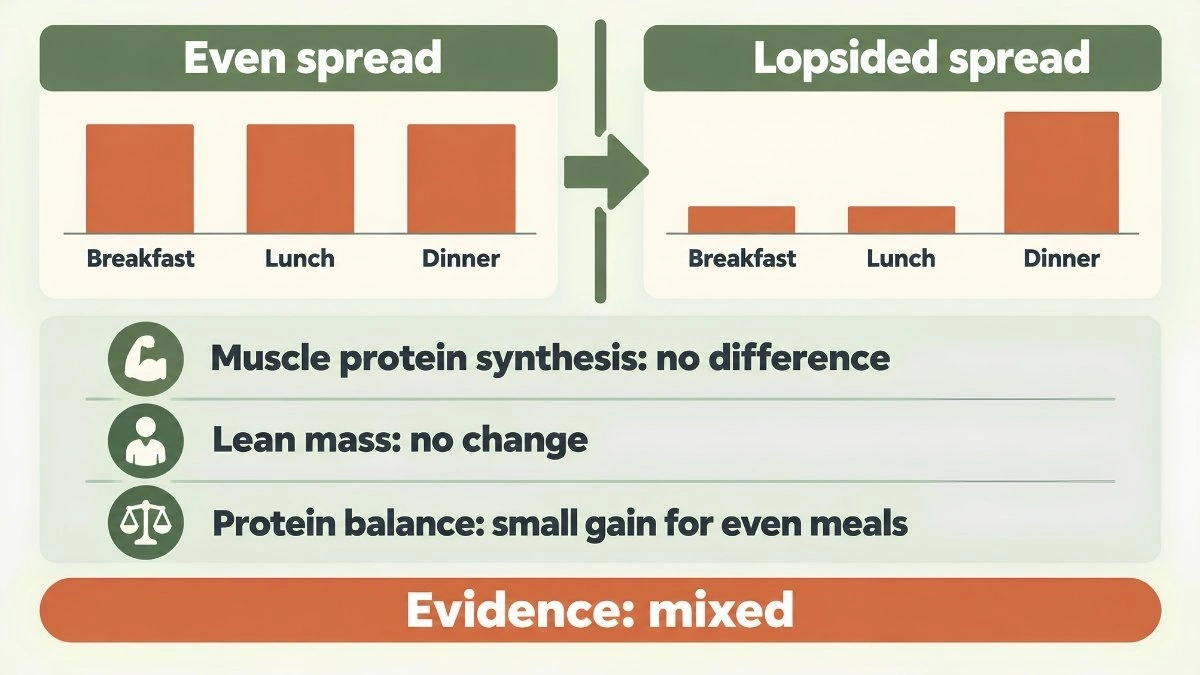
A 2022 randomized trial in Nutrients tested 24 adults aged 65 to 80 on an even or a lopsided protein pattern. Muscle protein synthesis did not differ between the groups.
A 2023 trial in Clinical Nutrition found a small upside. Whole-body protein balance improved with even meals, because the body broke down less protein. Muscle synthesis rates stayed the same.
A 2021 systematic review in the European Journal of Nutrition weighed the evidence. Three of seven studies linked an even protein spread to higher muscle mass. Only one of six linked it to protein synthesis. That is an association, not proof of cause.
The target itself varies. A Dutch analysis notes that some experts suggest 30 to 40 grams per meal. The same 2025 review concluded that 25 to 30 grams per meal is enough to peak muscle building in older adults. That is about 0.4 grams per kilogram, from animal or plant protein. Smaller bodies land lower.
Most of this work studied adults over 65. For ages 50 to 64, the advice rests on reasoning, not direct proof.
Exercise adds one clear piece. In a randomized trial of team sport training, untrained older adults gained leg muscle mass only when they ate protein after training. The trial used ball games, not weights. Still, it shows that protein and movement work as a pair.

Your daily total and your activity likely matter more than perfect meal timing. The next section turns this into a plan.
Note: This article is general education, not personal medical advice. If you have kidney disease or another health condition, talk with your doctor or a registered dietitian before you raise your protein.
Getting to 25-30 Grams Without Overhauling Your Day

Start with your weakest meal, not your whole diet. In the Dutch figures, that was breakfast. Then find your number. Use the 0.4 grams per kilogram figure from the 2025 Nutrients review. A 70 kg person lands near 28 grams per meal. A 60 kg person lands near 24 grams.
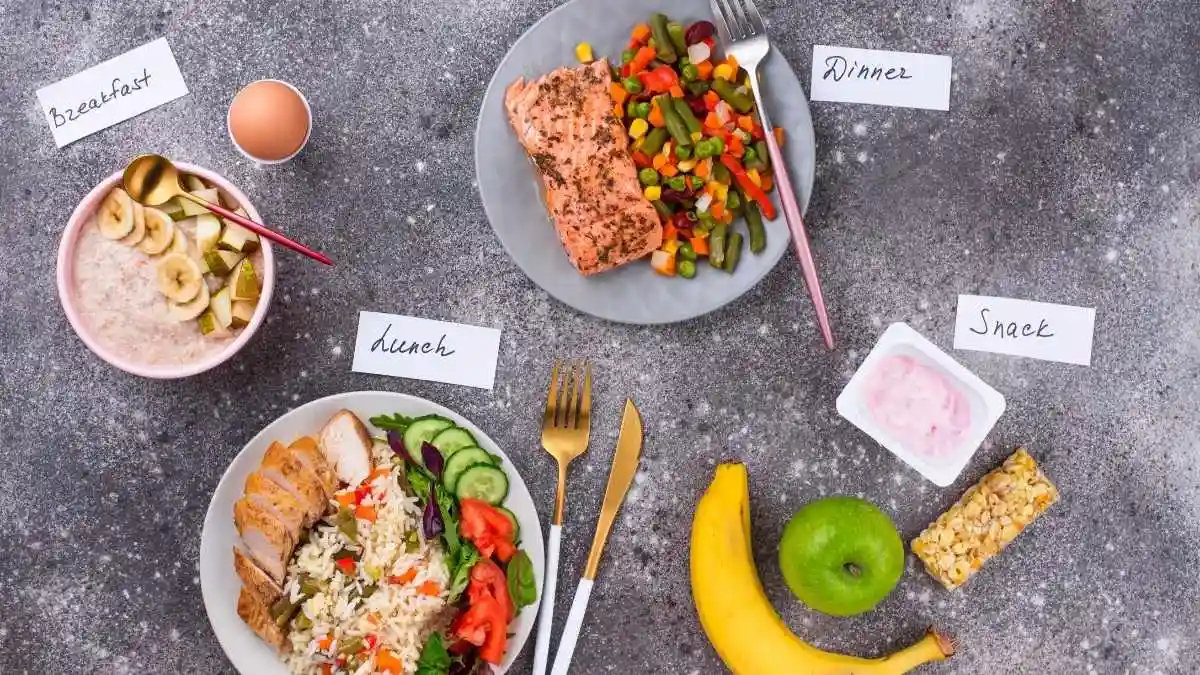
The USDA’s FoodData Central database lists about 26 grams of protein in 3 ounces of cooked chicken breast. The same database puts a large egg near 6 grams. Two eggs and 3/4 cup of nonfat Greek yogurt reach about 30 grams at breakfast. Yogurt labels vary by brand, so check the Nutrition Facts panel.
The 2025 Nutrients review says plant protein can meet this target as well as animal protein. A cooked cup of lentils holds about 18 grams, per USDA data. Plant meals often need bigger portions to reach the same dose.
When I suggest this to adults in their 60s, the first worry is often appetite or cost. I tell them to build the meal around foods they already like. Eggs, canned fish, yogurt, and beans all work.
Pair your protein with movement. A 12-week randomized trial in 116 active older adults found that protein supplements improved lean body mass. All of them started below 1.0 gram per kilogram a day. A walk or a strength session gives you a good reason to eat well afterward.
Check with your care team first if your kidneys are a concern. The PROT-AGE paper names one clear exception. People with severe kidney disease, meaning a kidney function score (eGFR) below 30 and no dialysis, may need to limit protein.
The same paper says most older adults with illness need more, up to 1.5 grams per kilogram. Anyone with kidney disease or another condition should get a personal target from a doctor or dietitian. With that check done, you have what you need to begin.
Conclusion
Muscle loss can feel like something that just happens. Your plate is one part you can change. This week, pick one meal and move it toward 25 grams of protein. Leave the rest of your day alone. Notice how you feel in a week. One steady habit is enough to begin, and I am rooting for you.
References
- Dutch analysis of protein at breakfast and lunch: A higher protein intake at breakfast and lunch is associated with a higher total daily protein intake in older adults
- Review of protein and muscle function: Protein Intake and Muscle Function in Older Adults
- Paddon-Jones and Rasmussen, 2009: Dietary protein recommendations and the prevention of sarcopenia
- 2015 review: Protein Requirements and Recommendations for Older People: A Review
- PROT-AGE Study Group, 2013: Evidence-based recommendations for optimal dietary protein intake in older people
- Kim et al., 2018: Protein intake distribution pattern does not affect anabolic response, lean body mass, muscle strength or function over 8 weeks in older adults https://doi.org/10.1016/j.clnu.2017.02.020
- Justesen et al., 2022, Nutrients: Comparing Even with Skewed Dietary Protein Distribution
- Agergaard et al., 2023, Clinical Nutrition: Even or skewed dietary protein distribution and whole-body protein net-balance
- 2021 systematic review, European Journal of Nutrition: Evenness of dietary protein distribution and muscle mass
- Nutrients, 2025: Protein and Aging: Practicalities and Practice
- Randomized trial of team sport training and protein: Effect of small-sided team sport training and protein intake in older untrained adults
- Randomized trial in active older adults: Protein supplementation improves lean body mass in physically active older adults
- USDA: FoodData Central