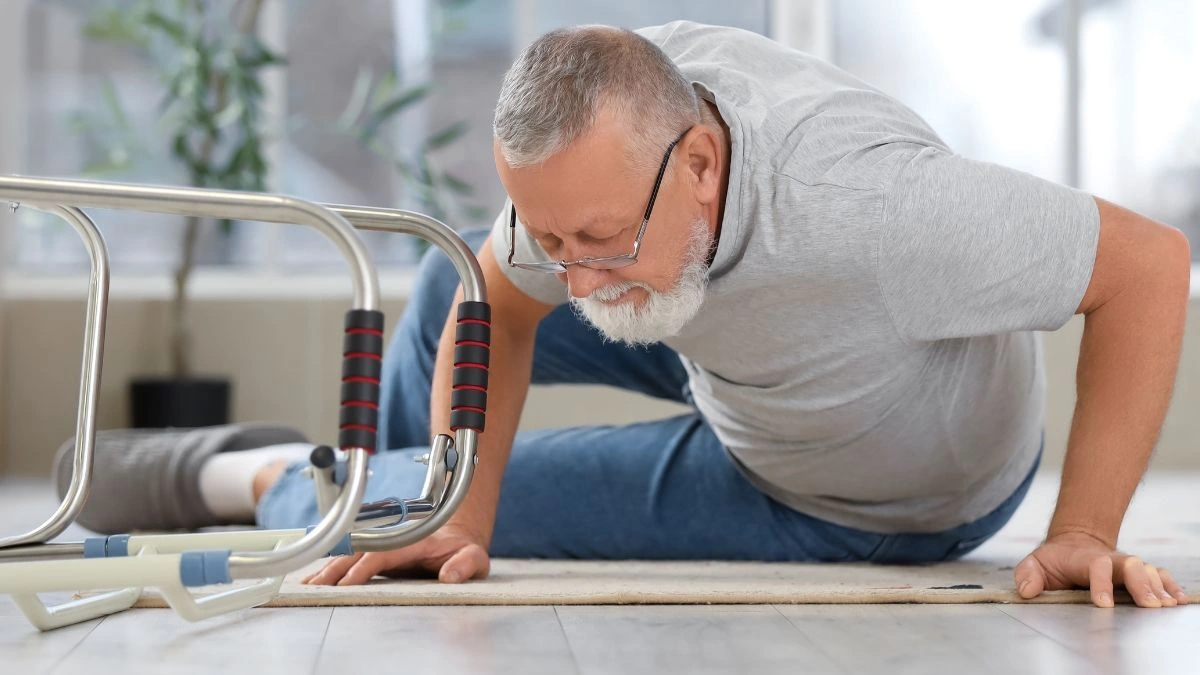
You land on the floor, and one urge takes over: stand up now, before anyone sees. I hear this from older adults often, and I understand it. Fear and embarrassment push people to rush.
But the next minute matters more than the next movement. Rushing can make an injury worse. Slowing down can keep you safe.
Let me walk you through how to get up from the floor after a fall, one decision at a time. You will learn when to stay down, when to roll, and when to call for help.
Each choice has a clear rule, so you can act with a steady head. Read it once, and the steps will be there when you need them.
Stay Down for a Minute: The First Decision Is Not to Move
The National Institute on Aging (NIA) starts its fall advice with a pause. Take several deep breaths. Remain still for a few moments to get over the shock.
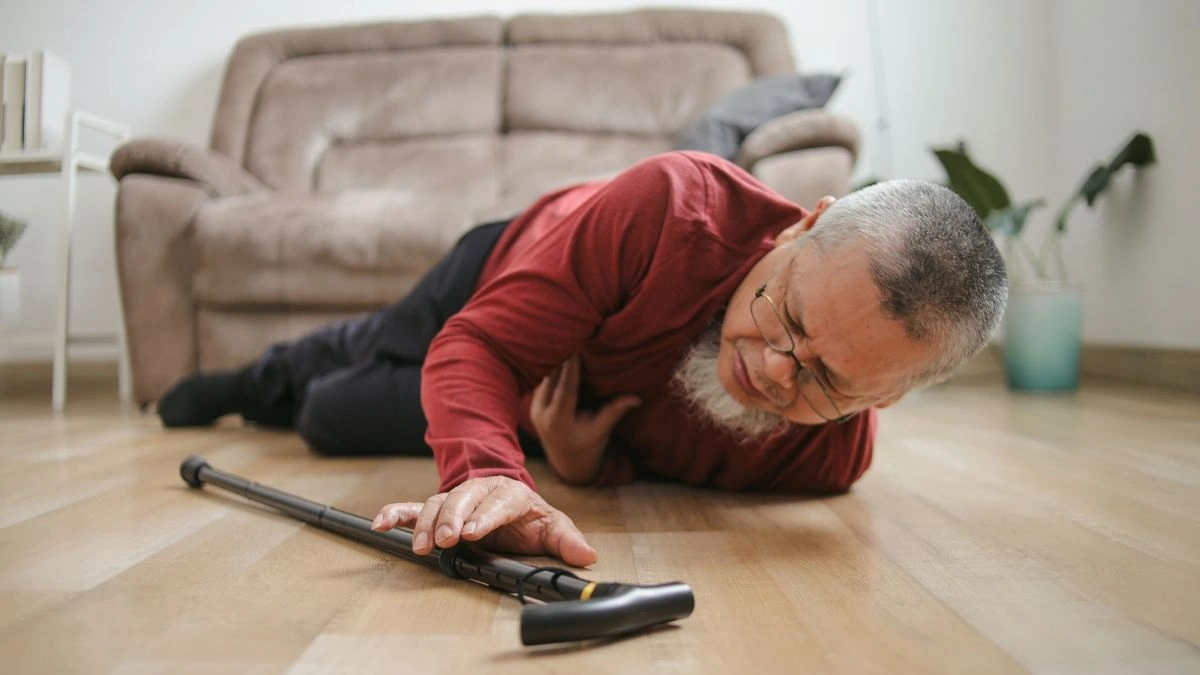
This pause protects you. The fall rattles your body, and you cannot yet tell what hurts. NIH guidance warns that getting up too fast, or in the wrong way, can make an injury worse. A short wait lets you check before you move.
Jump Up First, Find the Pain Later
In my conversations with older adults, a pattern repeats.
A sore wrist or hip shows up hours afterward.
The Pattern
Many jump up first and find the pain later. A sore wrist or hip shows up hours afterward.
The Cost of Pausing
The pause costs you a few moments.
The Next Step
Once you feel calmer, the next step is to find out whether you are hurt.
Decision One: Are You Hurt?
Take a couple of minutes to check yourself for pain or injury, as the NHS advises. Look at your head, neck, back, hips, wrists, and ankles. Any pain that worries you counts. Stay still while you check.
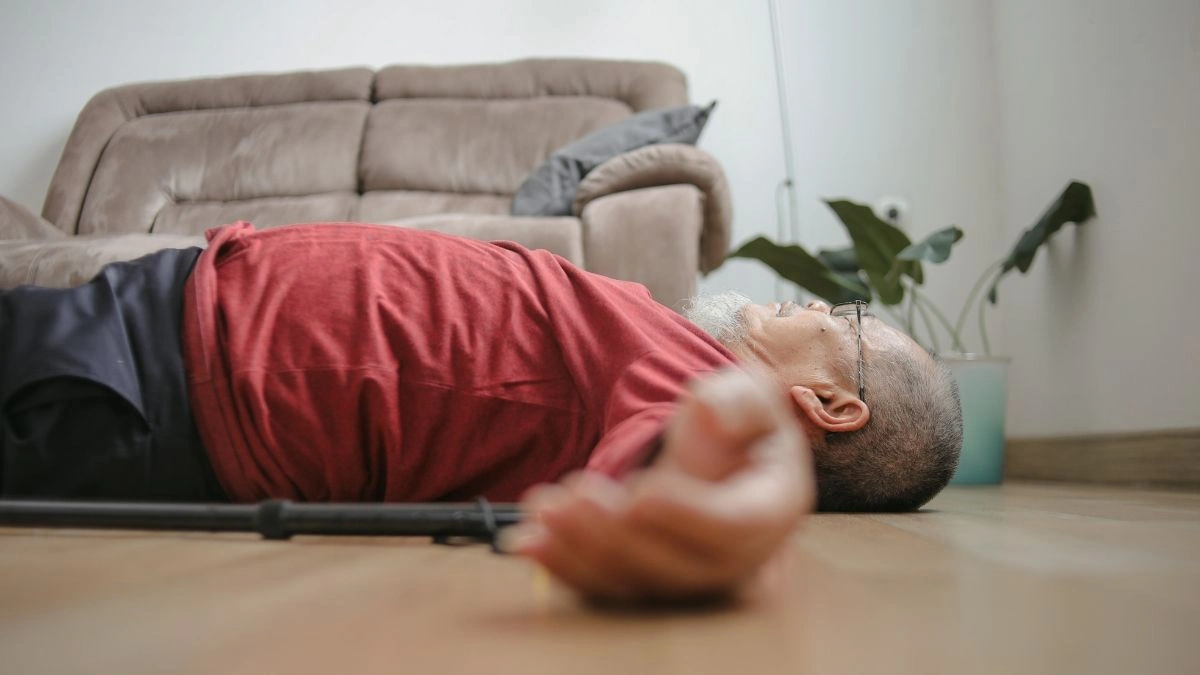
If you are hurt, do not try to get up. The NIA says to ask for help or call 911 (or your local emergency number). NIH guidance adds that if you are alone, you should get comfortable and wait for help.
When you are unsure, treat it as hurt. Waiting for help is the safer call. If you feel steady and have no pain, you can move on to the rise itself.
Decision Two: Rising Safely When You Are Not Hurt
Move in small steps, and rest between each one. A City of Parramatta falls handout says illness, stiffness, and pain can change how you get up. It urges you to adapt the steps to your body.
A falls brochure that draws on NIA guidance outlines the first three moves. A guide from Washington State’s Department of Social and Health Services covers the lift. NIH guidance covers the finish, and the NHS adds how to stand once you are steady.
- Roll onto your side.
- Roll onto your hands and knees.
- Crawl to something stable, such as a sturdy chair.
- Bring one knee forward and put that foot flat on the floor.
- Push up with your arms and legs, and pivot around to sit in the chair.
- Rest in the chair. When you feel steady, stand slowly, holding something stable.
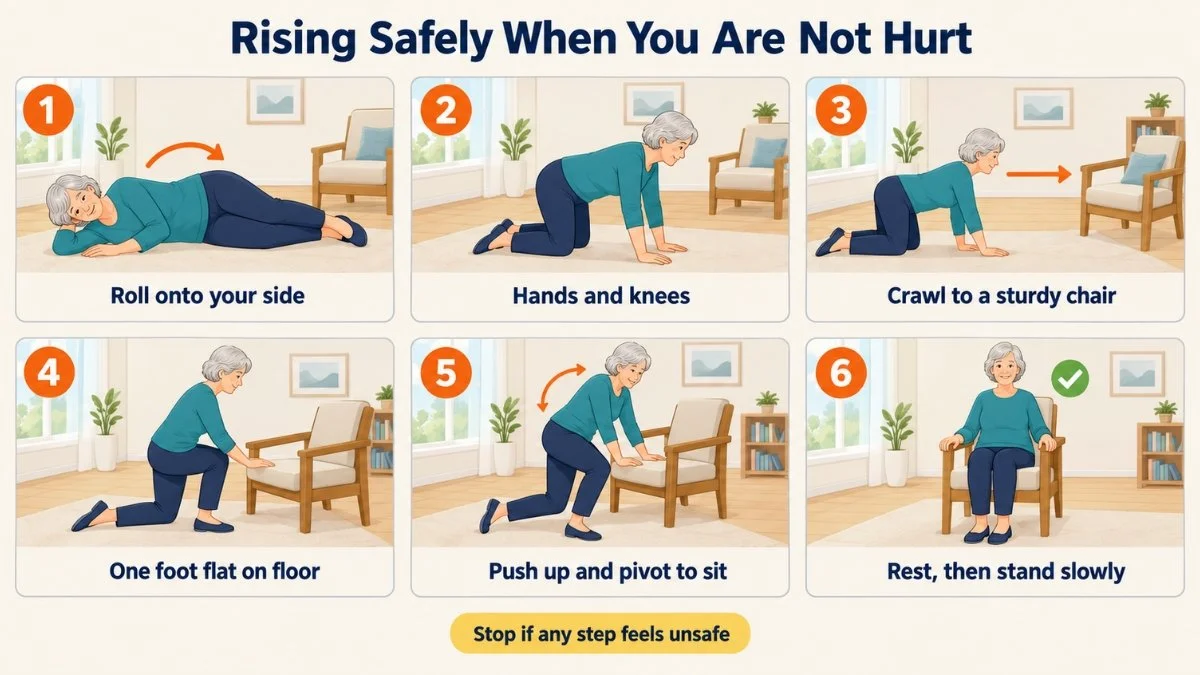
Crawling gets you to a stable surface without standing first. Each step is small, so you can stop at any point.
If step order is hard to remember, keep a picture card of these steps near your favorite chair. Occupational therapy authors John Rider, Alyssa Sowerwine, and Monica Tay suggest visual cues for adults with impaired cognition who struggle to sequence the steps. Flashcards, handouts, or posters can serve.
One caution matters. A falls leaflet hosted by Age UK warns against its floor-rise method. This applies within six weeks of a hip or knee replacement. The exception is when your physiotherapist has taught you the method. Treat these steps the same way. If any step feels unsafe, stop, and move to the next decision.
Decision Three: When You Cannot Get Up
Stopping is a decision, and often the right one. The NHS says to use a phone or personal alarm if you can reach one. NI Direct adds that you can call out for help to get someone’s attention.
Carry your phone in a pocket, or wear a personal alarm, so help stays within reach. From what I have seen in practice, the people who stay down longest feel they should manage alone.
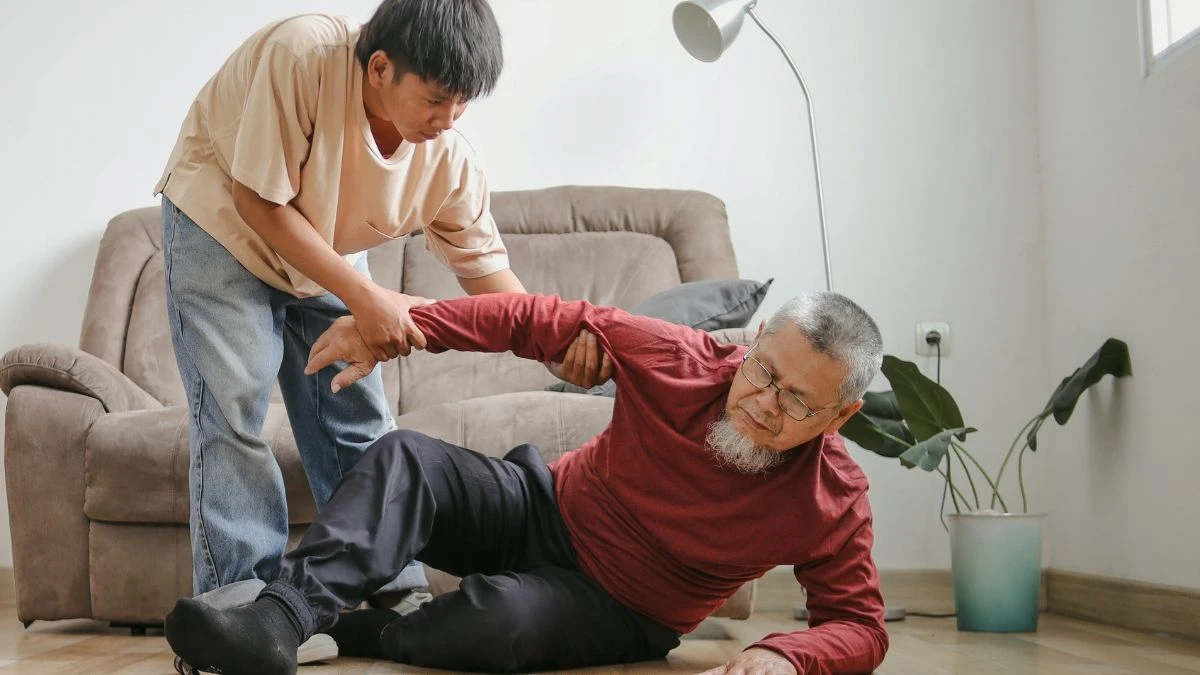
Staying stuck has a cost. Rider, Sowerwine, and Tay report that being unable to rise after a fall is a major contributor to medical complications. So do not wait to ask for help.
Stay warm while you wait. An NHS falls booklet from Lincolnshire suggests a blanket in each room. It also suggests a heating timer, so you will not get cold if you cannot rise.
If you are helping someone else, do not lift them yourself, says the NHS. Keep them warm and comfortable. Help them up only if they can rise. Whether you rose alone or with help, one job remains.
After You Are Up: Tell Someone and Rebuild Confidence
Sit down and rest first. Then tell someone you fell. The falls brochure that draws on NIA guidance says to let a friend or family member know. Do this even if the fall felt small.

Then call your doctor. A falls leaflet hosted by Age UK says a fall may have a treatable cause. The NHS also lists a recent fall as a reason to see a GP. Before you call, write down where, when, and how you fell.
Many people skip the doctor. A September 2023 CDC report found that more than a quarter of older US adults reported a fall in the past year. The CDC also says less than half of older adults who fall tell their doctor.
Falling once doubles your chances of falling again, the CDC says. That is a reason to act, not to panic.
You can also train for this. Rider, Sowerwine, and Tay report that floor-rise training reduces avoidance caused by fear of falling and builds strength to get up. Ask your physiotherapist to teach you and to watch your first tries.
A fall can shake your trust in your own body. A plan gives some of it back.
This week, share this plan with one person you trust. Tell them what you will do if you fall, and ask them to check in. You do not have to carry this alone. You are already more ready than you were an hour ago.
References
- NIA recommendations via HealthDay, “Health Tip: What to Do If You Fall”: https://orthoatlanta.com/health-news/health-tip-what-to-do-if-you-fall
- NIH guidance via Caregiver.com, “Senior Falls”: https://caregiver.com/articles/what-should-i-do-fall/
- Falls prevention brochure citing the NIA Age Page “Preventing Falls and Fractures”: https://pipertrust.org/wp-content/uploads/2019/03/Falls-Prevention-Brochure-English.pdf
- NHS, Falls: https://www.nhs.uk/conditions/falls/
- NI Direct, Falls: https://www.nidirect.gov.uk/conditions/falls
- Washington State DSHS, “Knowing how to get up from the floor by yourself”: https://manuals.dshs.wa.gov/sites/default/files/ALTSA/hcs/documents/safelygetup.pdf
- Falls leaflet hosted by Age UK, “What to do if I fall”: https://www.ageuk.org.uk/bp-assets/globalassets/north-staffordshire/resources/pdf-what-to-do-if-i-fall–leaflet.pdf
- City of Parramatta, Falls Prevention Handout: https://www.cityofparramatta.nsw.gov.au/sites/council/files/2023-03/Falls-Prevention-Handout.pdf
- Rider, Sowerwine, and Tay, “Rising Up to Cope With Falls”: https://rehabpub.com/conditions/rising-up-to-cope-with-falls
- CDC, “Important Facts about Falls” (archived copy): https://www.cdc.gov/falls/data-research/facts-stats
- HealthDay via Drugs.com, summary of the CDC Morbidity and Mortality Weekly Report, September 2023: https://www.cdc.gov/mmwr/volumes/72/wr/mm7235a1.htm
- News report quoting the National Council on Aging, via inkl: https://inkl.com/news/falling-can-be-risky-here-s-how-to-avoid-it-and-what-to-do-if-it-happens