

A 2016 paper co-authored by Dan Buettner said people in blue zones reach age 100 at ten times the US rate. Then a UK researcher said the numbers might come from bad paperwork. Both claims made headlines. Many readers now wonder if the walking, the beans, and the long dinners with friends ever mattered.
That is a fair question. It also has a more interesting answer than myth or proven.
The honest answer sits between hype and hoax. No single study settles it. The best records appear sound. The advantage, though, is shrinking in places. I will show how researchers check ages, where the data fade, and what to do with the answer.
How Do We Know Blue Zone Ages Are Real?
Anyone can claim to be 105. Demographers want paper proof. In 2025, Steven Austad and Giovanni Pes described the age checks behind blue zones in The Gerontologist. They compared those checks with the methods demographers normally use to confirm very old ages. Their review confirmed that four places earned the blue zone label: Okinawa, Sardinia, Ikaria, and Nicoya.
Euronews reported the working rules in January 2026, citing the study’s authors. A blue zone must be a defined area. It needs an unusually high share of people who reach 90 over the past 150 years. Records must confirm births and deaths.

Sardinia shows how deep the checks go. Popular Science reported in 2025 that researchers matched ages against civil records back to 1866. They also used church records from the 1600s and rebuilt village family trees. Across the four blue zones, researchers also drew on military and electoral records and spoke with people in person, according to the authors’ news release.
Ikaria is the harder case. The 2025 paper notes that the oldest residents there largely lacked birth records. Researchers there leaned on other local evidence. That leaves more room for doubt.
Blue Zones Rest on Whole Populations
Survival patterns across whole populations, not a few extreme cases
Whole Populations
The authors’ release also stresses that blue zones rest on survival patterns across whole populations, not a few extreme cases.
Why This Matters
A few false ages can distort a short list of record holders. They have little effect on a count of everyone past age 90.
What Proof of Age Shows
Proof of age shows that long lives happened. It does not show why.
A Fair Hearing
Critics still doubt the records, and their case deserves a fair hearing.
What Do the Critics Say, and How Have Researchers Answered?
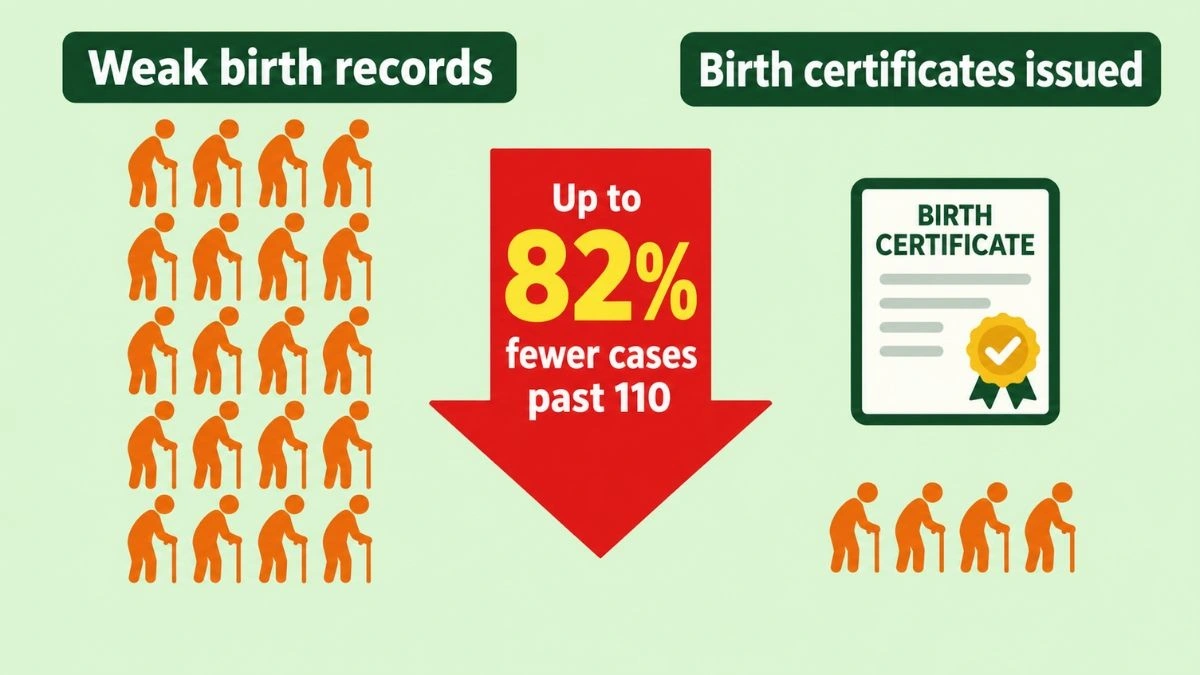
Saul Newman, a UK researcher, posted preprints that challenged blue zone ages. A preprint has not passed peer review, the step where outside experts check the methods. Treat its claims as early. Popular Science summarized his key finding. Recorded cases past age 110 fell by up to 82 percent once US states issued birth certificates.
His argument is direct. Where birth records are weak, age errors and even fraud can inflate the oldest groups. Popular Science noted that he also pointed to low income, low literacy, and high crime in several blue zones. Those traits would normally shorten lives, not lengthen them.
Popular Science reported that blue zone researchers replied in a joint statement in October 2024. They said Newman overlooked the age checks and statistics behind each blue zone. They also said regional crime and poverty figures do not describe the small rural villages inside the zones.
Newman’s 82 percent figure covers people past 110. The blue zone claim rests on much larger groups of people past 90. A flaw in the rarest records does not spoil the rest by itself. Critics argue it still raises fair doubt.
Austad set the bar himself. In the paper’s news release, he said, “Extraordinary claims about longevity demand extraordinary evidence.” The fight is over whether the blue zone records meet that bar.
Say a 62-year-old reads a headline calling blue zones a hoax. She may drop her daily walk and her bean soup. That would be a leap. The records dispute and the value of those habits are two separate questions.
The December 2025 paper in The Gerontologist is a detailed peer-reviewed reply. Austad and Pes argue that blue zone methods meet or beat the standards used worldwide for extreme ages. Readers should know that Pes helped discover the blue zones, so he defends work he started.
Even the defenders of the records admit something that headlines often skip. The longevity edge is slipping in some places.
Is the Blue Zone Advantage Fading?
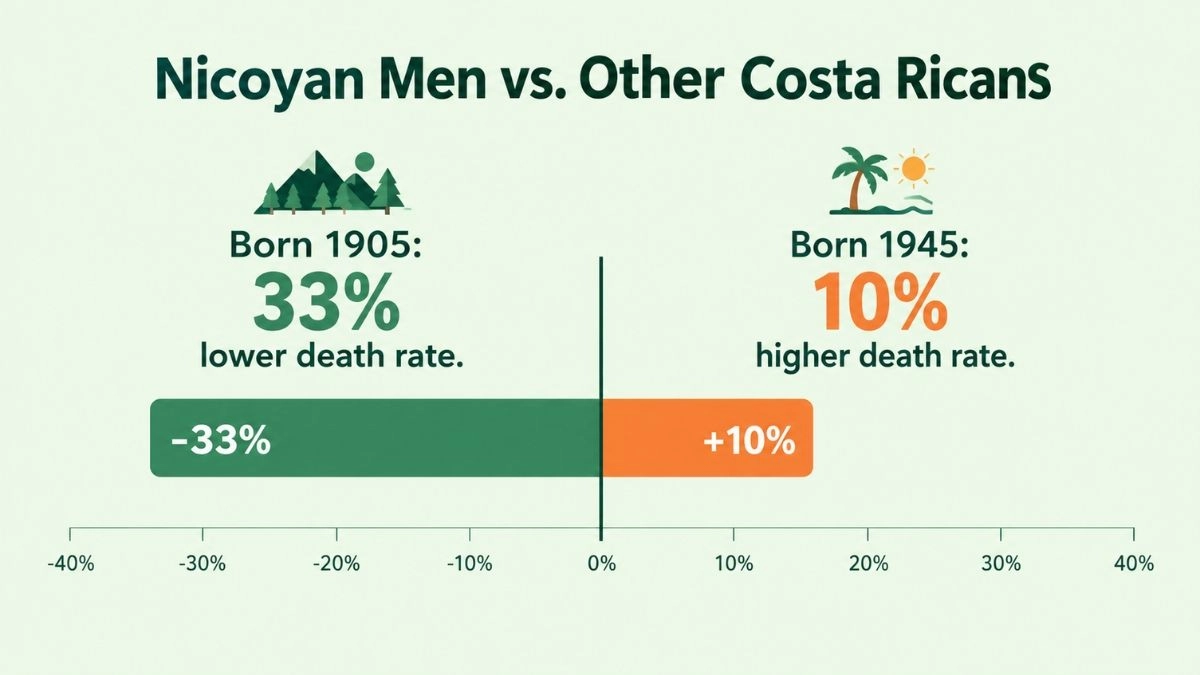
Luis Rosero-Bixby tested whether the edge held. His 2023 study in Demographic Research tracked about 550,000 Costa Rican adults alive at any point from 1990 to 2020. He used electoral records to estimate their remaining years of life. He compared Nicoyan men with other Costa Rican men born from 1900 to 1950.
The results are stark. Nicoyan men born in 1905 had 33 percent lower adult death rates than other Costa Ricans. Men born in 1945 had death rates 10 percent higher.
A 33 percent lower rate means about one third less risk of dying in any given year. The edge faded as birth years moved later.
The original hotspot also shrank. Rosero-Bixby found that it now covers a small area in the south. Nicoyans born before 1930 who are still alive remain exceptional. Later birth groups do not match them. The study covers older men only.
Okinawa tells a similar story. Austad and Pes state that Okinawa no longer meets blue zone criteria. They point to war impacts and long-term lifestyle change during modernization as likely causes. Euronews reported the same picture in January 2026 and added that Nicoya appears to be shrinking.
Austad and Pes say blue zones can weaken as lifestyles shift, migration grows, and local culture changes. Rosero-Bixby calls such hotspots probably temporary. Austad sees a benefit in that. If a blue zone can vanish, researchers can study what changed.
Rosero-Bixby traced the drop mostly to birth year. That means later generations did not keep the edge of their elders. The researchers say the reasons are not yet clear, though migration and modernization are suspected. The lesson is simple: a place’s long-life advantage can fade within one generation.
So the short answer is yes, for some groups in some places. Euronews lists Sardinia and Ikaria as confirmed, while Nicoya and Okinawa have lost ground. The label may fade, but the habits behind a long life have strong evidence of their own.
What Should This Change About Your Daily Habits?
Note: If you have a health condition or take medication, speak with your doctor before changing your diet or activity.
Keep the habits. Drop the label. The age-validation work shows who lived long. It does not show which habit caused it. So I turn to guidance from health agencies that review each habit on its own.
The CDC says adults need at least 150 minutes of moderate activity each week, such as brisk walking.

Older adults should also do muscle-strengthening work on two or more days and add balance training. Harvard Health Publishing suggests breaking the total into smaller pieces.
Try three 10-minute walks after meals on five days a week. That adds up to 150 minutes. Add strength work two days a week, such as chair stands or light bands. Start with fewer days if this feels like too much.
The American Heart Association updated its dietary guidance in Circulation in March 2026. It calls for plenty of fruits and vegetables and whole grains over refined grains. It also favors healthy proteins such as nuts and legumes. It advises avoiding processed meat.

Start small. Add one bean or vegetable dinner this week, such as lentil soup. Swap white bread or rice for a whole-grain version once a day.
The National Institute on Aging links social isolation and loneliness to higher risks of heart disease, depression, and cognitive decline. Treat connection as a health habit. Researchers still study how much connection helps, so aim for regular contact you enjoy.
Take a 58-year-old who walks alone each morning. She asks a neighbor to join twice a week. That one change adds movement and company. It also gives her a reason to show up when the weather turns gray.
Each habit has its own research behind it. All of them earn a place in your week even if blue zones vanish tomorrow.
The Bottom Line
The debate over blue zones will keep going, but your next week is yours to shape. Book one ten-minute walk with a friend before Sunday. That single step gives you exercise and company in one go. It costs nothing. Repeated small choices build a long life, and you are ready to begin.
References
- Austad SN, Pes GM. The validity of Blue Zones demography: a response to critiques. The Gerontologist. 2025;65(12):gnaf246. DOI 10.1093/geront/gnaf246. https://pmc.ncbi.nlm.nih.gov/articles/PMC12709677
- Rosero-Bixby L. The vanishing advantage of longevity in Nicoya, Costa Rica: A cohort shift. Demographic Research. 2023;49(27):723-736. DOI 10.4054/DemRes.2023.49.27. https://www.demographic-research.org/articles/volume/49/27
- Lichtenstein AH, et al. 2021 Dietary Guidance to Improve Cardiovascular Health: https://professional.heart.org/en/science-news/2026-dietary-guidance-to-improve-cardiovascular-health
- Centers for Disease Control and Prevention. Physical activity guidelines. https://www.cdc.gov/physical-activity-basics/guidelines/index.html
- Harvard Health Publishing. Hitting the activity mark. https://www.health.harvard.edu/exercise-and-fitness/hitting-the-activity-mark
- National Institute on Aging. Loneliness and social isolation: tips for staying connected. https://www.nia.nih.gov/health/loneliness-and-social-isolation/loneliness-and-social-isolation-tips-staying-connected
- Popular Science. Do people in blue zones actually live longer? https://www.popsci.com/health/do-people-in-blue-zones-actually-live-longer/
- Yahoo News. Do people in blue zones actually live longer? https://www.yahoo.com/news/people-blue-zones-actually-live-135432950.html
- Euronews. Blue zones: Are global longevity hotspots a myth? (January 2026). https://www.euronews.com/health/2026/01/07/blue-zones-are-global-longevity-hotspots-a-myth-new-study-proves-where-people-really-live-
- Earth.com. Do people really live longer in blue zones? https://www.earth.com/news/do-people-really-live-longer-in-blue-zones-what-the-records-say
- The Brighter Side of News. New study challenges recent claims questioning the authenticity of the world’s blue zones. https://www.thebrighterside.news/post/new-study-challenges-recent-claims-questioning-the-authenticity-of-the-worlds-blue-zones
- EurekAlert. Scientific validity of blue zones longevity research confirmed (news release). https://www.eurekalert.org/news-releases/1111189