
You walk into the kitchen and stand there, blank. You know you had a reason. It’s on the tip of your brain, and then it’s gone. Adults over 50 who are starting to worry about memory know that feeling, and it’s unsettling in a way that’s hard to shake.
The problem is that most people looking for answers spend money on brain-training apps, and a 2025 review found that while all the apps studied claimed cognitive benefits, only one cited empirical research to back those claims
What recent science shows instead is that creative hobbies may protect your brain in ways those apps simply cannot.
By the end of this article, you’ll know which types of hobbies the research supports, why you don’t need to be any good at them, and how to start.
What Researchers Now Measure as Brain Age, and Why the Number Matters
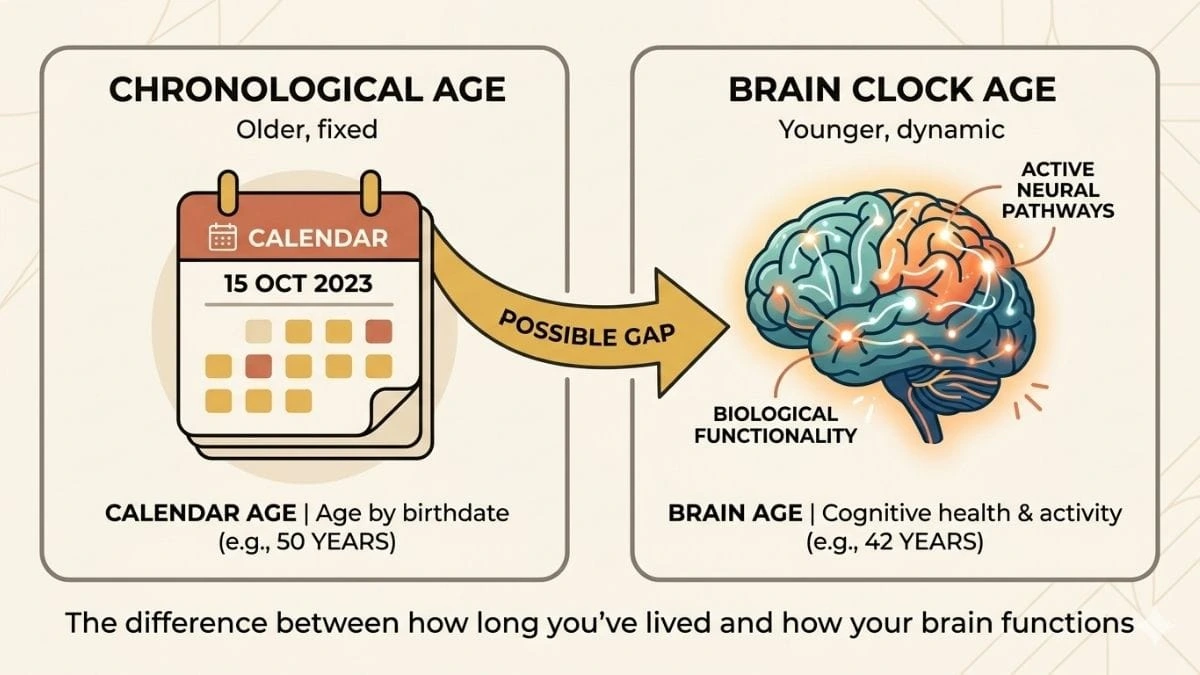
You’ve probably never had anyone tell you your brain’s age. Researchers can now estimate it, and the gap between that number and your birthday age may be the clearest sign of how well your brain is holding up.
The brain clock [a machine-learning model that reads brain scan data to estimate how old your brain acts compared to how old you actually are] is one of the newest tools scientists use to track cognitive health.
When your brain clock age is lower than your real age, your brain’s networks are firing faster and connecting more efficiently than what’s typical for someone at your stage of life.
The stakes are real. The World Health Organization estimates that more than 57 million people worldwide are currently living with dementia, with nearly 10 million new cases diagnosed every year.
Cognitive decline [a gradual reduction in memory, focus, and mental processing that can begin decades before it becomes noticeable] doesn’t usually announce itself. It quietly starts building long before a person notices anything wrong.
If you have a hobby you do regularly, you may already be doing something that matters. Research now shows creative hobbies are associated with direct changes in brain clock scores, and the next section shows you what the data found.
The Creative Hobby Result That Surprised Researchers, and What It Means for Brain Aging Prevention
If you’ve ever assumed that protecting your brain requires heavy lifting, this is good news. A large international study published in Nature Communications in October 2025 scanned the brains of 1,402 participants across 13 countries to find out which creative hobbies might slow brain aging.
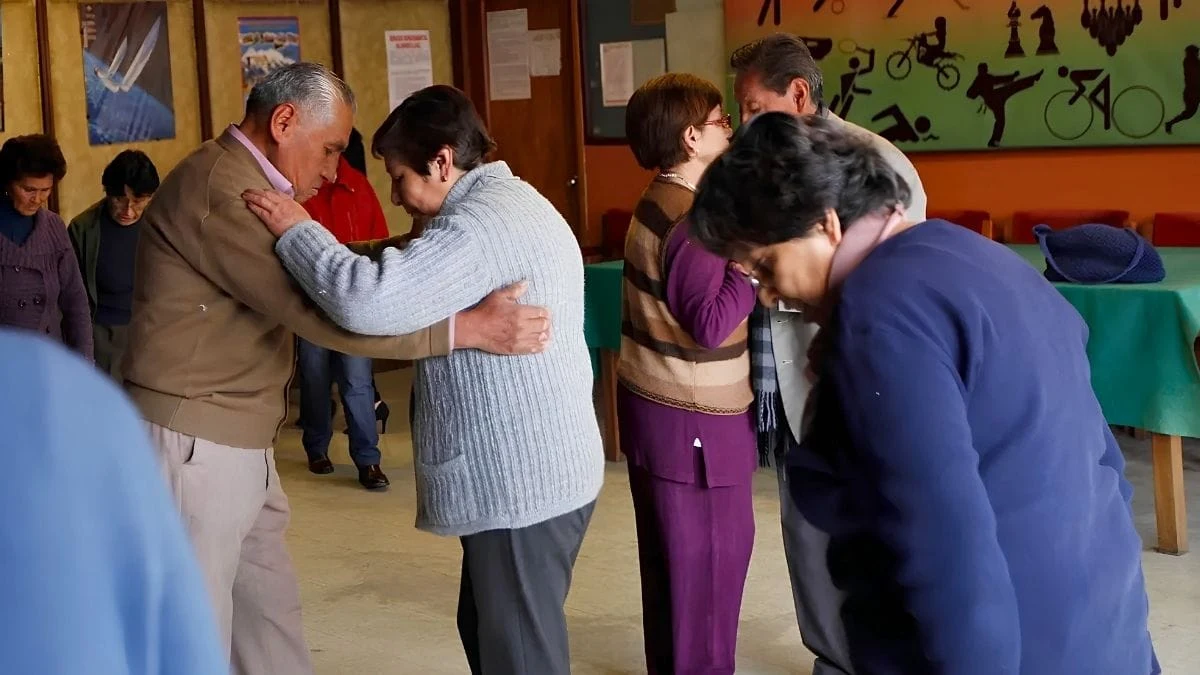
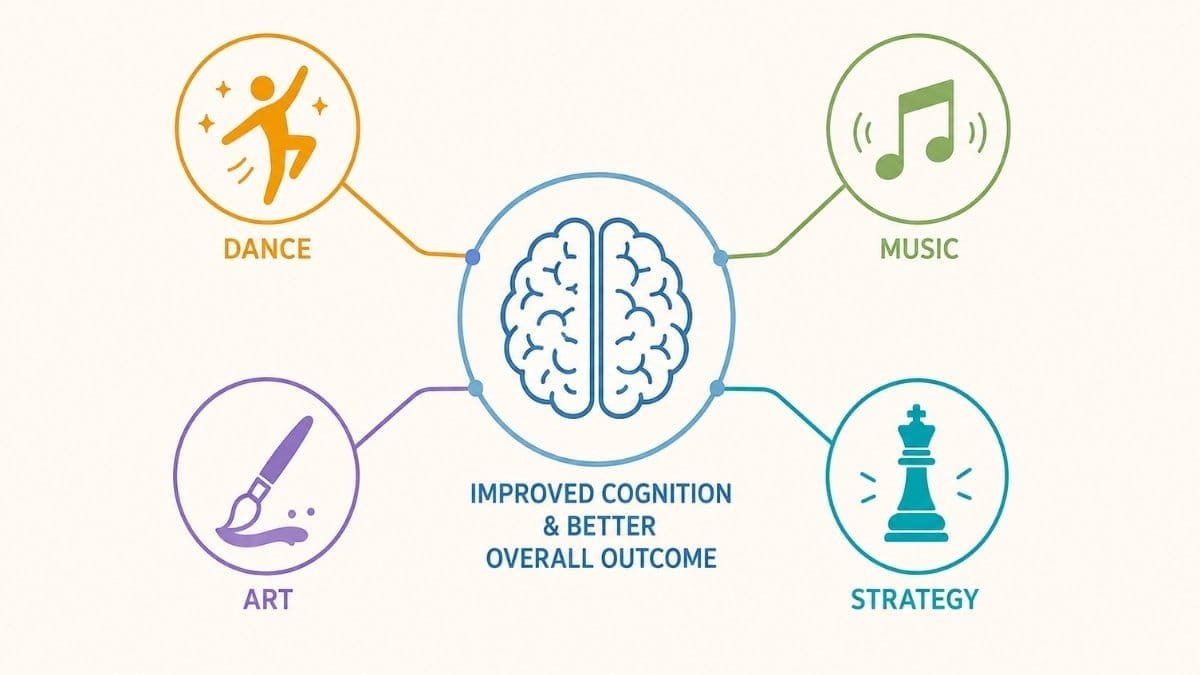
The researchers included tango dancers, musicians, visual artists, and strategy game players, ranging from total beginners to longtime experts.
The result was striking. Experts in creative pursuits had brain ages five to seven years younger than their actual chronological age.
The brain regions that showed the greatest protection were exactly the ones most at risk from aging: the hippocampus [the part of the brain most responsible for forming and retrieving new memories], the prefrontal cortex [the region behind your forehead that handles planning, decision-making, and focused attention], and the parietal areas [brain regions that coordinate attention and spatial awareness].
You might expect the result to apply only to music or dance. It didn’t.
The protective effect showed up consistently across all four creative domains tested: dance, music, visual art, and strategy gaming. This tells researchers it’s the creative challenge itself that drives the benefit, not the specific hobby.
That’s not motivational language. It’s what the learning data showed, and the next section covers exactly what happened to the complete beginners in this study.
Why You Don’t Have to Be Good at It for It to Work
Most people assume they need years of practice before a hobby helps their brain. That assumption is one of the main reasons adults over 50 delay starting one.
The same 2025 Nature Communications study included a group of 24 adults who had never played strategy games before. Researchers had them spend 30 hours learning a complex strategy game spread over three to four weeks.

After just those 30 hours, their brain age measurements improved. The effect was smaller than what long-term experts showed, but it was measurable.
The study’s lead researcher stated plainly: “You do not need to be an expert to benefit from creativity.”
The moment you start a creative hobby, even on day one, your brain is already getting a benefit that a brain-training app cannot give you.
This matters because cognitive decline [a gradual reduction in memory, focus, and mental processing] can begin building in the brain decades before any outward sign appears.
A gerontologist cited by National Geographic made the point directly: engaging in mentally stimulating hobbies throughout life is important precisely because decline starts earlier than people expect.
Here’s the practical point: starting badly and starting slowly are both fine. The brain benefit activates when you learn something that makes you think.
So the question becomes: which hobby protects which part of your brain? The next section matches the research to specific activities.
Which Creative Hobby Protects Which Part of Your Brain, and the Best Hobbies for Memory
Talk to your doctor before adding a physically demanding activity if you’re managing a chronic condition, joint problems, or taking medication that affects balance.
If you’re trying to protect a specific area of brain function, the research gives you something to work with. Different creative hobbies appear to strengthen different cognitive systems.
If you’ve always wanted to learn an instrument, this is a good reason to start. A 2022 meta-analysis in BMC Neurology (Arafa et al.) found playing one was associated with a 36% lower risk of dementia in older adults (hazard ratio 0.64).
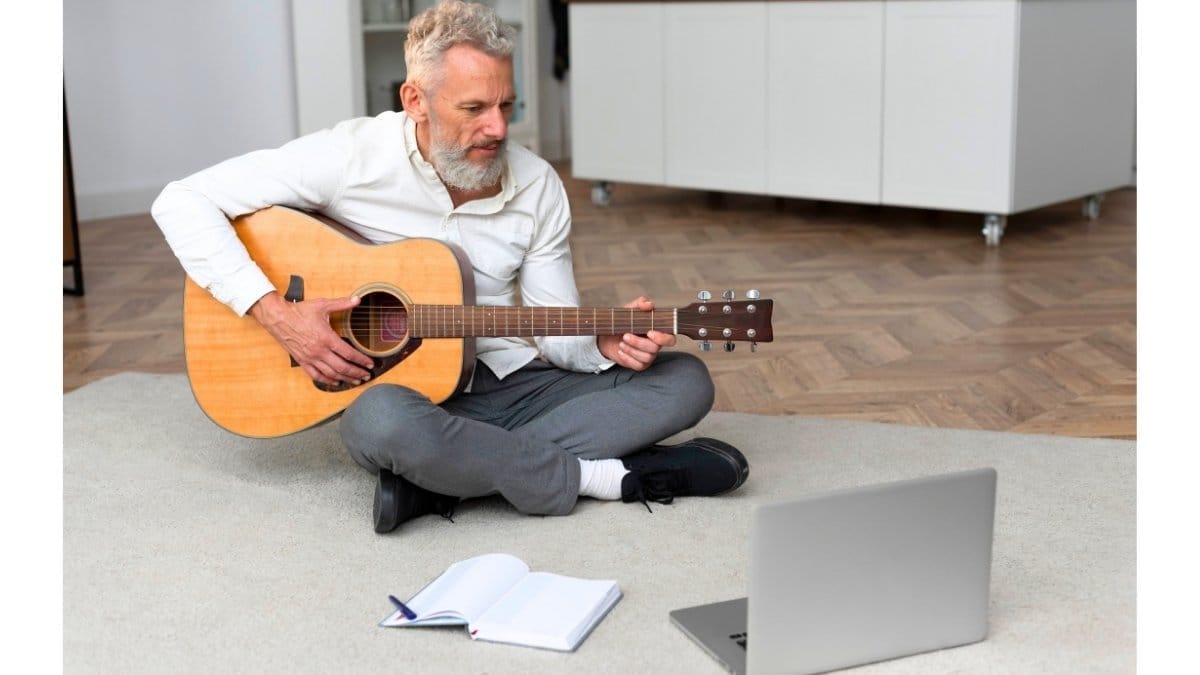
Keyboard instruments showed the most consistent benefit for memory specifically.
If you already garden, you may be protecting your brain without realizing it. A 2024 study of 136,748 adults aged 45 and older found that gardeners reported fewer memory problems and less difficulty managing everyday tasks, compared to people who didn’t exercise at all.
If you’re drawn to puzzles, writing, or strategy games, those are the activities most strongly linked to better attention and processing speed.
Research on cognitively stimulating leisure activities found that mentally engaging pastimes done three to four times a week were associated with better performance across memory, working memory, and attention.
Drawing, painting, and other visual arts strengthen the brain networks for coordination and problem-solving that researchers found most vulnerable to aging.

Each hobby hits a slightly different target. What dramatically amplifies the benefit of any of them is something most articles skip over entirely.
The One Factor That Changes What a Hobby Does to Your Brain
You’ve likely heard that consistency matters. In brain research, the specific frequency at which you engage with a creative hobby appears to be a real threshold, not a vague recommendation.
Research on cognitively stimulating leisure activities found that doing them at least three to four times a week was associated with significantly better scores across all measured cognitive areas: memory, working memory, and attention.
Adults in the highest-frequency group maintained more stable cognitive function over an eight-year follow-up period.
Sustained engagement [sticking with a challenging activity on a regular schedule rather than doing it occasionally] also showed up clearly in a 2025 longitudinal study following 6,854 community-dwelling adults aged 50 and older.
Hobby engagement was associated with 54% lower odds of belonging to the group with persistently low cognitive function.
A second factor you might not expect also multiplies the benefit: social connection. A 2024 meta-analysis drawing on data from more than 608,000 individuals across 21 longitudinal studies found that loneliness was associated with a 32% higher risk of developing dementia.
Group hobbies, such as a community choir, a chess club, or a painting class, work on both brain aging and social isolation at the same time.

Getting the most from creative hobbies:
- Three to four sessions per week
- At least one session in a group setting, if possible
- The activity must require you to solve, create, or learn something new — passive activities do not produce the same result
The last section gives you a concrete first step for this week.
Where to Start If You Haven’t Had a Hobby in Years
You don’t need a plan, a studio, or a long track record to start getting the brain benefits from creative hobbies. The Nature Communications study showed meaningful brain age improvements after just 30 hours of a new creative activity.
What you need first is one session.
Here are four entry points that require no prior skill:
Accessible Hobbies
Engaging, low-cost activities to spark your mind and creativity
Piano Chords
Free apps and YouTube tutorials can get a complete beginner to three chords in one afternoon.
Community Garden
Shared spaces at low or no cost. Physical, sensory, and cognitively engaging all at once.
Drawing Class
Local libraries and community centers run them regularly. No talent required to begin.
Strategy Games
Chess clubs and board game cafes. The social layer adds a separate layer of brain protection.
The one rule: whatever you choose has to require you to think. Watching a nature documentary is relaxing, but it doesn’t activate the same brain networks as making something, solving something, or learning something.
Start with one session this week. Aim for three sessions by week three. That’s the frequency the research supports.
Conclusion
Pick one creative hobby and do it at least three times this week. It doesn’t have to be impressive, expensive, or something you were ever good at.
New science shows that creative hobbies may be one of the most accessible ways to protect your brain health as you age, and the benefit starts earlier than you expect.
You don’t need to wait until it feels urgent. That kitchen moment you keep having? It’s telling you something worth listening to.