
You’ve been doing the hard part. You’ve been cutting back, moving more, watching what you eat.
And still the results feel slower, harder, and somehow less than they used to be. Most people over 50 cut calories to lose weight but lose muscle instead of fat because they don’t know how much protein their body actually needs at this age.
This is not a motivation problem. The research points to something more specific, and it has a number attached to it.
If you’re among the adults aged 50 to 70 working on weight loss after 50, this article gives you that number and shows you exactly how to use it.
Why Losing Weight After 50 Feels Different
You cut the same calories you always have, but this time you feel weaker, not lighter. That’s not in your head. After 50, the body doesn’t just shrink during a calorie cut. It starts trading muscle for fat in a way that quietly works against everything you’re trying to do.

Your body starts losing muscle earlier than most people realize. Muscle mass decreases roughly 3 to 8% per decade from age 30, and the rate picks up speed after 60.
When you lose muscle, your resting metabolism slows, since muscle tissue burns more calories at rest than fat tissue does. A slower resting metabolism means your body burns fewer calories even while you’re sitting still.
That makes every future attempt at losing weight harder than the last one.
Here’s the part most diet plans skip: muscle loss during a calorie cut is not inevitable. It’s largely driven by one dietary factor: protein intake.
The amount that’s enough to protect your muscle after 50 is higher than most standard plans suggest, because protein intake during weight loss after 50 works differently than it did at a younger age.
Talk to your doctor before making major changes to your diet if you’re on medication, managing a chronic condition, or have a history of kidney disease, as higher protein intake may need to be monitored in some cases.
The question isn’t whether to cut calories. It’s whether you’re eating enough protein. The next section gives you the specific number the research points to, and it’s higher than your doctor probably told you.
The Protein Threshold Your Body Now Ignores
You might already be eating protein. The problem is that aging muscle has developed what researchers call anabolic resistance [the reduced ability of aging muscle to build and repair itself from the protein you eat].
The protein amounts that worked for younger muscle simply don’t clear the bar for aging muscle. In younger adults, consuming around 0.24 grams of protein per kilogram of body weight in a single meal appears sufficient to stimulate muscle protein synthesis at a meaningful level.

After 50, that threshold climbs to approximately 0.40 grams per kilogram of body weight per meal, nearly double what it was at 30. That means the same protein dose that built and protected muscle at 30 does significantly less at 55.
After 50, your muscles don’t respond to the same protein dose that worked when you were younger. No one tells you this when they hand you a calorie plan.
This explains something many people notice but can’t name. You eat what feels like a decent amount of protein. You follow the plan. But the weight that leaves is lean mass, not fat. The dose was simply too low to clear the new threshold.
You can eat what used to be plenty of protein and still see your muscle shrink during a calorie cut. Research suggests aging muscle now requires more protein per meal to stimulate the same repair response.
The good news: this threshold is not a wall. It’s a number. And the research gives it to you clearly. The next section gives you the specific number the research points to, and it’s higher than your doctor probably told you.
What Research Says About Protein Intake and Weight Loss After 50
You’re probably familiar with the standard protein recommendation: 0.8 grams per kilogram of body weight per day. That number wasn’t built with protein intake and weight loss after 50 in mind.
If you’ve been told to eat more protein but weren’t given a specific number, here it is. A meta-analysis of 20 randomized controlled trials in adults over 50 found that those who ate higher-protein diets, defined as at or above 1.0 gram per kilogram per day, or at least 25% of total calories from protein. retained more lean mass and lost more fat mass than those who ate less.
The researchers were clear: standard protein intake during weight loss was associated with greater lean mass losses.
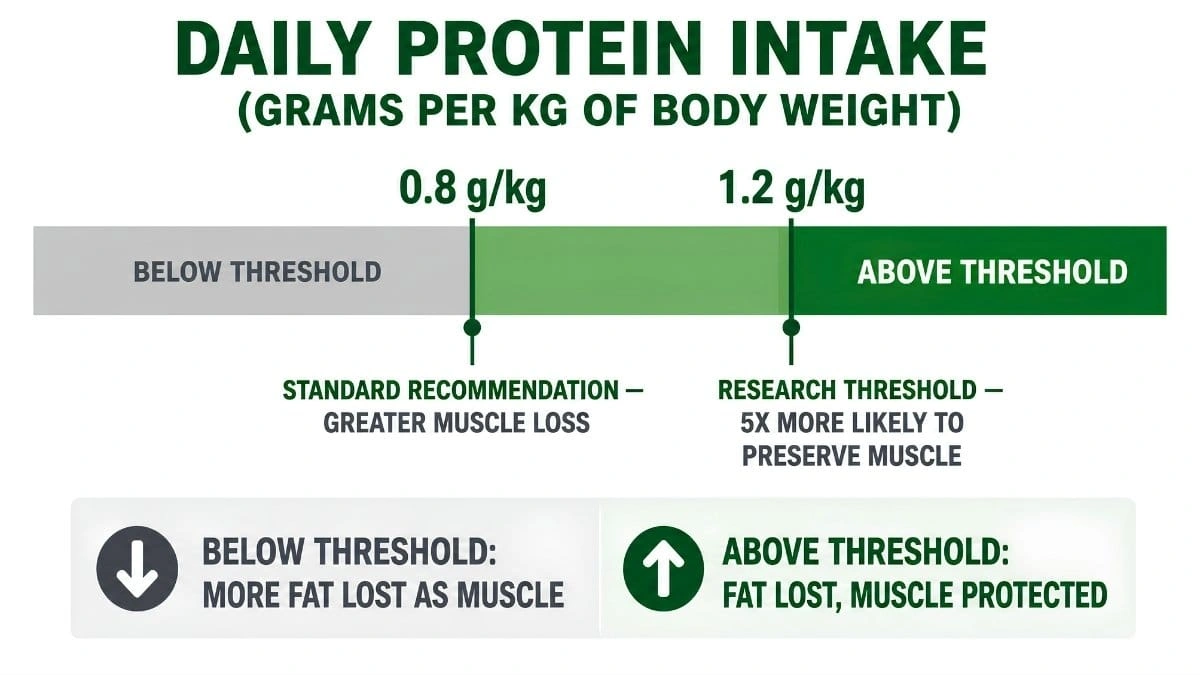
One number keeps appearing across the research. A separate study of 60 obese older adults on a 13-week weight loss program identified 1.2 grams per kilogram of body weight per day as the point where muscle preservation improved significantly.
Adults eating above that threshold were over five times more likely to maintain or gain muscle mass during the weight loss period than those eating below it.
Your personal minimum target:
If you weigh 70 kg (about 154 lbs): aim for at least 84 grams of protein per day.
If you weigh 80 kg (about 176 lbs): aim for at least 96 grams of protein per day.
If you weigh 90 kg (about 198 lbs): aim for at least 108 grams of protein per day.Formula: your body weight in kilograms, multiplied by 1.2. That’s your daily minimum, not a ceiling.
This is the number that changes what you put on your plate. The next section shows the one timing habit that leads people to eat enough total protein and still lose muscle anyway.
The Timing Mistake That Wastes Your Protein
Knowing your daily protein goal is not enough if you eat most of it in one sitting. Protein timing matters more after 50, and most people get it wrong without realizing it.
The most common pattern: a small or carb-heavy breakfast, a light lunch, and a big dinner that carries most of the day’s protein. That structure doesn’t work for aging muscle.
When you eat your protein matters almost as much as how much you eat. Research on protein distribution in older adults suggests that spreading protein evenly across all three meals is associated with better per-meal muscle protein synthesis than concentrating intake at one time of day.
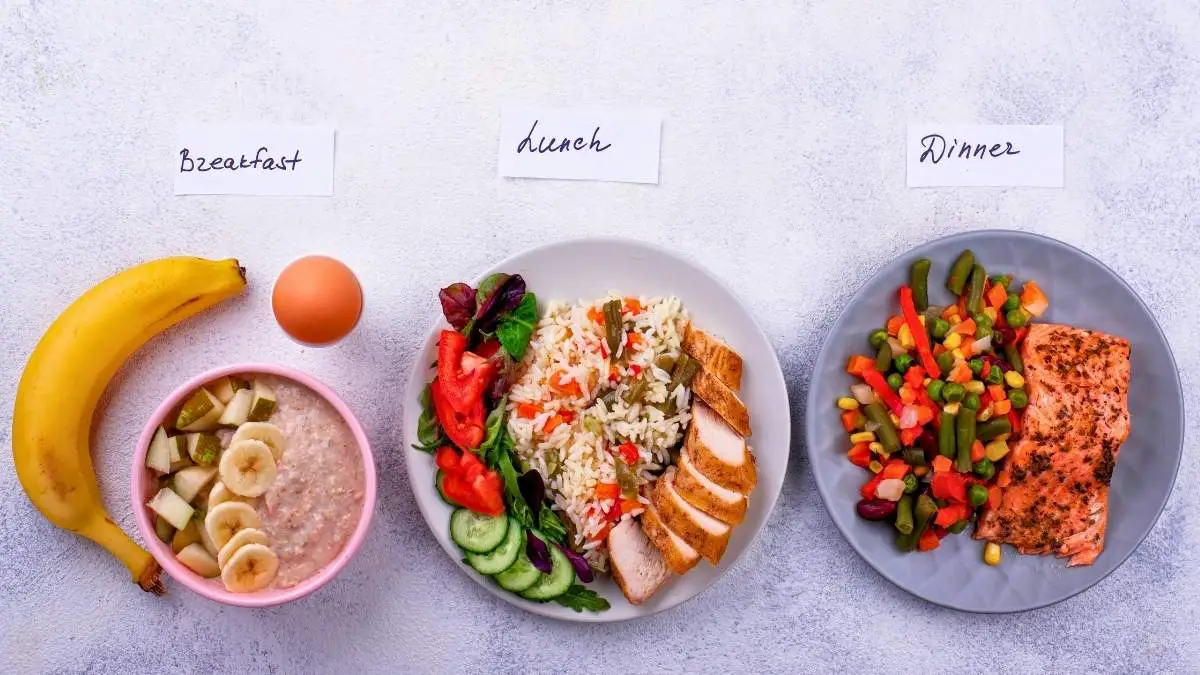
The reason is the per-meal threshold discussed earlier: if your muscle needs roughly 0.40 grams per kilogram per meal to trigger a meaningful response, a 20-gram dinner protein load after a low-protein day still leaves two missed opportunities to signal muscle repair.
A simple way to think about it: If your daily target is 96 grams, that’s three meals at roughly 32 grams each.
Not all protein at dinner. Not a protein shake at night to compensate for a low-protein day. Three consistent meals, each clearing the threshold.
Distribute across all three meals: Even one poorly timed day doesn’t matter much. The pattern over weeks is what research suggests shapes body composition change over time.
Getting the daily number right and spreading it evenly across meals is the structural correction most plans overlook. The next section shows what that actually looks like as food on a plate.
How to Hit Your Number Without Eating Chicken Every Day
People assume that hitting a 90-plus gram protein target requires eating the same foods on repeat. It doesn’t. What it requires is building each meal around a protein anchor.
A few common options, with approximate protein values from USDA FoodData Central:
Everyday Foods, Ranked by Protein
Quick reference for common protein sources — see what stacks up highest.
Two Large Eggs
2 eggsCottage Cheese
½ cupPlain Greek Yogurt
170gCooked Lentils
1 cupCooked Salmon
3 ozCanned Tuna
3 ozOne way to build a day that reaches 96 grams without repeating a single protein source: breakfast with two eggs and Greek yogurt (about 29 grams), lunch with tuna over salad (about 22 to 25 grams), dinner with salmon and a cup of lentils (about 40 grams).
That’s roughly 91 to 94 grams, with small additions from nuts, cheese, or beans filling the gap.
No supplement required to reach 1.2 g/kg on whole foods alone. What matters is that every meal has a clear protein anchor, not that every meal is the same.
There’s one more thing to know before you start: what to expect from your body in the first month. Most people check the wrong signal and think the approach isn’t working when it actually is.
What to Expect in the First Four Weeks
The scale is a slow signal. Body composition changes faster than the number on it, and in the first four weeks of eating enough protein during a calorie deficit, that gap between what’s happening and what the scale shows can feel discouraging if you’re watching the wrong thing.
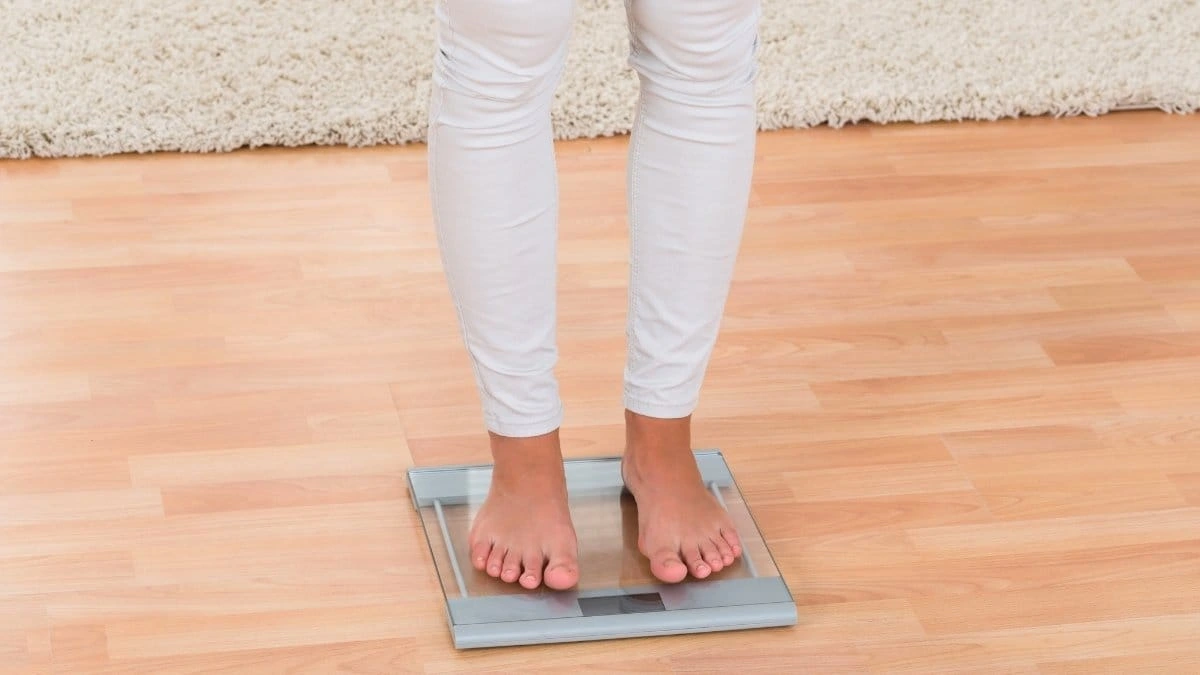
Here’s what’s more likely happening under the surface:
In the first one to two weeks, hunger often drops noticeably. Protein is the most satiating macronutrient, and higher-protein meals are associated with greater diet-induced thermogenesis, meaning the body appears to use more energy processing protein than it does processing carbohydrates or fat.
Feeling less hungry on roughly the same calories is a sign the approach is working.
In weeks two through four, fat loss and muscle preservation are both occurring, but the scale may not reflect this clearly because you’re not losing scale weight from muscle. Research during this period is encouraging.
A meta-analysis of 47 randomized controlled trials covering 3,218 participants found that higher protein intake significantly prevented muscle mass decline in adults working toward weight loss.
What you’ll likely see is a smaller number on the scale than you expected, alongside a body composition that’s shifting in the right direction.
Watch one signal in month one: your energy during normal daily activity. Strength on the stairs. How you feel carrying groceries. These reflect lean mass retention before any scale measurement can.

The number will move. But what it’s made of changes first.
Conclusion
Start with one number: your body weight in kilograms, multiplied by 1.2. That’s how many grams of protein you need daily to protect your muscle during weight loss after 50.
Calculate your daily protein target using the 1.2 g/kg body weight benchmark. Write the number down today, because knowing it changes what you put on your plate every single morning.
Most people tracking protein intake for weight loss after 50 are working from a number that was never designed for this stage of life. This one is.