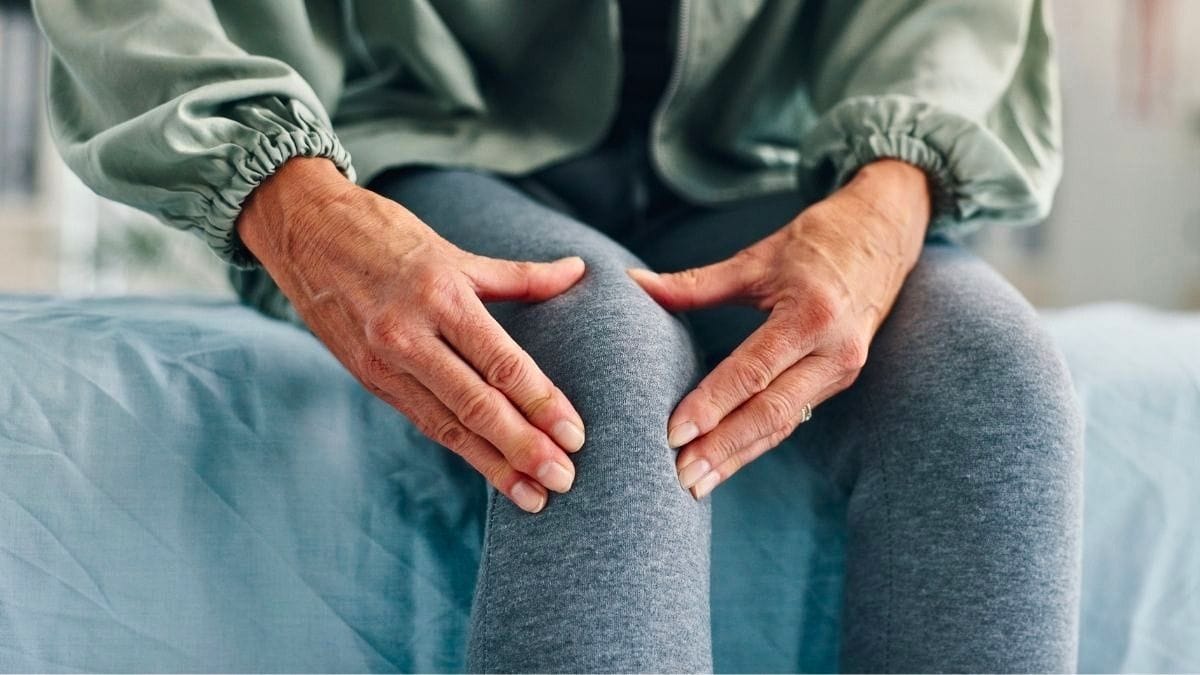
You clicked this because something made you worry about your bones. Maybe a doctor said something. Maybe you watched someone you love break a bone and you don’t want that happening to you.
Most people over 50 think taking calcium is the main answer. It’s not the whole story. The real reason your bones get weaker after 50 happens inside your cells, and a calcium pill alone can’t fix it.
If you’re between 50 and 70 and starting to think about bone health, this is for you. By the end, you’ll know what’s really going on and what to do about it.
What happens to your bones after 50
Your bones are not solid and still. They break down and rebuild themselves all the time. Up until about age 50, this stays balanced. The same amount broken down gets replaced.
After 50, that balance breaks. More bone gets removed than gets put back. A little bit lost each time, over and over, adds up to real bone loss.
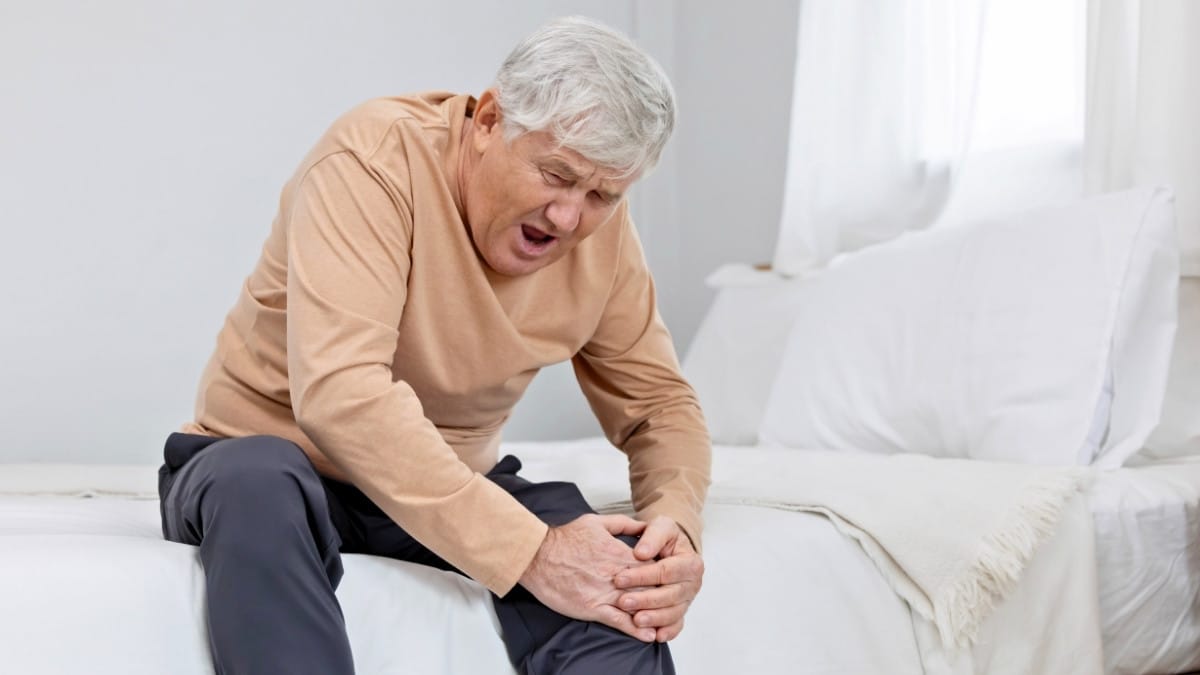
Two types of cells run this process. Osteoclasts, cells that break down old bone, keep working. Osteoblasts, cells that build new bone, slow down. The gap between them is where bone loss happens.
More than half of all Americans over 50 are either losing bone or heading toward it. Most don’t know because you can’t feel it. By the time it shows up as a broken bone, years of quiet loss have already happened.
Your body starts making fat where bone should be
Here’s the part almost no one talks about.
The cells that build new bone don’t appear out of thin air. They come from bone marrow stem cells, which are master cells inside your bones that can become either bone cells or fat cells, depending on signals they get.
Every time one of these stem cells divides, it makes a choice. Become a bone cell or a fat cell.
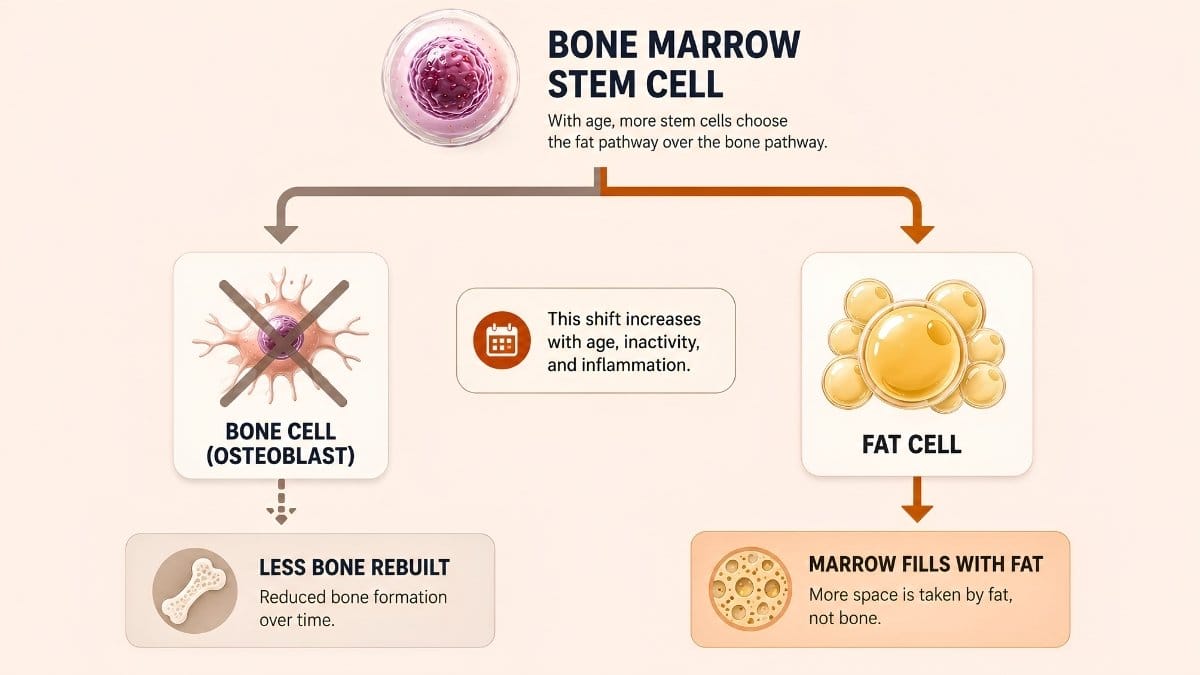
After 50, they start picking fat more often. This is not because of what you eat. It’s a shift in the signals your body sends to those cells. As more of your bone marrow fills with fat, fewer new bone-building cells get made. Less bone gets built. The loss gets worse.
This is why two people can eat the same amount of calcium and have very different bone strength. If the cells that should use that calcium have switched jobs, the calcium has nowhere useful to go.
Old “zombie” cells make things worse
Some cells in your body get old and stop working. But instead of dying, they just stay there and cause trouble.
Scientists call these senescent cells, which are worn-out cells that stop doing their job but keep releasing harmful signals into the tissue around them. A simple name for them: zombie cells.
These zombie cells release a stream of chemicals called the SASP, which is a mix of proteins that cause low-grade inflammation in nearby tissue. In plain words: zombie cells poison the area around them.
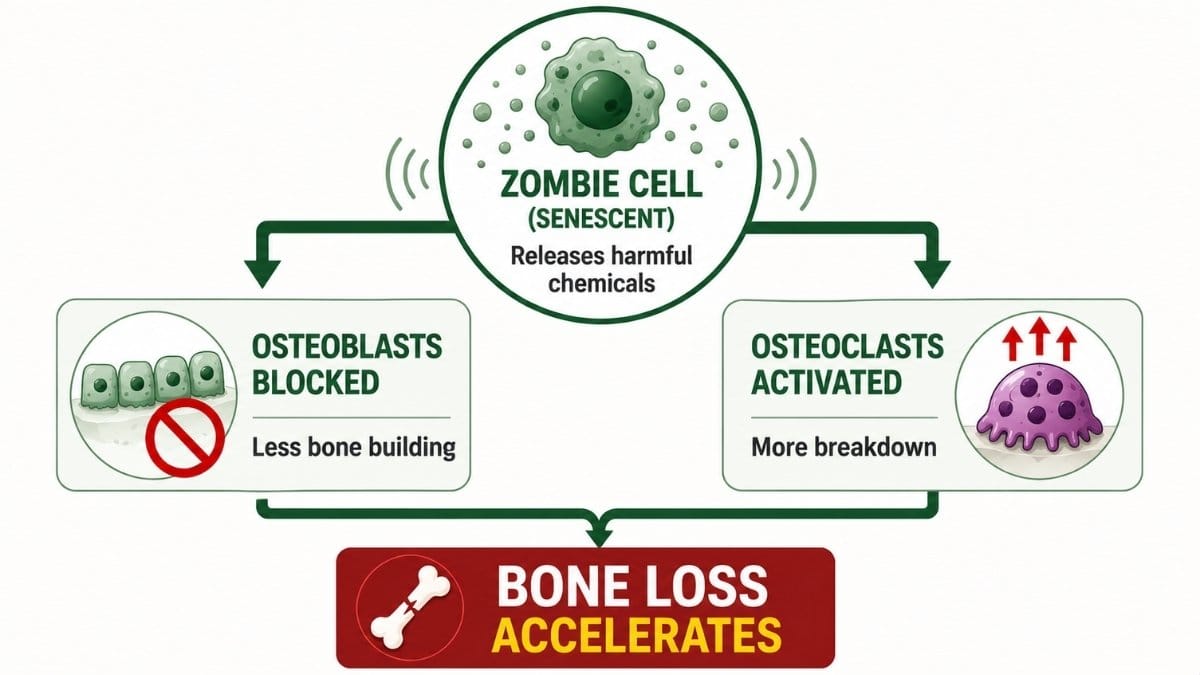
In your bones, this poison does two bad things at the same time. It blocks new bone cells from forming. And it tells the breakdown cells to work harder. Both of these push your bones in the wrong direction at once.
Research shows that zombie cells build up in bone as we age. In animal studies, clearing them out slowed bone loss. Human trials testing drugs that remove zombie cells are happening now, with early results showing some promise. These drugs are not available to the public yet.
The Three-Layer Problem
Bone breakdown cells keep working while bone building cells slow down.
Result: Net loss builds upStem cells start making fat cells instead of creating new bone-building cells.
Result: Reduced building capacityZombie cells block bone building and speed up bone breakdown at the same time.
Result: Accelerated degenerationCalcium and vitamin D help with layer one. They don’t reach layers two or three.
Your gut affects your bones
Most people would never connect the bacteria in their stomach to the strength of their bones. But the connection is real.
The bacteria living in your gut help control how well your body absorbs calcium. They also produce compounds that reduce inflammation and help your stem cells lean toward making bone instead of fat.
When gut bacteria diversity drops, which happens with age, antibiotics, and low-fiber diets, those helpful compounds fall too.
A large study of 684 adults found that people with more of certain gut bacteria had higher bone density. This was an observational study, meaning it shows a link but not a proven cause.
In one controlled trial, older women with low bone density who took a specific probiotic every day for a year lost less bone than those who didn’t. That result applies to that specific group, not every adult over 50.
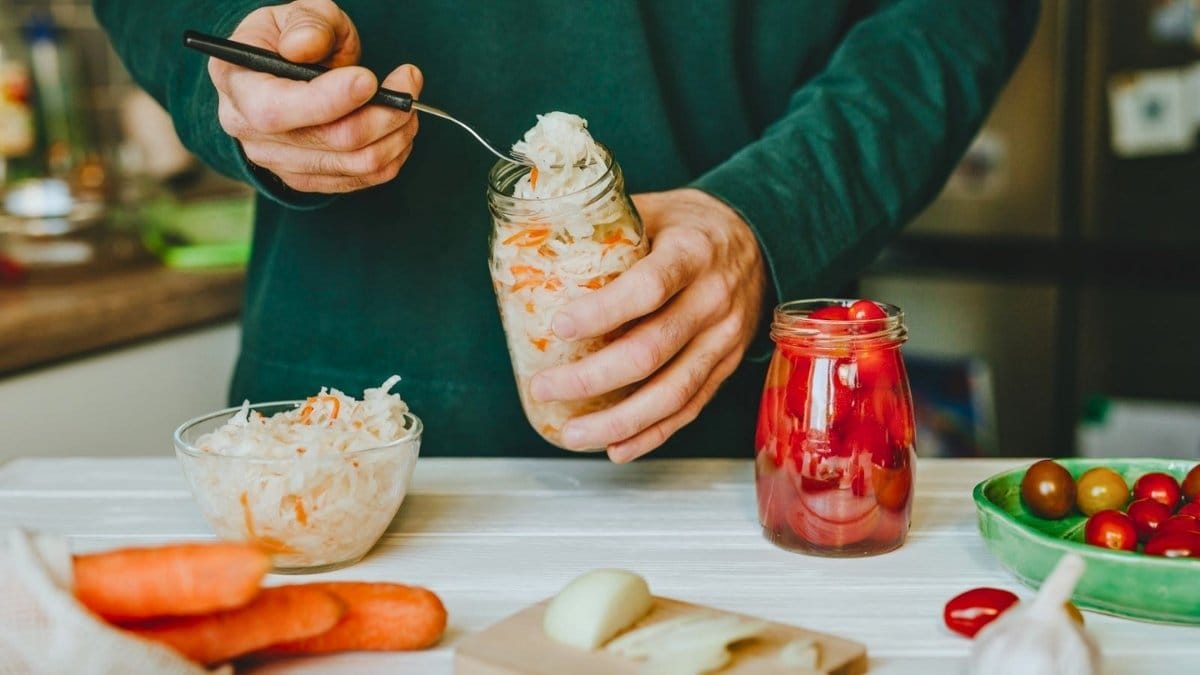
The practical point: eating more fiber-rich vegetables, legumes, and fermented foods supports the gut conditions that are linked to better bone health.
What actually helps
Talk to your doctor before changing your supplements if you’re pregnant, on medication, or managing a health condition.
Building Stronger Bones
Essential strategies to preserve bone density and prevent loss
Resistance Exercise
None of these work as well alone as they do together.
The one thing to do this week
Most people find out they have serious bone loss after they break something. By then, years of the stem cell switch and zombie cell buildup have already done their work.
A DEXA scan is a quick, low-radiation test that usually takes 10 to 20 minutes. It measures bone density at your hip and spine and gives you a real number. Without it, you’re guessing.
Less than half of women over 50 without a diagnosis have ever had one. For men, it’s even fewer.
Current guidelines recommend DEXA scans for all women 65 and older, and for women 50 to 64 and men 50 to 69 who have risk factors such as family history of fracture, low body weight, smoking, or low calcium intake. Many people in their 50s qualify right now.

You don’t have to wait until 65 to know where you stand.
What to do now
Start with your baseline. Ask your doctor to run a bone density scan (DEXA scan) and bring a list of three things to discuss: starting resistance exercise, eating more calcium-rich foods, and checking your vitamin D level. Bone loss after 50 is not automatic, and it is not only about calcium.
Now that you know what’s actually driving it, you have what you need to push back.