If you want stronger hips in retirement, walking helps, but research suggests it is usually not the most effective single exercise for building hip bone density. Bone responds to load and force.
A gentle stroll does not create enough mechanical stress to drive real bone adaptation at the hip. The good news is that a smarter approach exists.
This article explains which types of hip bone density exercise have the strongest evidence behind them, what the research actually shows, and how to approach resistance training for osteoporosis safely at any fitness level.
What Actually Builds Hip Density?
Bone is living tissue. It responds to load, resistance, and impact, not just movement. The more force placed on bone in a controlled, progressive way, the more the body signals bone-forming cells to get to work.
Walking is good for your heart and overall health. But it usually does not load the hip enough to trigger meaningful bone adaptation. The sites that matter most are the femoral neck, the trochanter, and the total hip, all areas linked to fracture risk.
The best-supported approach is multicomponent exercise. That means combining resistance training with some form of impact or balance work. Research supports this model consistently.
In a meta-analysis of 53 studies and 2,896 participants aged roughly 60 to 82, exercise significantly increased bone mineral density (BMD) at the femoral neck, lumbar spine, and trochanter.
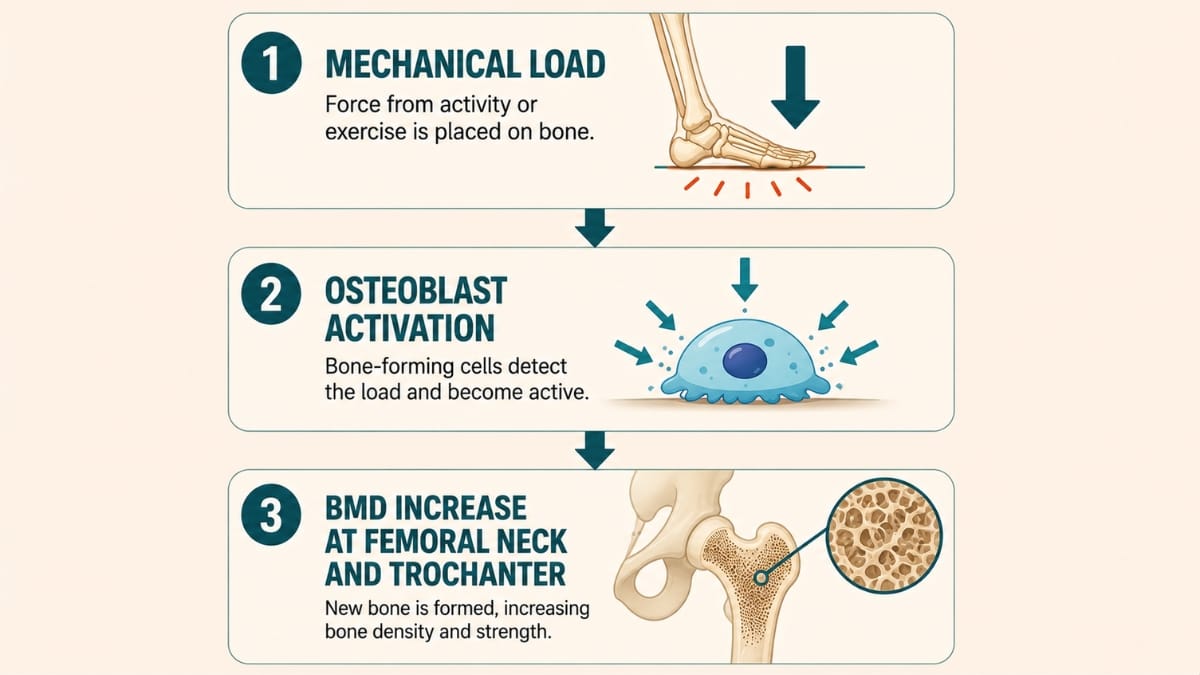
Total hip did not show a statistically significant change in that analysis, which is a reminder that improvements are real but not uniform.
Consult your doctor before starting.
The Exercise Type With the Strongest Evidence
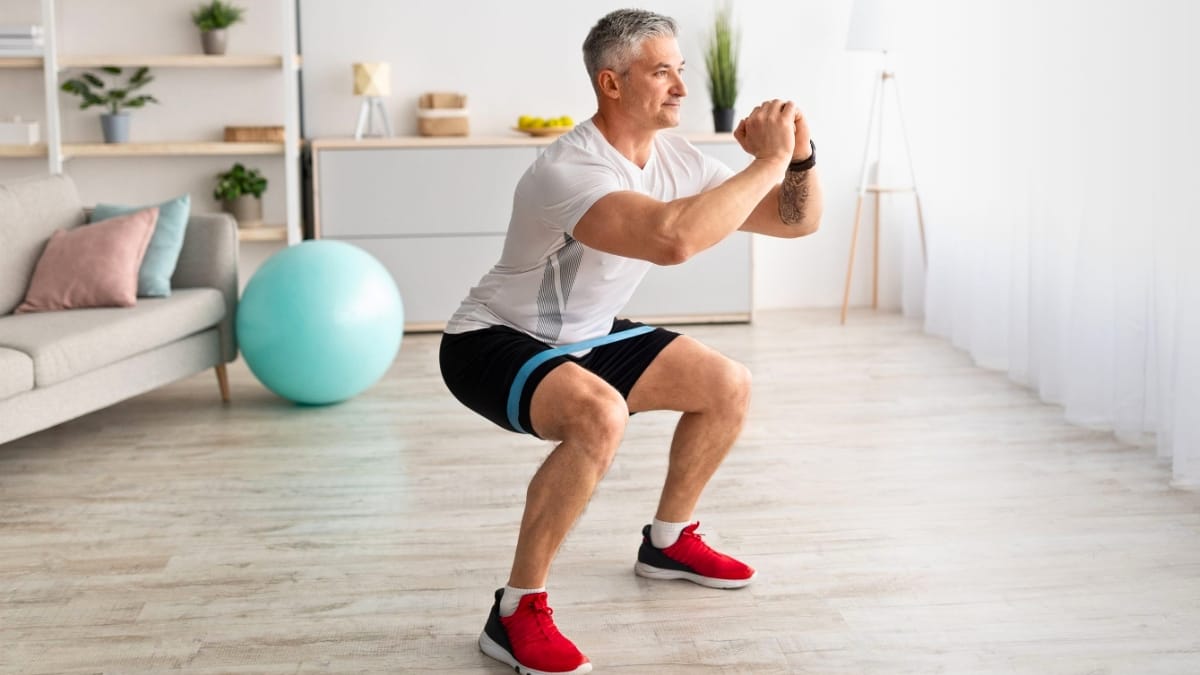
Resistance training is the foundation. It creates the kind of bone-loading signal that walking alone rarely matches. Guidelines now consistently recommend it as a core strategy for bone-building exercise for seniors.
A 2023 position statement recommended resistance exercise using 3 to 10 types of free-weight or machine exercises, at 50% to 85% of one-repetition maximum, for 5 to 12 reps per set, performed 2 to 3 days per week, over 3 to 12 months.
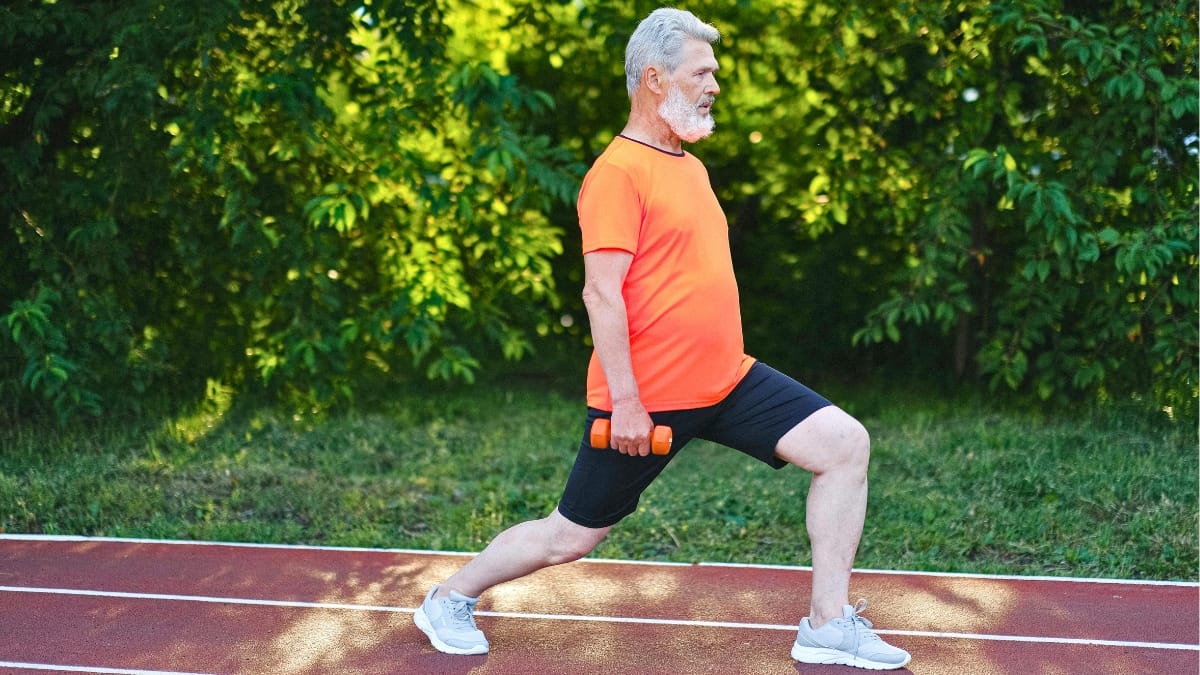
That is a meaningful, specific dose, not a vague “lift weights sometimes.”
Impact exercise can add benefit when it is medically appropriate. Jumping and step-based moves create ground reaction forces that load hip bone effectively. But impact is not right for everyone.
Walking still belongs in your routine. It supports cardiovascular health, mood, and functional fitness.
The point is not that walking is bad. It is that walking alone is rarely enough to drive hip BMD gains. Think of resistance training for osteoporosis as the main event, with walking as a valued supporting role.
What the Research Shows at the Hip
Studies in older adults show that resistance training can improve proximal femur BMD. The improvements are real. They are also modest. It helps to set realistic expectations going in.
In one well-cited 40-week resistance training study, 45 men and 79 women aged 55 to 74 participated. Spine, trochanter, and total hip BMD all increased from baseline to 40 weeks. That is a meaningful result across multiple hip sites in a real aging population.
Older trial data also support impact exercise. One study in adults over 50 found that high-impact exercise improved proximal femur outcomes compared to controls. Again, the gains were meaningful but not dramatic.
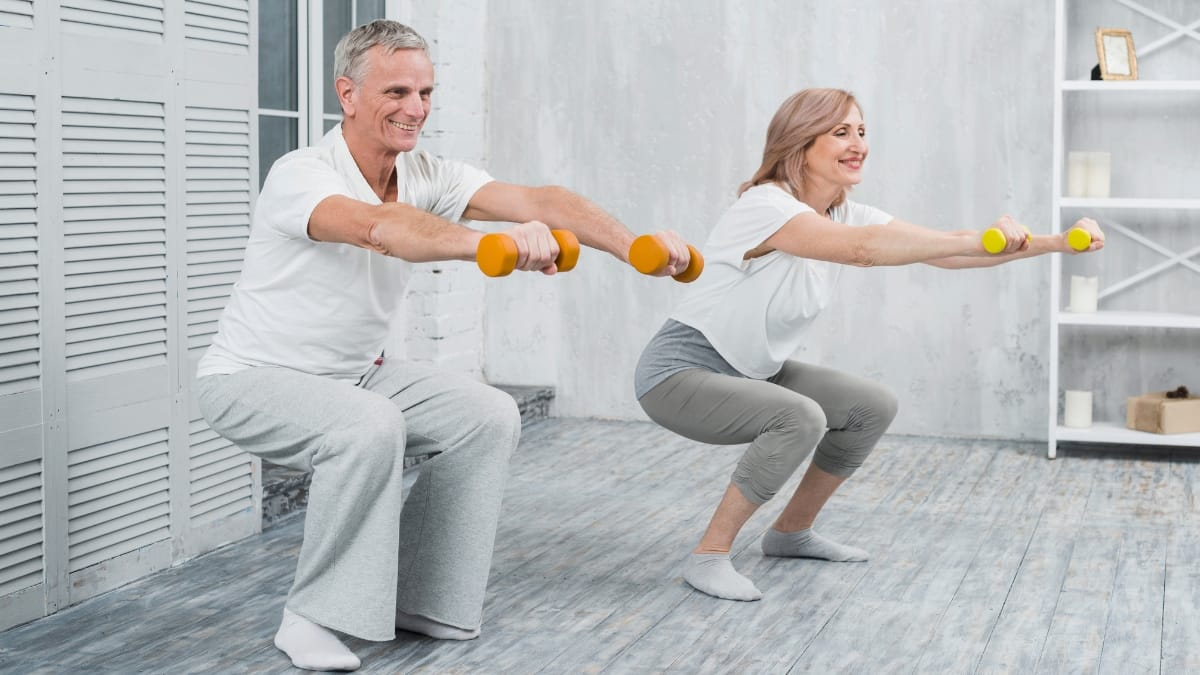
What this tells you is that hip strength training in older adults works, not as a miracle, but as a real, evidence-backed strategy. A few months of consistent, progressive effort can shift your bone density in the right direction. That matters when hip fracture risk is the concern.
Safe Moves Worth Including
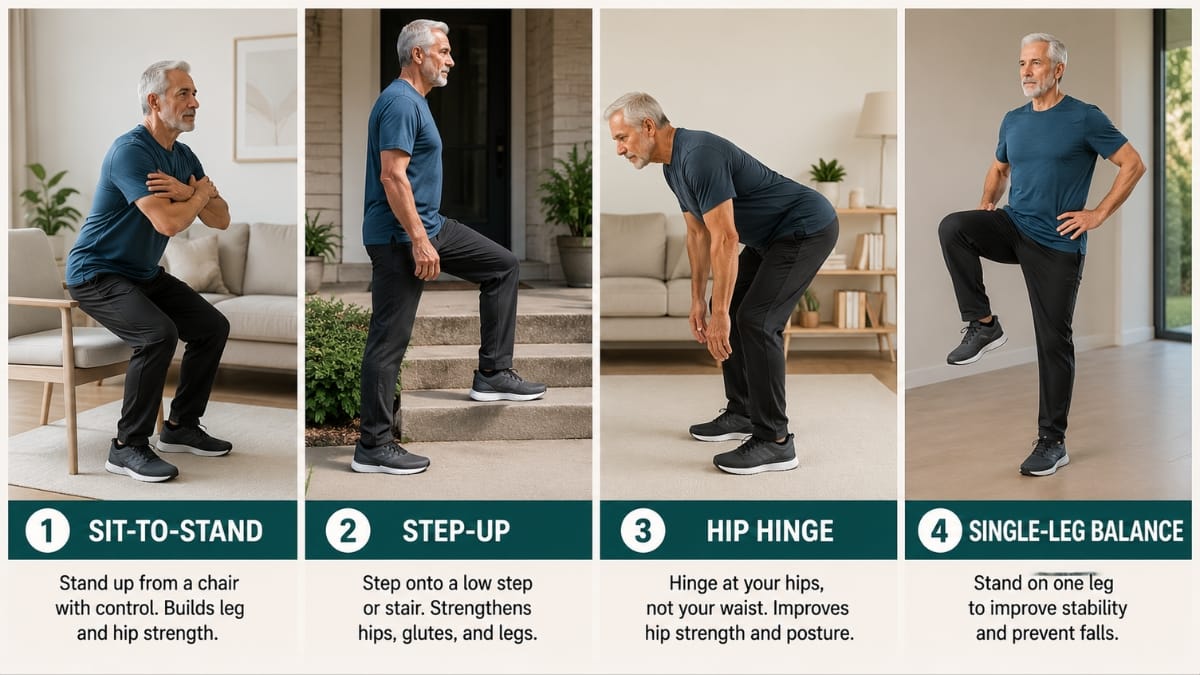
Several exercises load the hip effectively without being overly complex. These are the ones most commonly supported in guidelines and research:
- Squats and sit-to-stand: Work the hip, knee, and femur under load
- Step-ups: Create single-leg loading at the hip joint
- Hip hinge (deadlift pattern): Loads the posterior chain and proximal femur
- Loaded carries: Challenge hip stability under weight
- Balance drills: Reduce fall risk, which drives fracture risk in older adults
Some healthy, medically cleared adults may also benefit from low-level impact work, such as heel drops, marching, or modified jumping, depending on their bone health status.
Good form matters more than heavy weight. Supervision from a physical therapist or certified trainer with experience in older adults is worth considering.
NIAMS recommends that older adults aim for 150 minutes of exercise per week, including balance, aerobic, and muscle-strengthening work every week.
This is a hip bone density exercise plan, not a fitness test. Build slowly.
Who Should Be Cautious First
Not every exercise suits every body. Some people need medical clearance before adding resistance or impact work.
Talk To Your Doctor First
Consult a healthcare professional before starting if you have:
Bone Density Issues
Diagnosed with osteoporosis or osteopenia.
Spinal Fractures
History of a vertebral compression fracture.
Resting Body Pain
Experience joint, back, or hip pain while at rest.
Stability Concerns
Ongoing balance problems or recent fall history.
Chronic Conditions
Living with conditions affecting bone, heart, or nerve function.
NIAMS explicitly advises people with low bone density, osteoporosis, or physical limitations to talk to a health care provider before starting an exercise program. That advice is not just legal caution.
It is genuinely useful. A clinician or physical therapist can tell you which moves are appropriate for your specific bone density level and fracture risk.
Stop any exercise that causes sharp pain, dizziness, or instability. Individualized plans matter more than generic routines. What works for one person may not be appropriate for another.
A Simple Weekly Template to Start
A realistic starting point for most older adults looks like this:
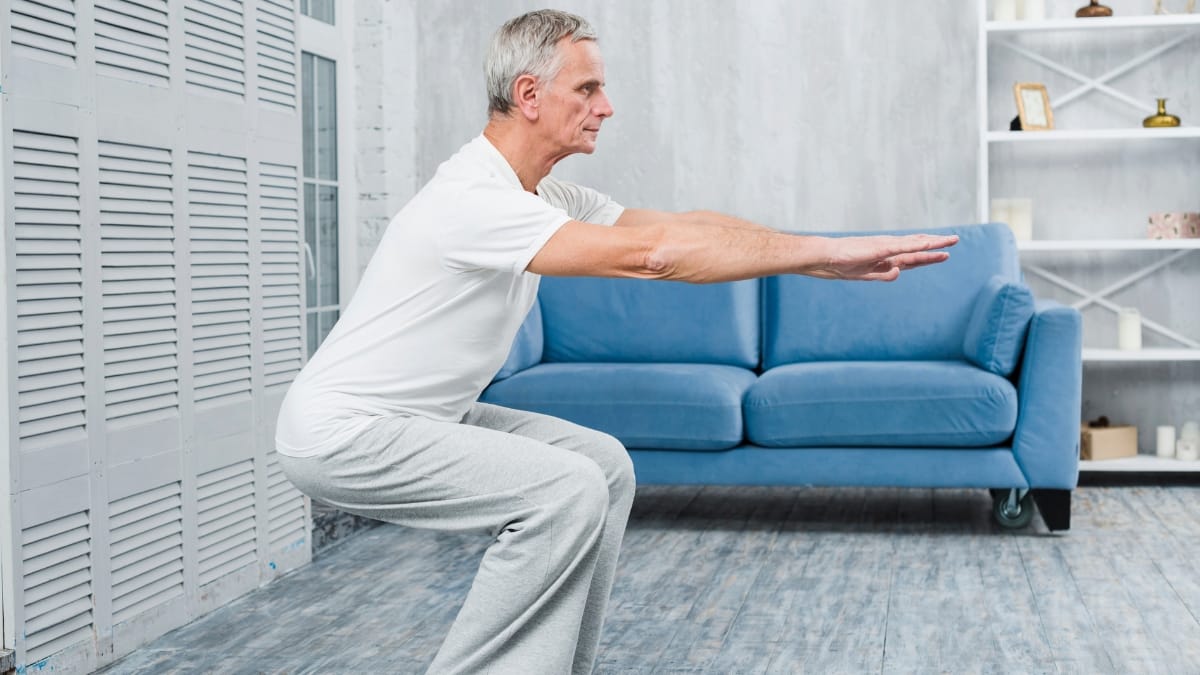
- Day 1 — Resistance training: Squats, step-ups, hip hinge, 2 sets of 8 to 10 reps
- Day 2 — Walking and balance: 20 to 30 minutes of walking, plus 5 minutes of single-leg standing
- Day 3 — Rest or gentle movement
- Day 4 — Resistance training: Same or slightly heavier load, add one new exercise
- Day 5 — Walking and balance work
- Days 6 to 7 — Rest or light activity
Guidelines recommend resistance training 2 to 3 days per week, with impact or balance work 3 or more days per week in some cases.
Progress gradually. Add one rep, one set, or a little more resistance every one to two weeks. Consistency matters more than intensity. A bone health routine you do reliably for months will always outperform a harder routine you quit after three weeks.
A Final Word
Walking is good. But the best-supported hip bone density exercise is a safe, progressive resistance program, often combined with balance and impact work. Research shows real but modest gains are possible.
Start carefully, build slowly, and most importantly, talk to your doctor about your bone health, fracture risk, and exercise limits before you begin.