

You walk into the kitchen and forget why you came. Ten minutes later, the reason returns on its own. Then a quieter thought arrives: is this normal forgetfulness, or the start of something else? Both can begin with the same small slip.
What happens afterward tells them apart. In some people, a lapse fades once a doctor finds and treats the cause. In others, the memory never comes back, and the gaps grow. Which path you face depends on what sits behind the slip.
In my work with older adults, the worry often weighs more than the lapse. The sections below show how to read the signs, and why some memories return while others do not.
What Ordinary Forgetfulness Actually Looks Like
The National Institute on Aging (NIA) says mild forgetfulness is often a normal part of aging. Taking longer to learn new things fits that pattern. So does forgetting to pay a bill now and then. Losing things from time to time also counts.
These lapses share one feature. Often, your brain still holds the information, and retrieval runs slow. A cue can bring it back, like retracing your steps or hearing the first letter of a name. Names are the classic case. You know the neighbor’s face but not the name, and it arrives that night.

Distraction adds to the problem. You cannot recall where you set your glasses if you never noticed putting them down. A bowl by the door for keys and glasses helps. Say out loud where you put things, and your brain gets a second chance to notice.
In my conversations with adults in their late 50s and 60s, a pattern repeats. People with ordinary lapses notice them and feel annoyed. Their daily life stays on track. The slip stays a nuisance. That baseline only helps if you also know what falls outside it.
The Red Flags That Point Somewhere Else
The NIA states that dementia is not a normal part of aging. Serious memory problems make everyday tasks hard, such as driving, using the phone, and finding the way home. How often you slip matters less than what the slips cost you.
The NIA also compares the two side by side. A bad decision once in a while is normal. Poor judgment most of the time is a warning sign. Forgetting a payment once is normal. Struggling to manage monthly bills is not.

Misplacing things often, and being unable to find them, is another sign. The NIA’s dementia guidance also lists repeated questions and getting lost in familiar places. Taking longer to finish normal daily tasks counts too. So does personality change.
The NIA explains that dementia comes from brain diseases such as Alzheimer’s. When that disease harms memory centers, a reminder may not bring the memory back. The person may ask the same question again five minutes later.
In my experience, awareness shifts as the problem grows. Early on, a person may see no problem at all. Family members often notice first. One sign alone proves nothing. Doctors look at the pattern and whether it is getting worse.

If a parent or spouse shows several of these signs, book a visit rather than wait. Some people who fit part of this picture have a cause that doctors can treat.
Why Some Lapses Come Back: The Treatable Causes
Note: If you take medication or have a health condition, talk with your doctor before you change your sleep habits, supplements, or prescriptions.
Cleveland Clinic lists several causes of memory trouble that doctors can treat. An underactive thyroid is one. A simple TSH blood test checks it, and medication treats it. Low vitamin B12 is another. A blood test finds it, and supplements or injections correct it.

Sleep matters too. Cleveland Clinic calls sleep critical for memory. Your brain sorts and stores new memories while you rest, so short nights leave gaps.
The clinic also names untreated sleep apnea as a cause of thinking problems. Loud snoring, pauses in breathing, and daytime sleepiness are the warning signs. Treating a sleep disorder can improve memory and thinking skills.
Medications deserve an early look. Cleveland Clinic says some sleep aids, anxiety medicines, and pain medicines can affect memory. It advises a medication review with your doctor at least once a year. Bring every pill and supplement to that visit.
Cleveland Clinic says some memory problems can be reversed. The reason is simple. These causes disturb how your brain works day to day, and treatment restores the balance.
A peer-reviewed review in the University of California’s eScholarship repository found that fully reversible dementia is uncommon. The same review links a drug group called anticholinergics, sleep apnea, and depression to higher Alzheimer’s risk. Ask your pharmacist whether any of your medicines belong to that group.
Depression can cloud memory too. Low mood drains focus, and a mind that cannot focus cannot record new memories. A lapse that fades still deserves a follow-up visit. If low mood or worry is affecting your daily life, talk with your doctor or a mental health professional. In the US, you can call or text 988 at any time.
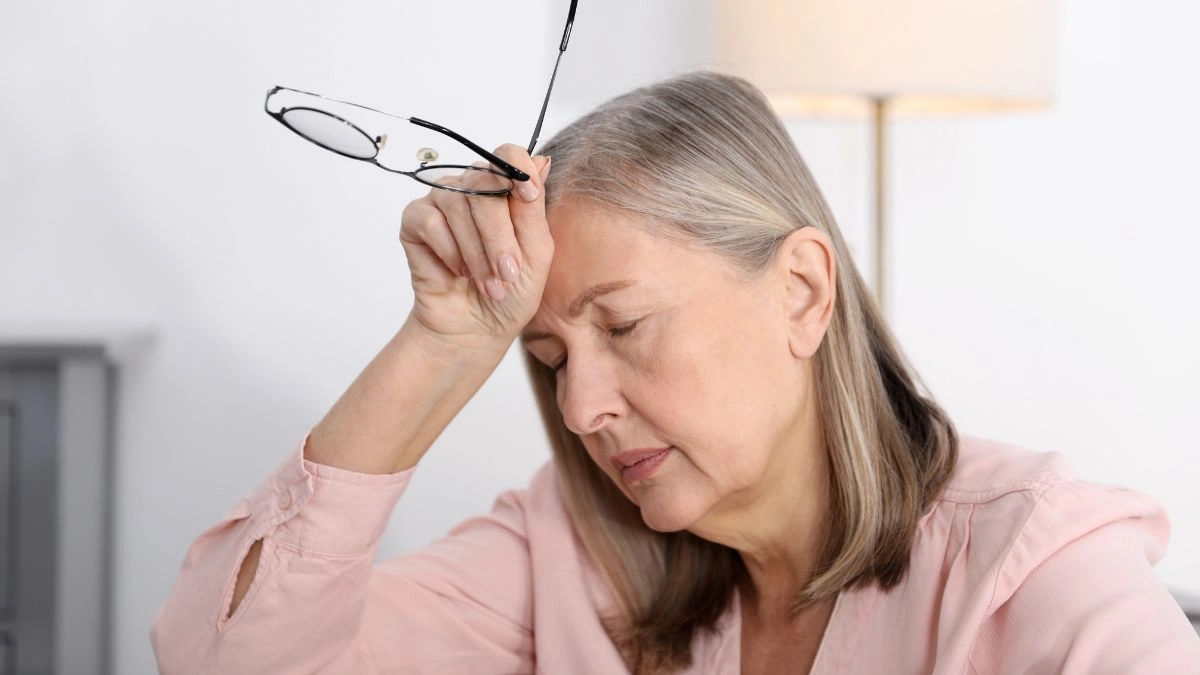
In my conversations with adults in their 60s, fear often delays the doctor visit. They dread the answer. Yet the first steps are small: a blood draw and a medication list. Ask for your results in writing. A TSH or B12 number gives you something concrete to track.
Between a treatable cause and full dementia sits a middle stage that confuses many people.
Mild Cognitive Impairment: The Gray Zone
Mild cognitive impairment (MCI) sits between normal aging and dementia. Cleveland Clinic says people with MCI have more noticeable memory or thinking problems and score lower on cognitive tests. Yet they can still function independently in daily life.
A person with MCI might forget recent conversations more often than before. The same person still cooks, drives, and handles money. That in-between status is why MCI confuses so many people.
The NIA notes that not everyone with MCI develops dementia. Some people stay stable.
One test gives a snapshot. Tests repeated over time show the direction. Ask your doctor how often to retest. A memory log helps at home. Each evening, write one line about any slip that day. After a month, you and your doctor can see whether the pattern grows, holds, or fades.

Knowing the categories helps only if it leads to a plan.
What I Would Do Next
Note: If you have a heart condition, joint pain, or any other health concern, check with your doctor before you start a new exercise routine.
A good visit starts with notes. Write down three recent lapses, with dates and what was happening at the time. List every medicine and supplement you take. If a family member has noticed changes, ask them to come along.

Then ask your doctor four direct questions:
- Can you check my B12 and thyroid levels?
- Could any of my medicines affect my memory?
- Can you screen me for depression and sleep apnea?
- Can you check my hearing and vision?
These four questions cover the most common treatable causes.
The hearing and vision checks come from the 2024 Lancet Commission on dementia prevention. Gill Livingston and her colleagues named 14 risk factors that people can change. They estimated that tackling all 14 could prevent or delay about 45 percent of dementia cases worldwide.
In the 2024 update, hearing loss and high LDL cholesterol each tied to about 7 percent of dementia cases, the largest shares. Vision loss and high LDL cholesterol are new additions. Physical inactivity, high blood pressure, and social isolation also appear on the list.
Treat the 45 percent as a best-case estimate. Commission members writing in The Conversation explained that it assumes each factor causes dementia and that people can remove it. A 2025 paper in eBioMedicine suggested ways to broaden the model, including differences in risk between men and women.
You can act on the easy ones now. A ten-minute walk after a meal is a simple start.

The Commission lists physical inactivity among its 14 factors. That leaves one step, and it takes a single phone call.
A lapse does not have to stay a worry. Treat it as a question, and you can answer it. This week, call your doctor’s office and ask for a memory and thinking check. Whatever the visit shows, you will know more than you do today. That is solid ground, and you earned it by asking.
References
- National Institute on Aging, “Memory Problems, Forgetfulness, and Aging” https://www.nia.nih.gov/health/memory-loss-and-forgetfulness/memory-problems-forgetfulness-and-aging
- National Institute on Aging, “What Is Dementia? Symptoms, Types, and Diagnosis” https://www.nia.nih.gov/health/alzheimers-and-dementia/what-dementia-symptoms-types-and-diagnosis
- National Institute on Aging, “What Is Mild Cognitive Impairment?” https://www.nia.nih.gov/health/what-mild-cognitive-impairment
- Cleveland Clinic, “Memory Changes: What’s Normal and What’s Not?” https://preventad.ccf.org/memory-concerns/
- Peer-reviewed review of reversible dementia syndromes, University of California eScholarship. https://escholarship.org/content/qt3033b0zj/qt3033b0zj.pdf
- Livingston G, et al. “Dementia prevention, intervention, and care: 2024 report of the Lancet standing Commission.” The Lancet, 2024. https://doi.org/10.1016/S0140-6736(24)01296-0
- “Broadening dementia risk models: building on the 2024 Lancet Commission report.” eBioMedicine, 2025;120:105950. https://pmc.ncbi.nlm.nih.gov/articles/PMC12509747
- The Conversation, “Addressing these risk factors could reduce dementia rates by 45%,” August 2024 (republished by EWN). https://www.ewn.co.za/2024/08/13/addressing-these-risk-factors-could-reduce-dementia-rates-by-45