

Bloating can be uncomfortable, but the food that helps one person may trigger gas or fullness in someone else. If you have tried cutting foods, adding supplements, or reading about gut health without finding clear answers, you are not alone. That confusion is very common.
Bloating is a symptom with multiple possible causes, and no single food relieves it for everyone. This article covers five foods with human research behind them:
Some of this evidence relates to constipation rather than bloating directly, and that distinction matters. If you have persistent or severe symptoms, including vomiting, bleeding, fever, unexplained weight loss, or significant pain, please contact a healthcare professional. (https://www.mayoclinic.org/diseases-conditions/gas-and-gas-pains/in-depth/gas-and-gas-pains/art-20044739)
Green Kiwifruit for Constipation-Related Bloating
If your bloating tends to appear alongside infrequent or difficult bowel movements, green kiwifruit may be worth considering. It contains both fiber and water, which can support stool movement. This does not mean it relieves every type of bloating.

In a randomized crossover trial of 184 participants, two green kiwifruits daily for four weeks increased complete spontaneous bowel movements by 1.53 per week in people with functional constipation and by 1.73 per week in those with constipation-predominant IBS. Gastrointestinal comfort also improved in the constipated groups. (https://pubmed.ncbi.nlm.nih.gov/36537785/)
The evidence is stronger for constipation and abdominal comfort than for unexplained bloating without constipation. If you do not have constipation, the results of this trial may not apply to you.
Some people are sensitive to certain fruits or specific fermentable carbohydrates known as FODMAPs. If kiwifruit has caused symptoms before, introduce it gradually and track your response.

Start with one fruit and observe changes in stool frequency and comfort over one to two weeks.
Plain Yogurt or Kefir With Live Cultures
Yogurt and kefir are fermented dairy foods, but they are not all the same. Products differ in microbial strains, added sugar content, and how much lactose remains after fermentation. Seeing “contains live cultures” on a label does not mean the product meets the scientific definition of a probiotic.

For people with lactose malabsorption, yogurt may be easier to digest than regular milk. In a randomized, double-blind crossover trial of 24 people with lactose malabsorption, yogurt reduced peak hydrogen exhalation by 27 percent compared with placebo, indicating improved lactose digestion. (https://pubmed.ncbi.nlm.nih.gov/25042846/)
The NIH explains that fermented foods such as yogurt may contain beneficial microorganisms, but not every fermented food contains organisms that meet the definition of a probiotic. (https://ods.od.nih.gov/factsheets/Probiotics-HealthProfessional/)
This evidence is primarily about lactose digestion, not a universal reduction in bloating. Probiotic effects vary by strain, product, and individual response. If you have lactose intolerance, a lactose-free yogurt may be better tolerated. Choose unsweetened products and begin with a small serving.
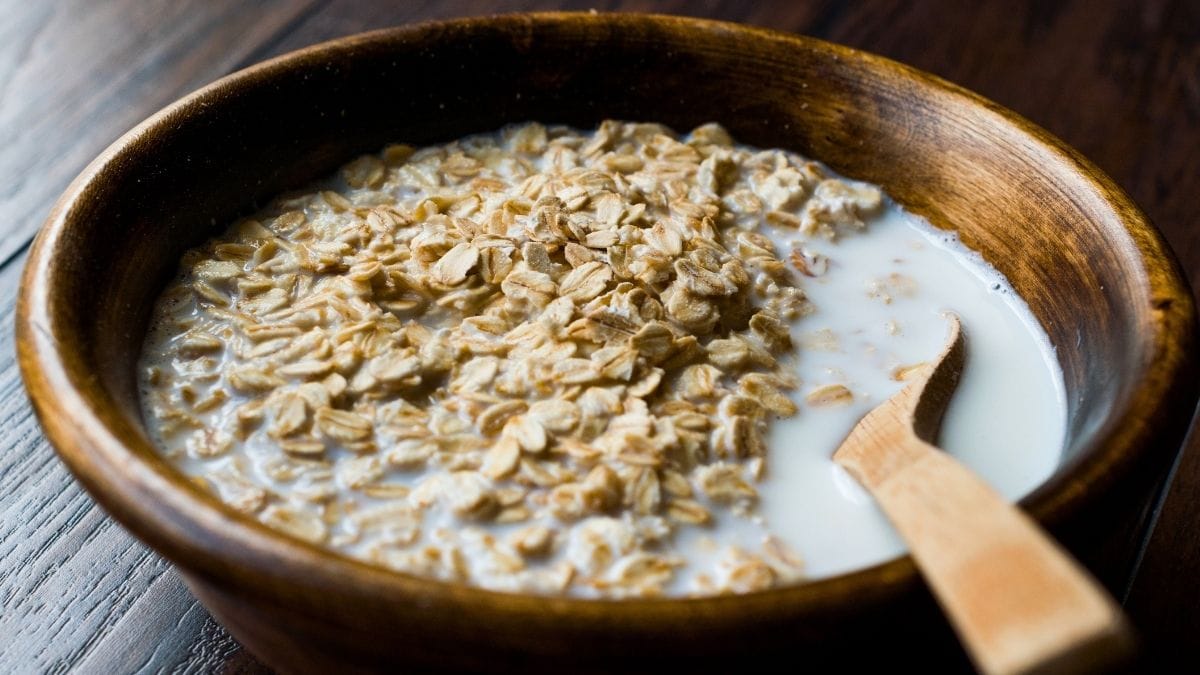
Oats for Gentle Soluble Fiber
Oats are a versatile source of soluble fiber that may support regular bowel habits. Soluble fiber absorbs water and can help soften stool, which is useful when constipation contributes to discomfort. The important caution is to increase portions gradually.
A systematic review of 84 articles, including 23 randomized controlled trials, found that oats showed potential effects on beneficial bacterial groups and short-chain fatty acids. However, most studies reported no change in gastrointestinal symptoms, and no included studies specifically assessed IBS. (https://pubmed.ncbi.nlm.nih.gov/34486656/)
A review of 14 studies in people without bowel disease suggested that oats or oat bran may increase stool weight and reduce constipation, while noting limited evidence that oats outperform other cereals. (https://pubmed.ncbi.nlm.nih.gov/25267242/)
If you increase fiber intake too quickly, you may notice more gas before your digestive system adjusts. Add oats in small amounts and allow one to two weeks for your body to adapt. People with celiac disease should use certified gluten-free oats and confirm this with their healthcare professional.
Prunes for Hard Stools and Infrequent Bowel Movements
Prunes are most relevant when bloating is linked to hard stools or infrequent bowel movements. They contain both fiber and naturally occurring sorbitol, a sugar alcohol that draws water into the bowel. This combination may contribute to their laxative effect.

In an eight-week randomized crossover study of 40 people with mild-to-moderate constipation, dried plums improved complete spontaneous bowel movements and stool consistency compared with psyllium. Straining and global constipation symptoms did not differ significantly between treatments. (https://pubmed.ncbi.nlm.nih.gov/21323688/)
A systematic review reported that 100 grams of prunes daily increased stool frequency from 2.8 to 3.5 complete spontaneous bowel movements per week in one constipation trial, but found no difference in overall gastrointestinal symptoms. (https://pubmed.ncbi.nlm.nih.gov/25109788/)
The evidence supports stool frequency and consistency more clearly than bloating relief. Prunes are not a treatment for abdominal pain or unexplained distension. Sorbitol may cause loose stools or gas in some people, so start with three to four prunes and observe your response before increasing the amount.

Fermented Vegetables in Small Portions
Sauerkraut and other fermented vegetables are not the same as tested probiotic products. Fermentation changes a food’s microbial and chemical profile, but products vary widely. Pasteurized versions may not contain live microorganisms, so checking labels matters.

In a pilot randomized study of 31 women, approximately 100 grams per day of fermented vegetables for six weeks was associated with an increase in a beneficial bacterial species called Faecalibacterium prausnitzii in one intervention group. The study was small and did not establish that fermented vegetables reliably relieve bloating. (https://pubmed.ncbi.nlm.nih.gov/36201455/)
In a 17-week randomized study with 18 participants per arm, a diet high in fermented foods increased microbiota diversity and decreased inflammatory markers. (https://pubmed.ncbi.nlm.nih.gov/34256014/)
A change in microbiome measures is not the same as a proven reduction in bloating symptoms. These are early findings. Some people find that fermented foods worsen bloating, particularly if they are sensitive to acidic or salty foods. Begin with a small portion, such as a tablespoon or two, rather than a full serving.
How to Test Foods Without Triggering More Gas
The safest approach is to introduce one food at a time. Changing several foods simultaneously makes it impossible to know which one is helping or causing symptoms. Begin with a small portion and track bloating, pain, and stool changes for at least one week.
Rapidly increasing fiber from any source can cause more gas before your digestive system adjusts. Increase portions slowly and drink adequate water.

A low-FODMAP diet reduces fermentable carbohydrates linked to gas and bloating. It is a structured clinical approach, not a permanent list of forbidden foods. A review found clinical response in approximately 50 to 80 percent of people with IBS across at least 10 randomized trials. (https://pubmed.ncbi.nlm.nih.gov/28592442/)
Johns Hopkins Medicine describes gradual food reintroduction as a way to identify triggers after a low-FODMAP trial. (https://www.hopkinsmedicine.org/health/wellness-and-prevention/bloating-causes-and-prevention-tips) Speak with your doctor before starting, and work with a registered dietitian before following a restrictive diet.
If you have unintentional weight loss, gastrointestinal bleeding, vomiting, severe pain, or a new persistent change in bowel habits, contact a healthcare professional. (https://www.mayoclinic.org/diseases-conditions/gas-and-gas-pains/in-depth/gas-and-gas-pains/art-20044739)
Conclusion
Green kiwifruit and prunes may support constipation-related symptoms, yogurt or kefir may ease lactose digestion, oats may help with regularity, and fermented vegetables offer promising early microbiome evidence. Try one gut-friendly food for bloating at a modest portion, keep a simple symptom record, and discuss anything persistent with your doctor.
Medical Disclaimer
This article is for educational purposes only and does not replace diagnosis or individualized medical care. The information here is not intended to treat, cure, or prevent any condition. Responses to food vary by person, and the evidence described relates to specific populations in research settings. If you have ongoing or worsening digestive symptoms, please consult a qualified healthcare professional before changing your diet or beginning any supplement or treatment.