You know the feeling. It’s 10am. You’ve been at your desk for two hours, you have a full morning ahead, and your brain is already running on fumes.
Most people who feel their focus fade before lunch blame sleep, stress, or their schedule, but the real problem is often what they ate at 7am.
Most people pick a breakfast that spikes their blood sugar fast and leaves their brain starved of fuel by mid-morning, and they don’t know a cheaper, simpler fix is already sitting in their pantry.
This article is for adults who feel their focus fade before lunch and want a food-based fix. By the end, you’ll understand exactly how oats brain energy works, and how to use that to your advantage every morning.
What Happens in Your Brain When You Skip a Steady Breakfast
You’ve probably noticed that some mornings your thinking is sharp and some mornings it isn’t, and your breakfast is a bigger factor than most people realize.
The brain runs almost entirely on glucose [a type of sugar that circulates in the blood and powers every thought, memory, and decision your brain makes].
It can’t store more than a few minutes’ worth. That means what you eat for breakfast directly shapes how well your brain functions for the next several hours.
The supply problem is simple. When you eat something that sends glucose flooding into your blood all at once, white toast, a pastry, a bowl of sweetened cereal. your body responds by pulling that glucose out of circulation quickly.
Blood glucose climbs fast and then drops. That drop is linked to the fog you feel.
Credit: Deposit Photo
That’s the distraction. That’s the moment you reach for a second coffee and wonder if you slept badly.
Research in school children found that a more stable blood glucose profile, one that avoids sharp peaks and troughs, is associated with better cognitive function across the morning. The effect is likely similar in adults, though the research in adults is less consistent.
The problem isn’t that you ate too little. It’s that you ate something that couldn’t hold the line.
What changes this isn’t expensive. It’s not complicated. It’s already in most kitchens, and it works through a mechanism your body can’t rush or skip, which is exactly what makes it reliable.
Credit: Deposit Photo
That’s the oats brain energy story, and it starts in the first hour after you eat.
Tips:
Eating a high-sugar breakfast can cause a glucose spike and crash — plan for a low-GI option to keep your mind steadier before 10am.
If you can’t eat first thing, even a small bowl of oats beats skipping breakfast for protecting your morning focus.
The First 60 Minutes: Oats Brain Energy Starts Here
Your brain does not care how healthy your breakfast is. It only cares how steady the fuel arrives. Oats give the brain what it actually wants: a slow, consistent release of glucose that keeps the supply line open without overwhelming it.
The difference comes down to one thing oats contain that most breakfast foods don’t.
Oats contain beta-glucan [a thick, gel-forming fiber that slows the breakdown of carbohydrates in the gut and delays glucose absorption into the bloodstream]. When beta-glucan mixes with water in your digestive tract, it forms a gel.
That gel coats the walls of your small intestine and slows how fast glucose gets through.
Credit: Deposit Photo
The result is a gentler, more drawn-out release of sugar into your blood, not the spike-and-crash pattern a bowl of cornflakes produces.
In a randomized crossover study of 19 healthy young adults, oat beta-glucans at breakfast significantly reduced the glucose peak in the hour after eating.
Talk to your doctor before changing your breakfast routine if you’re managing diabetes, taking medication that affects blood sugar, or pregnant.
Quick morning check Two hours after breakfast, notice how you feel. Stable: you can hold a thought without reaching for coffee or a snack. Unstable: your mind is wandering and you feel flat or hungry already. A stable reading two mornings in a row after eating plain oats is your first signal it’s working.
Credit: Deposit Photo
But what happens after that first hour is where most people stop reading, and where the real benefit begins.
Tips:
Steel-cut and rolled oats contain the most beta-glucan. instant packets with added sugar largely cancel this steadying effect.
Eat your oats within 15 minutes of waking if possible; earlier breakfast timing helps set a more stable glucose baseline for the morning.
Hours Two and Three: Why Your Focus Holds When Others Fade
You finished your oats an hour ago, but they may still be working for you. Oats may keep shaping your blood glucose response for hours, right through the time of day when most people lose their focus.
Research on 19 healthy young adults found that oat beta-glucans consumed at breakfast also improved the blood glucose response after a lunch meal eaten 3.5 hours later, compared to a control.
This pattern has a name: the second-meal effect [the way food eaten at one meal continues to influence how the body handles glucose at the next meal].
Credit: Deposit Photo
The mechanism involves beta-glucan slowing gastric emptying and altering how the gut absorbs carbohydrates, an effect that persists beyond the original meal window.
Separately, research in school children found that a more stable blood glucose profile across the morning, one with fewer peaks and troughs, is associated with better cognitive performance during that period.
The connection between blood glucose stability and cognitive output is more clearly demonstrated in children than in adults, but the underlying fuel biology is the same.
The practical oats brain energy benefit is straightforward. When the person next to you hits their mid-morning wall, the difference may not be their willpower or their sleep. It may be that their breakfast ran out and yours hasn’t.
That gap is the second-meal effect working in your favor. It isn’t the last thing your morning bowl sets in motion, though.
Tips:
Pair oats with a small amount of protein (an egg or Greek yogurt). protein slows digestion further and can extend the steady-fuel window into late morning.
Avoid eating a high-sugar mid-morning snack even when you feel good; it can create the very crash you’ve been avoiding since breakfast.
The Overnight Benefit: What a Bowl of Oats Does While You Sleep
Most people think breakfast is done working the moment they put the bowl in the sink. The beta-glucan in oats isn’t only a glucose manager. It also acts as a prebiotic [food that feeds the beneficial bacteria living in the gut, helping them survive and multiply].
Those gut bacteria matter more to your brain than most people realize.
The gut and brain are in constant two-way communication through the vagus nerve [the long nerve that runs from the brainstem to the abdomen and carries signals in both directions between the gut and the brain].
Credit: Deposit Photo
A 2024 review published in the journal Nutrients found that a well-balanced gut microbiota is linked to reduced inflammation, and that prebiotics are associated with improvements in cognitive functions including attention, perception, and memory.
The connection takes time. This isn’t a this-morning benefit. it’s what builds over days and weeks of consistent oat consumption.
In a study using mice, oat bran beta-glucan enhanced cognitive performance after 15 weeks. Human studies have not yet confirmed this directly.
What the human evidence does support is the link between prebiotic fiber and a healthier gut environment, and the link between a healthier gut environment and lower chronic inflammation. Chronic low-grade inflammation is associated with worse cognitive function over time.
The morning bowl you’re already eating may be doing quiet, slow work long after the dish is clean. What it delivers next is more specific and more measurable.
Tips:
To get consistent prebiotic benefit, eat oats most mornings rather than occasionally. the gut bacteria effect accumulates over time, not overnight.
Adding berries to your bowl gives gut bacteria additional plant fiber to feed on, which may strengthen the gut-brain benefit over weeks of regular eating.
Credit: Deposit Photo
The Minerals and Vitamins That Keep the Signal Running
Your brain’s energy system needs more than fuel. It needs the tools to actually use that fuel, and oats carry several of them in one serving.
Thiamine (B1) [a B vitamin that acts as a required co-factor for the enzymes that convert glucose into usable energy inside brain cells] is one of the most critical.
Without enough thiamine, glucose cannot complete the metabolic process that feeds neurons. The Linus Pauling Institute at Oregon State University, citing NIH data, notes that adequate thiamine intake is important for the reactions in the brain that metabolize carbohydrates for energy.
A 100-gram serving of dry rolled oats provides approximately 38% of the daily value for thiamine, based on USDA data.
Credit: Deposit Photo
Oats also supply magnesium (33% of the daily value per 100g) and iron (24% of the daily value per 100g), based on the same USDA data.
Magnesium supports nerve function, and iron supports the transport of oxygen to the brain. Both are inputs the brain needs alongside glucose to work properly.
None of these nutrients changes the oats brain energy effect overnight. What they do is fill gaps that many common breakfast choices leave open, and the next section shows how to close those gaps in one bowl.
Tips:
Cooking oats in milk rather than water adds vitamin B12 and calcium to the bowl. two nutrients oats don’t supply in meaningful amounts on their own.
If you regularly skip breakfast or eat oats only once a week, you may be missing thiamine at the exact meal when your brain’s demand for it is highest.
How to Build a Bowl That Serves Your Brain, Not Just Your Stomach
You can do everything right with oats and still undo it with what you add to the bowl. What you include and what you leave out determines whether you get the steady-fuel effect or cancel it before you leave the kitchen.
Start with the right base.
Plain rolled oats or steel-cut oats: these retain the beta-glucan structure that produces the slow glucose release
Instant oats with added sugar: processing reduces beta-glucan effectiveness and added sugar creates the very spike you’re trying to avoid
Overnight oats made with rolled oats: cold preparation does not reduce the beta-glucan content and saves time in the morning
Add these.
A small handful of nuts (fat slows digestion further, extending steady fuel delivery)
Berries (low in sugar, high in antioxidants, and additional fiber for gut bacteria)
Credit: Deposit Photo
A boiled egg or Greek yogurt on the side (protein helps sustain blood glucose stability into late morning)
Skip these.
Flavored instant packets (most contain more added sugar per serving than a cookie)
Large amounts of honey or maple syrup poured on top (they convert a low-glycemic meal into a moderate-glycemic one)
Fruit juice alongside the bowl (it spikes glucose fast and works against the oat effect)
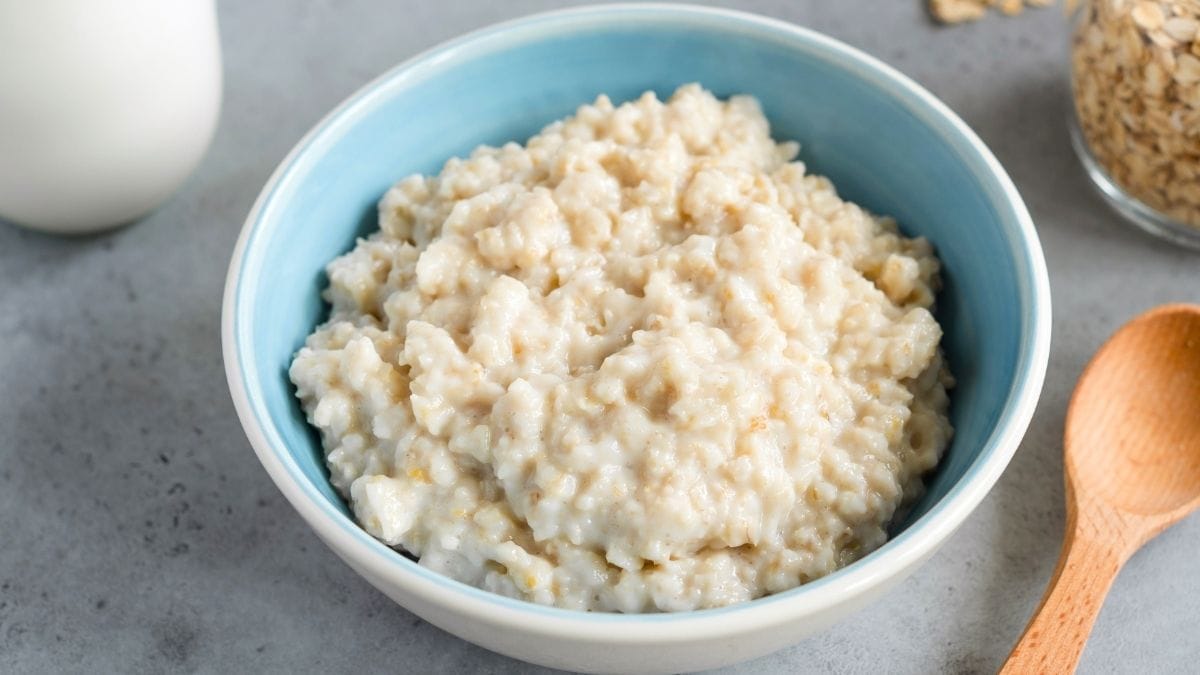
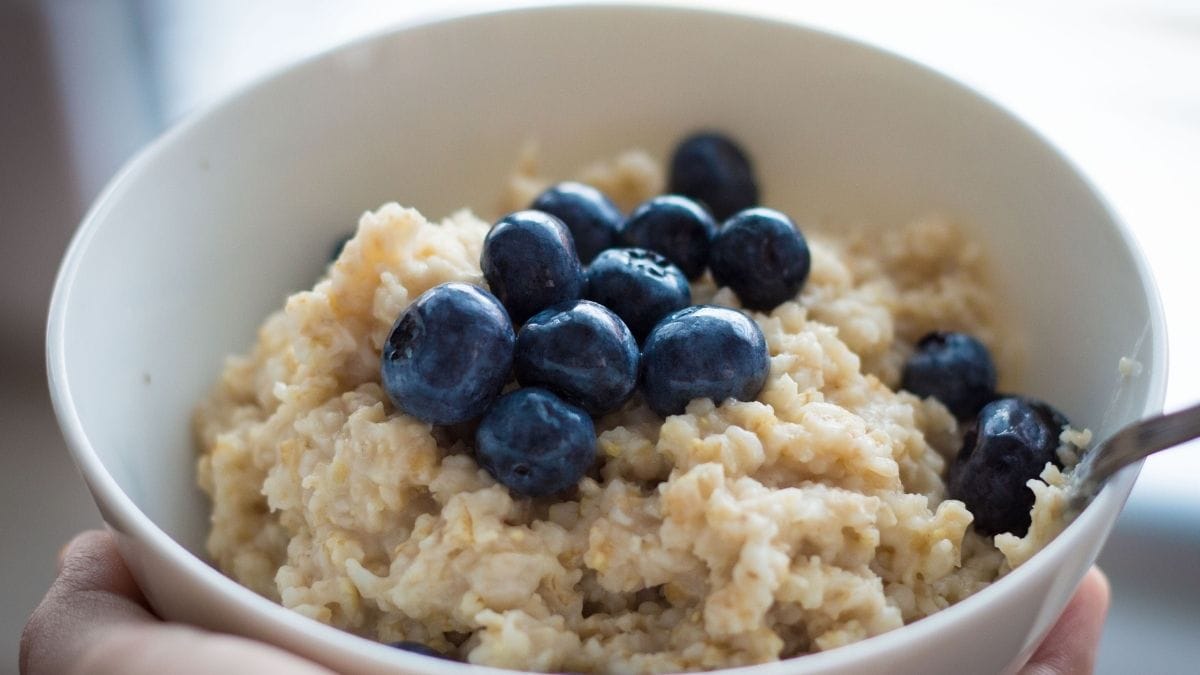
The simplest version that works is half a cup of dry rolled oats, cooked in water or milk, with a handful of walnuts and a few blueberries on top.
It costs less than most coffee drinks, takes four minutes, and gives your brain the steady oats brain energy supply the earlier sections described.
Credit: Deposit Photo
Tips:
Make overnight oats the night before so you never skip breakfast due to time. the beta-glucan stays fully intact after soaking in the fridge overnight.
Measure your oats dry rather than cooked; half a cup dry gives you the full beta-glucan dose without needing to estimate from a larger, watered-down bowl.
Conclusion
The single best thing you can do for your brain this week costs almost nothing and is already in most kitchens.
Swap your usual breakfast for a bowl of plain rolled oats tomorrow morning and notice how your focus holds up through the first two hours of your day. Give it two weeks.
The oats brain energy connection isn’t complicated once you understand it. Your brain needs steady fuel, and oats are one of the most reliable ways to deliver it. That’s not a health trend. That’s just how the fuel works.