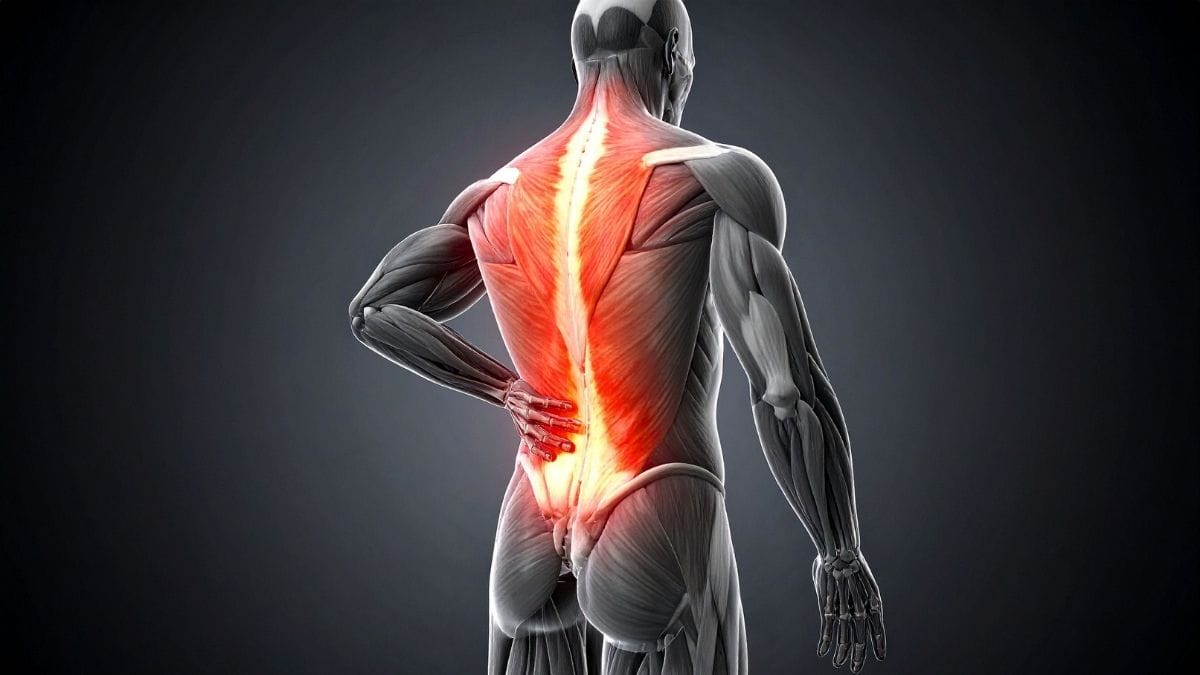
You’ve been doing the right things for years. You drink milk. You take a supplement. You get outside when you can. And yet your doctor mentions bone loss at your last checkup, and it feels like something went wrong that you didn’t cause and couldn’t see.
Most adults over 50 don’t realize their body has quietly become far less efficient at absorbing calcium and making vitamin D, so they keep eating the same foods and taking the same doses that worked decades ago while losing bone density without knowing it.
This article is for adults over 50 who want to protect their bones. By the end, you’ll know exactly where the process breaks down with age and what you can actually do to fix it.
Why Your Bones Start Losing Ground After 50
You don’t feel bone loss. That’s the problem. Your bones are constantly being rebuilt, and what drives how well that rebuild works comes down to two nutrients. When the balance tips the wrong way, the damage builds over years before anything hurts.
Bone is living tissue. Your body breaks it down and rebuilds it constantly. After 50, the breakdown side starts winning. The scale of this problem is larger than most people expect.

According to CDC data from the 2017-2018 National Health and Nutrition Examination Survey, 12.6% of U.S. adults aged 50 and over had osteoporosis [a disease marked by low bone density and fragile bones that break more easily] at the hip, spine, or both.
An additional 43.1% of adults in that age group had low bone mass, a condition that often leads to osteoporosis if nothing changes.
Nearly half of all adults over 50 are already on the wrong side of the line before a fracture ever happens.
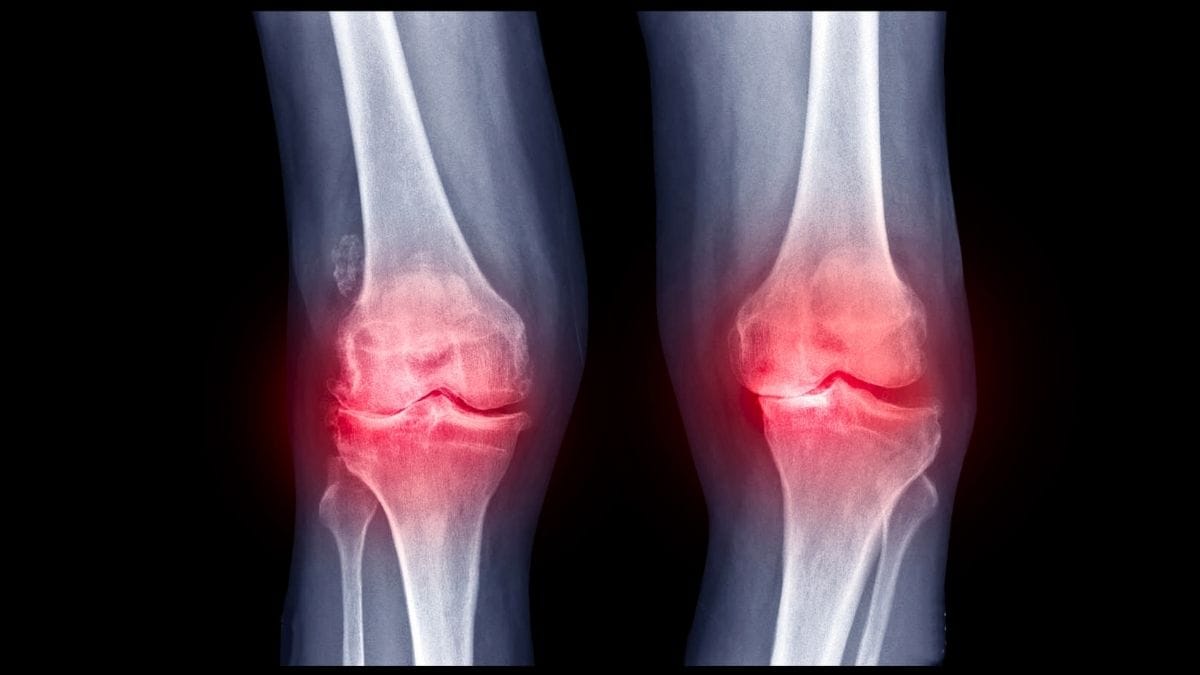
Bone loss is silent until something breaks. Osteoporosis is a silent disease that goes unrecognized until a fracture occurs, often after minimal trauma.
Getting enough calcium and vitamin D is the most direct step available to keep the rebuild side competitive. But getting enough is more complicated after 50 than it sounds. The next section explains why.
Step One of the Chain: Your Skin Stopped Making Enough Vitamin D Years Ago
Spend 20 minutes outside and your body makes vitamin D from sunlight. That’s what most people know. What most people don’t know is that this process slows dramatically as you age, whether or not you’re spending time in the sun.

You can eat all the calcium-rich foods on every list and still lose bone density because, after 50, your body has three separate bottlenecks that all have to be open for calcium to reach your skeleton.
The first bottleneck is in your skin. Vitamin D production starts with a compound in the outer layers of skin called 7-dehydrocholesterol [the molecule that sunlight converts into the early form of vitamin D].
A 1985 study published in the Journal of Clinical Investigation found that aging decreases the skin’s capacity to produce the early form of vitamin D by more than twofold when comparing young adults to people aged 77 to 82.
The skin samples in that study came from people of all ages, and the decline was consistent and measurable across the age range.
Research suggests that the same sun exposure that produces a strong vitamin D response in a 30-year-old produces a much smaller one in a 75-year-old.
Knowing your target helps you close the gap. The National Institute on Aging recommends that adults aged 51 to 70 get 600 IU of vitamin D daily, and adults over 70 get 800 IU daily.
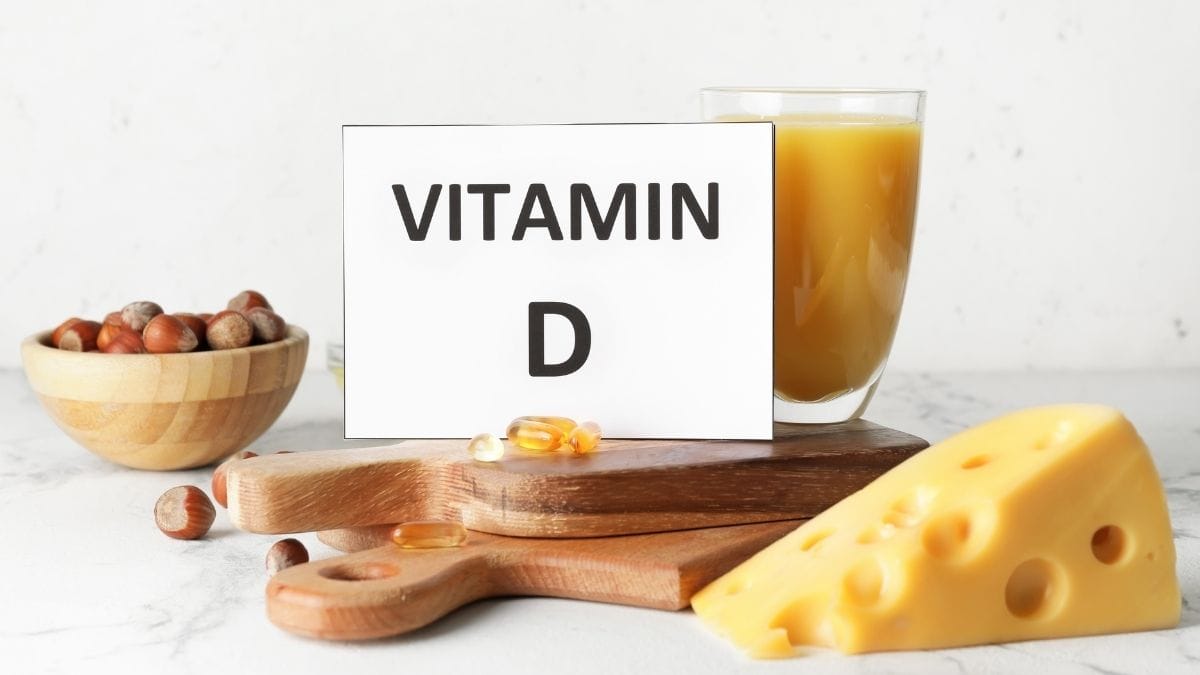
Those numbers are higher than what earlier guidelines suggested, partly because researchers now understand how much less the aging body makes on its own.
Your skin alone can’t fill the gap anymore. But the story doesn’t end with skin. The gut has its own separate problem with calcium that compounds this one.
Step Two of the Chain: Your Gut Is Absorbing Less Calcium
You know calcium is in dairy, leafy greens, and canned fish with bones. You’ve probably heard that a glass of milk has around 300 milligrams. What no one tells you is that after 50, especially after 75, your gut pulls significantly less calcium out of those foods than it did when you were younger.
The research behind this is specific enough to be unsettling. A study published in the American Journal of Clinical Nutrition measured radiocalcium absorption [a method of tracking how much calcium actually crosses from the gut into the bloodstream] in 262 healthy postmenopausal women aged 40 to 87.
Calcium absorption decreased with age across the group, and women over 75 absorbed 28% less calcium than younger women in the same study.

That 28% gap is the number worth sitting with. It means eating the same foods you’ve always eaten delivers meaningfully less calcium to your bones than it did at 45.
Absorption drops and is associated with levels of the active form of vitamin D that signals calcium uptake through the intestinal wall, and this relationship appears to weaken with age.
Less vitamin D activity in the gut means less calcium crossing over, regardless of how much calcium is on your plate.
How you space your calcium intake matters as much as how much you take. The NIH Office of Dietary Supplements confirms that splitting calcium intake into doses of 500 milligrams or less at a time improves absorption. Taking 1,000 milligrams at once is not equivalent to two 500-milligram doses spaced through the day.
The third link is one almost no article about calcium mentions at all.
Step Three of the Chain: Your Kidneys Are Converting Less Active Vitamin D
Most calcium-and-vitamin-D articles stop at intake. This one doesn’t, because intake is not the last step.
Vitamin D from sunlight or food is not yet in the form your bones can use. It travels to the liver first for an initial conversion, then to the kidneys, where it becomes 1,25-dihydroxyvitamin D [the fully active hormone form of vitamin D that tells the gut to absorb calcium and tells the kidneys to hold onto it].
Researchers documented this decline decades ago, in a study that followed women across multiple life stages.
A 1984 study in the Journal of Clinical Investigation measured active vitamin D levels across four groups of women at different life stages.
Levels of the active form were significantly lower in women aged 78 on average compared to nonelderly women, and the kidney’s ability to produce it correlated directly with how well the kidneys filtered blood, which declines with age.
The converter slows as you get older.

Research suggests this may be one reason some people with reasonable diets and regular sun exposure still lose bone, as the kidney’s ability to complete the final conversion step appears to decline with age.
This third bottleneck compounds the first two. Reduced skin production, weaker gut response, and slower kidney conversion have each been linked to aging in separate bodies of research.
Addressing only one of the three without understanding all three is why many people feel like they’re doing everything right and still losing ground. Knowing all three is useful only if it changes what you actually do. The next section gives you the specifics.
Important Safety Notice
Talk to Your Doctor First
Before changing any supplement routine,
check with your healthcare provider.
Condition 01
You Are Pregnant
Supplements can affect fetal development. Even “natural” vitamins carry risks during pregnancy that your doctor must evaluate.
Condition 02
You Take Medication
Supplements can cause drug interactions that alter how your medication works — sometimes dangerously so.
Condition 03
You Have a Chronic Condition
Ongoing conditions like diabetes, thyroid issues, or heart disease make unsupervised supplementation a serious risk.
How to Fill the Gaps: What to Eat, What to Take, and When
You don’t need a perfect system. You need a few specific decisions made correctly. Here is where each decision matters.
Start with food. The National Institute on Aging recommends 1,200 milligrams of calcium per day for women over 51 and men over 71, and 1,000 milligrams per day for men aged 51 to 70. Most people are not hitting those numbers from diet alone.
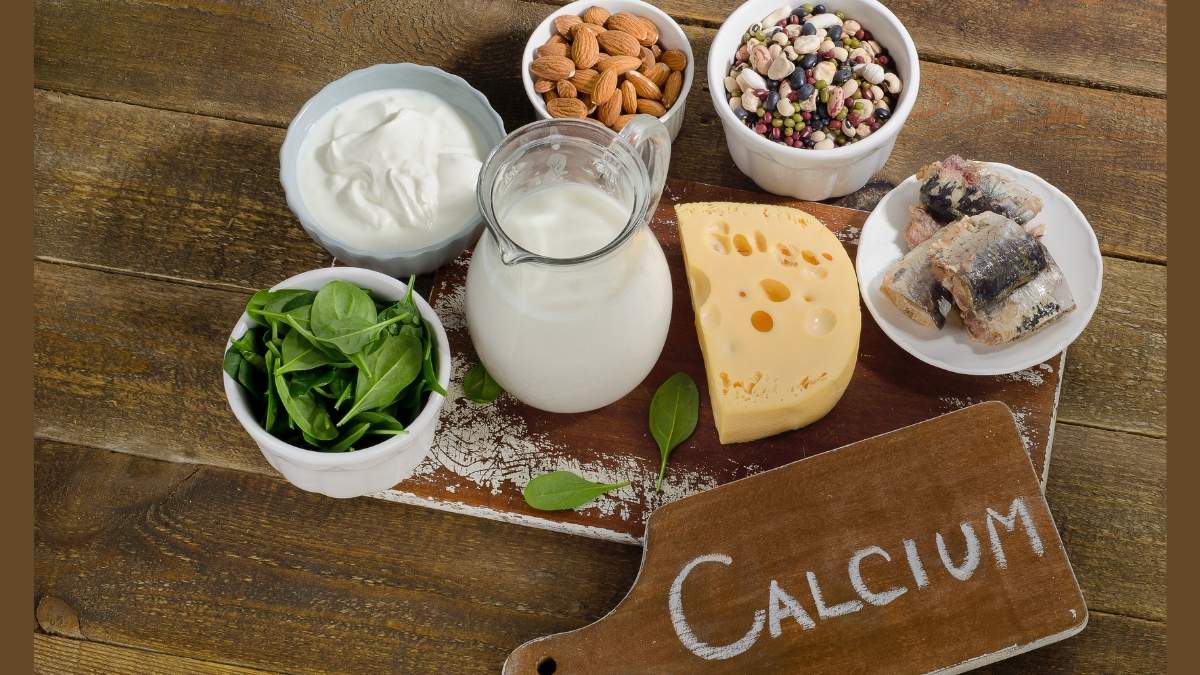
Strong food sources for calcium include:
- Plain low-fat yogurt (around 300-400 mg per cup)
- Milk, dairy or calcium-fortified soy or oat milk (around 300 mg per cup)
- Canned sardines with bones (around 325 mg per 3-ounce serving)
- Canned salmon with bones (around 180 mg per 3-ounce serving)
- Cooked collard greens (around 268 mg per cup)
- Cooked kale (around 94 mg per cup)
Food calcium values are approximate and drawn from NIH Office of Dietary Supplements data.
For supplements, the form matters more than most people realize. A meta-analysis found that calcium citrate [a form of calcium supplement that dissolves without requiring stomach acid] is absorbed 22 to 27% more efficiently than calcium carbonate on an empty stomach.
Atrophic gastritis, a condition more common in older adults, can reduce stomach acid production and may lower the body’s ability to absorb calcium carbonate supplements.
Calcium citrate works with or without food and is often the better choice for people over 50, especially those taking acid-reducing medications.
How you space your calcium intake matters as much as how much you take. The NIH Office of Dietary Supplements confirms absorption is highest at doses of 500 milligrams or less at one time. If you need 1,200 milligrams per day total from food and supplements combined, spread it across at least two or three separate occasions.
Vitamin D supplements absorb better when taken with a meal that contains some fat, research in older adults suggests. A handful of nuts, some avocado, a piece of fatty fish, or an egg yolk alongside your supplement is enough to improve uptake.
The specifics above give you a working plan. But a plan built on guesswork about your actual levels has a ceiling.
When to Ask Your Doctor for a Blood Test
The most useful conversation most adults over 50 never have is a simple one: ask your doctor to check your 25-hydroxyvitamin D [the form of vitamin D measured in a blood test that shows how much your body currently has in storage].
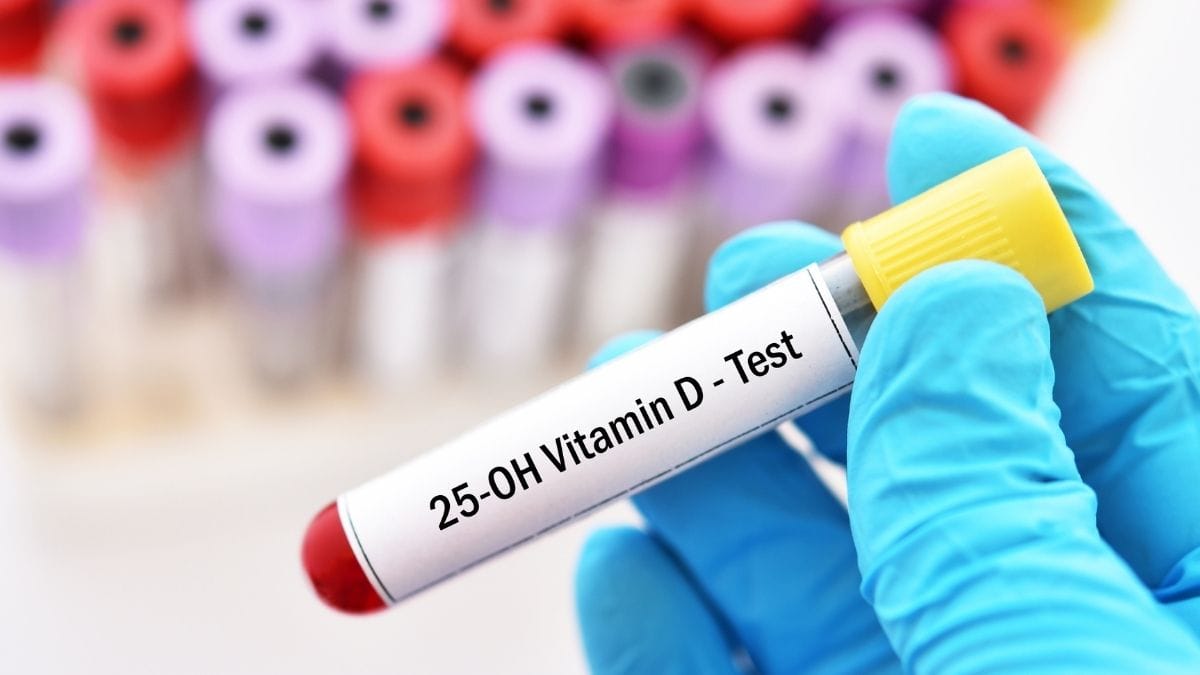
This is the standard test for vitamin D status. The NIH and NIA both recommend discussing vitamin D and calcium with a physician, particularly for adults over 50.
A result below 20 nanograms per milliliter is generally considered deficient. Many physicians prefer levels above 30 ng/mL for bone health, though optimal targets vary.
Your doctor can also measure your bone density directly. A DXA scan [a low-radiation imaging test that measures bone mineral density and compares it to a healthy young adult reference] is the standard test for osteoporosis and low bone mass. It is painless and takes about 15 minutes.
A test is especially worth requesting if any of these apply to you:
- You’re over 65
- You eat little or no dairy and don’t reliably eat other calcium-rich foods
- You spend most of your time indoors or live in a northern climate
- You take acid-reducing medications such as proton pump inhibitors
- You’ve had a fracture from a minor fall or bump
- A parent or sibling has been diagnosed with osteoporosis
Knowing your numbers ends the guesswork. You move from a general plan to decisions based on what your body actually has.
What This Comes Down To
Get tested. A blood test for 25-hydroxyvitamin D and a conversation with your doctor about your calcium and vitamin D intake will tell you more than any article can.
Talk to your doctor about getting your calcium and vitamin D levels tested, and start tracking how much calcium you actually get from food each day. Most people are surprised by how far short they fall before adding a single supplement. Your bones are rebuilding right now. Give them what they need to do it.